Just the hard numbers · Times, temperatures and charts · No foreplay
After Dark BBQtechnique · the hard numbers
How long to smoke a pork butt: Plan on 1½ to 2 hours per pound at 250°F. An 8 pound butt runs 12 to 16 hours including the stall, plus at least an hour of rest.
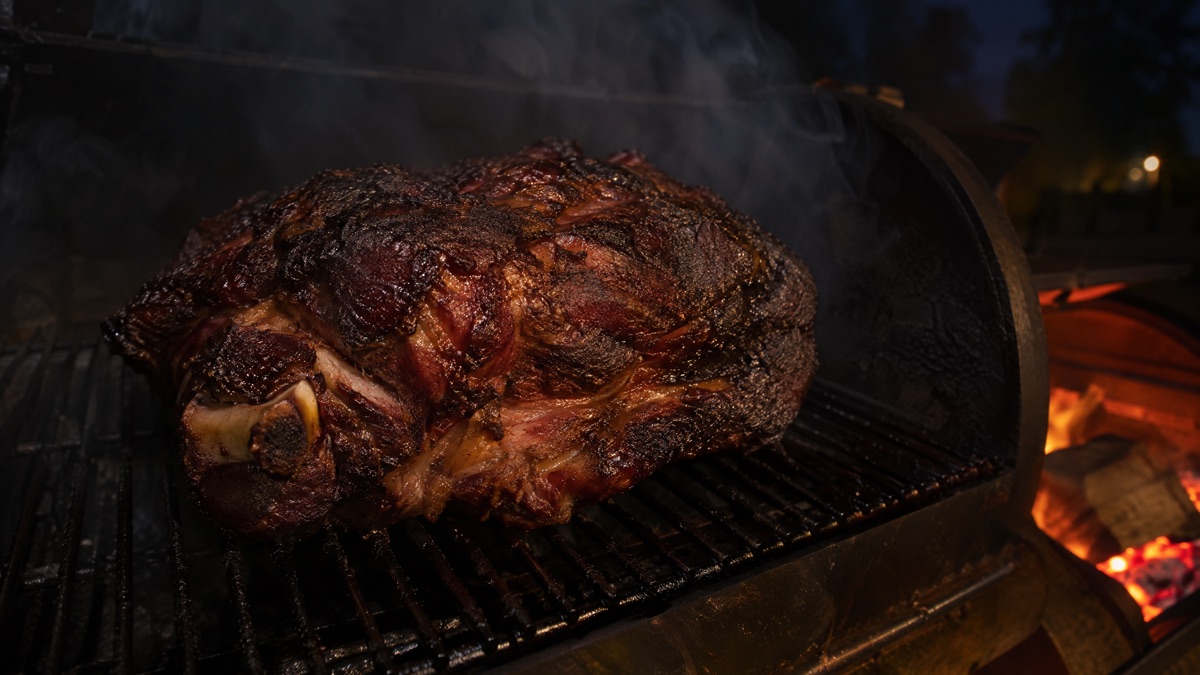
How long to smoke a pork butt?
Plan on 1½ to 2 hours per pound at 250°F. An 8 pound butt takes 12 to 16 hours including the stall, plus at least an hour of rest.
It is a long night, and a pork butt intends to make you earn every minute of it.
A pork butt is the most forgiving thing on a pit and the hardest to schedule. It stalls, it stalls for as long as it feels like, and it does not care about your party. Build the slack into the plan, and when it finishes early, hold it close.
| Weight | At 225°F | At 250°F | At 275°F |
|---|---|---|---|
| 6 lb | 12–14 hr | 9–12 hr | 8–9 hr |
| 8 lb | 16–18 hr | 12–16 hr | 10–12 hr |
| 10 lb | 18–22 hr | 15–18 hr | 12–14 hr |
| Two 8 lb butts | Same as one | Same as one | Same as one |
Two butts do not take twice as long
Time is set by thickness, not by how much meat is on the grate. Two eight pound butts finish in about the same time as one, as long as the pit holds temperature and air can move around them. What changes is recovery time when you open the lid, and how hard the fire has to work.
The stall
Somewhere between 150 and 170°F the temperature stops climbing and sits there, sometimes for four hours. That is evaporative cooling — moisture leaving the surface faster than the fire can push heat in. Nothing is wrong, and nothing needs rushing.
You can wait her out, or wrap her up and push through. Wrapping in butcher paper cuts two to three hours and keeps most of the bark. Foil is faster still and costs you the crust.
All Night Long, Worked Backward
For pulled pork on the table at 6 p.m., with an 8 pound butt at 250°F:
| Clock | What happens |
|---|---|
| 9:00 p.m. | Trim, season, on the pit, lid closed |
| 12:00 a.m. | Bark starts to set, do not touch it |
| 2:00–6:00 a.m. | The stall. Wrap here if you are wrapping |
| 10:00 a.m. | Probe tender at 203°F, come off |
| 10:30 a.m. | Vent to 170°F, then wrap and hold at 150–160°F |
| 5:00 p.m. | Pull it by hand, not with forks |
Fat Cap Up or Down: Which Way She Likes It
On an offset, where the heat comes from the side and rises over the top, cap up. The fat melts down over the shoulder for the first six hours and keeps the bare muscle from drying out while the bark sets underneath.
On a vertical smoker or a kettle, where heat comes from below, put her cap down so the fat takes the heat instead of the meat.
Buying for a crowd? The meat calculator works out how many pounds of pork butt to buy per guest, using the USDA yields for bone and trim.
How long to smoke a pork butt at 225?
Closer to two to two and a half hours a pound, so an eight pound butt runs sixteen to twenty hours instead of twelve to sixteen. That is the trade: 225 buys you a deeper smoke ring and a longer, gentler render, and it costs you most of a working day.
The honest case for 225 on a pork butt is weaker than it is on brisket. A butt is so forgiving and so well marbled that it turns out beautifully at 250, and the extra four hours mostly buy you more time awake with it. If you are cooking overnight and want to wake up to it rather than sit with it, 225 is the reason to.
How long to smoke a 10 pound pork butt? And a 5 pound one?
At 250°F, a ten pound butt runs fifteen to twenty hours and a five pound butt seven and a half to ten. Both plus the rest. The per-pound figure holds across the range because a pork butt is roughly the same shape whatever it weighs — it is a thick block, not a thin one, and thickness is what sets cooking time.
What does change is the stall. A bigger butt holds more water, so it sits in the stall longer and the spread between the low and high estimate widens. Plan for it to go long, and be pleased if it finishes early. A butt that finishes three hours ahead of schedule holds perfectly well; one that finishes three hours late ruins an afternoon.
Do you wrap a pork butt?
Most people do, in foil, once the bark has set and the color is where they want it — usually around 160 to 170°F. Wrapping pushes you through the stall and can take two or three hours off the back end. The cost is bark: foil steams the crust soft, and a butt that went in wrapped at 155 comes out with no real bark at all.
Tuck it in once it has some color in its cheeks, and it gives for you sooner.
Butcher paper is the compromise and it is a smaller compromise on pork than on brisket, because pulled pork gets tossed and the bark ends up distributed through it anyway. Unwrapped is the purist route and it works; it just adds hours and asks you to hold your nerve through the stall.
How many people does a pork butt feed?
An eight pound bone-in butt gives you a little over four pounds of pulled pork, which is about eleven adult plates at six ounces or roughly thirteen sandwiches. That is the USDA buying yield doing the work: a pound of bone-in Boston butt as purchased comes back as 0.52 pounds of cooked meat once the bone and the fat are gone.
Buying for a crowd rather than a family, the meat calculator works it out from the same yields. The short version is about three quarters of a pound of raw bone-in butt per adult.
Don’t Stop Now
Sources
The 0.52 buying yield for bone-in Boston butt is from the USDA Food Buying Guide for Child Nutrition Programs, Section 1, Meats and Meat Alternates yield table. The 145°F safe minimum for fresh pork roasts and the three minute rest are from USDA Food Safety and Inspection Service, Fresh Pork From Farm to Table, last updated December 2024 — a pork butt passes that number in the first few hours and keeps cooking for texture, not safety. Holding above 140°F follows the FSIS Danger Zone (40°F to 140°F) fact sheet. Times per pound are Dutch’s own. Read September 2026.