Just the hard numbers · Times, temperatures and charts · No foreplay
After Dark BBQTechnique · Planning
Plan on about 6 ounces of cooked meat for an average appetite, 8 for a big one and 3 for a small one, then buy roughly twice that weight raw, because barbecue loses about half of what you pay for to bone, trim and the fire. For twenty average appetites and four small ones eating brisket, that is 8.25 pounds cooked and 18 pounds of trimmed brisket on the scale at the store.
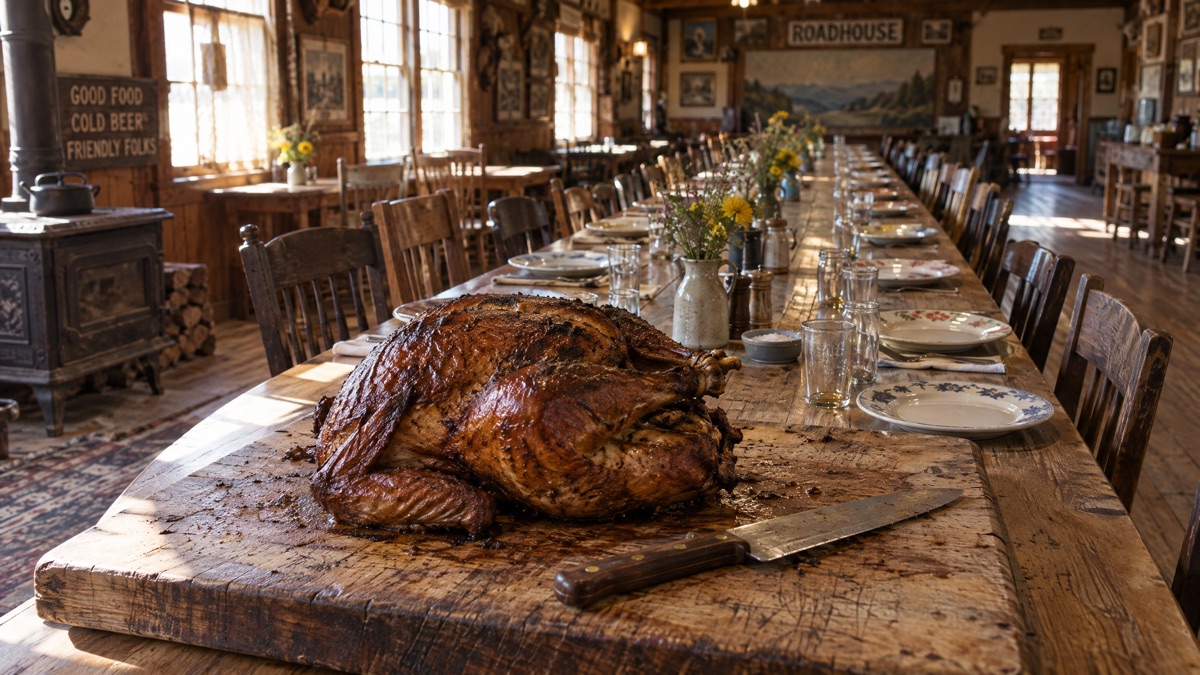
How much meat per person for barbecue?
Six ounces of cooked meat for an average appetite, eight for a big one, three for a small one, and buy about double that weight raw. The doubling is the part people get wrong. A pound of brisket on the butcher’s scale comes off the pit as about seven and a half ounces of meat you can put on a plate. The rest leaves as fat, bone and water. Every number below traces back to the United States Department of Agriculture, and the calculator does the arithmetic.
The After Dark BBQ meat calculator
| Buy this much raw | — |
|---|---|
| It cooks down to | — |
| Per guest on the plate | — |
| USDA yield used | — |
Dutch reads the mail on Tuesdays. Write to him about your cook, or start with the hard numbers.
Data updated September 2026.
The Shrinkage: How Much of What You Buy Actually Reaches the Plate
This is the table worth keeping. Every figure is the United States Department of Agriculture’s own yield for that cut — what one pound of meat as purchased becomes after bone, trim and cooking. It is the number the calculator divides by, and it is why a fourteen pound brisket does not feed twenty-eight people.
| Cut, as you buy it | 1 lb bought becomes | Raw per average appetite at 6 oz cooked |
|---|---|---|
| Beef brisket, boneless, trimmed to 1/4 inch | 0.46 lb cooked | 0.82 lb |
| Beef brisket, boneless, nearly all fat removed | 0.69 lb cooked | 0.54 lb |
| Pork shoulder, Boston butt, bone in | 0.52 lb cooked | 0.72 lb |
| Pork shoulder, Boston butt, boneless | 0.60 lb cooked | 0.63 lb |
| Pork shoulder, picnic, bone in | 0.43 lb cooked | 0.87 lb |
| Pork spareribs | 0.39 lb cooked | 0.96 lb |
| Whole chicken, skin on, no neck or giblets | 0.44 lb cooked | 0.85 lb |
| Chicken wings | 0.34 lb cooked | 1.10 lb |
| Whole turkey, skin on, no neck or giblets | 0.53 lb cooked | 0.71 lb |
The formula, so you can check us
Three steps and no magic. Cooked ounces needed, divided by sixteen to get pounds, divided by the USDA yield for the cut. Big appetites get eight ounces, average six, small three.
| Step | What you work out |
|---|---|
| 1 | Cooked ounces = (big appetites × 8) + (average × 6) + (small × 3) |
| 2 | Cooked pounds = cooked ounces ÷ 16 |
| 3 | Raw pounds to buy = cooked pounds ÷ the USDA yield, rounded up |
Two of the settings are ours rather than the USDA’s, and we would rather come clean than hide it. The eight, six and three ounce portions are After Dark BBQ planning numbers; the government’s reference portion for meat served as a main dish is three ounces cooked, which is a nutrition label figure and nobody’s idea of a barbecue plate. And when a second meat is on the table the calculator gives each meat sixty-five percent of the portion, forty-five percent with three or more. Change the settings if your crowd eats differently. You know them and we do not.
Worked by hand: twenty average appetites, four small ones, brisket
Twenty average appetites at six ounces is 120 ounces. Four small ones at three ounces is 12. That is 132 ounces of cooked brisket, which is 8.25 pounds. Brisket’s USDA yield is 0.46, so 8.25 divided by 0.46 is 17.9 pounds, and you round up and buy 18. Checking it backwards: 18 pounds at 0.46 gives 8.28 pounds cooked, or 132.5 ounces — half an ounce more than you needed, which is the right direction to be wrong in.
In practice that is one whole packer brisket. Weigh it after you trim it, not before, because the yield above starts from a brisket already trimmed to a quarter inch of fat. Anything you cut off in the driveway was never going to end up in anybody’s mouth.
How much brisket per person?
About thirteen ounces of raw trimmed brisket per average appetite, and half that for a small one. Six ounces of cooked brisket is a fair plate next to sides. If brisket is the only thing on the table, go to eight ounces cooked and about a pound and a tenth raw. Pulled or chopped brisket stretches further than sliced because nothing is lost to the knife.
How much pulled pork per person?
About eleven and a half ounces of raw bone-in pork butt per average appetite at a six ounce plate, or ten ounces if you bought it boneless. Pork butt is the most forgiving cut on this list: it yields better than brisket, it holds for hours, and leftovers freeze without complaint. On sandwiches, five ounces of pork on a bun eats like plenty, and a pound and a quarter of raw butt makes two of them.
How much meat for 50 people?
Fifty average appetites at six ounces is 300 ounces, or 18.75 pounds of cooked meat. That is 41 pounds of trimmed brisket, 37 pounds of bone-in pork butt, or 49 pounds of spareribs. Cooking two of those together does not mean doubling — set the calculator to one other meat and it will split the plate for you.
Do I need more if there are sandwiches?
Less, usually. A bun, slaw and pickles take up room a plate of sliced meat does not, and five ounces on a sandwich reads as generous where five ounces on a plate reads as thin. Plan five ounces a sandwich and you will land close. The big appetites are the exception; they eat two and always have.
The Half-Pound Rule Leaves Them Unsatisfied: Here Is the Arithmetic
Search this question and almost every answer tells you to buy half a pound of raw brisket a head. Run that through the yield and see where it lands: half a pound bought, multiplied by 0.46, is 0.23 pounds on the plate. That is three and a half ounces of brisket — less than a deli sandwich, for a cut you sat up all night with.
The rule is not made up. It is the right number for cooked weight and it has been repeated so many times that the word cooked fell off somewhere. Half a pound of finished brisket a head is a generous plate. Half a pound of raw brisket a head will have you carving thin and apologizing.
If you take one thing home tonight, take that: the number you were told is about the meat coming off the pit, not the meat going on it. Buy for the scale at the store, plan for the plate.
Where All That Weight Goes
Bone, trimmed fat and water, in that order of size. The USDA’s separate cooking yield study measured beef brisket flat at sixty-nine percent of its raw weight after braising, and pork spareribs at seventy-six percent after roasting — and those figures count only what the fire takes. The bone and the fat cap come off before that, which is why the buying yields in the table above are lower than the cooking yields and why the buying yields are the ones to plan from.
Don’t Stop Now
Sources
Buying yields are from the USDA Food Buying Guide for Child Nutrition Programs, Section 1, Meats and Meat Alternates yield table. Cooking yields are from the USDA Table of Cooking Yields for Meat and Poultry, Release 2, September 2014. The three ounce reference portion for meat as a main dish is the figure set in United States food labeling regulations at 21 CFR 101.12. Read September 2026.