Volume Two · Chapter Two · Pork chops at 225°, seared hot · Ninety minutes
Volume Two · Chapter Two
SALT THEM THURSDAYA LITTLE PINK IN THE MIDDLEHE RAN THE COALS
Heat Running hot
Chapter two of After Dark BBQ, Volume Two: two-inch pork chops salted overnight, smoked at 225° to 135°, then seared hot and pulled at 145°.
The ledger said salt them Thursday. She found the page on Friday afternoon.
Something That Sells Before Midnight
The shoulder sold out by one in the morning that first Friday, which Ruthie said was a problem, because the bar crowd did not get out until one and the night nurses did not get out until three, and a stand that runs dry before the nurses get there is a stand that does not deserve them.
RuthieYour father always had something quick on the side of the pit for the early people.
DellaWhat?
RuthieLook in the book. Page after the picnic.
The page after the picnic said CHOPS in the same square capitals, and under it: TWO INCH. BONE IN. SALT THEM THURSDAY. 225 TILL 135. THEN HOT. PULL AT 145. PINK IS FINE. TELL THEM PINK IS FINE.
It was Friday, four in the afternoon. Della drove to the locker plant and asked for a dozen bone-in rib chops cut two inches thick, and the man behind the counter looked her over the way everybody on County Road 9 had been looking her over all week.
ButcherEarl’s girl.
DellaEarl’s girl, who forgot to salt them Thursday.
ButcherThen salt them now and give them every hour you have got.
Why Thin Chops Never Make It
A pork chop is a slice of loin, the leanest big muscle on the pig, and lean meat on a smoker has exactly one way to go wrong: it dries out and goes tight before the smoke has done anything worth waiting for.
Thickness is the whole defense. A three-quarter-inch chop goes from raw to ruined in the time it takes to blush. A two-inch chop gives you an hour and a half of slow, gentle smoke and a wide-open window at the end, with enough meat in the middle to stay tender and wet through a hard, hot finish.
If the store only has thin chops, buy a piece of bone-in loin and cut your own. It is almost always cheaper by the pound, and you get to decide exactly how thick you like them.
The pork chop is the most ruined cut in America, and it is ruined by two things: thin slicing and fear. Somebody taught your grandmother that pork had to be cooked gray all the way through, and that advice has been out of date since 2011.
You can read this one for the man who keeps showing up after midnight. I read it for the pink in the middle, which is safe, and which is the whole difference between a chop and a coaster.
DutchDella“He wrote tell them pink is fine. Twice.”
Ruthie“He had that argument every Friday night for thirty years.”
Science Spotlight: Why Salt Needs Time
Salt on the surface of raw meat first pulls moisture out, then dissolves into it, and then that brine is drawn back in, carrying salt into the meat and loosening the proteins so they hold more water while they cook. That cycle takes hours. A dry brine of about three-quarters of a teaspoon of kosher salt per pound, left uncovered in the refrigerator overnight, seasons a thick chop all the way through and dries the surface for a better sear. Two hours helps. Forty minutes is the worst window, when the moisture is sitting on the surface and has not gone back in yet.
Four Hours Instead of Twenty-Four
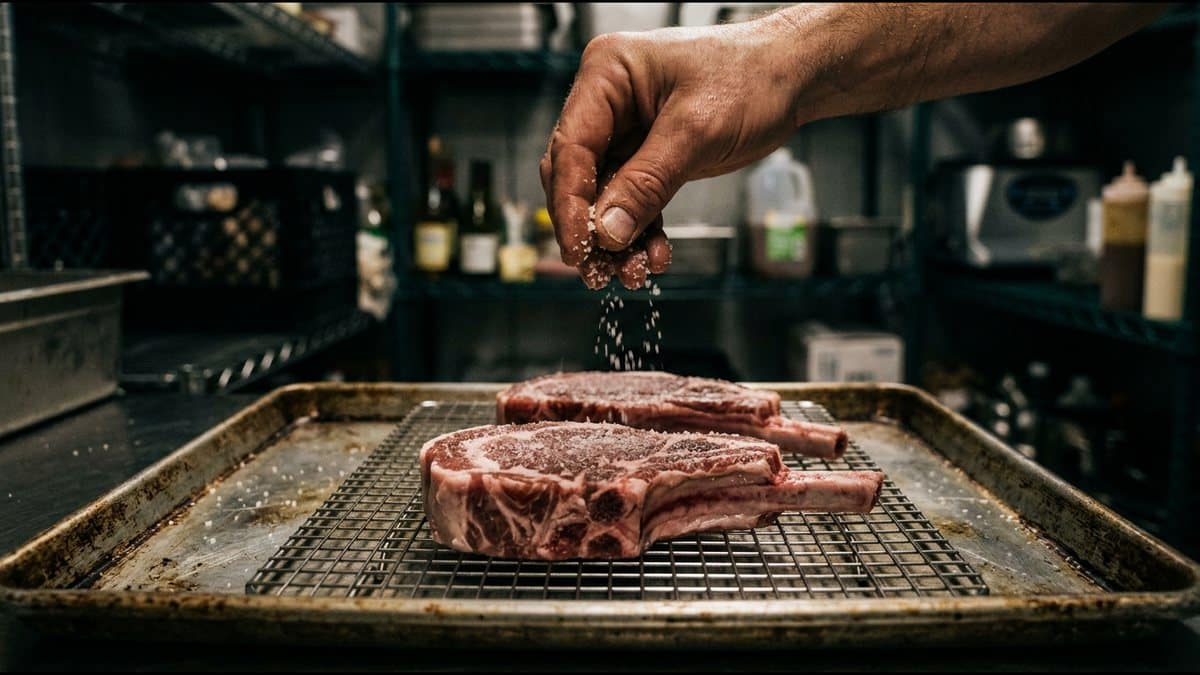
She salted them at five, three-quarters of a teaspoon of kosher salt per pound on every surface, both faces, the edges, right down along the bone, then laid them out bare on a rack in the walk-in cooler and made herself leave them alone. Four hours is not overnight. It is a great deal better than nothing.
At nine she went to fire the Old Man and the firebox door swung open on the first try, smooth as anything, like it had been waiting for her. Somebody had been at the hinge with a file and a can of graphite while she was at the locker plant.
DellaDid you fix his door?
WesIt was sticking.
DellaIt stuck for thirty years.
WesIt was sticking on you.
He was off shift for the night, he said, and had nowhere in particular to be, and he would run the coals if she did not mind. She minded, a little, and let him anyway.
225 Until 135
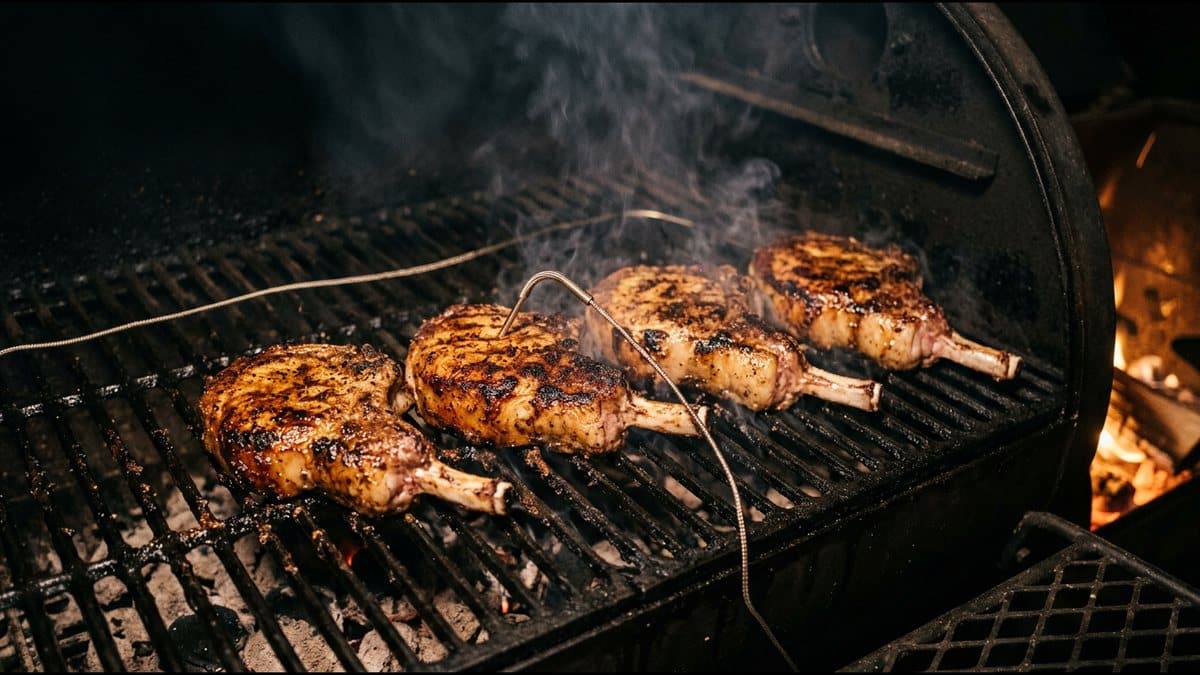
Two hundred and twenty-five degrees on the far end of the grate, well away from the firebox, with apple wood instead of hickory, because a lean chop takes smoke fast and hickory comes on too strong for something that tender. Bone side toward the heat. A probe slid into the thickest chop from the side, careful, not touching the bone.
A two-inch chop at two twenty-five reaches one hundred and thirty-five degrees in seventy-five minutes to an hour and a half. That is not done. That is the moment the smoke has had its way with it and the chop has to come off before slow and gentle turns into too much.
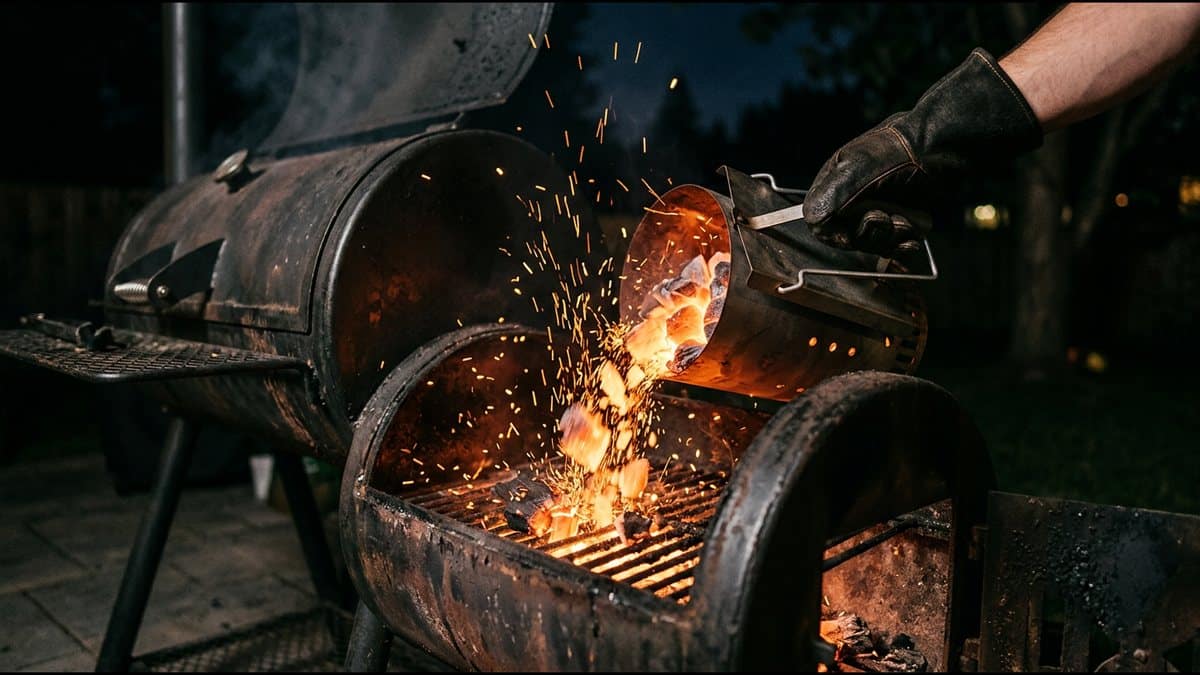
Meanwhile Wes built the other fire: a full chimney of lump charcoal dumped onto the grill grate in the firebox, banked up close and glowing, the hottest and most dangerous thing the Old Man had to offer.
Wes“Ready when you are.”
Della“Are you always this ready?”
Wes“Only at this hour.”
Then Hot, Ninety Seconds a Side
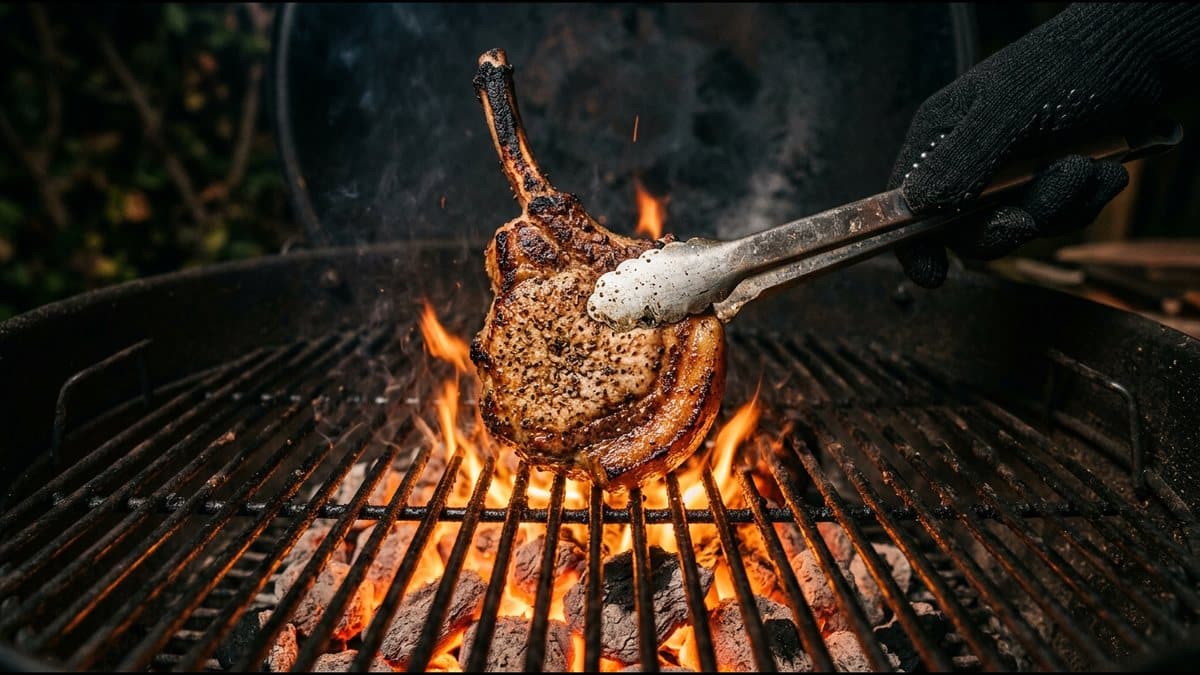
Off the smoke at one thirty-five and straight down onto the coals, where it hissed like it had been waiting all night to be handled that way. Ninety seconds a side, give or take, and then Wes held each one up on its edge with the tongs and pressed the fat cap against the grate for another thirty seconds, until the edge went crisp and the faces wore a dark crust laced through with the color of the apple smoke.
One hundred and forty-five degrees in the center. Off the fire and onto a board for three minutes, which is not a superstition but part of the safety rule: the USDA standard for pork is one hundred and forty-five degrees followed by a three-minute rest.
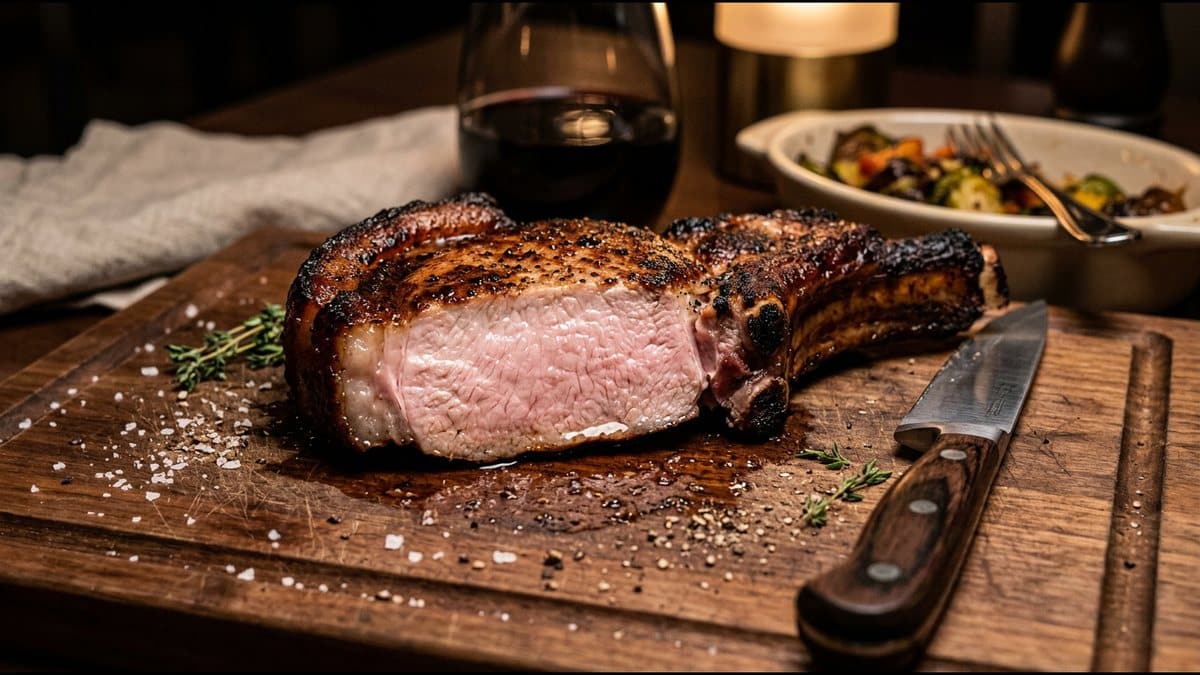
She cut the first one at the bone. It was blush pink all the way across, wet and trembling, and it parted under the knife like it had been waiting for her to ask.
DellaThat is not what a pork chop looks like.
WesThat is what his looked like.
DellaMine never looked like that. Not one, my whole life.
WesThen nobody ever cooked you one right.
Tell Them Pink Is Fine
At twelve forty the first car from the tavern pulled in, then a pickup, then three nurses from the county hospital still in scrubs. The chops went for eleven dollars on a paper plate with a scoop of beans and a slice of white bread, and the first man who got one held it up under the bulb over the window and frowned at it like it had said something rude.
Customer“It is pink.”
Ruthie“Your mother cooked them to shoe leather. Eat it.”
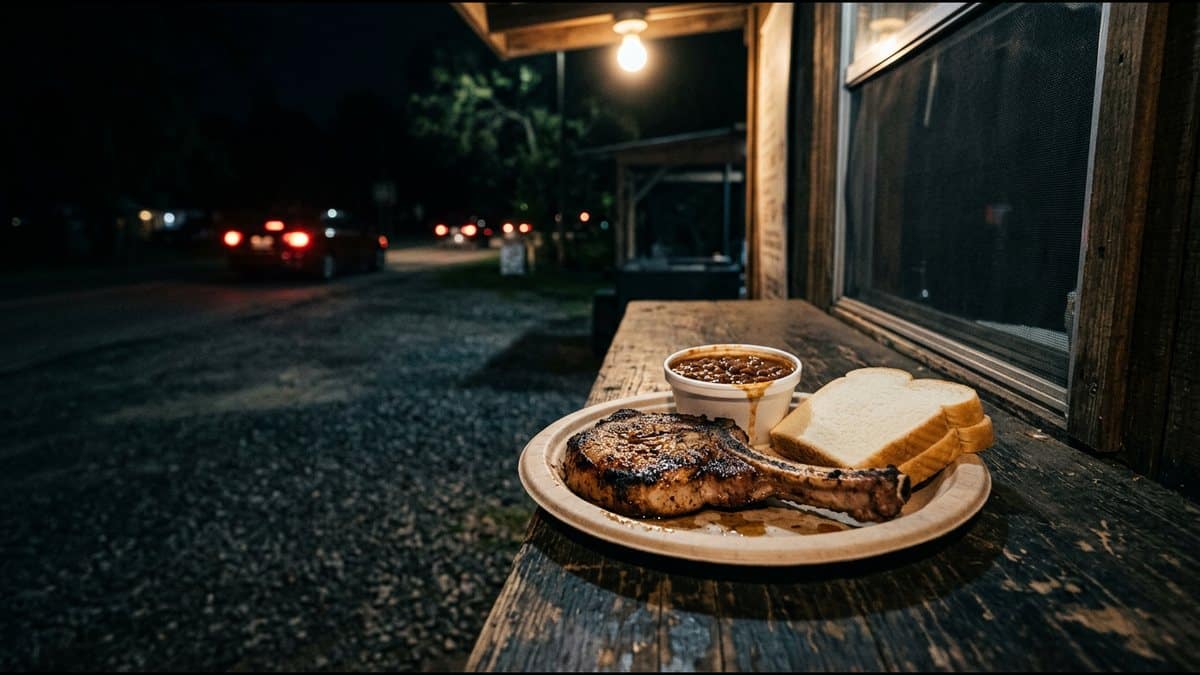
He ate it. He came back for a second one before the nurses had finished their first, and he did not say one more word about the color.
By two in the morning there were three chops left, and Della put two of them aside on a plate under foil without anybody asking her to. At two-ten Wes came back from walking the fence line behind the stand, where he said he had heard something, and she slid the plate across the counter to him slow.
WesWhat do I owe you?
DellaRuthie says my father never took your money.
WesHe did not.
DellaAre you going to tell me why?
WesSomeday. Not over a pork chop.
The Note in the Back of the Book
After he had gone, Della sat on an upturned bucket by the firebox with the ledger open on her knees and turned all the way to the back, past the recipes, past thirty years of Friday totals in Ruthie’s small neat numbers, to the inside of the back cover.
In her father’s capitals, in pencil, was one line with a date eleven years old: W.T. — NO CHARGE. EVER. JAN 9.
January ninth. She knew the date. It was the night of the ice storm, the winter she was twenty-two, when the power was out on County Road 9 for four days and her father did not answer his phone for one of them.
Della“Ruthie. What happened on January ninth?”
Ruthie“Ask him, honey. I only kept the books.”
Bone-In, Boneless, and the Window
A bone-in rib chop is the best chop for a smoker, because the bone slows the cooking next to it and keeps that meat juicy, and because a rib chop carries a little more fat than the center-cut loin chop lying next to it in the case.
Boneless chops work if they are thick, but they cook faster and more evenly, which means less room for error. Start checking them at an hour. A boneless two-inch chop can reach one thirty-five ten or fifteen minutes before the bone-in one beside it.
The window is small at the end and wide at the beginning. Between one thirty-five and one forty-five there are only a few minutes over hot coals. Between going on the pit and one twenty there is an hour and a half where nothing can really go wrong. Spend your attention accordingly.
What to Put Next to It
Something sharp. A spoonful of mustard, a scoop of vinegar slaw, apples cooked down soft in butter with a pinch of the same rub. Lean pork wants acid and fat beside it far more than it wants sauce all over it.
Beans with a little of last week’s pulled shoulder stirred through them. White bread to clean the plate. And, if a man is eating at two in the morning, standing up, nothing at all but the bone to hold it by.
The lights go out on County Road 9, the Old Man is the only fire for miles, and Wes is up a pole in the rain.
All the chaptersHow long do you smoke pork chops?
About 75 to 90 minutes at 225°F for 2-inch chops, until they reach 135°F inside. Then sear them over high heat for about 90 seconds a side, pull them at 145°F, and rest them three minutes. Chops thinner than about an inch and a half dry out before they take on smoke, so buy them thick or cut your own.
| Stage | Pit | Internal | Time |
|---|---|---|---|
| Dry brine, uncovered, refrigerated | — | — | 4–24 hr |
| On, far from the fire | 225°F | fridge cold | — |
| Smoke takes, color comes | 225°F | about 110°F | 45 min |
| Off the smoke | 225°F | 135°F | 75–90 min |
| Sear, fat cap too | over hot coals | — | 90 sec a side |
| Off the fire | — | 145°F | — |
| Rest on a board | — | — | 3 min |
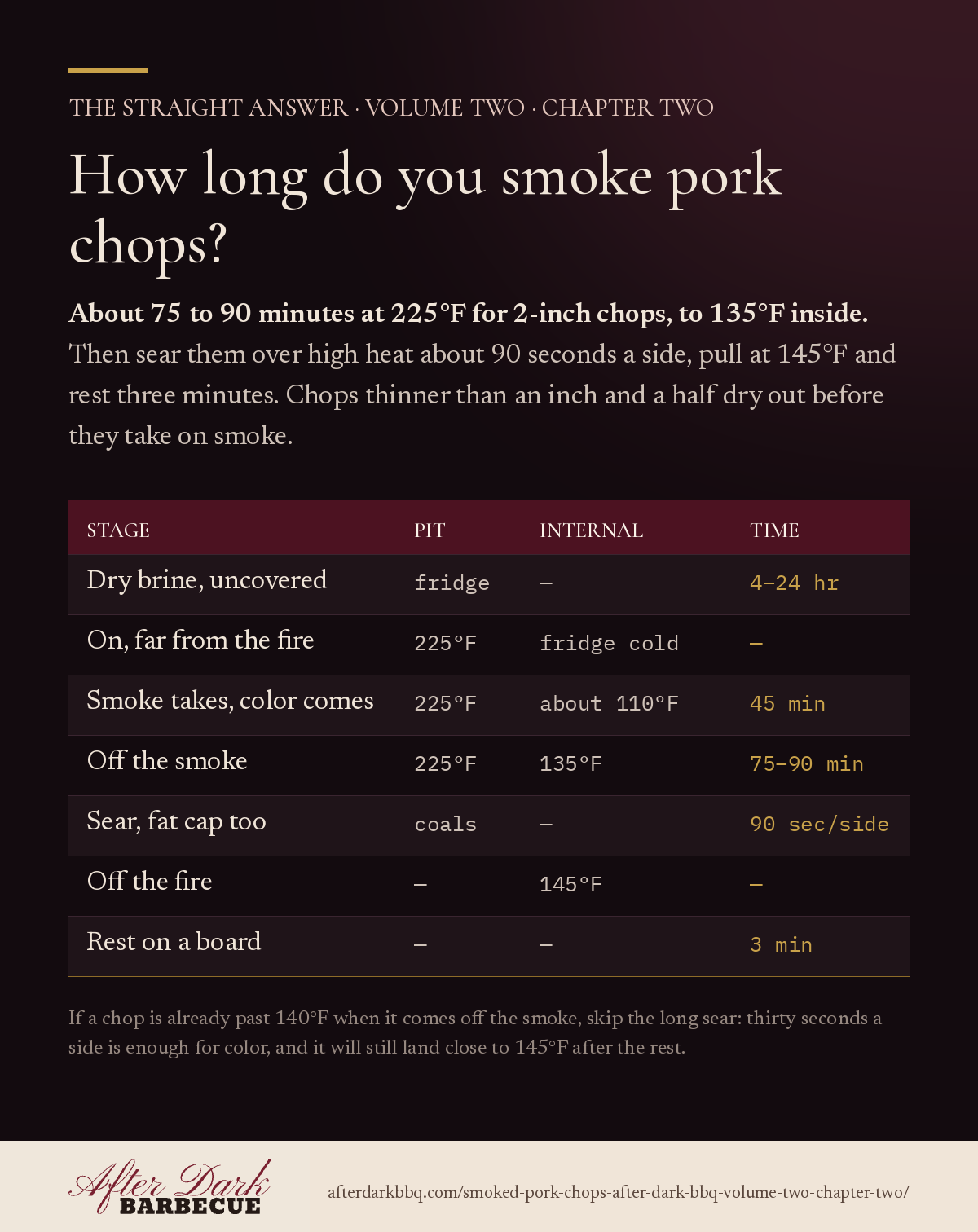
If a chop is already past 140°F when it comes off the smoke, skip the long sear: thirty seconds a side is enough for color, and it will still land close to 145°F after the rest.
Recipe: The Short Version
Cut: bone-in rib pork chops, 2 inches thick
Brine: about 3/4 teaspoon kosher salt per pound, uncovered in the refrigerator, overnight if you can
Smoke: 225°F, apple or cherry, away from the fire
Time: 75 to 90 minutes, to 135°F inside
Sear: over hot coals, about 90 seconds a side, fat cap last
Pull: 145°F
Rest: 3 minutes
Next Friday: a storm takes the county dark, a rack of chuck short ribs sits at 275° for eight hours, and Della finds out what happened on January ninth.
Sources
The 145°F minimum with a three-minute rest for pork chops is from the USDA Food Safety and Inspection Service Safe Minimum Internal Temperature Chart; the USDA lowered its pork recommendation from 160°F to 145°F in 2011. The 135°F pull from the smoke, the dry-brine ratio and the sear times are After Dark BBQ’s own, measured at the grate and stated as ours rather than dressed up as research. Read October 2026.
Volume Two · a new chapter every Friday.All the chapters · Write to Dutch

Leave a Reply