Volume Two · Chapter One · Pork shoulder at 250° · Fourteen hours
Volume Two · Chapter One
HER FATHER’S PITTHE MAN IN THE BUCKET TRUCKSKIN ON TILL MORNING
Heat Thin blue smoke
Chapter one of After Dark BBQ, Volume Two: a whole skin-on pork shoulder at 250° for about fourteen hours, pulled at 203° and pulled apart by hand.
She came home to sell it. The pit had other plans, and so did the man who showed up at two in the morning.
A Stand on County Road 9
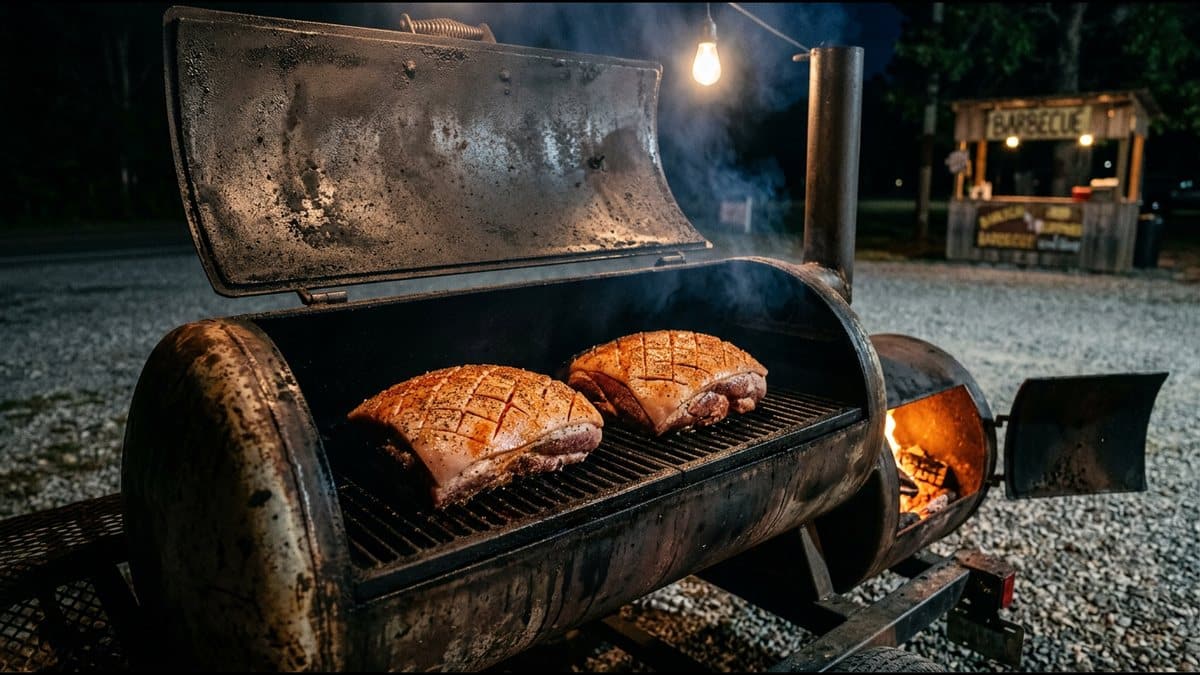
The sign still said HASKINS PIT STOP in letters her father had painted by hand in 1994, and the Old Man was still parked behind it: a reverse-flow trailer pit he welded out of a propane tank the year Della turned nine, black from the firebox to the chimney cap, built for one thing and never once pretending otherwise.
Earl Haskins sold barbecue out of that stand on Friday and Saturday nights for thirty-two years, to the bar crowd, the night nurses, the deputies and anybody else who was still hungry on a county road after dark. He died in August. Della drove in from Kansas City in September with a realtor’s number in her phone and every intention of being gone by Sunday.
Her aunt Ruthie was waiting in the stand with the cash box, the ledger and a sixteen-pound box from the locker plant, still cold, still sealed, still waiting for somebody to open it.
RuthieHe ordered it before he went in the hospital. It is paid for.
DellaThen you cook it.
RuthieI kept his books for thirty years, honey. I never once kept his fire.
The Whole Shoulder, Skin and All
There were two of them in the box, each a little over eight pounds: whole picnic shoulders, bone in and skin on, the lower half of the front leg, the cut most butchers sell cheap because most men do not know what to do with something that comes to them wearing that much.
Her father knew. The ledger had a page on it in his square capitals: PICNIC. SKIN ON. SCORE IT. 250. DO NOT WRAP. PULL AT 203. NOTHING ELSE TO IT.
Della had grown up around that pit and had never once been trusted to run it. She read the page three times, pulled on his gloves, and found they still smelled like hickory and like him, and she stood there holding the first shoulder a good deal longer than the job required.
A pork shoulder is two cuts. The top half is the butt, which is what most people smoke, and the bottom half is the picnic, which is what most people should. It has more skin, more bone and more connective tissue, and every one of those is a reason to stay up with it all night.
You can read this one for the woman who came home to sell a pit and the man who would not let her. I read it for the skin, which is the part everybody throws away and the part Earl Haskins built a stand on.
DutchDellaHe wrote nothing else to it.
RuthieHe wrote that on every page. It was never true once.
Technique Spotlight: Picnic or Butt
A whole pork shoulder runs from the top of the front leg down to the hock. The butt (sold as Boston butt) is the upper part, square and marbled; the picnic is the lower part, tapered, with the skin still on and a round leg bone running through it. Both want low heat and a long night. The picnic takes a little longer per pound, yields a little less meat, and gives you the skin, which a butt never will.
Score It, Salt It, Fire the Old Man
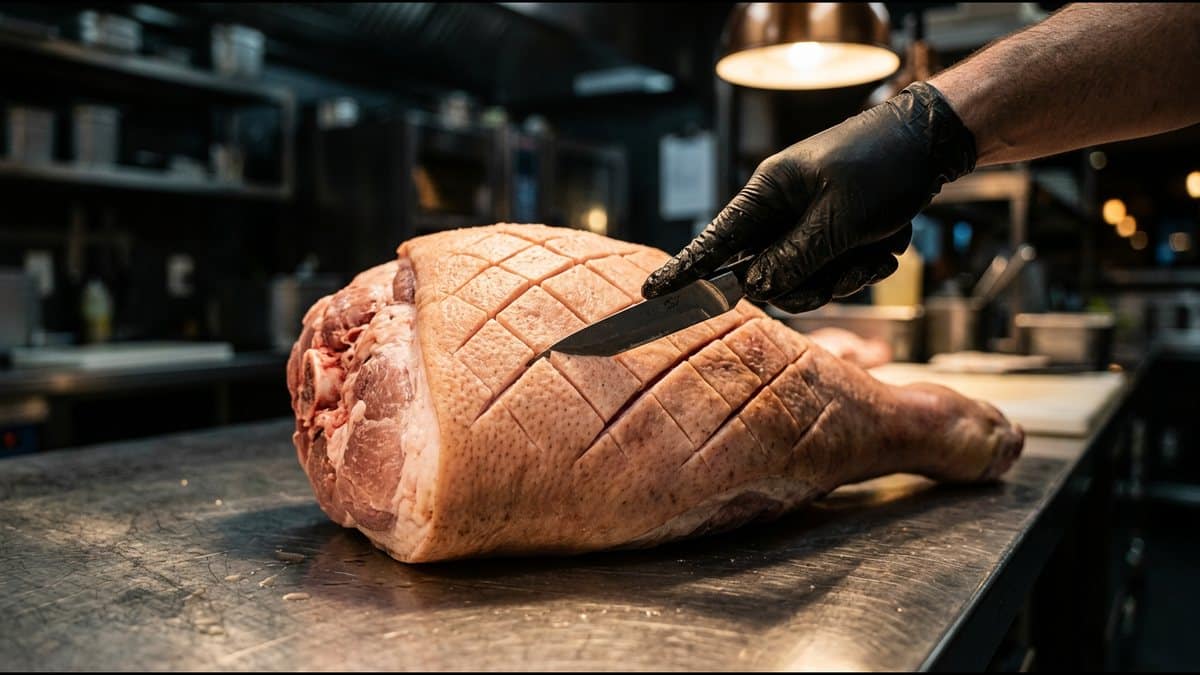
She scored the skin in diamonds an inch apart, slow and deliberate, through the skin and the soft white fat beneath it and not one hair into the meat, with the box cutter from the drawer because the knives were dull and she did not know where he kept the stone.
Scoring does two jobs. It opens the skin up so the rub and the smoke can reach the fat underneath, and it gives that fat somewhere to go once it starts to melt, so the skin draws tight and dry all night instead of lying there stewing in its own juices.
Salt and coarse pepper, heavy, with brown sugar and paprika worked down into every cut with her thumbs until the whole shoulder was glistening and spoken for. Then the fire: a chimney of lump charcoal in the firebox, two splits of hickory, and the vents the way the ledger said, a quarter open at the intake and wide open at the stack, so the Old Man could breathe out as hard as he liked.
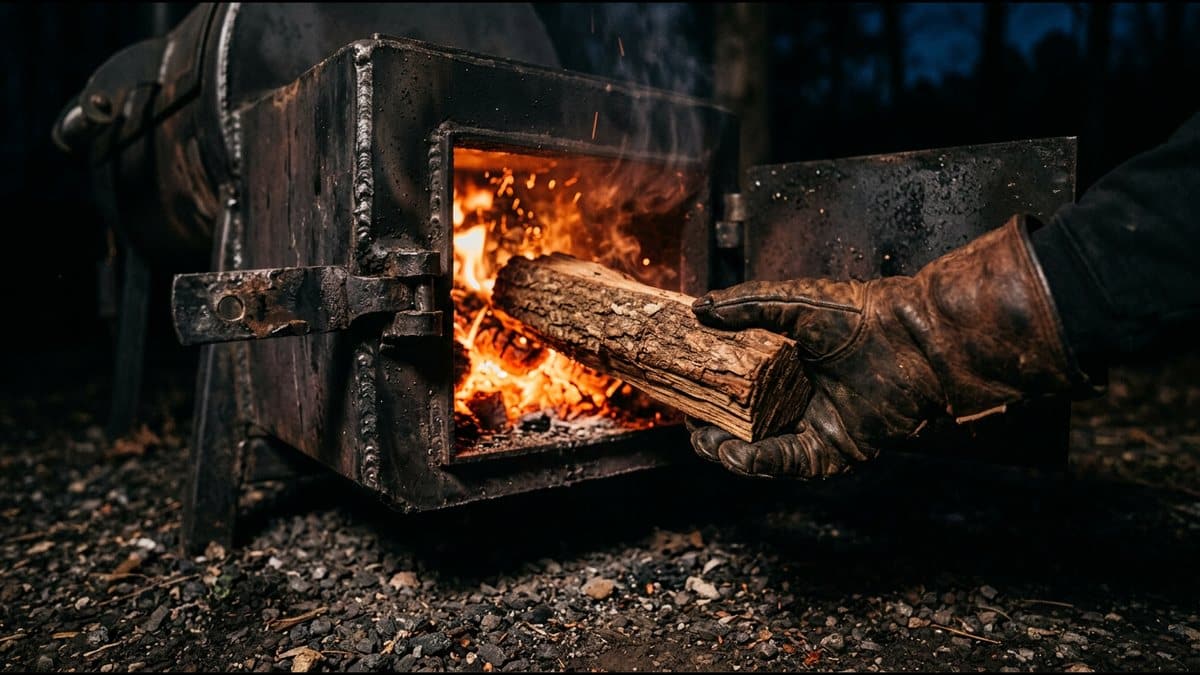
The Old Man took ninety minutes to come up to temperature, and the firebox door stuck shut on her twice along the way, the way an old thing does when an unfamiliar hand is on it.
Della“He never fixed that door in thirty years.”
Ruthie“He said it kept the wrong people out.”
The Man in the Bucket Truck
The shoulders went on at eleven at night, skin side up, bone side toward the heat, and lay there on the grate in the dark taking everything the fire gave them without one word of complaint. Two hundred and fifty degrees. One split of hickory every forty-five minutes, which she set an alarm for, and a pan of water underneath because she could not find a line in the ledger that told her not to.
At ten after two a white co-op bucket truck rolled onto the gravel with its amber lights still turning, and a man in a reflective vest climbed down, walked straight to the order window like he had done it a thousand times, and stopped dead when he saw who was standing behind it.
WesI am sorry. I heard. I saw smoke and I thought somebody had broken in.
DellaSomebody did. I have a key.
WesYou are the daughter.
DellaI am the daughter who is selling it. What did you want?
WesThe same thing I have wanted every Friday at two in the morning for eleven years.
His name was Wes Tolliver and he climbed power poles for the rural electric co-op on the overnight shift, which is to say he spent his whole working life going up things in the dark and knowing exactly where to put his hands. He looked at the thermometer on the lid, then at the firebox, then at the pan of water, and then, for a long second, at her.
WesHe never ran water in there.
DellaYou know a lot about my father’s pit.
WesI have been standing next to it at two in the morning since before you moved away.
Fourteen Hours and Not One Wrap
A picnic shoulder at two hundred and fifty degrees takes an hour and a half to an hour and three quarters a pound, which on an eight-pound shoulder is twelve to fourteen hours. Nobody makes it go faster without giving something up, and what it gives up is the whole reason anybody stays up for it.
At four in the morning both shoulders hit one hundred and sixty and stopped there, flushed and sweating under the lid. That is the stall: the meat sweats as it heats, the sweat cools it as fast as the fire warms it, and for three or four hours it holds out on principle while everything underneath is quietly giving in.
Della had the foil out on the side table before Wes said a word.
WesEarl never wrapped a picnic.
DellaIt has not moved in an hour.
WesIt is not supposed to move. It is supposed to make you wait. Wrap it now and that skin goes soft on you and you will be throwing it away at noon.
DellaYou do not even cook.
WesNo. I just stand here and listen to him tell me why.
She put the foil back. The shoulders sat at one sixty for three hours and twenty minutes, stubborn and glistening and completely unbothered, and then, a little after seven, with the sky over the grain elevator going gray, they gave up the fight all at once and started to climb.
Pulled at 203, and by Hand
One ninety-five. One ninety-nine. Two oh one. At two hundred and three the probe went into the thickest part of each shoulder like a hot knife into soft butter, no resistance anywhere, all the way to the handle, and the leg bone turned in its socket the moment she touched it, like it had been waiting all night for somebody to ask.
Safety is not the question by then. Pork is safe at one hundred and forty-five degrees with a three-minute rest. Everything after that is the collagen, the tough connective tissue that holds a shoulder rigid at one sixty-five, melting into gelatin somewhere between one ninety and two oh five. That surrender is what makes pulled pork pull.
She wrapped them in butcher paper then, only then, and laid them in an empty cooler under a towel for an hour, which was the one line in the ledger she had remembered without having to read it.
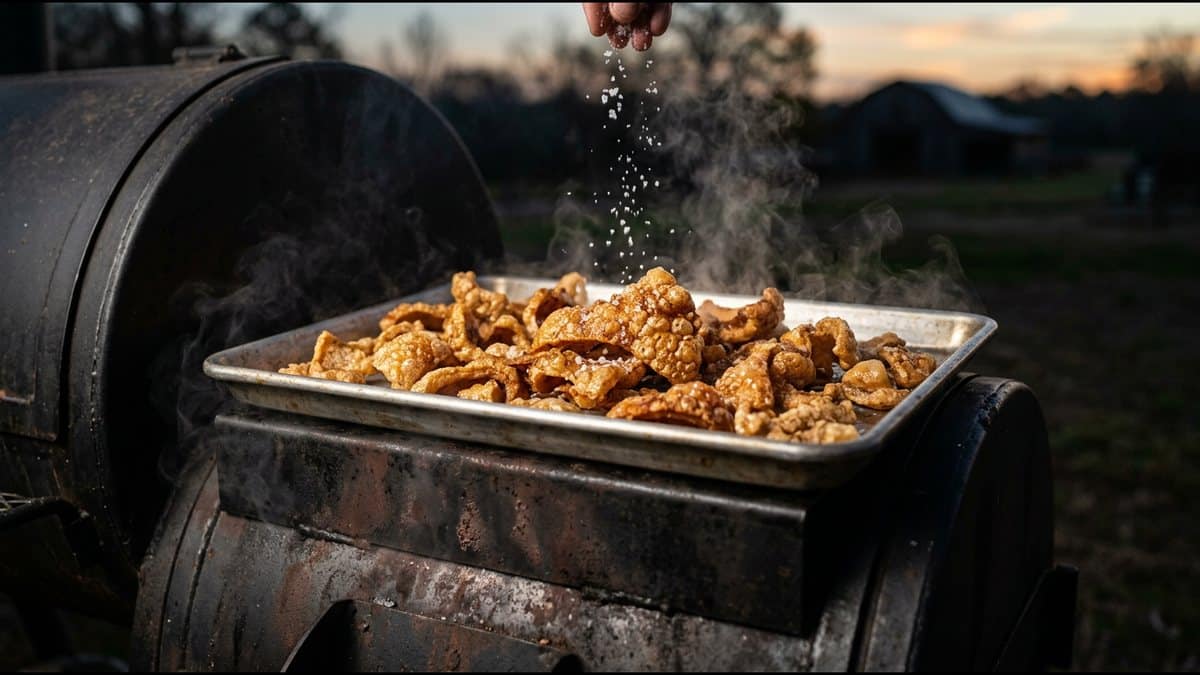
Then she peeled the skin off in one long piece, slid it onto a sheet pan and set it right back on the firebox, where it was hottest. Eight minutes later it was blistered and shattering and loud, crackling like it had something to say, and the sound of it brought Ruthie out of the stand in her coat.
Ruthie“That is the smell. That is exactly the smell.”
Della“Whose?”
Ruthie“His. Every Saturday morning for thirty years.”
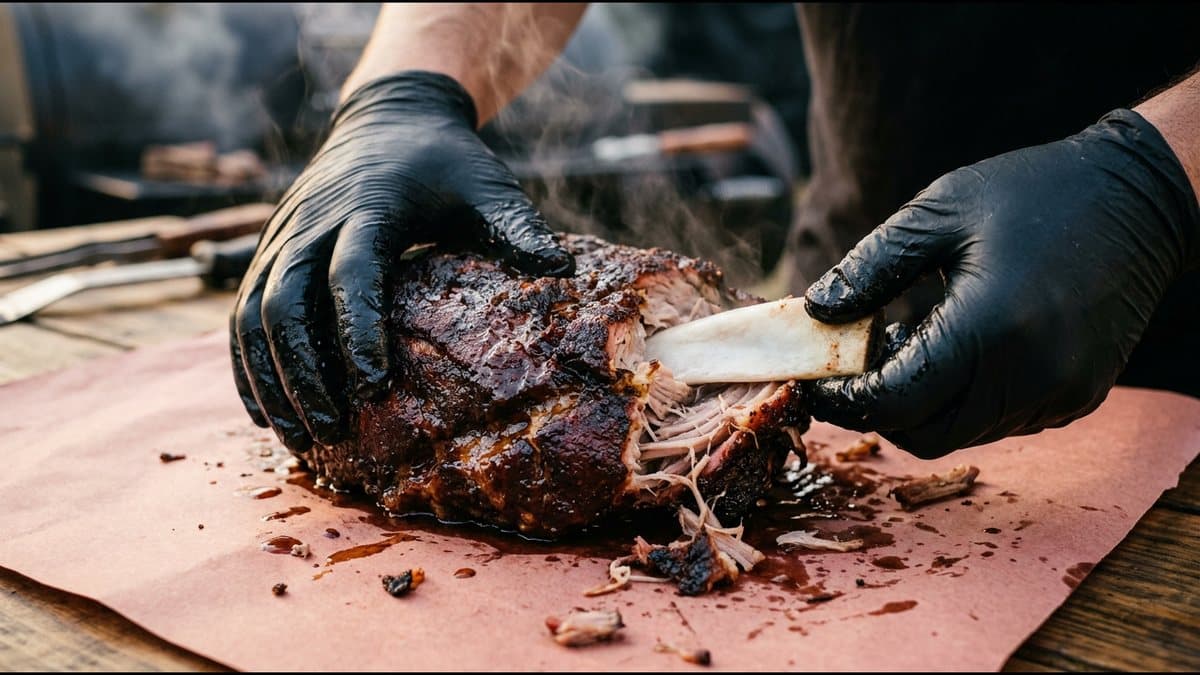
She pulled the meat by hand, in his gloves, the bone sliding out clean and willing, the dark bark and the pale, trembling interior tangled together the way the ledger said, with a little of the skin chopped back in so every bite had something to push against.
The Five Under the Ashtray
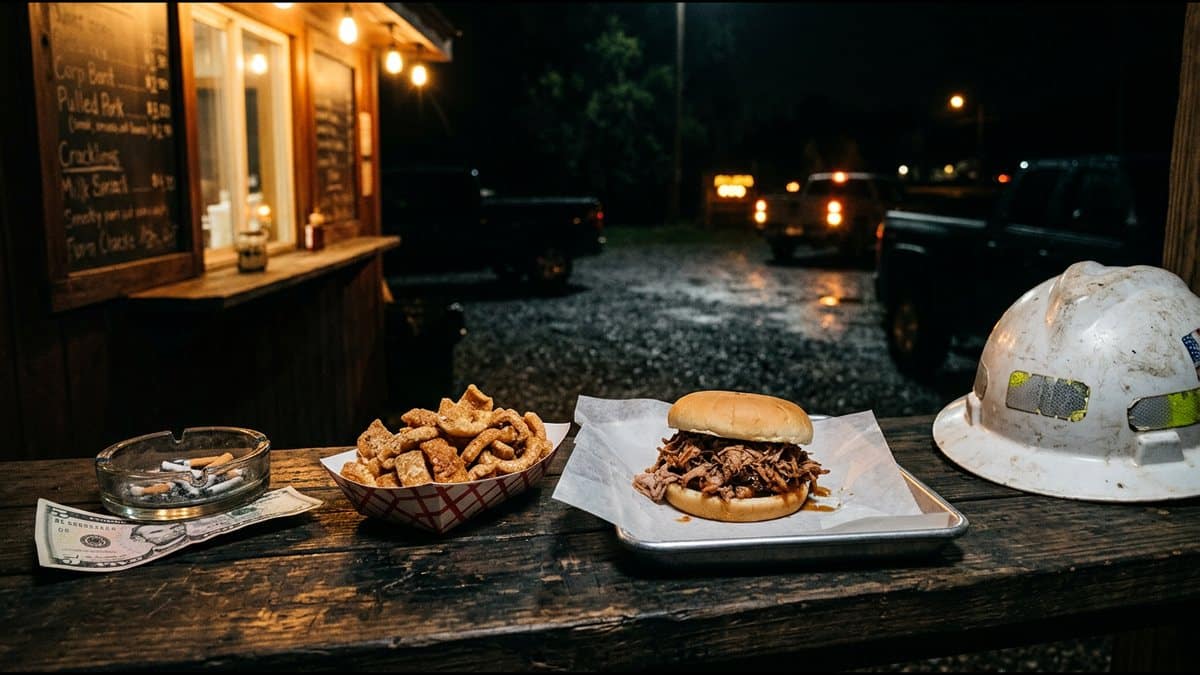
The first sandwich went to Wes, on a plain bun, with the vinegar sauce from the jug in the cooler and a handful of cracklings in a paper boat. He ate it standing at the window with his hard hat on the counter and his eyes half closed, and he did not say one word until it was gone.
WesThat is his.
DellaIt is his recipe.
WesNo. That is his. You did it the same.
He folded a five-dollar bill under the ashtray on the counter and drove off toward town with the amber lights still turning. Ruthie watched him go. So did Della, a good deal longer than she meant to.
RuthieYour father never once took that man’s money.
DellaWhy not?
RuthieAsk him. I only kept the books.
Della did not call the realtor that morning. She wrote OPEN FRIDAY on a piece of cardboard, taped it to the window, and went looking for the sharpening stone.
The Picnic, Explained Once
It is worth knowing exactly why the bottom half of a shoulder is the better cook, because the meat case is going to try to talk you out of it.
The picnic works harder than the butt when the animal is alive, so it carries more connective tissue. That is a problem in a hot pan and a gift on a pit, because every bit of collagen that melts overnight becomes moisture and body in the finished meat. A picnic pulled at two oh three is wetter than a butt pulled at the same temperature.
It also carries the skin. Smoked at two fifty, skin will not crisp on its own; it turns leathery and dark and nobody eats it. Lifted off at the end and put over high heat for five to ten minutes, it turns into cracklings that people will drive out to a county road for.
And it is cheaper. Picnics sell for less per pound than butts almost everywhere, because most shoppers do not know what to do with one. The yield is a little lower, around half the raw weight once the bone and skin come out, so plan on an eight-pound picnic feeding twelve to fourteen people on sandwiches.
DellaHe wrote nothing else to it.
WesHe was lying. He just did not want anybody else to know there was more.
What to Put Next to It
A vinegar sauce, thin and sharp, with red pepper flakes and a little sugar, splashed on at the table and not before. Fat and smoke want something with a bite, and a thick sweet sauce only makes a rich shoulder richer.
Slaw on the sandwich, not beside it. Cheap soft buns, because a good roll fights the meat. Pickles. The cracklings in a paper boat, salted while they are still hot.
Leftover shoulder keeps four days covered in the refrigerator and three months vacuum sealed in the freezer. Reheat it in a covered pan with a splash of the vinegar sauce and a spoonful of water, low, until it steams. Never the microwave, which tightens it into string.
Something that sells before midnight, a chop as thick as a paperback, and a pink center nobody on County Road 9 trusts.
All the chaptersHow long does it take to smoke a pork shoulder?
About 1.5 to 1.75 hours per pound at 250°F, so 12 to 14 hours for an 8-pound shoulder. Pull it at 200 to 205°F internal, when a probe slides in with no resistance, then rest it wrapped in a cooler for an hour before pulling. Expect a stall around 150 to 165°F that can last three hours or more.
| Stage | Pit | Internal | Time |
|---|---|---|---|
| Score the skin, rub it | — | — | 20 min |
| On, skin side up | 250°F | fridge cold | — |
| Bark sets, color comes | 250°F | about 140°F | 4–5 hr |
| The stall, do not wrap | 250°F | 150–165°F | 3–4 hr |
| Climbing again | 250°F | 185–195°F | 2–3 hr |
| Off, probe like butter | — | 200–205°F | 12–14 hr total |
| Rest in a cooler | — | — | 1 hr |
| Skin over high heat | 400°F or more | — | 5–10 min |
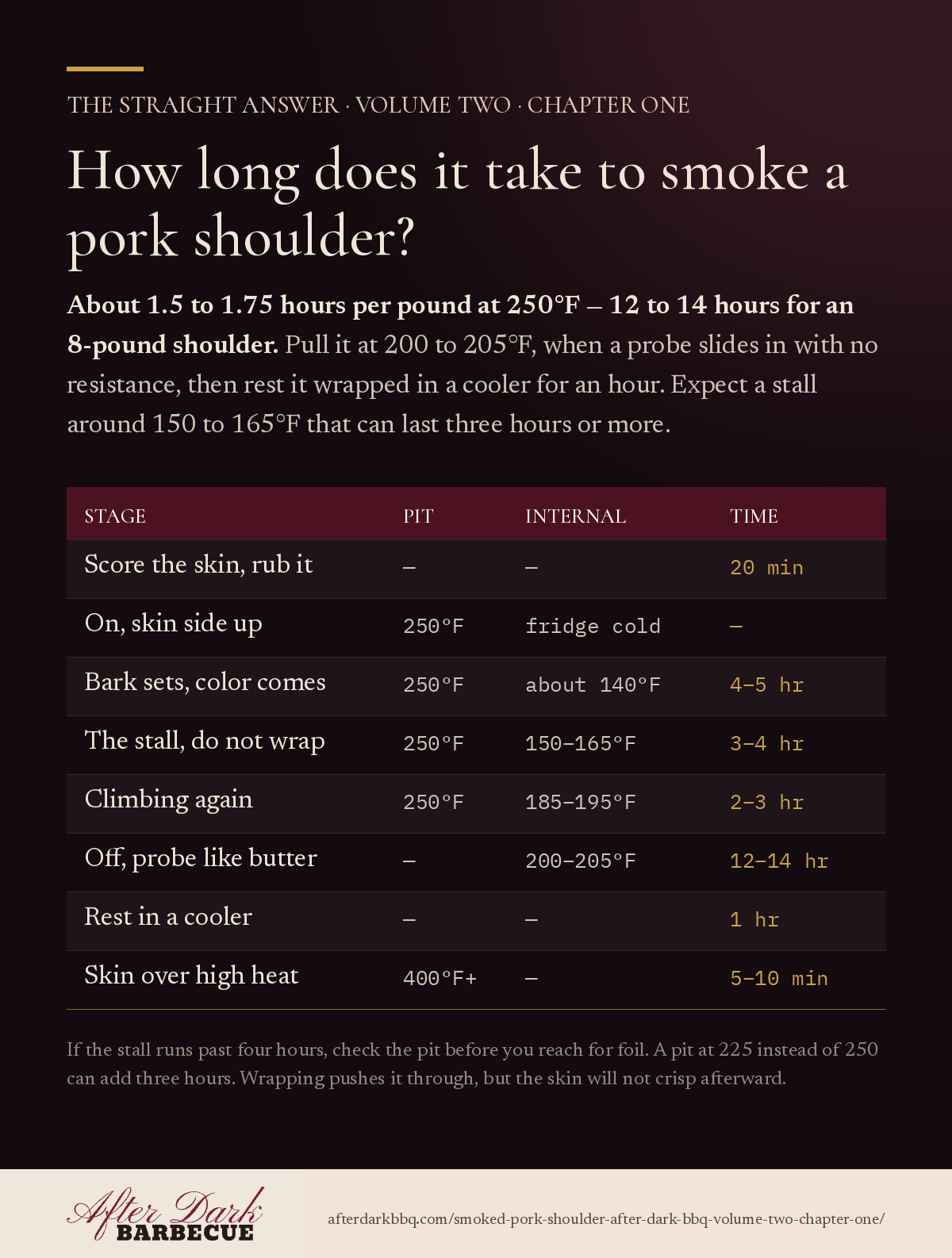
If the stall runs past four hours, check your pit temperature before you reach for foil. A pit running at 225 instead of 250 can add three hours to a shoulder. Wrapping will push it through, but the skin will not crisp afterward.
Recipe: The Short Version
Cut: one whole skin-on picnic shoulder, 7 to 9 pounds
Prep: score the skin in 1-inch diamonds through the fat but not the meat; rub with salt, coarse pepper, brown sugar and paprika
Smoke: 250°F, hickory, skin side up
Time: 1.5 to 1.75 hours per pound, about 12 to 14 hours
Pull: 200 to 205°F, when a probe goes in like butter
Rest: 1 hour wrapped in butcher paper in a dry cooler
Skin: lift it off whole and crisp it over high heat for 5 to 10 minutes
Next Friday: the stand needs something that sells before midnight, and the ledger has a page that says salt them Thursday.
The Hard Numbers, Laid Out Bare
If you are cooking the top half instead, how long to smoke a pork butt has the chart and the stage table with no story attached, and Volume One, Chapter Three cooks four of them in one night.
Sources
The 145°F minimum with a three-minute rest for whole cuts of pork is from the USDA Food Safety and Inspection Service Safe Minimum Internal Temperature Chart. The 1.5 to 1.75 hours per pound, the 203°F pull and the crackling method are After Dark BBQ’s own, measured at the grate and stated as ours rather than dressed up as research. Read October 2026.
Volume Two · a new chapter every Friday.All the chapters · Write to Dutch

Leave a Reply