Chapter Twenty · Wings at 250°, finished hot · Two hours
Chapter Twenty
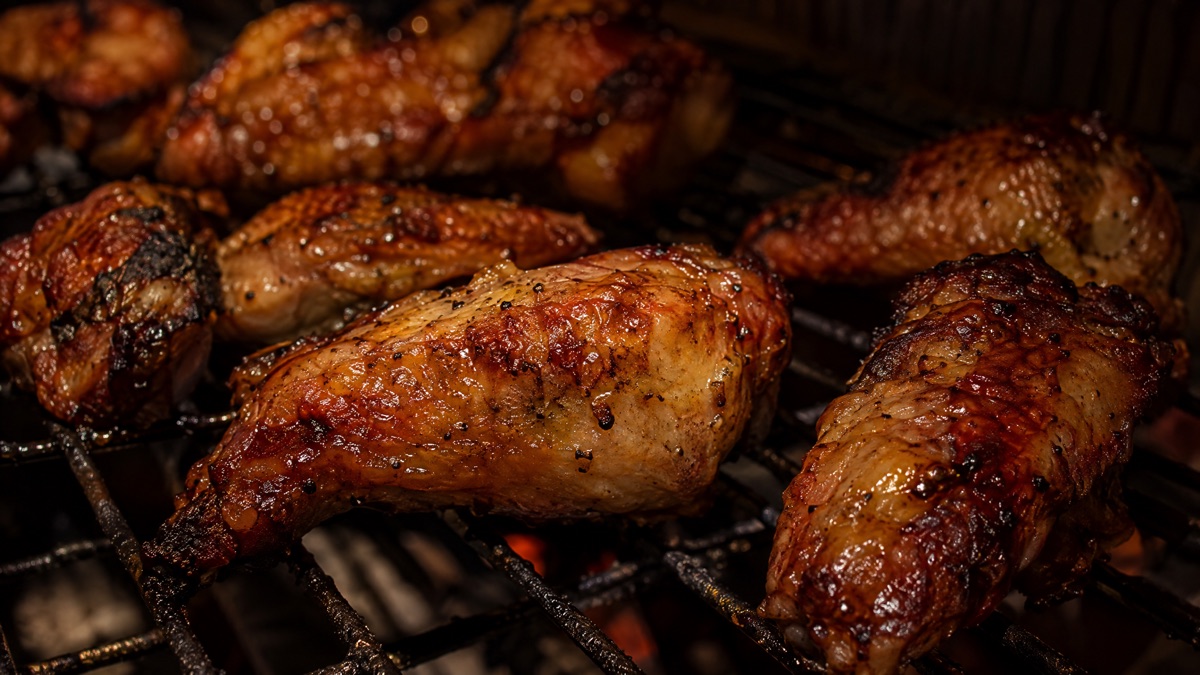
NOBODY WENT HOMEPAST MIDNIGHTTHE LAST CAR LEFT AT THREE
Heat Somebody is going to get burned
Chapter twenty of After Dark BBQ: wings at 250° and finished hot, two hours for skin that crisps at two in the morning.
The last car left at three. The fire was still warm at five.
Nobody Was Going Home
It was past midnight and the fire was still good and nobody had made a move toward their keys.
LenaThere are two dozen wings in the fridge behind the beer.
HenryThey will be soft. They are always soft.
LenaThen do it the other way for once.
Mara came through the gate a little before one, first and alone, the way she had in March, with something warm under foil and no explanation for where she had been all summer. Nobody asked for one. She set it down on the stainless table, stood close enough to the firebox to let it have a good long look at her, and took the third chair like it had been keeping itself warm for her since spring. Lena moved her coat off it without being told, and did not ask where a third chair had come from.
Dry, Then Dry Again
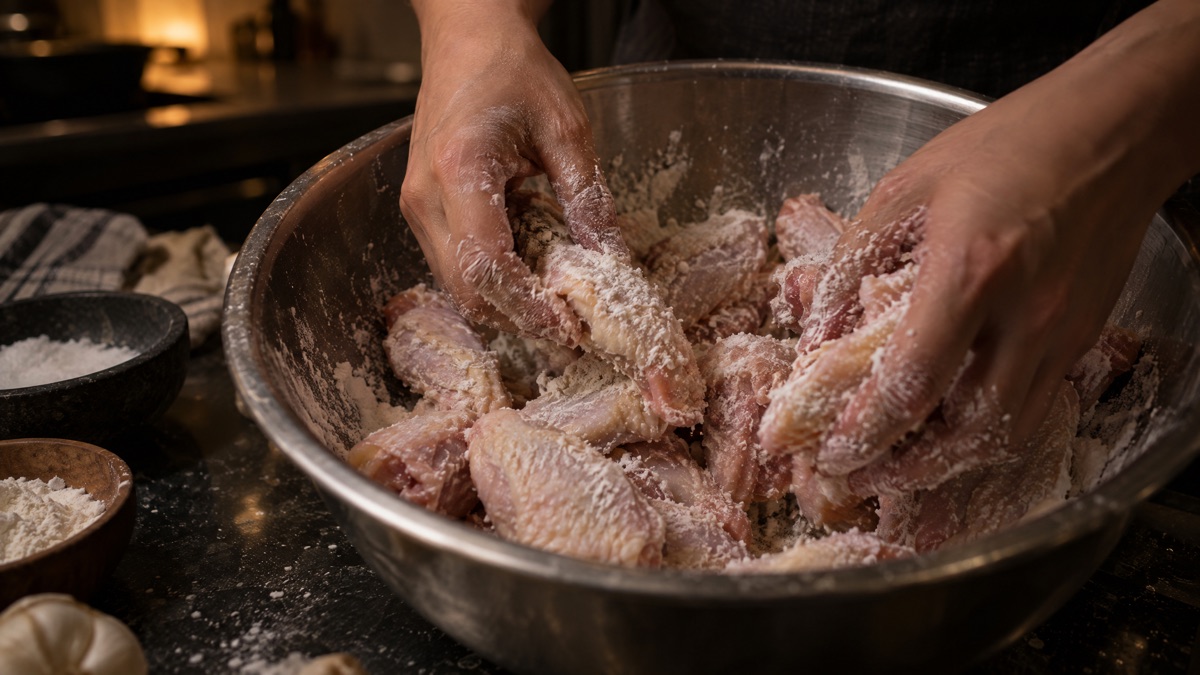
Thawed, separated into flats and drums, and patted with paper towel until the towel came away clean and dry. Then a bowl and the trick: a tablespoon of baking powder and a tablespoon of kosher salt tossed through two dozen wings until every piece is dusted all over and not one of them looks wet.
Aluminum-free baking powder, not baking soda. Soda is bitter and will tell everybody what you did. Powder raises the pH of the skin, which speeds the browning reaction and makes the surface dry into a fine blistered crust instead of a rubbery sheet.
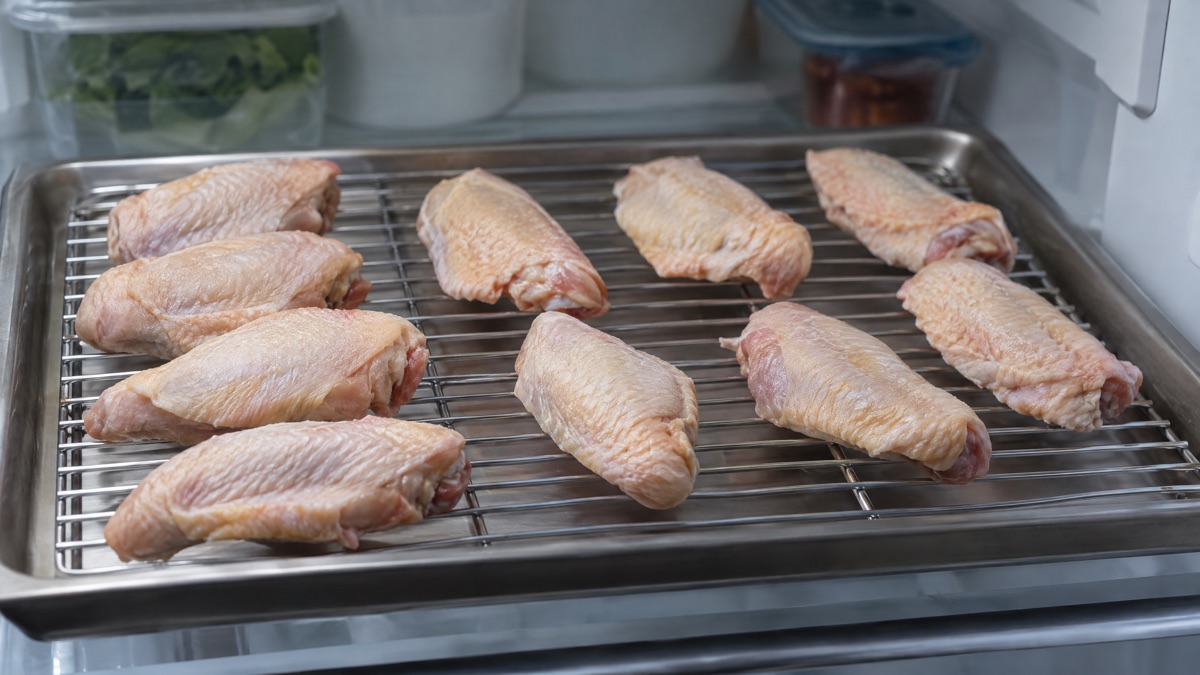
On a rack in the refrigerator, uncovered, nothing over them, an hour at the absolute minimum. Overnight if a man planned ahead, which at half past midnight nobody had.
Twenty chapters and we finish with the cheapest thing in the case. That is on purpose. A wing costs almost nothing and it is the hardest skin in barbecue to get right, because there is more skin per ounce of meat on a wing than on anything else a man will ever put on a pit.
You can read this one for how late they stayed up. I read it for the baking powder, which is the only trick in this story that sounds like a gimmick and is not.
DutchHenry“An hour.”
Lena“You have waited twelve hours for a brisket. You can wait one for these.”
Technique Spotlight: The Two-Temperature Cook
Smoke at 250°F for ninety minutes to get flavor and render the fat under the skin, then move them hot — 400°F or straight over the coals — for the last ten to fifteen minutes to crisp. One temperature will not do both jobs. Low the whole way gives you smoke and rubber. Hot the whole way gives you crisp and nothing behind it.
Ninety Minutes Low, Ten Minutes Hot
Two hundred and fifty degrees, cherry and a little pecan, wings spaced out on the grate so the air can get between them. Ninety minutes, one turn at the halfway mark and no more handling than that.
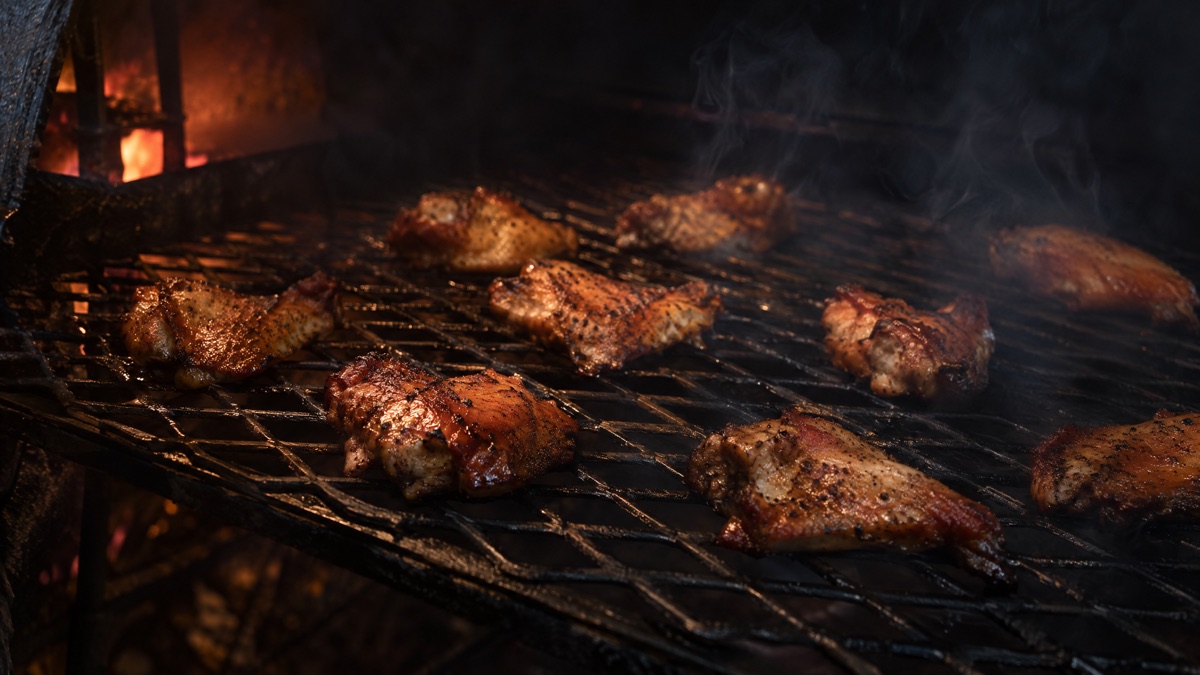
The fat under the skin renders in that window. It is the same logic as everything else in this story: smoke sticks to fat, and the fat has to have somewhere to go or it sits under the skin and holds it soft.
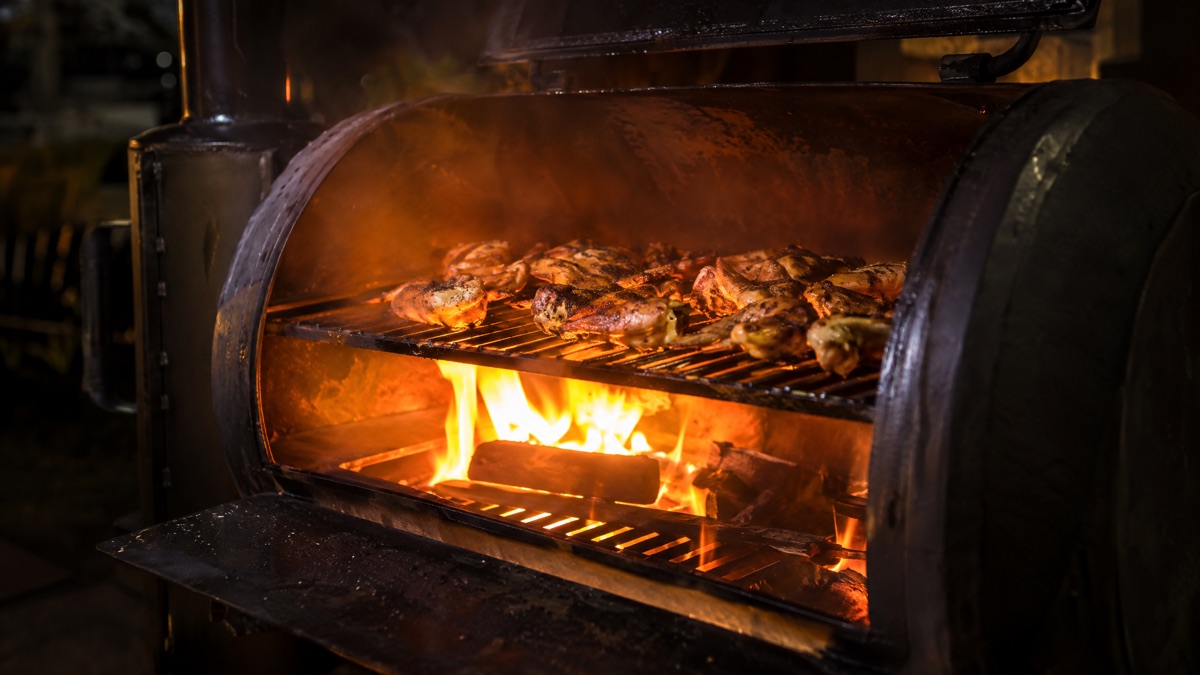
At ninety minutes they read about one hundred and seventy-five and the skin is dry and tan and still not crisp. That is the moment most men lose their nerve and sauce them.
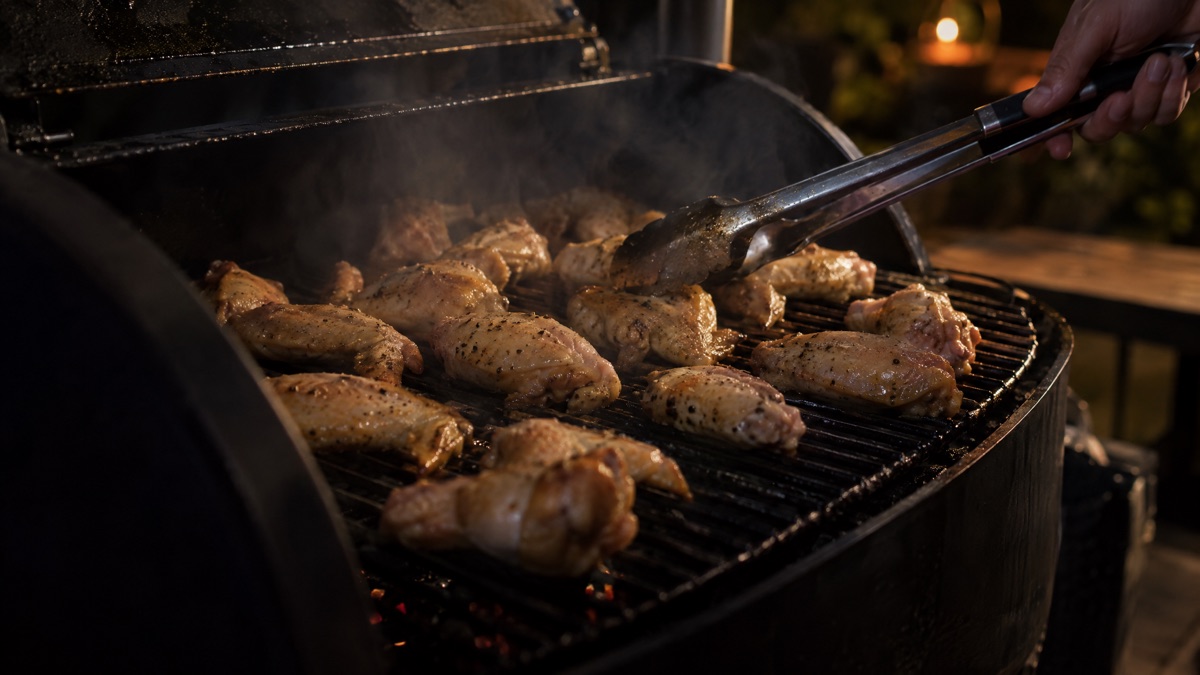
Instead he opened the vents all the way, let the pit run up to four hundred, and gave them twelve more minutes, turning them once. The skin went from tan to blistered, and the fat that was left came up to the surface and fried it from the outside.
Sauce at the Table, Not on the Pit
He pulled them at one hundred and ninety-five internal, which is a long way past the safe number and exactly where a wing wants to be. Chicken is safe at one sixty-five. A wing at one sixty-five is safe and chewy, because the connective tissue in all those small joints has not let go yet. Take wings to one ninety and up. The meat comes off the bone clean and the texture is a different thing entirely.
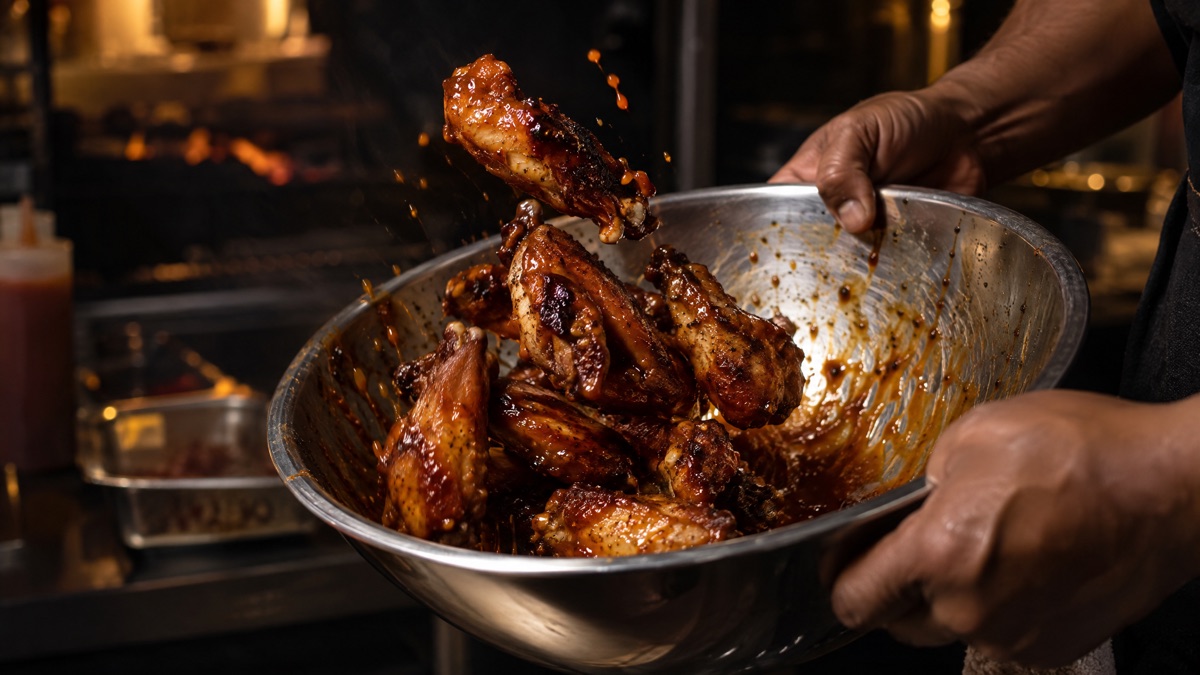
Sauce goes in a bowl. Wings go into the bowl. Toss them, get them good and wet, and serve them right then. Sauce brushed on at the pit turns skin a man spent two hours crisping back into wet skin inside of four minutes.
LenaThat is the sound I wanted.
HenryIt only took twenty chapters.
LenaAnd you finally stopped opening the lid to check.
The last car left at three. Mara went after it, the long way, down the alley instead of through the gate, and stopped at the fence where she had stood the first night she came to see what she was smelling. She breathed it in one more time, slow and deep, like a woman taking some of it home with her.
MaraSame time next year.
HenrySame time Friday.
MaraThen I am bringing the corned beef.
Lena did not leave. She had not left on a Friday since the salmon, and nobody in the yard had said one word about it, which is how everything that mattered in that yard got settled.
Henry banked the fire low and slow, the way a man tucks in something he fully intends to come back to, folded one chair and leaned it against the workshop wall. He left the other one where it was, close enough to his that the arms touched.
LenaWhen did you buy a third chair.
HenryAugust.
LenaYou never said.
HenrySome things you leave alone and let them finish.
The fire was still warm at five, which is the only honest way to end a story about barbecue.
Why Baking Powder Is Not a Gimmick
He had read about it for years and never done it, on the grounds that it sounded like a shortcut and he does not trust shortcuts.
Here is what it actually does. Chicken skin browns through the Maillard reaction, and that reaction runs faster in an alkaline environment. Baking powder is alkaline. Raise the pH of the skin and it browns at a lower temperature and in less time, which matters enormously on a pit that is only running two hundred and fifty degrees for most of the cook.
It does a second thing as well. The powder reacts with the moisture on the surface and releases carbon dioxide, which leaves microscopic bubbles in the skin as it dries. The surface area goes up, the skin blisters instead of sheeting, and it crisps the way a fried wing does.
Aluminum-free, and baking powder, never soda. Soda is far more alkaline, it does not have the acid component that makes powder self-limiting, and it will leave a metallic soapy taste that no sauce covers.
One tablespoon to two dozen wings. Doubling it does not double the thrill; it makes them taste like the box.
Flats and Drums, and the Argument About Which
Two dozen wings is roughly twelve of each, and every table has one person who only takes flats and one who claims to prefer drums so the flats survive.
They do not cook identically. A drum is thicker, rounder and has one bone; it takes about ten minutes longer and holds more heat once it is off. A flat is thinner with two bones and more skin per ounce of meat, which is why it crisps better and why it goes first.
If you buy whole wings and break them down yourself — two cuts through the joints with a heavy knife, and the tip goes in the stock bag — you get both, cheaper, and you can put the drums on ten minutes ahead.
Do not throw away the tips. Six wing tips and an onion make a cup of stock strong enough to matter, and they are already smoked.
Henry“You took four flats.”
Lena“I took five. You were counting wrong on purpose.”
Twenty Chapters, One Rule
It is worth saying at the end of the first twenty what all of them had in common, because it was not a temperature and it was not a wood.
Every chapter turned on waiting. The overnight cure on the salmon. The hour of drying on the sausage casings. The twelve hours of a dry brine on a chicken. The three hours bare before the belly ever saw a pan. The ten minutes on a board that turn a hot sausage into one that snaps. Even the tri-tip, the one cook that punishes patience in the fire, asks for salt the night before.
The fire is the easy part. Any man can build a fire. What separates the pits people drive across a county for is that somebody started a day earlier than he had to, for a payoff nobody would have noticed if he had not.
That is the whole story, and it took twenty Fridays to say it.
LenaSo what is next.
HenrySomething that takes all night.
LenaThen I am not going anywhere.
Sauce, and the Four That Actually Work
A wing that has spent two hours in the smoke already has plenty going on, which changes what the sauce is for. It is no longer carrying the dish. It is contrast.
Buffalo — equal parts hot sauce and melted butter, whisked — works because the vinegar cuts the smoke and the butter carries it. Make it in the bowl you are going to toss in.
Alabama white — mayonnaise, cider vinegar, black pepper, horseradish — is the regional answer to exactly this problem, invented for smoked chicken, and it is the best of the four.
Hot honey and butter, which is the same architecture as buffalo with the heat and sweetness swapped around.
A dry finish — more rub, a squeeze of lemon, nothing wet on them at all — keeps every bit of the crisp a man worked for, and it is what a pitmaster eats standing alone at his own pit.
Whatever it is: warm, in a metal bowl, wings in, three quick tosses, out. Sauce that sits on a wing for more than about two minutes before it is eaten has already begun softening the skin.
The Hot Finish, Three Ways
The last fifteen minutes need real heat and there is more than one way to find it.
Open the vents on the same pit. Simplest, and it works on an offset or a kettle. Takes five to ten minutes to climb, so start opening things up before the ninety-minute mark.
Move them over the coals. Fastest, and the most dangerous, because rendered chicken fat dripping onto live coals gets things flaring up fast. Stand there. Turn them constantly. Four minutes total, and do not answer the phone.
Take them inside to a 425°F oven. No romance in it at all, and it still gets the job done perfectly. Ten minutes on a rack over a sheet pan. On a rainy night this is the correct answer and nobody at the table will be able to tell.
An air fryer, for three or four minutes, does the same thing and does it well. Nobody has to know that either.
The End
End of Volume One · Twenty Long Nights
Henry, Lena and Mara will be back in this yard. Volume Two lights somebody else’s fire.
Write to DutchHow long do you smoke chicken wings?
Ninety minutes at 250°F, then ten to fifteen minutes at 400°F or over direct coals, pulled around 190 to 195°F internal. Toss in baking powder and salt an hour ahead and dry them uncovered in the refrigerator.
| Stage | Pit | Internal | Time |
|---|---|---|---|
| Pat dry, toss with baking powder and salt | — | — | 10 min |
| Uncovered on a rack, refrigerated | refrigerated | — | 1–12 hr |
| On, spaced apart | 250°F | — | — |
| Turn once | 250°F | about 150°F | 45 min |
| Skin dry, fat rendered | 250°F | about 175°F | 1.5 hr |
| Vents open, run it hot | 400°F | — | 10–15 min |
| Off, skin blistered | — | 190–195°F | about 2 hr total |
| Toss in sauce in a bowl | — | — | 1 min |
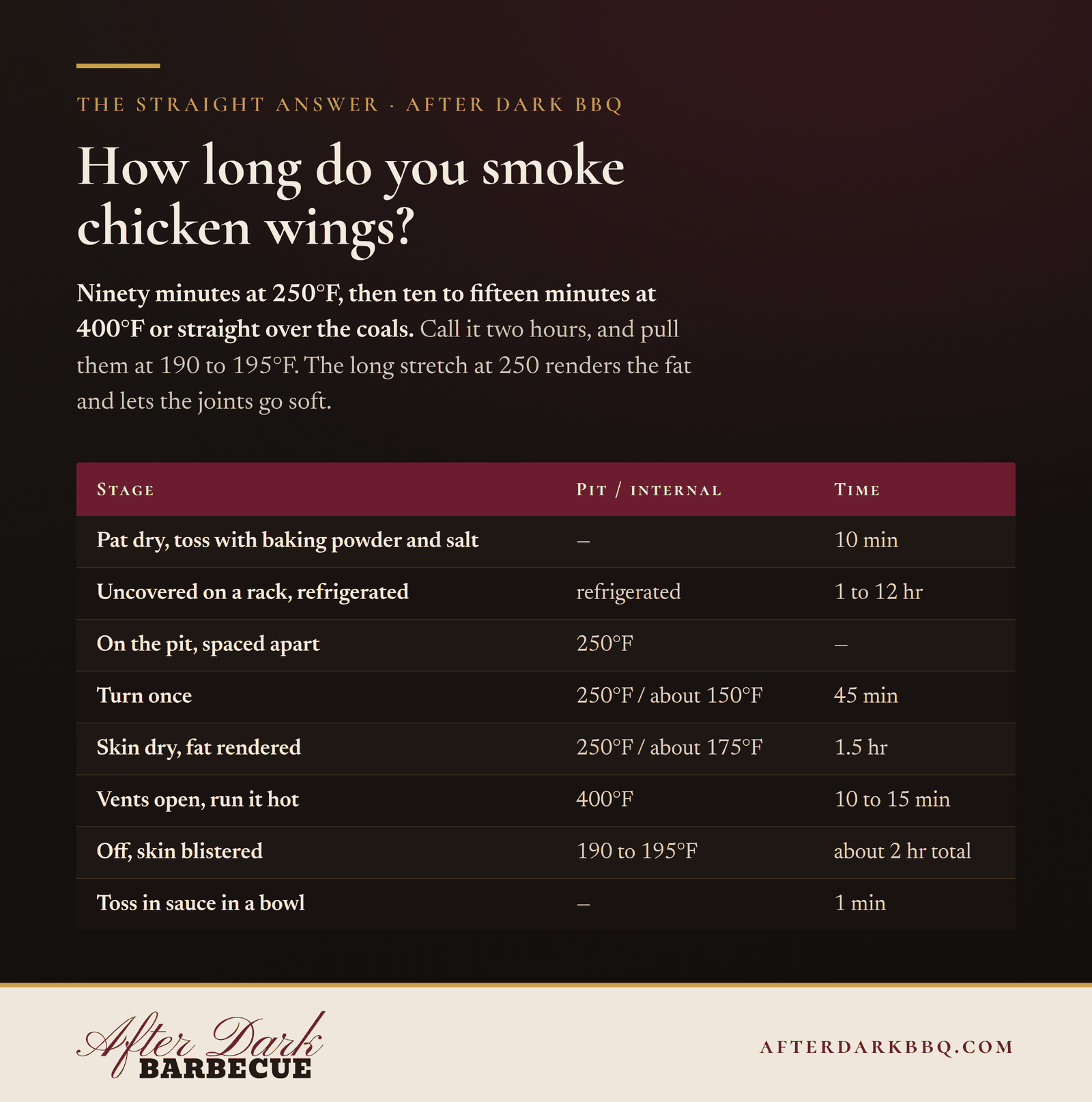
165°F is the safety number for chicken and the wrong number for wings. The joints and connective tissue need 190°F and up, and unlike a breast, a wing does not dry out getting there.
Recipe: The Short Version
Wings: 24 pieces, separated, patted bone dry.
Toss: 1 tbsp aluminum-free baking powder and 1 tbsp kosher salt.
Dry: uncovered on a rack in the refrigerator, 1 hour minimum, overnight is better.
Smoke: 250°F, cherry and pecan, 90 minutes, one turn.
Crisp: 400°F or direct coals, 10 to 15 minutes.
Pull: 190 to 195°F internal.
Sauce: in a bowl, at the table, never on the pit.
That is the first twenty. The letters keep coming on Tuesdays, and there is always another Friday.
The Hard Numbers, Laid Out Bare
How long to smoke chicken wings — the chart, the stage table and the questions people actually ask, with no story attached.
Sources
The 165°F safe minimum internal temperature for poultry is from the USDA Food Safety and Inspection Service Safe Minimum Internal Temperature Chart. The 40 to 140°F range and the two hour limit out of refrigeration are from the FSIS Danger Zone (40°F to 140°F) fact sheet. The 190 to 195°F finish, which is far past safe and is entirely about rendering the skin, the baking powder and the hot finish are After Dark BBQ’s own, measured at the grate and stated as ours rather than dressed up as research. Read September 2026.
Volume One, complete. Volume Two, a new chapter every Friday.All the chapters · Write to Dutch

Leave a Reply