Chapter Nineteen · Tri-tip at 225°, seared hot · Ninety minutes
Chapter Nineteen
HE COULD NOT STAND STILLNINETY MINUTESSHE TOOK THE FIRST SLICE
Heat Somebody is going to get burned
Chapter nineteen of After Dark BBQ: tri-tip at 225° then seared hot, ninety minutes start to finish and still rare in the middle.
The one cook in this story that punishes a man for taking his time.
A Cut That Does Not Wait for You
It came out of the paper as a two-and-a-half-pound triangle with a fat cap on one side and a shape that does not look like anything else in the case.
LenaWhat time do we eat.
HenryIt goes on at six.
LenaThen we eat at eight. That is not a long enough night for you and I can see it on your face.
He is a brisket man, and a brisket man handed a ninety-minute cook does not know where to put his hands.
Salt Early, Trim Almost Nothing
Salt it the night before if you can, uncovered on a rack, the same way as the chicken. Four hours is enough. Forty minutes is not — salt applied in the last hour sits on the surface and pulls water to it, and you go on the pit wet.
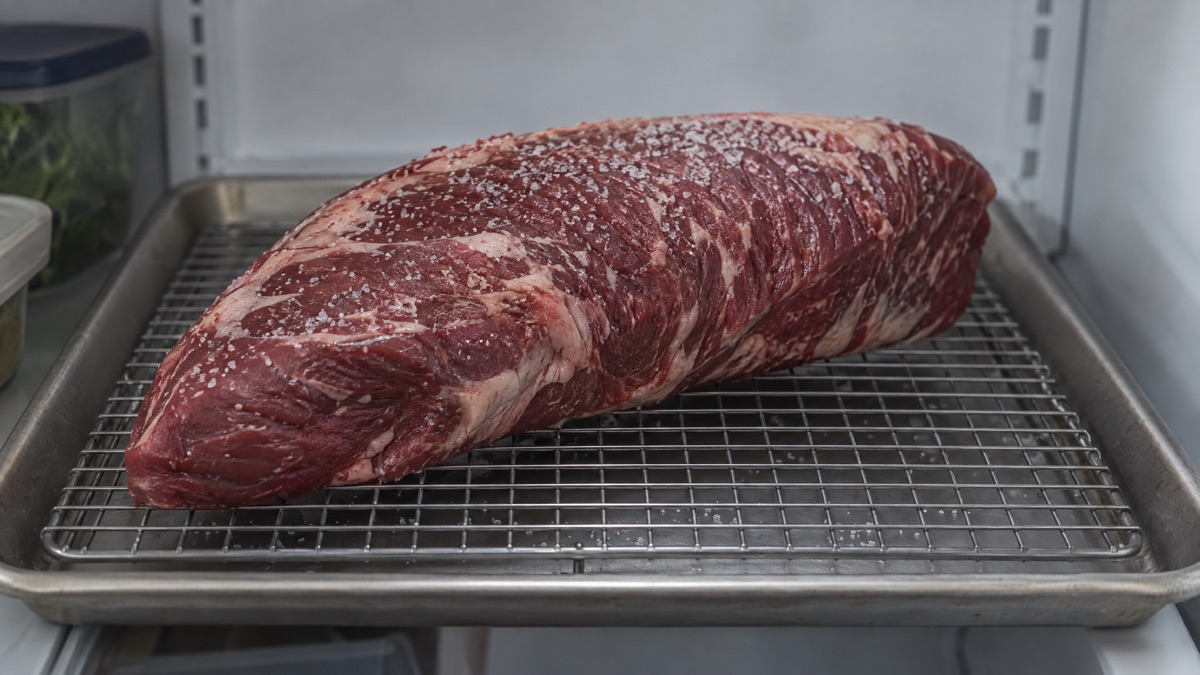
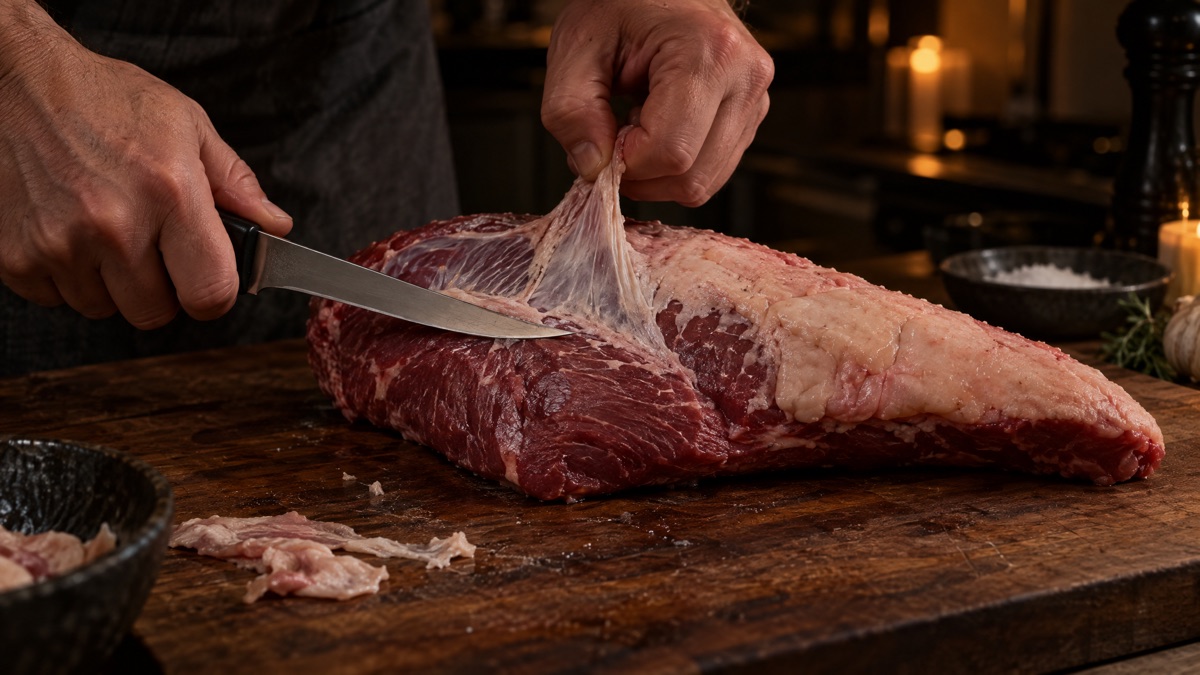
Leave the fat cap on. It is thin on a tri-tip and it will melt away in ninety minutes, and it is the only protection this cut has. Trim the silverskin on the underside, which will not render and turns to string.
Eighteen chapters of telling a man to wait, and here is the one where waiting ruins it. A tri-tip is lean, it has no collagen worth breaking down, and every extra ten degrees past medium rare costs him something he is not getting back.
You can read this one for a man who could not stand still. I read it for the carve, because a tri-tip has two grains running in different directions and most men go straight through both of them without ever looking.
DutchCoarse pepper and garlic and nothing sweet. This one likes it rough. Sugar on a cook that ends with a hot sear is a plan to make something black.
Technique Spotlight: Reverse Sear, and Why This Cut Needs It
Take it low and slow until the middle is almost there, then finish it hot and fast. Searing first and then smoking gives you a gray band under the crust, because the meat spends the whole cook climbing through the temperature that makes it gray. Do it backwards: 225°F to an internal of 120°F, then straight over the coals for ninety seconds a side.
Ninety Minutes, and Then Ninety Seconds
Two hundred and twenty-five degrees, oak or a little hickory, fat cap up. He probed it at forty-five minutes and it read ninety-five. At seventy-five minutes it read one hundred and eighteen and he took it off, which is three degrees earlier than he wanted to and exactly right.
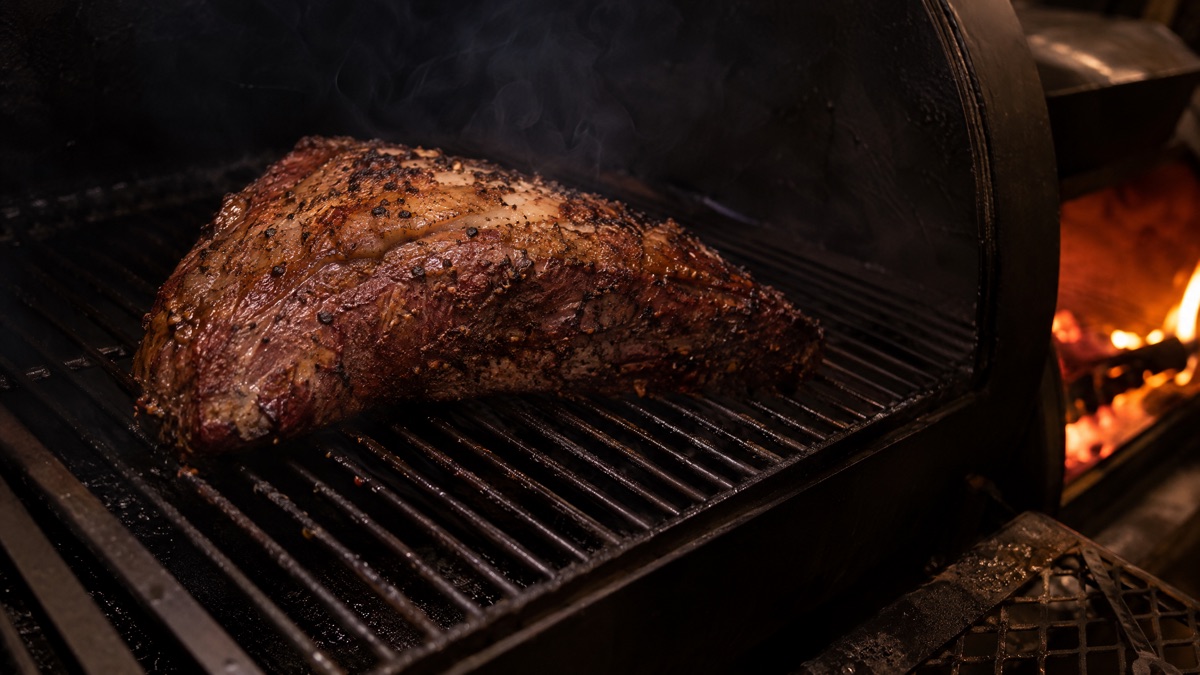
Then the fire. Coals raked into a pile, grate down low, and the tri-tip laid directly over it. Ninety seconds a side, maybe two minutes on the thick end, until the crust is dark brown and dry. That sear adds about ten degrees, and those ten degrees are the whole reason he pulled at one eighteen.
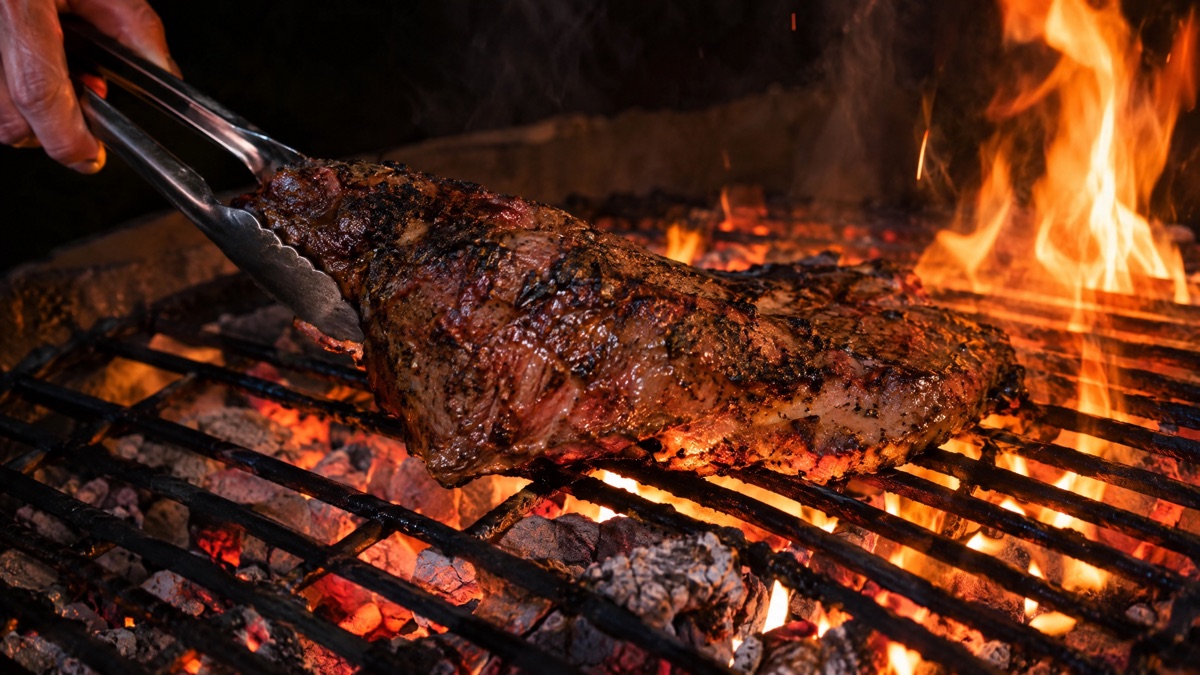
One hundred and thirty to one hundred and thirty-five after the sear is medium rare, which is what this cut is for. One forty-five with a three-minute rest is the USDA line, and medium. One fifty is a mistake with a nice bark on it.
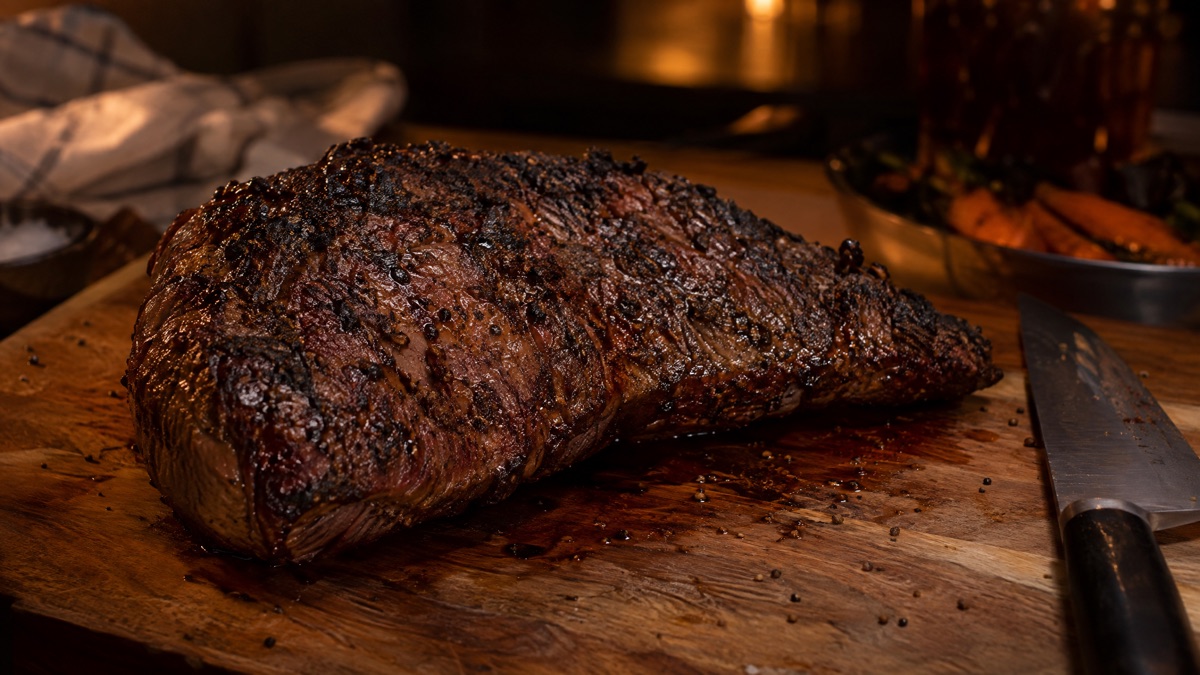
Lena“That was fast.”
Henry“I did not like it.”
Lena“You will like the eating part.”
Two Grains, One Knife
Ten minutes rest and not one minute more. A cut this size loses more to cooling than it gains from being made to wait.
Then the part that separates men who have actually had one from men who have only read about it. A tri-tip is a triangle because two muscles meet inside it, and their grains run at roughly a right angle to each other. Slice it straight down the length and half the plate is tender and half of it is rope.
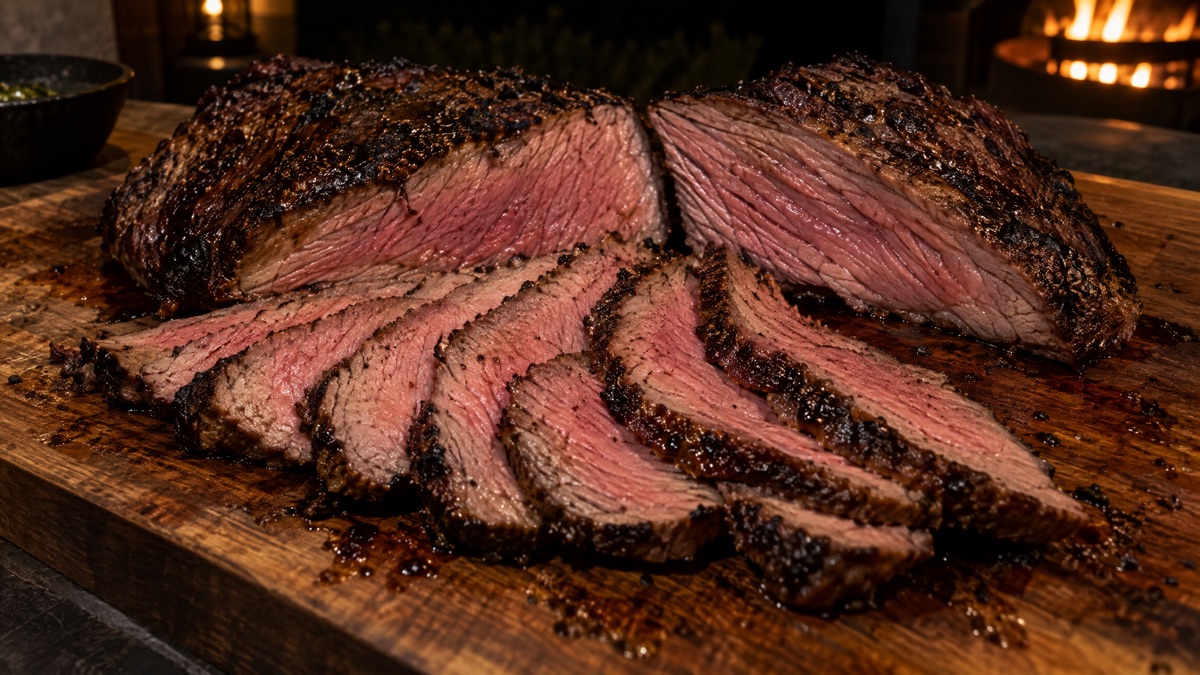
Cut the triangle in two at the point where the grain changes — a man can see it on the surface if he looks before he starts cutting — then turn each piece and slice each one across its own grain, thin, on a slight bias.
She got the first slice off the thick end, rare in the middle with a quarter inch of dark crust and a rim of rendered cap, and did not offer the second one to anybody.
Where the Cut Comes From
The tri-tip is the bottom corner of the sirloin, and for most of American butchery history it was ground into hamburger.
Santa Maria, California kept it whole, seasoned it with salt, pepper and garlic, and cooked it over red oak coals at a hundred community barbecues a year until it became a regional institution. That is why the traditional seasoning is three ingredients: it was never a recipe, it was what was on the table.
The rest of the country found it about twenty years ago, which is why your grandfather has never heard of it and your butcher may still call it a bottom sirloin roast or a triangle steak.
It costs a fraction of what a ribeye does and eats like a better steak than most, and the entire reason is that almost nobody knows what to do with it. Enjoy her while she is still your secret.
LenaWhy is it cheap.
HenryBecause it is shaped strangely and people are frightened of it.
LenaThen do not tell anyone.
Reverse Sear, and Why Not the Other Way
A steak seared first and then finished low spends the entire cook climbing through the gray zone — the range between one hundred and forty and one hundred and sixty where myoglobin denatures and the meat goes from red to brown. What you get is a thick gray band under the crust and a narrow ribbon of pink in the middle.
Cooked low first, the whole piece warms up together, slowly and evenly, and the interior arrives at one hundred and twenty degrees edge to edge. Then ninety seconds a side over hot coals builds a crust faster than the heat can penetrate, and the gray band is a sixteenth of an inch instead of a half.
Two more things the low phase buys you. The surface dries out over ninety minutes, and a dry surface sears faster and darker, because none of the energy is being spent boiling off water. And the whole cook is forgiving of a nervous man — at 225°F you have several minutes of margin, where over live coals you have about forty seconds.
Sear with the lid off and the vents wide open. You want meat on flame and plenty of air, not a closed box.
The Thermometer Argument
This is the one cook in the story where an instant-read is not optional, and where a leave-in probe will lie right to your face.
A tri-tip tapers from about two and a half inches at the thick end to under an inch at the tip. A probe left in one spot is reporting on one spot, and the two ends are as much as twenty degrees apart. Check the thick end, and know that the tip will be medium while the middle is rare — which is a feature at a table with mixed preferences and the reason the cut got popular at community barbecues in the first place.
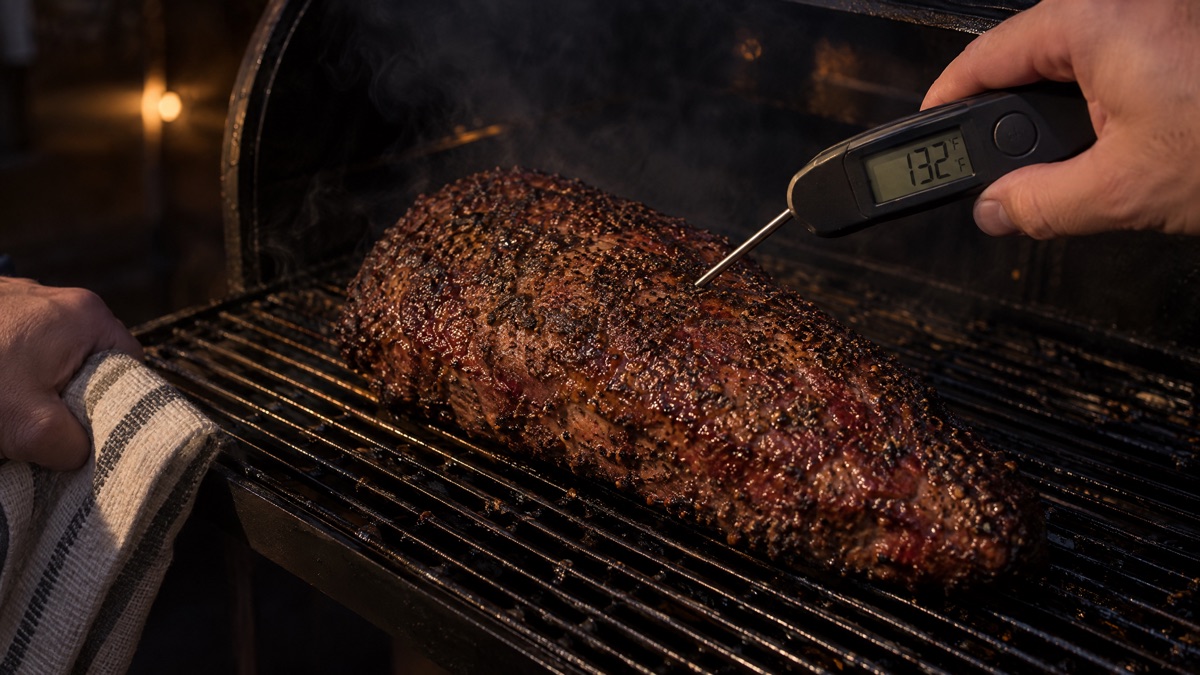
Calibrate the thermometer in ice water. Slush, packed tight, not cubes floating loose, and it should read thirty-two. Four degrees of drift is nothing on a pork butt and it is the entire cook on a tri-tip.
Lena“You checked it four times.”
Henry“It is a fast cook.”
Lena“It is the first time all year you have been early for anything.”
Finding the Grain Change Before You Cut
Look at the raw roast on the board and you can see it: the muscle fibers on one lobe run toward the long point, and on the other they run out toward the wide edge. They meet somewhere near the middle, at an angle close to ninety degrees.
Mark it before it goes on. A shallow nick with the tip of the knife at the top and bottom of the line, so that ninety minutes and one sear later, when the surface is dark and crusted and you cannot read the grain anymore, you still know where to cut.
Then: separate the two lobes along that line. Turn each one so its grain runs left to right in front of you. Slice thin, across, on a slight bias.
The difference between this and going straight through is not subtle. Same roast, same cook, and one half of the plate chews like a good steak and the other half chews like a belt. More tri-tips have been blamed on the butcher for a carving mistake than for anything the butcher ever actually did.
Cold, the Next Day
Medium rare beef reheats badly and slices beautifully, so leave it cold and let it be.
Cold tri-tip, sliced thin off the leftover half, is the best sandwich meat in this story. On a roll with horseradish and a handful of arugula. On white bread with mayonnaise and salt, which is better than it sounds and better than most things.
If you must warm it: a low oven, two hundred degrees, ten minutes, tented. Or thirty seconds a side in a pan hot enough to color the outside without driving into the middle. Never a microwave — it drives the whole slice to one temperature, and that temperature is well-done.
Chopped into a hash with potatoes and an egg on Sunday is where the last of it went, and Henry has not admitted to anybody that he now cooks two of them.
Two dozen wings past midnight, and nobody making a move toward their keys.
Read the next chapterHow long does it take to smoke a tri-tip?
About 75 to 90 minutes at 225°F to an internal of 120°F, then 90 seconds a side over direct coals. It lands at 130 to 135°F after the sear, which is medium rare.
| Stage | Pit | Internal | Time |
|---|---|---|---|
| Salt, uncovered on a rack | refrigerated | — | 4–24 hr |
| Trim silverskin, leave the fat cap | — | — | 10 min |
| On, fat cap up | 225°F | — | — |
| Halfway check | 225°F | about 95°F | 45 min |
| Off the smoke | 225°F | 118–120°F | 75–90 min |
| Sear over direct coals | hot and open | climbs about 10°F | 90 sec per side |
| Rest | — | 130–135°F | 10 min |
| Cut at the grain change, then slice each half | — | — | 5 min |
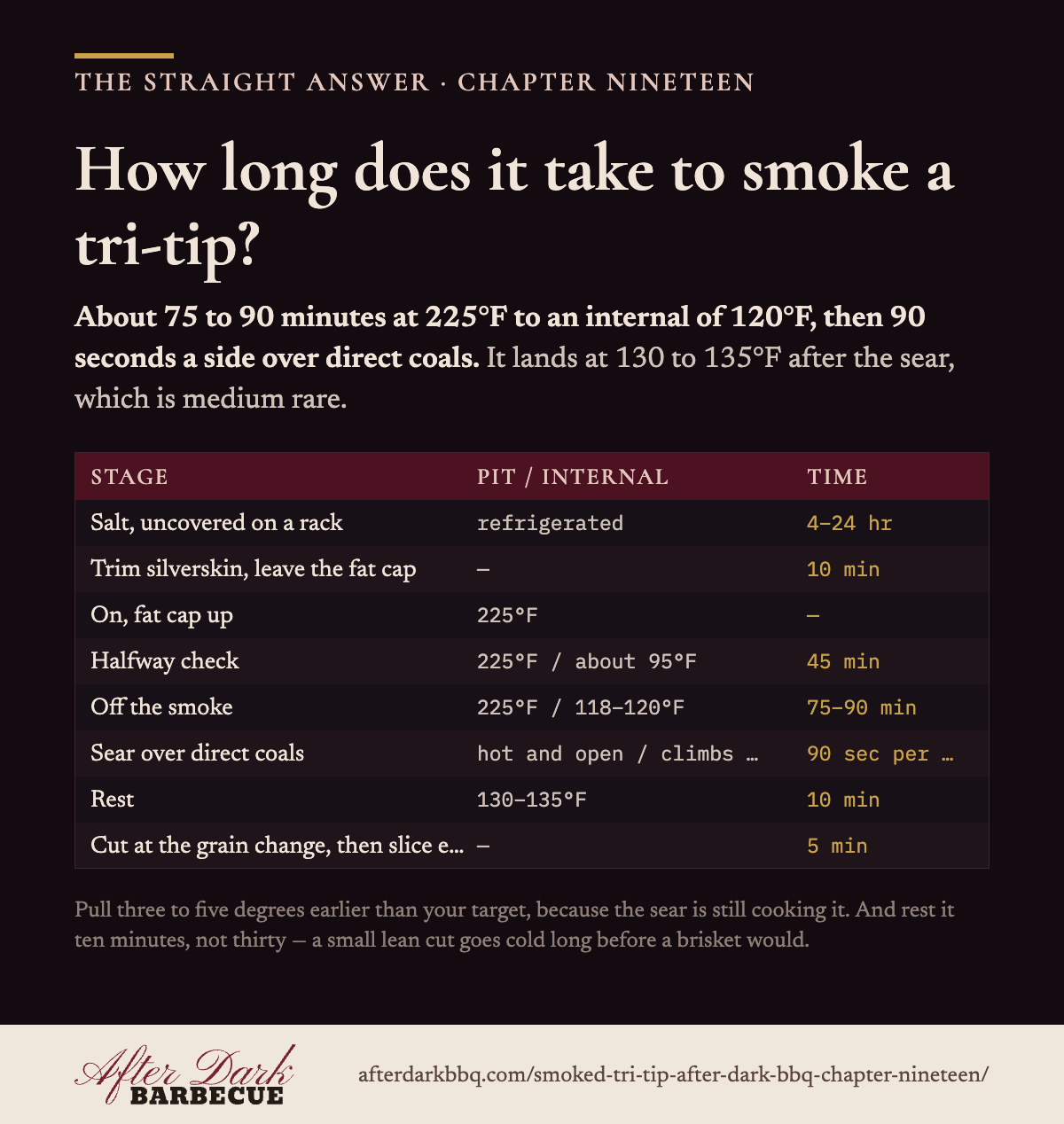
Pull three to five degrees earlier than your target, because the sear is still cooking it. And rest it ten minutes, not thirty — a small lean cut goes cold long before a brisket would.
Recipe: The Short Version
Beef: one tri-tip, 2 to 3 lb, fat cap on, silverskin off.
Season: kosher salt 4 to 24 hours ahead, uncovered. Coarse pepper and garlic before it goes on. Nothing sweet.
Smoke: 225°F, oak, fat cap up, 75 to 90 minutes.
Pull: 118 to 120°F internal.
Sear: straight over hot coals, 90 seconds a side.
Rest: 10 minutes, to 130–135°F.
Carve: cut the triangle in two where the grain changes, then slice each half across its own grain.
Next: the last chapter. Two dozen wings at two in the morning, and the one thing that makes skin crisp on a smoker.
The Hard Numbers, Laid Out Bare
How long does it take to smoke a tri-tip — the chart, the stage table and the questions people actually ask, with no story attached.
Sources
The 145°F safe minimum with a three minute rest for whole cuts of beef is from the USDA Food Safety and Inspection Service Safe Minimum Internal Temperature Chart. The 40 to 140°F range and the two hour limit out of refrigeration are from the FSIS Danger Zone (40°F to 140°F) fact sheet. The 118°F pull, the ninety second sear and the grain-change cut are After Dark BBQ’s own, measured at the grate and stated as ours rather than dressed up as research. Read September 2026.
Volume One, complete. Volume Two, a new chapter every Friday.All the chapters · Write to Dutch

Leave a Reply