Just the hard numbers · Times, temperatures and charts · No foreplay
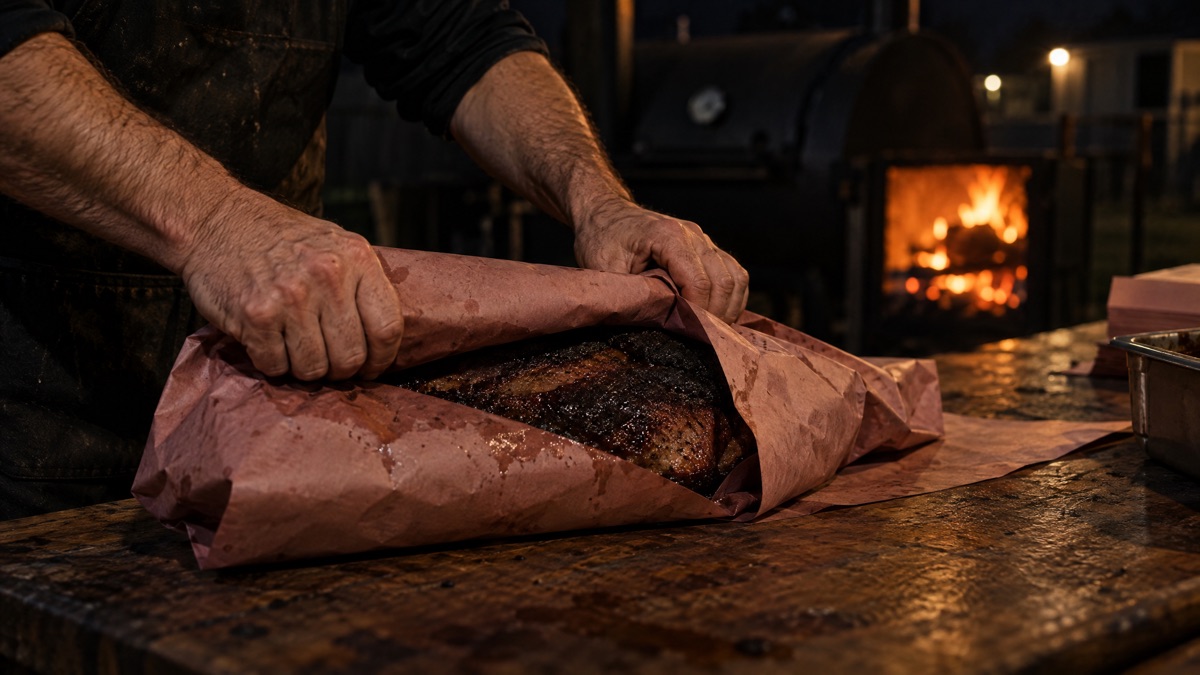
How long do you rest a brisket?
An hour is the minimum. Four is better. Eight is possible if you hold it above 140°F, and the meat will be better for it, not worse. Resting and holding are two different jobs that happen in the same hour, and almost every argument about brisket rest is really two people answering different questions. The planner below works out which one you are asking.
| Cut | Let it lie before you cut it | Comfortable hold | Outside limit |
|---|---|---|---|
| Brisket, whole packer | 1 hour | 4 hours | 8 hours |
| Pork butt | 1 hour | 4 hours | 8 hours |
| Beef plate ribs | 45 minutes | 2 hours | 4 hours |
| Pork ribs | 15 minutes | 1 hour | 2 hours |
| Whole turkey | 30 minutes | 1 hour | 2 hours |
| Whole chicken | 20 minutes | 45 minutes | 1 hour |
The After Dark BBQ holding and rest planner
| Rest until | — |
|---|---|
| Then hold | — |
| Holding temperature | — |
| Time in the hold | — |
| Safe until | — |
Dutch reads the mail on Tuesdays. Write to him about your cook, or start with the hard numbers.
Data updated September 2026.
Resting Her and Holding Her Are Two Different Things
Resting is short and it is about the meat. A brisket comes off at 203°F and the outside is hotter than the middle. Give it an hour and the heat evens out, the muscle unclenches, and the juice that would have run all over the board stays right where you want it. That hour is not optional and it is not a holding technique. It is part of the cook.
Holding is long and it is about the clock. It comes after the rest, and it exists because the meat finished at six in the morning and nobody is ready for it until two in the afternoon. Holding is not a compromise. A brisket held at 150°F for six hours is better than one sliced straight off the pit, and every barbecue joint you have ever liked was serving you held meat.
The mistake is doing the first and calling it the second. An hour tented on the counter is a rest. Five hours tented on the counter is a food-safety problem with a brisket in the middle of it.
The 140 Line, and Why It Is the One Line You Never Cross
The USDA calls 40 to 140°F the danger zone, and in that band bacteria multiply fastest — doubling in as little as twenty minutes. Their instruction for food you are not serving right away is one sentence long: keep hot food at or above 140°F.
That is the whole rule. Everything else on this page is preference. Above 140 you can hold a brisket most of a working day and the only thing you are trading is texture. Below 140 you are on a two hour clock, one hour if the day is above 90°F, and after that the honest advice is to chill it fast and reheat it to 165°F rather than serve it.
So hold at 150 to 160°F, not at 140. The ten or twenty degrees of headroom is for the door that keeps opening, the cold pan, and the thermostat that is not half as good as it thinks it is.
Three Ways to Keep It Hot, Worst to Best
The counter. Buys you an hour, maybe ninety minutes on a big brisket. This is a rest, not a hold, and it is the right answer when you are eating soon. Tent it loosely. Wrap it up tight on the counter and it gets hot and sweaty and steams the bark you spent all night building.
A dry cooler packed with towels. Buys you four to six hours on a wrapped packer and costs nothing. The catch is that it is a falling temperature with no floor under it — it starts at 190 and drifts down, and nothing stops it at 140. Put a probe in the meat and leave it there. Warm the cooler up first with hot tap water and pour it out, or the cooler steals its share of the heat before the meat ever gets comfortable.
An oven or warming drawer set to 150 to 160°F. This is the answer. It holds a floor instead of drifting toward one, it will keep a brisket for eight hours, and most home ovens go low enough even if the dial does not say so — set it to its lowest setting, put an oven thermometer in, and find out. If it bottoms out at 170, prop the door with a wooden spoon and check it once.
For any hold longer than about two hours, vent the meat first. Take it out of the wrap, let the middle fall to around 170°F, wrap it again and put it in the hold. Going straight from 203 into a warm box is how a brisket keeps going when it should be winding down, and shows up at dinner overdone.
What a Long, Slow Hold Does to Your Meat
It improves it, up to a point, and the point is further away than people think. Collagen that had not finished breaking down keeps breaking down. The rendered fat redistributes. A brisket that probed a little tight at 203 will probe perfectly after four hours at 150.
What you give up is bark. Held meat lies there in its own steam, and a crust that was firm at noon has gone soft by four. There is no way around this that also keeps the meat hot for six hours, so pick one. If bark is the whole point, hold it shorter and eat it sooner.
The exception is poultry. Chicken and turkey do not have the connective tissue that rewards a long hold, and the skin goes to paper within the hour. Hold a bird if you must, keep it brief, and never plan your night around it.
Can you rest a brisket too long?
Not on the clock, if it stays above 140°F. You can rest one too hot, which is the real failure and the one nobody names. Wrap a 203°F brisket tight and put it in a 170°F cooler and it does not rest, it keeps cooking, and eight hours later the flat has gone from tender to mush and the slices fall apart on the board.
That is why the venting step matters, and why the number to watch is the meat’s temperature rather than the hours. If the middle is sitting between 150 and 165°F, it is resting. If it is sitting at 190°F, it is still cooking and you are on a much shorter clock than you think.
How long to rest pulled pork
An hour before you pull it, and it holds better than anything else on the pit. Pork butt carries so much fat that it forgives a long hold the way brisket does not, and it will sit at 150°F for eight hours and pull just as well at the end.
One difference worth knowing: pull it late, never early. Pulled pork dries out lying around in a pan; a whole butt lying in the same pan does not. Hold it whole and wrapped, pull it twenty minutes before it goes on the table, and put the drippings back in as you go.
Worked Over by Hand: A Brisket Off at Six, Dinner at Two
Thirteen pounds, off the pit at 6:00 in the morning, eating at 2:00 in the afternoon. That is eight hours to fill.
The first hour is the rest: out of the wrap, on the counter, loosely tented, and the middle falls from 203 toward 170. At 7:00 it gets wrapped again and goes into an oven set to 150°F with a probe in the thickest part of the flat. It sits there for six hours. At 1:00 it comes out and sits on the board, still wrapped, for the last hour while the rest of the food is finished.
Total: one hour resting, six hours held above 140°F, one hour coasting down on the board. Nothing in that plan spends more than an hour in the danger zone, and the brisket is better at two o’clock than it was at six.
The same cook in a dry cooler is tighter. Four to six hours is what a wrapped thirteen pound packer will hold above 140°F, so an eight hour gap does not fit and the honest answer is to light the fire two hours later next time.
Don’t Stop Now
Sources
The 40 to 140°F range, the twenty minute doubling time, the two hour limit and the 165°F reheat figure are from the USDA Food Safety and Inspection Service Danger Zone (40°F to 140°F) fact sheet, last updated June 2023. Safe minimum internal temperatures are from the FSIS Safe Minimum Internal Temperature Chart, last updated April 2025. The rest windows, the hold windows and the cooler estimate are After Dark BBQ’s own, measured at the grate and stated as ours rather than dressed up as research. Read September 2026.