Letters to Dutch · A reader confesses · Write in and yours may be next →
Crisp skin wants a dry bird and real heat: salt it uncovered overnight, then cook at 325 to 350°F instead of 250. Low and slow is what softened it.
Letters to Dutch · a whole chicken on a pellet grill at 250
How do you get crispy skin on smoked chicken?
Crisp skin needs a dry surface and real heat. Salt the bird and leave it uncovered in the refrigerator for 8 to 24 hours, then cook it at 325 to 350°F rather than 250. Pull the breast at 160°F and the thighs at 175 to 180°F.
Dear Dutch,
I never thought I would be writing to you about this. I am a nurse, I work nights, and I bought a pellet grill last spring because I wanted something I could set and then leave alone while I slept.
Two Saturdays ago I did a whole chicken for my sister and her husband. I rubbed it the way I always do, straight out of the package, wet and all, and put it on at 250 because low and slow is what everybody says.
Four hours later it came off the grill looking like a magazine cover. Deep mahogany. Even color the whole way around. I was proud of it in a way I have not been proud of anything I made in years.
Then my brother-in-law cut into it and the skin came away in one wet sheet.
I am told I did not hide my face well.
The meat was fine. Juicy, 168 in the breast, not one complaint from anybody at that table. But that skin lay there on the plate like a wet paper towel and I have thought about it every day since. I have run two more birds at 250 trying to fix it and gotten the same thing out of both of them.
— Denise, Bellwood
Letters may be edited for length and clarity. Names and towns have been changed.
Skin wants two things you never gave it: to be kept dry, and to be given real heat. Salt the bird the night before and leave it uncovered in the refrigerator with nothing over it. The cold air works the moisture up out of that skin all night long while you sleep, and most of the seduction is settled before you ever strike a match.
Then stop taking your chicken low and slow. Run it at 325 to 350. Pull the breast at 160 and the thighs at 175 and let it carry. Low and slow is for collagen and connective tissue. A chicken has almost none, so all 250 does is get her steamy underneath and leave the skin limp.
Dutch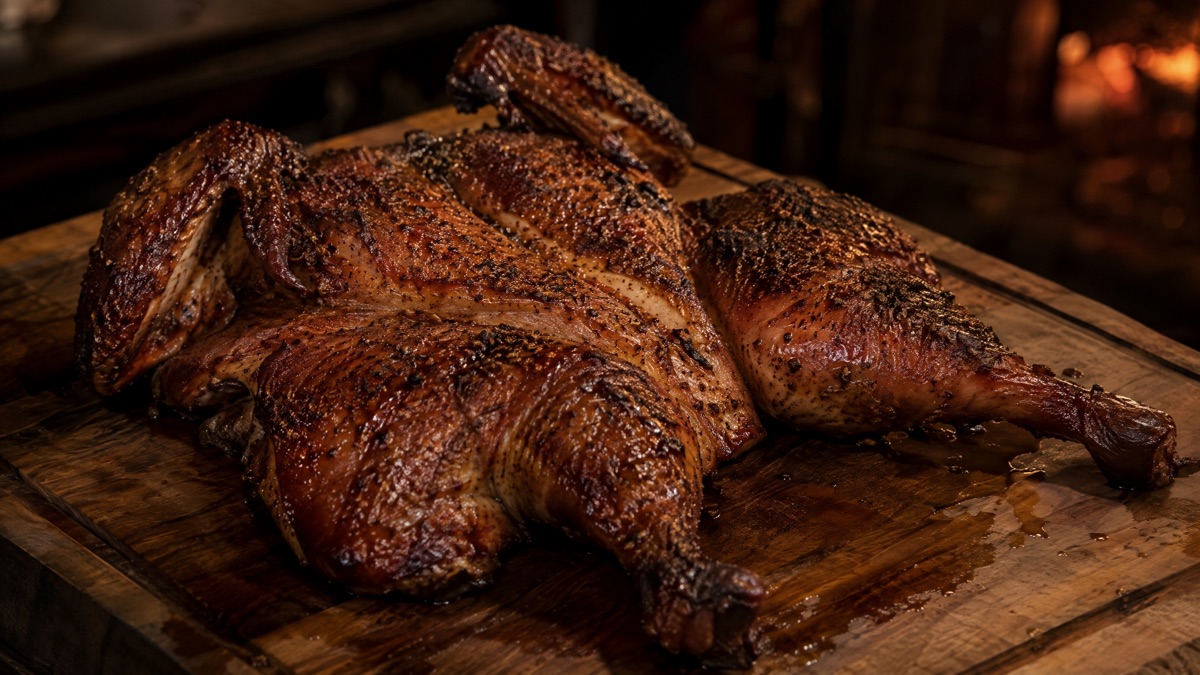
How do you get crispy skin on smoked chicken?
Two causes, and you have to fix both. Moisture in the skin has to go before it ever sees the smoker, and the cooking temperature has to be high enough to render the fat underneath.
Dry brine: salt the bird all over, set it on a rack and leave it uncovered in the refrigerator for 8 to 24 hours. The surface dries out and firms right up. Hold off on the oil and keep any sugary rub off her until the last half hour.
Then cook it at 325 to 350°F, not 250. Chicken has almost no connective tissue to break down, so a bird gets nothing out of the long, slow treatment, and a low pit only leaves her skin steamy and soft.
Pull the breast at 160°F and the thighs at 175 to 180°F. Carryover takes the breast to a safe 165 while it rests. Thighs are better when you take them past done, so there is no reason to neglect them for the breast.
| Step | What it does |
|---|---|
| Salt, uncovered, 8–24 hr | Dries and firms the skin |
| Cook at 325–350°F | Renders the fat under the skin |
| Breast to 160°F | Lands at 165 after carryover |
| Thigh to 175–180°F | Breaks down the dark meat |
Every move above works the same whether you make it on a pellet grill, a kettle or an offset.
Wings are the exception that proves the rule here — they take the same dry-brine treatment but want it finished a whole lot harder. How long to smoke chicken wings, stage by stage.
Stay a While Longer

Leave a Reply