Chapter Six · Prime rib at 225° · Five hours
Chapter Six
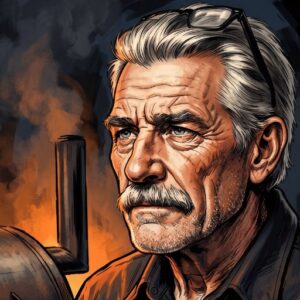
IT WAS NOT EVEN HISEVERYBODY WATCHINGHE PULLED OUT EARLY
Heat Running hot
Chapter six of After Dark BBQ: how long to smoke prime rib at 225, and why Henry pulled it out early because it keeps rising long after it leaves the heat.
Take it off before you think you should. It keeps going without you.
You Only Get One Go at It
Every other cook in this story forgives a man. A brisket that runs long goes in a cooler. A butt that stalls at two in the morning just stalls. Ribs that are not ready get another forty minutes and nobody has to know.
A prime rib does not work that way. It is the loin muscle off the rib section, the same beef a steakhouse sells by the ounce, and it is tender before a man ever lights a fire — it does not need working on and it will not thank him for trying. There is no collagen to break down and nothing tough to work loose. Heat does exactly one thing to it: it takes it from red to pink to gray, in that order, and nothing on earth takes it back.
Which means the whole cook is one decision, made once, in the dark, with a probe. Pull it at 120 and it comes to the table medium rare and every man at that table remembers it. Pull it at 135 because 135 is a number he read somewhere, and by the time he opens it up it is 145 and brown to the bone, and somebody paid three hundred dollars to watch him do that to it.
This chapter is the third week of December, a four-bone roast that belongs to somebody else, and a man who has never had one under his hands. The method underneath it is the one that works on any pit: salt it two days out, run the smoker at 225, pull it at 120 to 122, rest it, then give it everything the fire has for four minutes at the end.
It Was Not Even His
The man from the roadhouse comes on a Tuesday, which is Lena’s night, and she is already on the fence when his truck turns into the alley. Neither of them says one word about that.
He has a box. He sets it on the stainless table under the bulb and does not open it, and makes Henry wait for it.
The man from the roadhouse“Four bone. Bone in, fat cap on, dry aged forty days.” He puts two fingers on the lid. “A man paid for this in October. He pays for it every year. He eats it the Saturday before Christmas with his whole family at my back table and he has done that since his wife died.”
Henry looks at the box.
HenryYour oven works.
“My oven works. It has worked for eleven years and it makes a fine roast and nobody has ever once asked me about it.” He finally takes the lid off. “They asked about the turkey. All of them, all day, for a week. So this year it goes on your pit, and if you ruin it I will pay him back myself and neither of us will ever mention it again.”
Inside the box, on white paper, is nine and a half pounds of beef with a cap of fat the color of butter and four long bones stripped down bare and clean.
Henry has cooked, by my count, one hundred and forty pounds of meat in this story, and not one ounce of it ever cost more than a tank of gas, and not one ounce of it was ever somebody else’s.
Henry“Saturday.”
“Saturday. Six o’clock at the table, so it is off your pit by four.” He is already walking. “Salt it tonight.”
The gate clicks. Lena has not come off that rail once the whole time.
LenaHe has never handed anybody that roast. Not the cook he had for six years. Not me.
She comes through the gate, which she does not usually do on a Tuesday, and stands over the open box with her hands in her coat pockets and looks at what is lying in it.
Henry“It is a lot of money to leave sitting on a table.”
“It is not the money.” She looks at him and not at the beef. “Salt it. Uncovered, top shelf, nothing over it. Then leave it alone for two days and stop opening the fridge to look at it.”
He salted it that night at nine, a half teaspoon of coarse salt for every pound, over the fat and under it and worked into both ends, everywhere it would take it, and set it on a rack over a sheet pan on the top shelf with nothing above it and nothing beside it and nothing over it at all.
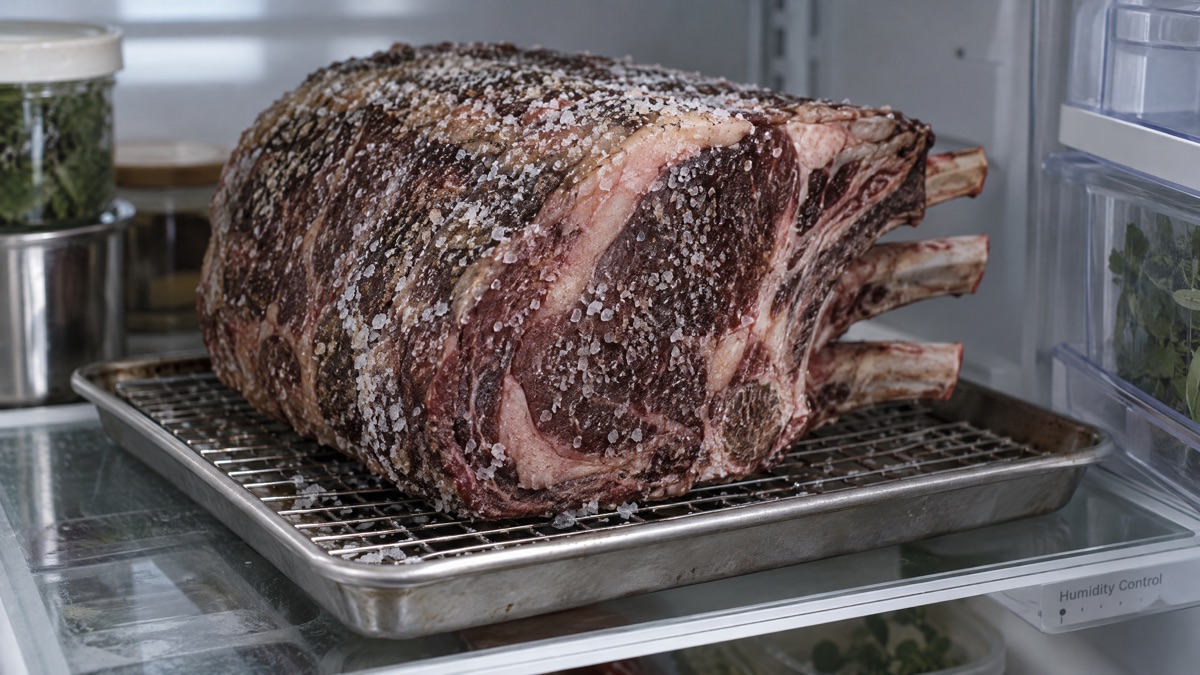
He opened the fridge to look at it eleven times on Wednesday alone.
Featured Fuel: Ashfell Fuelworks Post Oak and Cherry
A rib roast takes five hours of smoke and almost none of it should be loud. In the After Dark BBQ universe Henry burns Ashfell Fuelworks post oak with one cherry split, because beef this expensive is not the place to find out what mesquite does.
Post oak is the Texas default for a reason — steady, gentle, and never comes on too strong. One cherry split puts a blush on the fat cap and does nothing else.
Small fire, thin blue smoke, and no smoldering. A dirty fire on a roast this clean tastes like an ashtray and there is no bark to hide it in.
Hickory and mesquite both come on too strong for a five-hour cook on beef this tender, with no bark to hide them.
Technique Spotlight: Salt It Two Days Out, and Leave It Uncovered
A dry brine is not seasoning. It is two days of slow work that happens while you keep your hands off.
What it does
Salt pulls moisture out of the surface, dissolves into it, and then the brine it just made gets drawn back into the meat. Twenty-four hours in, the salt is through the outer half inch. Forty-eight hours in, it has gone deeper than that, and the surface is dry to the touch and ready for you.
How
A half teaspoon of kosher salt per pound, over every surface, including the bone side and both ends. On a rack, over a pan, uncovered, top shelf of the refrigerator, 24 to 48 hours. No cover, no wrap, no bag. The cold dry air does half the work while you keep your hands to yourself.
Why uncovered matters
A wet surface cannot brown. Two days of cold air leaves the fat cap dry and tight, and that is what lets the last four minutes of the cook build a crust instead of a steam bath.
Pepper goes on the morning of the cook, not with the salt. Leave coarse pepper lying on wet fat for two days and it turns bitter on you.
Saturday Morning, and Everybody Watching
He builds the fire at nine and makes it settle for a full hour before the roast comes out of the workshop fridge, because a cold grate and a young fire are how a five-hour cook turns into a seven-hour one, and nobody in this yard has seven hours.
The roast has changed in two days. The fat cap has gone the color of old ivory and it is dry and firm under a knuckle, and the cut ends have darkened to the color of a good steak crust before they have felt any heat at all.
He scores the cap open in a shallow diamond, an eighth of an inch and not one bit deeper, and rubs it down with coarse pepper and a little granulated garlic and nothing else.
Then he ties it. Four bones means four loops of butcher twine, one between every pair, snug up against the bone and pulled until the loin quits lying flat and sits up round.
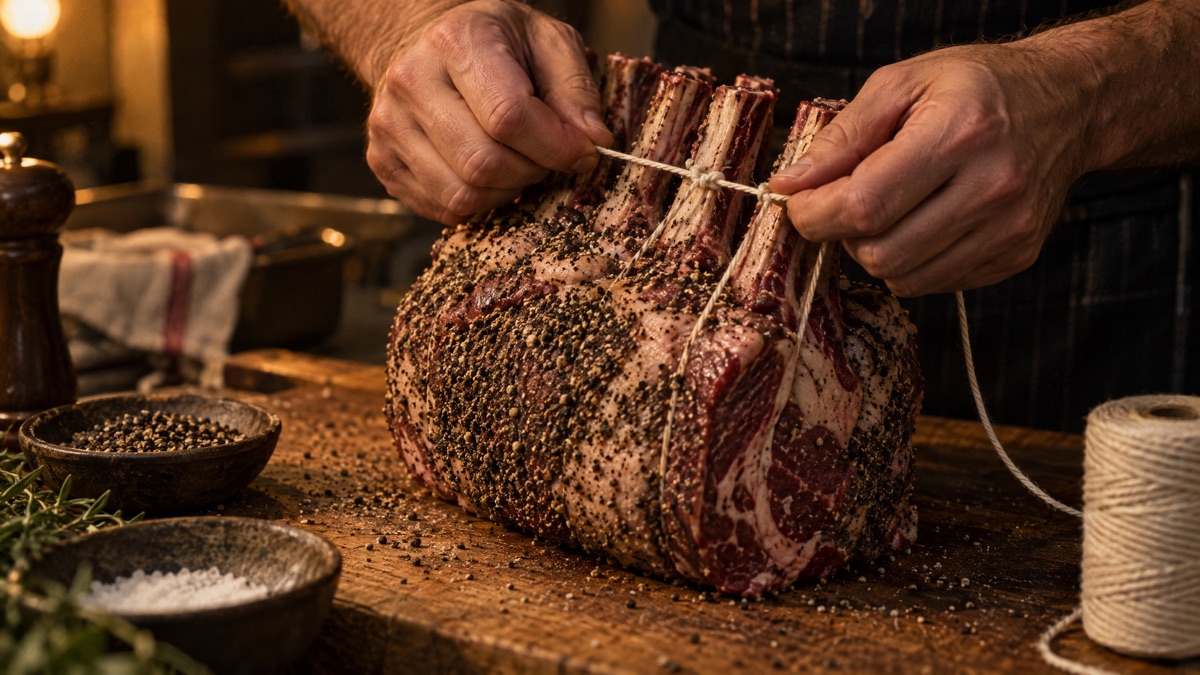
On at ten, bone side down, bones toward the firebox. Probe into the center of the eye from the end, run in parallel to the bones, not touching one. Lid down at 10:06.
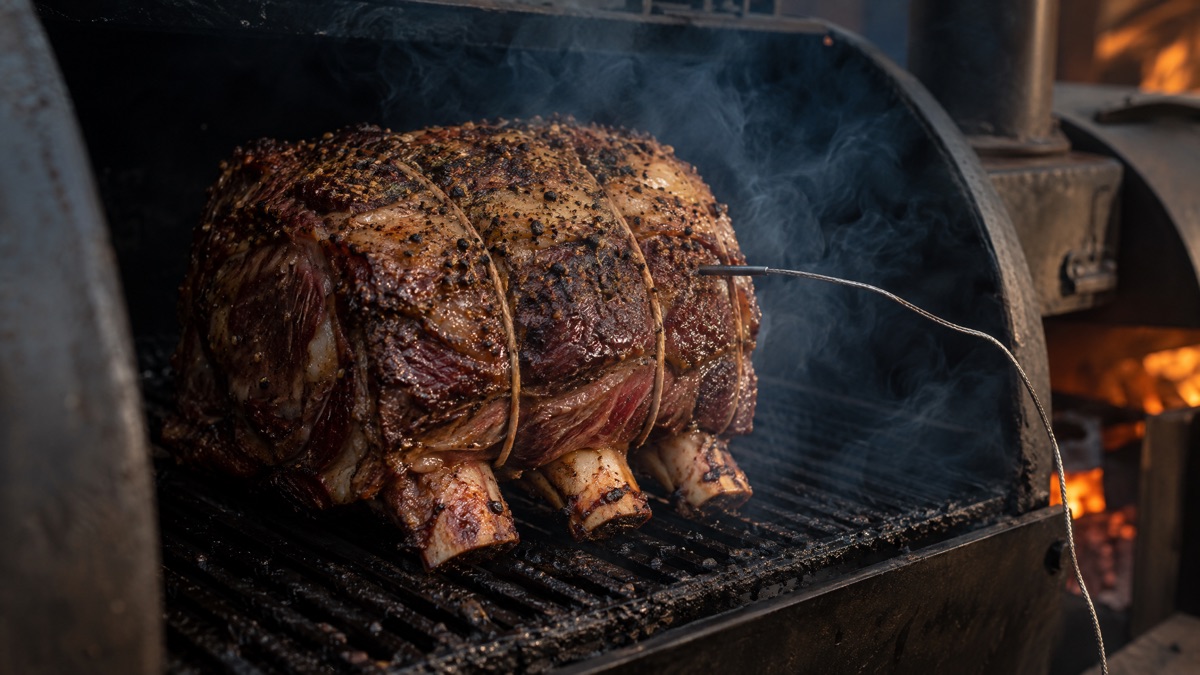
A prime rib is the only cook in this story a man does not get to do twice. A butt costs twenty dollars and fourteen hours. A standing rib roast costs what a man makes in two days, and he gets one pass at it, one, and everybody who paid for it is going to be watching when he carries it to the table.
You can read this one for whose name was on the order. I read it for the pull. Henry took it off at 122 with every instinct he has screaming at him that it was not ready, and then stood there with his hands at his sides while it finished the rest of the way on the counter without any help from him at all.
DutchAnd then nothing. For the first time in this story there is nothing to do at all. No spritz, no wrap, no stall to wait out. A rib roast at 225 climbs about fifteen degrees an hour and does not pause for anybody, and a man standing over a closed lid has five hours to think about what is in there and whose it is.
LenaYou are going to sit down.
She is in the good chair by eleven with a thermos, and Mara comes at noon and takes the third one, and the three of them sit out in a yard in December watching a lid that is not going to open.
Technique Spotlight: The Reverse Sear
Every other cook in this story finishes in the smoke. A rib roast gets its big finish in a blast of heat after it comes out.
Why backward
Searing first and cooking after gives you a gray band under the crust, because the roast spends its whole cook coming up through the temperature that turns beef gray. Smoking low first and searing last gives you edge-to-edge pink with a crust a quarter inch thick.
The three steps
Smoke at 225°F until the center reads 120 to 122°F for medium rare. Rest it, loosely tented, 20 to 30 minutes. Then run the pit as hot as it goes, 450 to 500°F, and put the roast back on fat side down for three to five minutes, turning once, until the cap is dark and crackling.
The part people skip
The rest goes before the sear, not after. The sear barely touches the inside, and a roast that rested first can go straight from the heat to the board and be carved the moment it comes off.
Science Spotlight: Why It Keeps Rising After You Pull It
Carryover is not a rumor, and on a roast this size it keeps going long after you have let go.
A nine-pound piece of beef holds an enormous amount of heat, and that heat is not evenly spread. The outer inch is far hotter than the middle. The moment it comes off the fire, that heat keeps moving inward, because heat always moves from more to less, and the center keeps climbing after the roast is off the pit and sitting on your counter.
On a rib roast that climb is 8 to 12 degrees. On a steak it is two or three. That is the whole difference between a steak and a big roast, and it is why every steak number you have memorized will take a roast too far.
Which is why it comes off at 120 to 122 for medium rare and not at 130. It will be 130 to 133 before you carve it, without you doing anything at all.
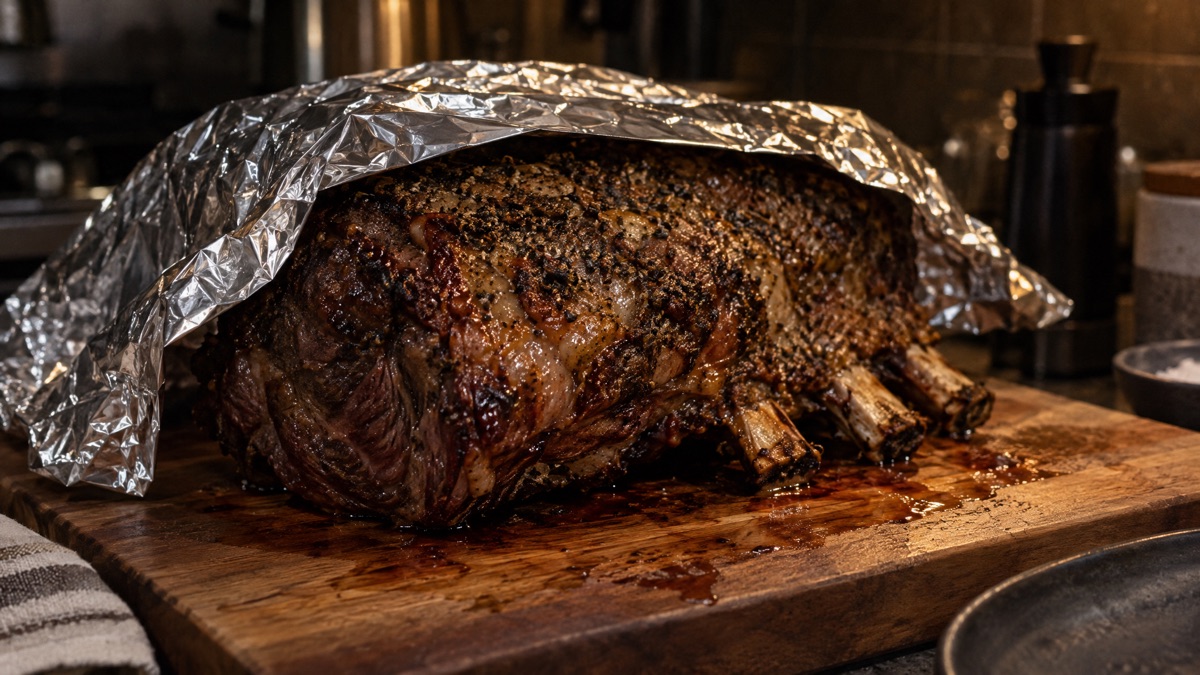
Two things make it worse. A hot sear at the end adds a few more degrees. Tenting it tightly in foil traps heat and pushes it further still, which is why it rests under loose foil laid over the top, never wrapped up tight.
He Pulled Out at 122
At two o’clock the probe reads 104 and Henry starts getting up every few minutes to look at a number that has not changed since the last time he looked at it.
At three it reads 114 and the fat cap has gone from ivory to bronze and there is a sound coming off it now, faint, like rain a long way off.
At 3:40 it reads 120.
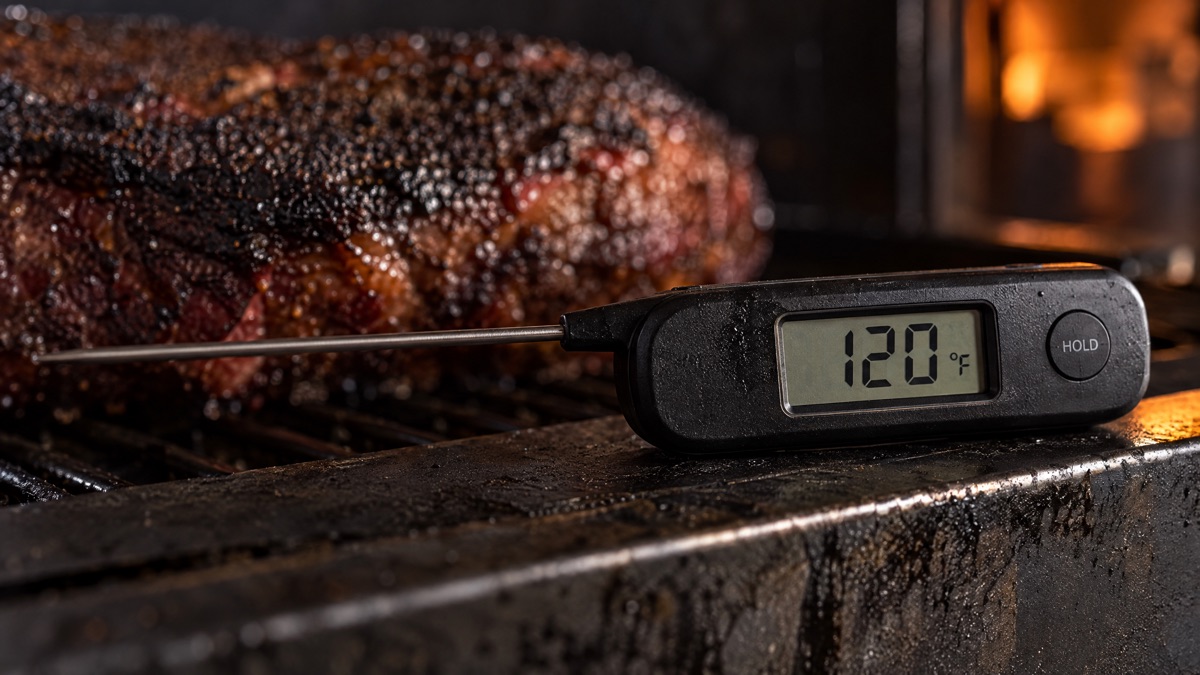
He does not move. This is the part I would have gotten wrong at his age, and did, twice, on other men’s beef. Every hour he has ever spent on a pit is telling him 120 is not ready, that it is red in the middle, that he should give it twenty more minutes just to be safe, and safe is the most expensive word in barbecue.
Lena“Now.”
It reads 122 when he lifts it off, two hands under the bones, and the weight of it surprises him the way it surprises every man the first time. He sets it down on the board under a loose sheet of foil and does not lay a finger on it again.
At 3:50 it reads 126. At four it reads 129. At 4:08, sitting on a board in a cold yard with nothing under it and nothing helping it along but its own heat, the probe reads 131 and finally stops climbing, with nothing left to give.
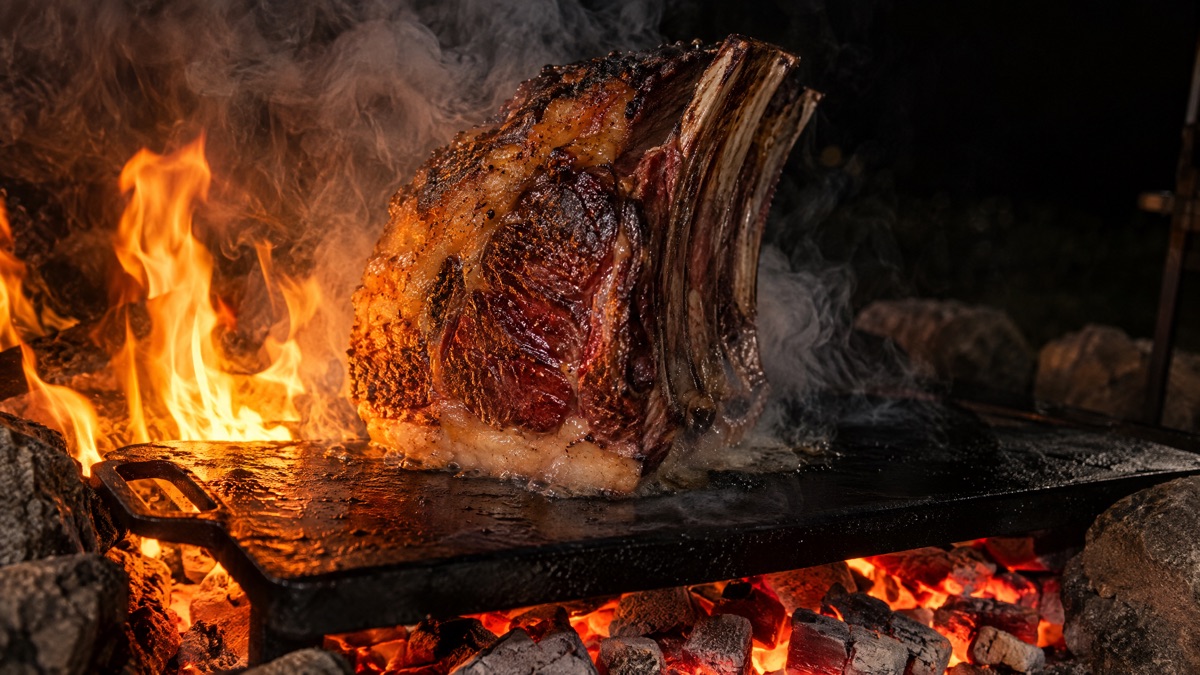
He opens the firebox all the way and feeds it, and the Ironbound comes up past 450 in about ten minutes, and the roast goes back on fat side down for four minutes, turned once, and comes off with a cap so dark it looks burnt and so dry it cracks the second the knife touches it.
Mara says one thing while he is cutting the twine off.
MaraDo not let him cut it here.
The Back Table
They carry it in through the kitchen door at twenty to six, Henry with the board and Lena ahead of him holding the door, and the roadhouse smells like a place that has been cooking all day for people who are not paying a dime.
The back table has eleven people at it. A man in his seventies stands up when the board comes through, and he does not look at Henry at all, and he does not look at the man from the roadhouse either.
He looks at the roast. He puts one hand flat on the table to steady himself, and nobody in the room says anything for a second and a half.
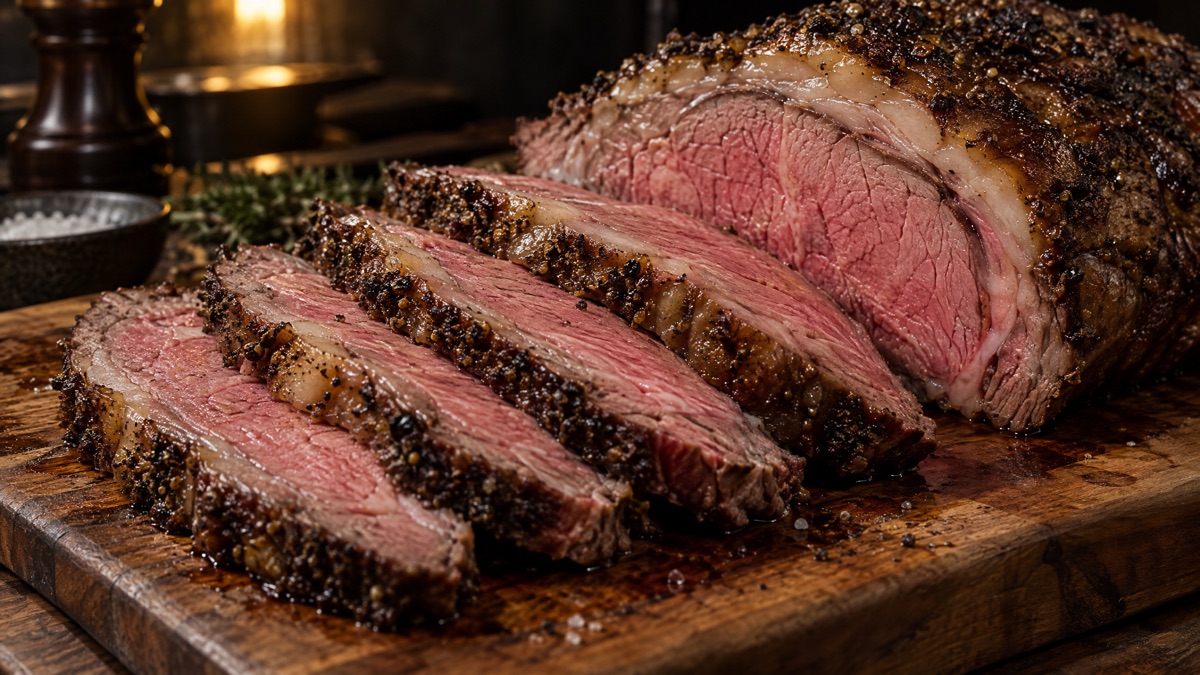
Then the knife goes in behind the first bone and the cut face opens up pink from the crust clean through to the bone, all the way across, edge to edge, everything it has, and the man sits back down.
A nine dollar roast, and she tells him to keep his hands in his pockets.
Read the next chapterWhat temp do you pull a prime rib?
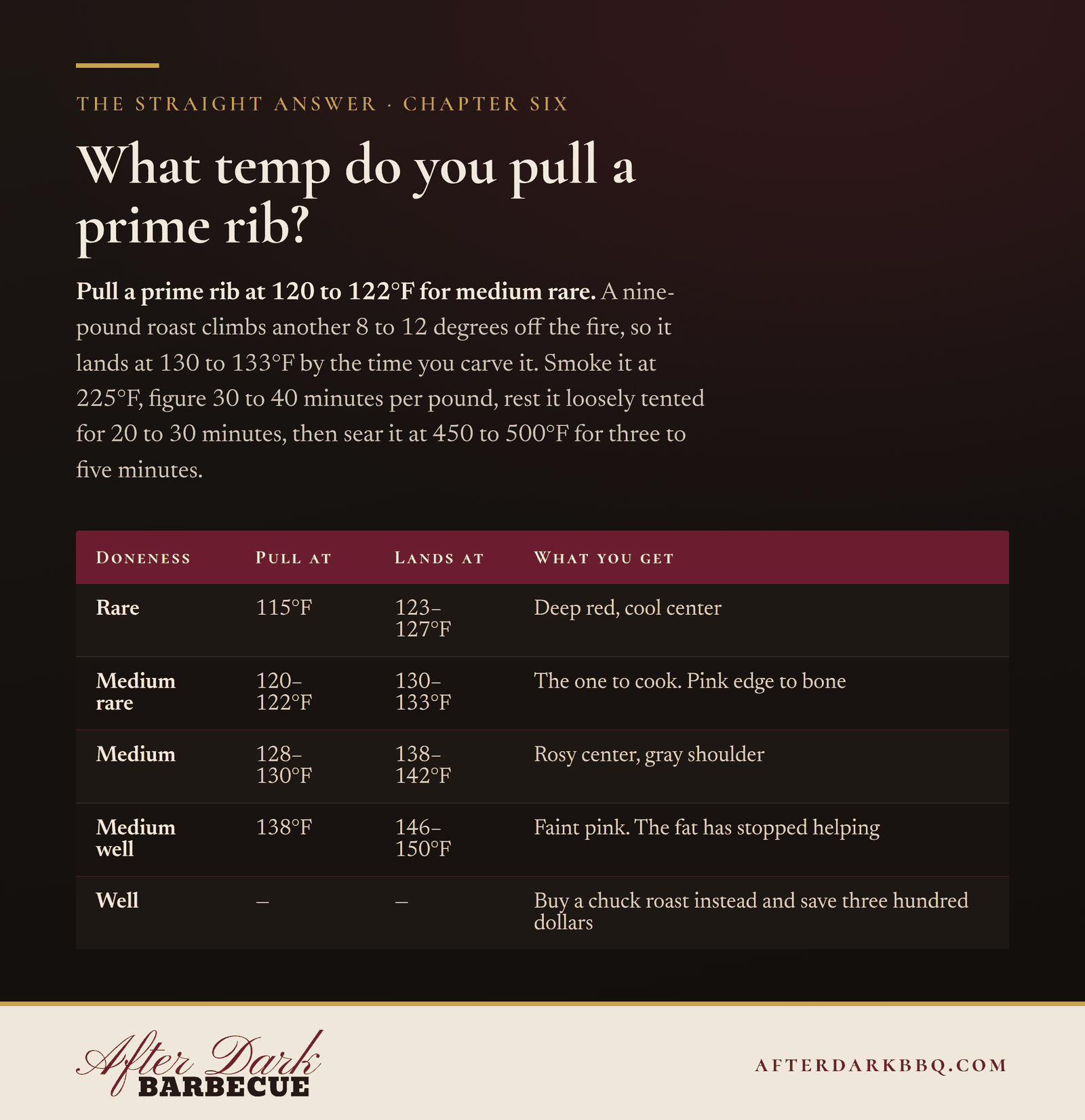
Pull a prime rib at 120 to 122°F for medium rare. A nine-pound roast climbs another 8 to 12 degrees off the fire, so it lands at 130 to 133°F by the time you carve it. Smoke it at 225°F, figure 30 to 40 minutes per pound, rest it loosely tented for 20 to 30 minutes, then sear it at 450 to 500°F for three to five minutes.
Salt it 24 to 48 hours ahead, uncovered on a rack in the refrigerator, at a half teaspoon of kosher salt per pound. Pepper goes on the morning of the cook. Tie it between the bones so the loin holds its shape, put the probe into the center of the eye parallel to the bones and clear of them, and keep your hands off the lid — there is no stall to wait out and nothing to spritz.
| Doneness | Pull at | Lands at | What you get |
|---|---|---|---|
| Rare | 115°F | 123–127°F | Deep red, cool center |
| Medium rare | 120–122°F | 130–133°F | The one to cook. Pink edge to bone |
| Medium | 128–130°F | 138–142°F | Rosy center, gray shoulder |
| Medium well | 138°F | 146–150°F | Faint pink. The fat has stopped helping |
| Well | — | — | Buy a chuck roast instead and save three hundred dollars |
| Stage | Pit | Internal | Time |
|---|---|---|---|
| Salt, uncovered on a rack | — | — | 24–48 hours |
| Pepper, tie, probe, on bone side down | 225°F | — | lid down |
| Halfway | 225°F | about 90°F | 2 hours in |
| Off the pit | 225°F | 120–122°F | 4–5 hr for 9 lb |
| Rest, loose foil | — | climbs to 130–133°F | 20–30 min |
| Sear, fat side down first | 450–500°F | — | 3–5 min, turn once |
| Carve | — | — | immediately after the sear |
How to read this: Pit temperature is what the smoker holds. Internal is what a probe reads in the center of the eye, entered from the end, parallel to the bones and not touching one — bone reads high and will tell you the roast is done before it is. Minutes per pound is a planning number only. Two nine-pound roasts can finish forty minutes apart depending on how thick they are and how cold they went on.
This is the cook from the story above with nothing left on: just the numbers, ready for your own pit.
Recipe: Henry’s Smoked Prime Rib
What You Will Need Tonight
A bone-in standing rib roast, 4 bones, 8 to 10 lb · kosher salt, a half teaspoon per pound · coarse black pepper · granulated garlic · butcher twine · post oak, one cherry split.
Two days out
Salt every surface, including the bone side and both ends. Set it on a rack over a sheet pan, uncovered, top shelf of the refrigerator. Nothing over it. Leave it 24 to 48 hours.
The morning of
Score the fat cap in a shallow diamond, no deeper than an eighth of an inch. Coarse pepper and granulated garlic over the whole roast. Tie it between the bones, four loops, snug.
The cook
Build the fire and let the pit settle at 225°F for an hour before the meat goes on. On bone side down, bones toward the fire. Probe into the center of the eye from the end. Lid down and leave it there — no spritz, no wrap, no looking.
The pull
Off at 120 to 122°F for medium rare, about 4 to 5 hours for a nine-pounder. Loose foil laid over the top, never wrapped. It will climb to 130 to 133°F on the board over 20 to 30 minutes.
The sear
Open the firebox and run the pit to 450 to 500°F. Back on fat side down for three to five minutes, turned once, until the cap is dark and crackling. Cut the twine, carve the bones off in one piece, slice across the loin.
What to do with the drippings
Pour off the fat, deglaze the pan with beef stock and a splash of red wine, reduce it by half, and salt it at the end. That is au jus. Horseradish on the side, and no sauce on this one — this is the one cook in the story that does not want any.
Sources
Safe minimum internal temperatures, including the 145°F and three minute rest for whole cuts of beef, are from the USDA Food Safety and Inspection Service Safe Minimum Internal Temperature Chart. The 40 to 140°F range and the two hour limit out of refrigeration are from the FSIS Danger Zone (40°F to 140°F) fact sheet. The 120 to 122°F pull, the 8 to 12 degree carryover and the stage times in the chart above are After Dark BBQ’s own, measured at the grate and stated as ours rather than dressed up as research. Read September 2026.
Stay a While Longer
Volume One, complete. Volume Two, a new chapter every Friday.All the chapters · Write to Dutch
Leave a Reply