Chapter Four · Plate ribs at 250° · Nine hours
Chapter Four
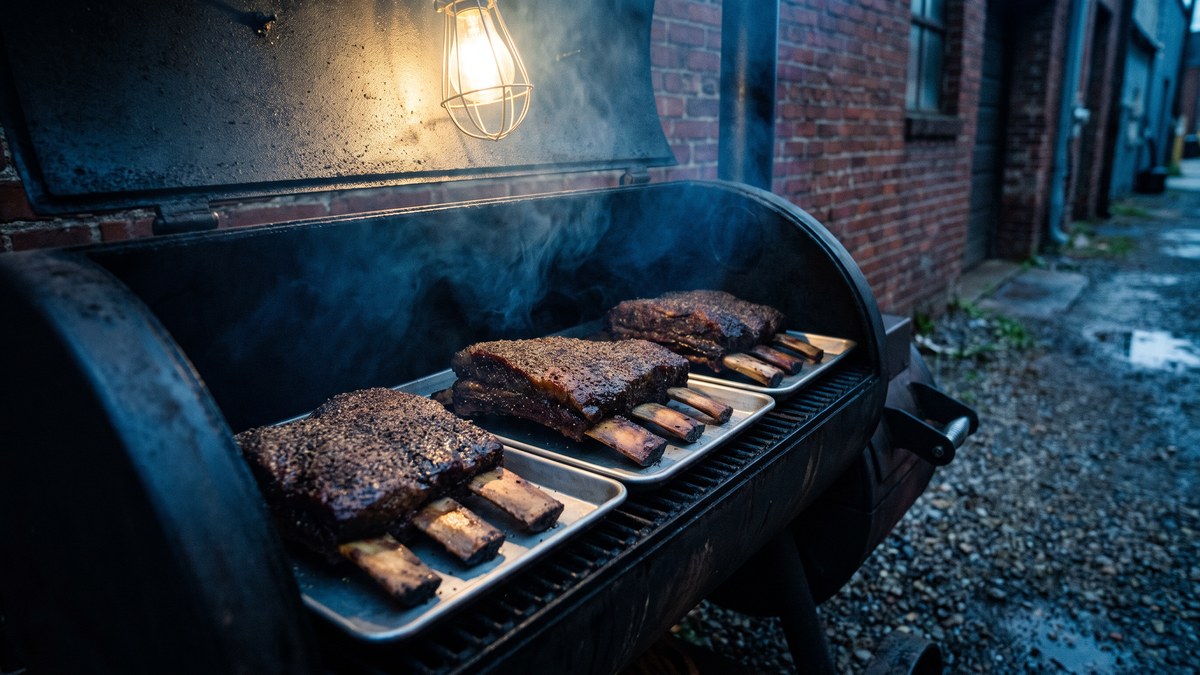
HE HAD NEVER DONE IT BEFOREONLY ONE GOOD CHAIRSLOW BURN
Heat Running hot
Chapter four of After Dark BBQ: plate ribs, salt and pepper only, nine hours bare on the bone at 250, and he never once reached for the paper.
Bare the whole way. Nothing to hide behind and nowhere to rush it.
The Cut With Nowhere to Hide
A pork butt forgives a man. A beef plate rib does not, and it does not punish him either. It just tells on him. Three bones, five pounds, a cap of fat over the top and a sheet of membrane underneath, and nothing between the meat and the fire but salt and pepper. Whatever he did to it in there, it is right there on the outside when it comes off, where anybody can read it.
The plate is the lower section of the ribs, down under the brisket, cut from the sixth bone through the eighth. The bones are as long as a man’s forearm and the meat lying on top of them is two inches thick, marbled like a ribeye and threaded through with the same collagen as a chuck. Taken to 205 and rested, it is the richest thing a smoker will ever give anybody. Taken to 180 because a man could not wait, it is a shoe.
This chapter is Henry’s second order from the roadhouse and the first cut he has never had his hands on. The method underneath it is the one that works on any pit: 250 degrees, salt and pepper only, bone side down, no wrap, eight to ten hours.
He Wants It Every Friday
She comes back on a Tuesday this time, after dark, and does not bother with the gate. She comes up the alley on foot and stands at the fence waiting for him to notice her, which takes longer than it ought to, because he is down on his knees in the gravel with a wire brush and the firebox door wide open, working on something else.
LenaHe wants Fridays.
HenryPulled pork.
LenaBeef ribs. The big ones. The old cook did them Fridays for eleven years and nobody has had one since June, and the man says he is tired of hearing about it.
Henry sits back on his heels. She rests her forearms on the top rail of the fence.
LenaThree plates. Nine bones. Ready by ten Friday night.
He has never cooked a plate rib. He has had two in his life, both of them in the same afternoon outside Lockhart, and he remembers the second one better than anything that has happened to him since.
HenryI’ve never done them.
LenaI know.
He says it because she will know if he does not. She pushes off the fence.
LenaI’ll bring them Friday at noon. Don’t buy anything. Don’t put anything on them but salt and pepper.
She is three steps down the alley when she adds it, without turning around.
Lena“They’re big. You’ll want both hands.”
Featured Fuel: Ashfell Fuelworks Post Oak Splits
Beef ribs are a Central Texas cook, and Central Texas burns post oak. In the After Dark BBQ universe, Henry runs the Ironbound on Ashfell Fuelworks kiln-dried post oak for anything with a bone that long.
- Post oak is mild, steady, a little sweet, and it has the stamina to go all night. It flavors beef without ever taking it over — nine hours of hickory on a beef rib turns the bark bitter.
- Kiln-dried and split small. A plate rib at 250 wants a small, bright fire fed every 45 minutes, the same as a butt.
- One bag for three plates across a nine-hour cook. Buy two, because the second one is for the night you run long.
- No apple, no cherry, no mesquite. Post oak from the first split to the last, and nothing on the side.
Three Plates, and He Had Never Done It Before
Friday, noon. She comes through the gate with a butcher-paper bundle the size of a car battery held up against her chest with both arms, and she sets it down on the stainless table in the workshop and it makes a sound that table has never made for anybody before.
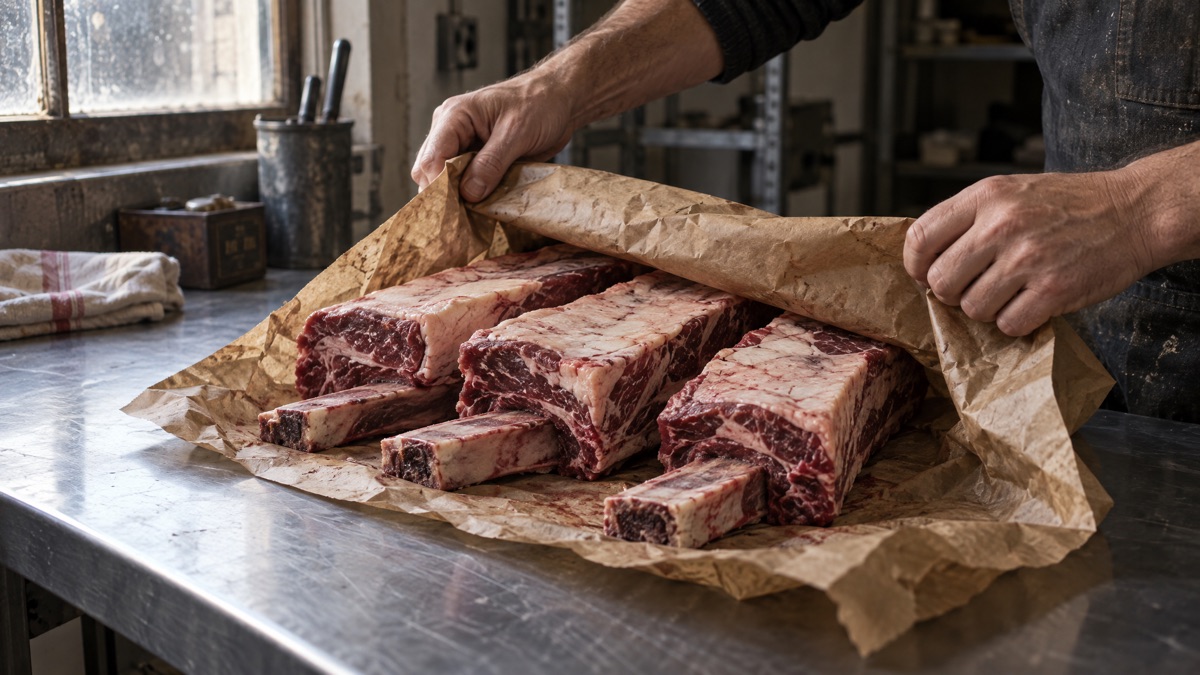
A beef plate rib is the biggest thing most men will ever put on a pit, and the simplest. Salt, pepper, post oak, and nine hours with the lid down and nobody watching. There is nowhere to hide on a plate rib. Whatever a man does to it shows up on the outside for everybody to see.
You can read this one for who came through the gate. I read it for what Henry did not do — no wrap, no sauce, no rub with a name on it. Big, bare, and nine hours on the bone with nothing between it and the fire.
— Dutch
Three plates. Fifteen pounds and change. He peels the paper back slow and the bones underneath are as long as his hand and his wrist together, three to a slab, with a cap of white fat an inch thick lying over the top of them and a gloss of silver skin across the meat where the cap does not quite cover it. He has never had anything this size on his table in his life, and he is aware, standing there with the paper still in his hand, that she has not taken her eyes off him and is waiting to see what he intends to do about it.
HenryWhere did you get these?
LenaA man who owed the roadhouse a favor.
She does not elaborate.
LenaCap to a quarter inch. Take the silver skin off the top. The membrane on the bone side stays — it’s the only thing holding those bones on.
He knows that. He nods anyway, because she is right and because she is standing very close to the table.
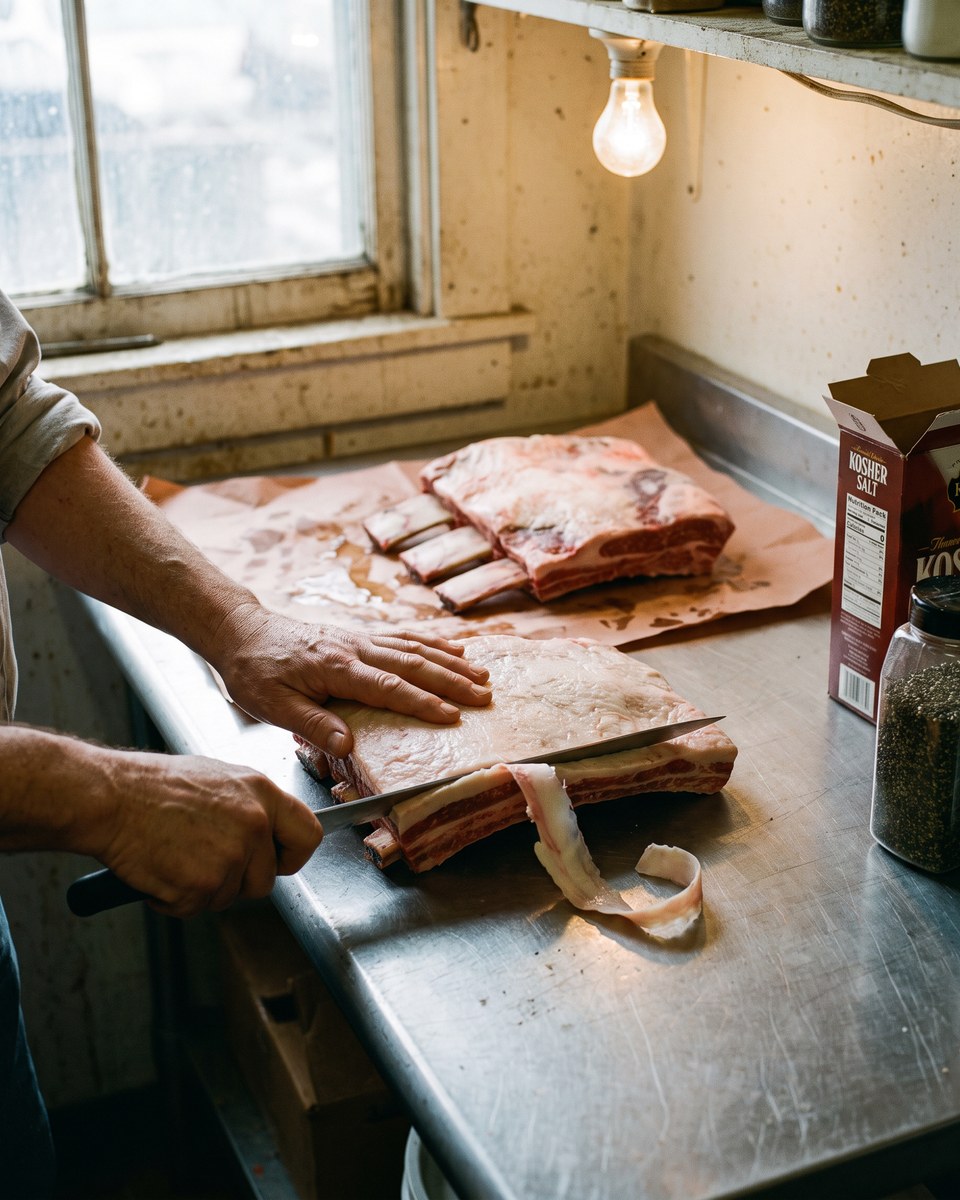
The Emberline knife comes off the magnet. He lays the first plate fat side up and takes the cap down in long flat strokes, the blade riding just under the surface, easing it back a little at a time and never once hurrying it, until there is a quarter inch left across the whole top and not a thread less. Not down to the meat. Never down to the meat — a plate rib stripped bare goes dry at the bone ends long before the middle of it is anywhere near ready. Then he turns it over, turns the knife over with it, works the tip in under the silver skin at one corner, and peels the whole sheet off in one long unbroken piece without tearing it once, and she stands there the entire time and watches him do it and does not say a word.
The membrane underneath, on the bone side, he leaves exactly where it is. It will go dark and leathery in there and hold all three bones together through nine long hours of the meat doing its level best to get away from them.
Technique Spotlight: Salt, Pepper, and Nothing Else
Beef ribs are the one cook where a rub with a name on it is a mistake. The meat is rich enough to carry the whole night with nothing on it but salt and pepper.
- Coarse black pepper and kosher salt, half and half by volume. The pepper should be 16-mesh — coarse enough to see the pieces. Fine pepper burns and goes bitter over nine hours.
- A tablespoon of granulated garlic per cup of rub is as far as most Texas pits go. Sugar has no place on a beef rib; it scorches before the meat is done.
- No binder needed. Wet the surface with a little water or a shake of hot sauce if you want the rub to stick faster; the meat gets wet enough all on its own.
- Coat every side heavily, bone side included, and let it sit thirty minutes until the salt pulls moisture up and the pepper goes from dusty to dark.
On at One, Bone Side Down
By 12:40 the Ironbound is at 250 and holding, the water pan full at the firebox end, and the three plates are lying on the table under a coat of pepper so heavy they look shingled. He carries them out one at a time with both hands, because she was right about that too.
Bone side down on the grate, bones running the same way as the smoke, the biggest one closest to the firebox where it will get worked the hardest. The probe goes into the thickest part of that one, in between the second bone and the third, not touching either. He shuts the lid at 1:05 and leaves it to it.
LenaTen o’clock.
HenryThey’ll be done when they’re done.
LenaThey’ll be done by ten.
She says the first of it from the gate. The gate clicks. He is alone with the stack and the sound of the fire, and for three solid hours he does not lift the lid once, because what is happening in there is smoke and dry heat working on a wet surface, and every time a man opens it up to look, it stops.
He feeds the fire. He watches the stack. Thin and blue. At four o’clock he opens it up for the first time and the pepper has gone from black to the color of a cast-iron pan, and the surface is dry and drawn tight and just starting to crack along the grain. He wets them down once, water and vinegar, and has the lid shut again before the heat has time to leave the box.
Technique Spotlight: Bone Side Down, and Why You Don’t Wrap
A plate rib is thick enough to protect itself. The bones take the heat from underneath and the fat cap covers it on top, and that changes two things about how you handle it.
- Bone side down, always, on any pit. The bones sit between the meat and the grate and take the direct heat. There is no fat-side-up debate on a beef rib.
- Do not wrap. The bark on a beef rib is the whole point — a black, peppered crust an eighth of an inch thick — and paper makes it go soft on you. The meat has enough fat and collagen to wait out the stall bare.
- Spritz after hour three, once an hour, water and cider vinegar half and half, only if the surface looks dry. A dull, dry bark is drying out; a tacky one is fine.
- If you must be done by a certain hour, wrap in butcher paper at 175 with the bark already set. You will give up some crust and get there about an hour sooner.
Mara Brings Her Own Chair
The sun is going down behind the workshop when the gate clicks, and it is a folding chair coming through it before it is a woman.
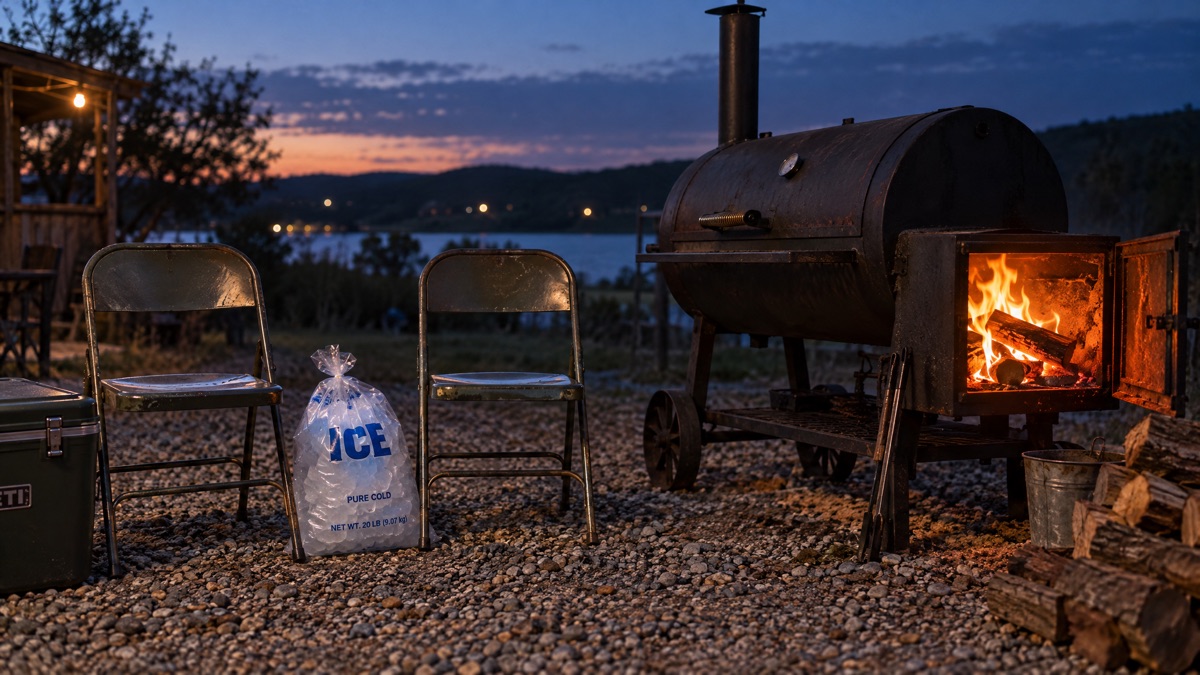
Mara has the chair under one arm and a bag of ice under the other and her hair up in the same surrender as last time. She sets her chair down right next to the good one, close, not in it, and looks at him like she is daring him to say one word about where she put it.
MaraBrought my own. Figured somebody else might want yours.
HenryNobody else is coming.
MaraSugar, that is not what your yard smells like.
She sits down in her own chair, which puts her closer to the Ironbound than the good chair will ever be, and looks at the stack.
MaraWhat is it this time?
HenryBeef ribs. Plate ribs.
She whistles, low, the way she did at the bone.
MaraThe big ones.
She dumps the ice in the cooler.
MaraHow long?
HenryNine hours, about. They went on at one.
Mara“Nine hours on the bone.”
Mara“I have never gotten nine hours out of anybody.”
She says it slowly, like she is tasting it.
He opens the firebox door and feeds it a split it does not need yet, because he has to do something with his hands.
Science Spotlight: Why the Meat Pulls Back from the Bone
The thing every cook looks for on a finished beef rib — an inch of bare bone at the ends where the meat used to be — is not the meat shrinking. It is collagen tightening up and doing exactly what it is supposed to.
- The meat on a plate rib is wrapped in sheets of collagen that tighten as they heat, the same way a rubber band shortens when it warms. Between 160 and 205 the sheets pull the meat up the bone and away from the ends.
- At the same time, the collagen inside the meat is melting into gelatin. That is what makes a rib at 205 feel like butter under a probe and a rib at 180 feel like a tire.
- Beef ribs stall high — 165 to 175 — and for one to three hours, because there is a lot of surface for the water to leave from. The stall ends when the bark dries enough to stop the evaporation.
- Pull-back is a promise, not a finish line. A rib can show an inch of bone and still be tough in the middle. The probe decides, not the bone.
It Held at 172 and Would Not Move
At 7:10 the probe reads 172 and will not move off it, and Mara gets to it before he does, because she has decided that is her job now.
MaraIt stopped.
HenryIt’s working.
She says it with him, and neither of them laughs, exactly.
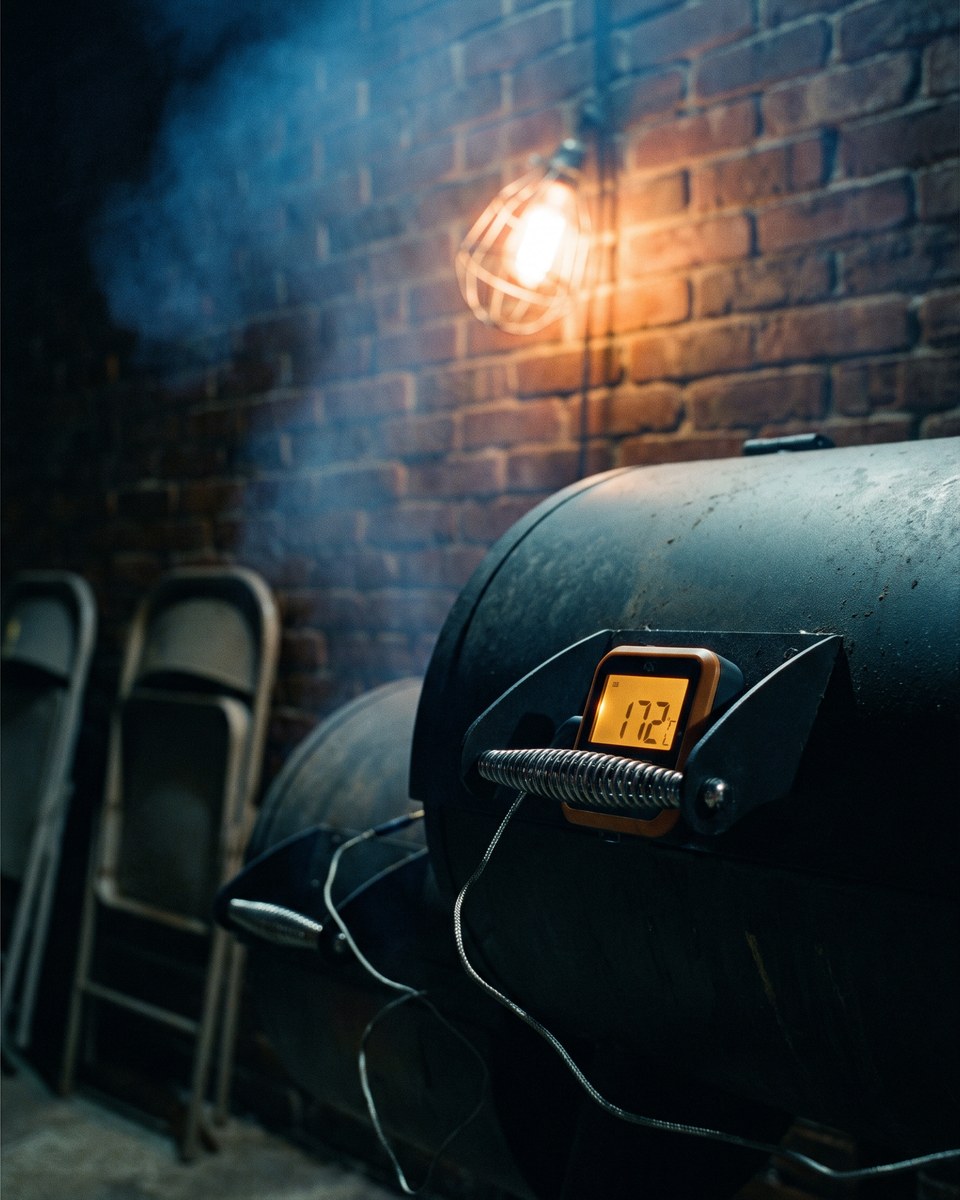
The bark is black now. Not dark brown — black, the pepper fused right down into the crust, the fat cap gone glassy over the top of it, and the meat at the ends of the bones has started to pull back on itself so that a half inch of clean bone is showing on every one of them. He shuts the lid on it. He does not open it again for a full hour, and it costs him something to do that.
At 7:40 the gate clicks. Lena. She has a cooler in one hand and she sets it down just inside the gate and looks at the two chairs pulled up side by side, and then at the crate, and takes the crate.
LenaWhere is it?
Henry172.
LenaSince?
HenrySeven.
LenaIt’ll go at eight-thirty.
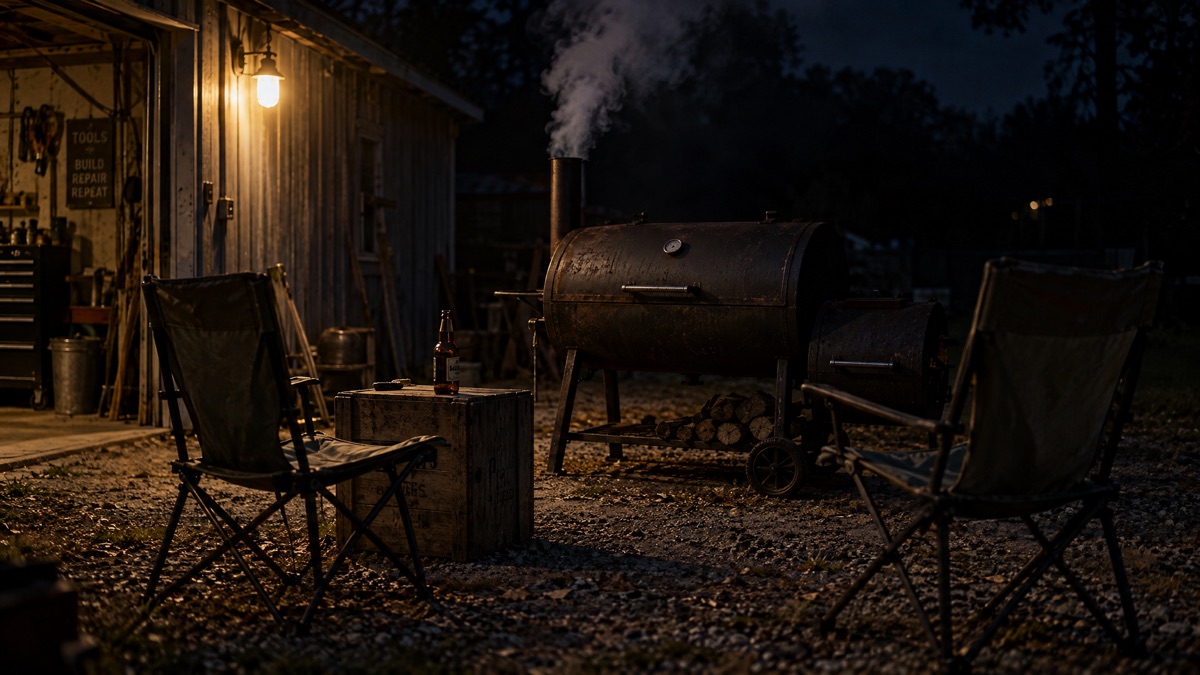
She does not lift the lid. She sits down on the crate with her elbows on her knees and watches the stack like the smoke is telling her something private, and Mara watches her watch it, and Henry feeds the fire because it is the only thing in this yard tonight that actually needs him.
Lena“Salt and pepper.”
Henry“Salt, pepper, and it stays bare. No paper.”
LenaGood.
At 8:25 the probe reads 174. At 8:40 it reads 181, and Lena does not say one word about having been right, which is somehow worse than if she had.
History & Culture: The Rib That Was Too Big to Sell
For most of a century the beef plate was a cut nobody wanted. Packers trimmed it for stew meat and ground beef, and the Central Texas meat markets that smoked whole forequarters over post oak sold the brisket by the pound and gave the ribs to the men who cut the wood.
It took the last twenty years for the plate rib to become the most photographed thing in barbecue: a slab the size of a phone book, a bone you can hold like a handle, and a black bark that reads from across a room. Somebody on the internet called them dinosaur ribs and the name held. Underneath the name it is the same cook it always was — salt, pepper, oak, and a long afternoon — and in After Dark BBQ, when a roadhouse eleven miles out on the highway asks Henry for the big ones, it is asking him for the oldest beef on the pit.
It Pulled Back an Inch
At 9:50 the big plate reads 204, and Henry takes the lid all the way off and does not put it back on.
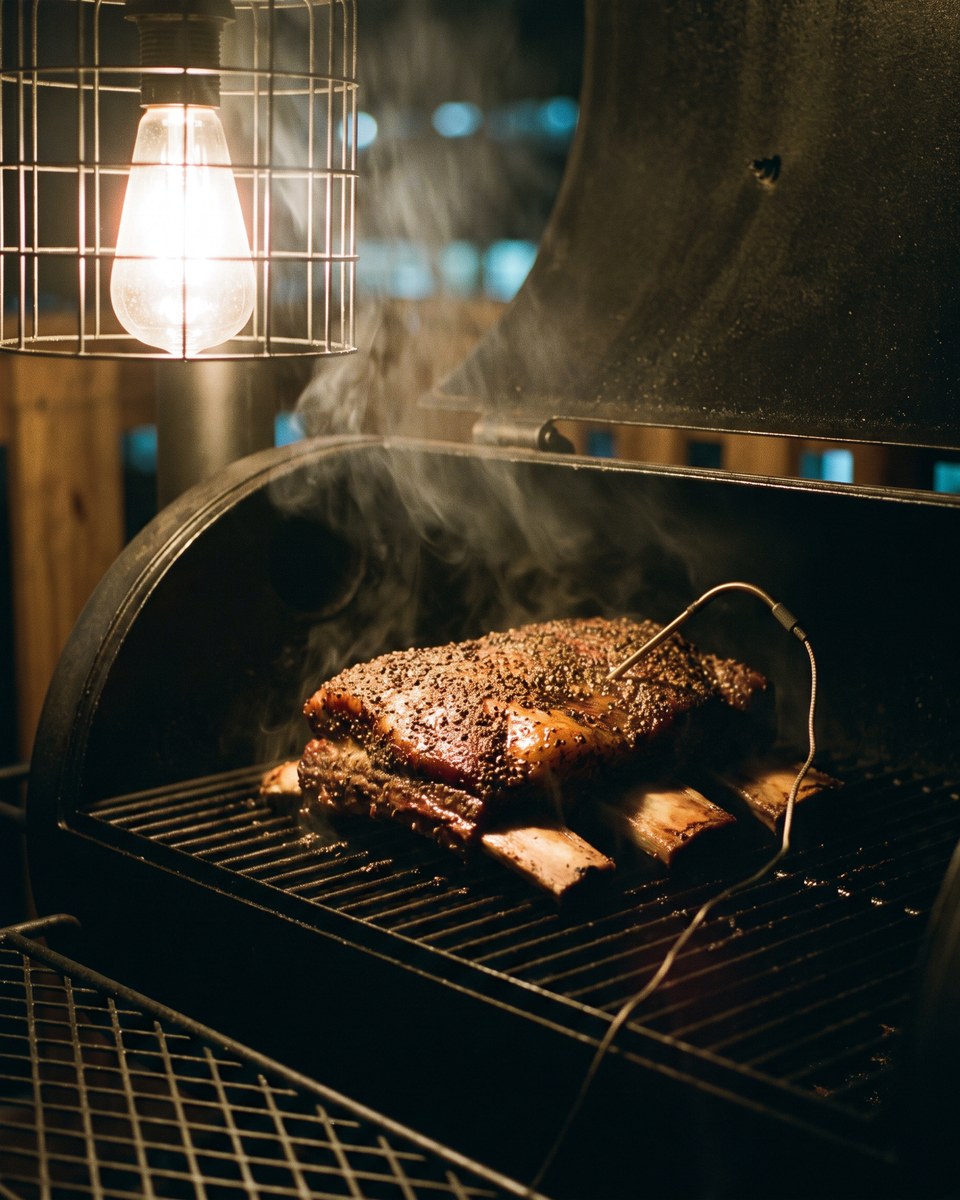
The meat has walked a full inch up every bone. What is left sitting on top is a black block that shakes when he so much as touches the grate, and the probe goes into it between the bones and meets nothing at all, no resistance anywhere, and comes out clean, and goes in somewhere else and finds nothing there to argue with either.
The middle plate reads 203. The small one is sitting at 207, has been ready for a full twenty minutes, and never said a word to anybody about it.
LenaBoth hands.
He uses both hands, and the plates come off one at a time onto the sheet pan on the crate. Not into a cooler. Onto butcher paper, tented loose, on the table in the workshop with the door open, thirty minutes and not one minute longer — because a beef rib left shut up in a cooler for two hours turns into pot roast, and a beef rib given exactly thirty minutes under paper is what the man asked for.
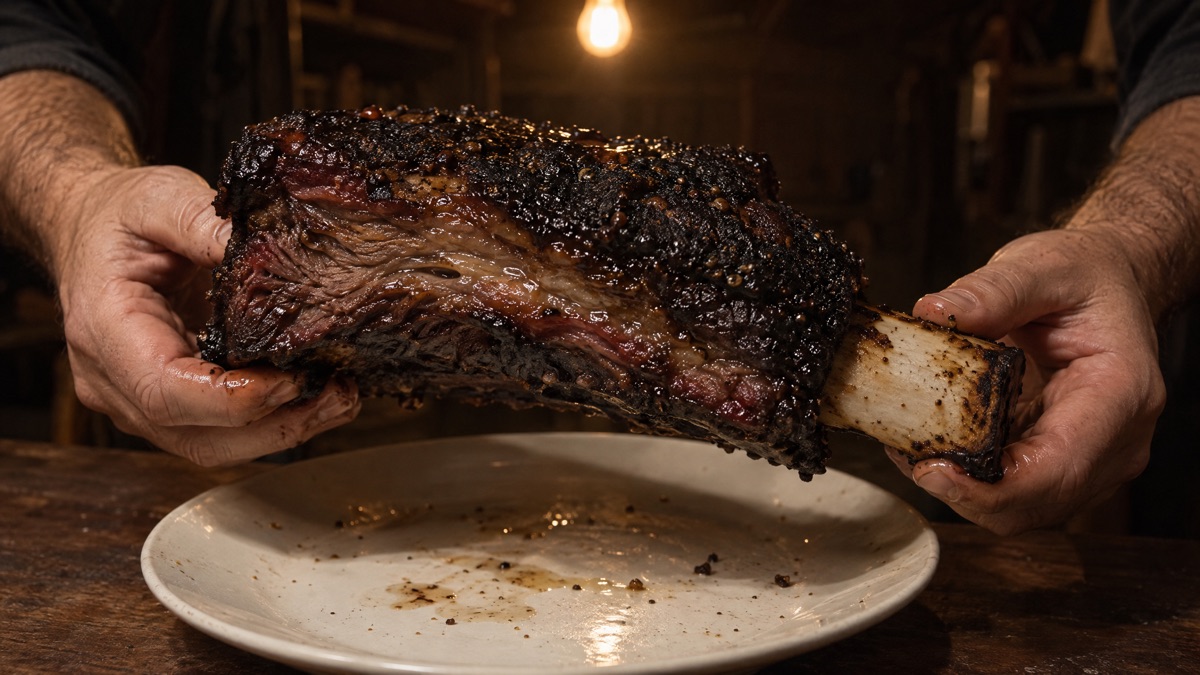
At 10:20 he goes between the bones of the small plate with the long knife, straight down, all the way, and what opens up is pink and glossy at the center with a black quarter inch of bark on the outside and a smoke ring under that the width of a pencil. He cuts one bone free and hands it to Mara because she is closest.
She takes it in both hands. She does not say anything for a while, and then she says, “Well, hell,” quietly, and that is the review.
Recipe: Henry’s Smoked Beef Plate Ribs
The real method underneath the chapter. It works on an offset, a pellet grill, a kamado, or a kettle set up for indirect heat. Bone side down on all of them.
Ingredients
- 1 beef plate rib (three bones, 4 to 6 pounds), sometimes labeled short plate, 123A, or dino ribs
- 1/4 cup coarse 16-mesh black pepper
- 1/4 cup kosher salt
- 1 tbsp granulated garlic, optional
- Water and apple cider vinegar, half and half, in a spray bottle
- Post oak splits or chunks for the whole cook
Method
- Trim the fat cap to a quarter inch. Peel the silver skin off the meat side. Leave the membrane on the bone side; it holds the bones together.
- Mix the salt and pepper. Coat every side heavily, bone side too. Let it sit 30 minutes, until the surface goes wet.
- Run the pit at 250. Bone side down, biggest plate nearest the heat. Probe the thickest meat between two bones, not touching either.
- Lid shut for the first three hours. After that, spritz once an hour if the surface looks dry.
- Expect a stall between 165 and 175 that lasts one to three hours. Leave it. If you are out of time, wrap in butcher paper at 175 once the bark is set.
- Start probing at 200. It is done between 203 and 210, when the probe slides in like butter and the meat has pulled back an inch from the bone ends.
- Rest 30 to 60 minutes tented loosely in butcher paper — not in a cooler. Slice straight down between the bones, all the way, and give everybody one bone to hold.
Time: about 1.5 to 2 hours per pound at 250 — eight to ten hours for a five-pound plate, plus the rest. Put them on at noon, stay with them, and they will be ready for you at a ten o’clock table.
Nine Bones, One Each
The two big plates go into Lena’s cooler whole, still in their paper, at 10:30, and the cooler goes in the truck. She leaves the small one on the table without saying she is leaving it, and Henry pretends not to notice, and Mara does not pretend anything.
At the gate:
LenaHe’ll want Fridays.
HenryHe said that already.
LenaHe said it before he ate one.
She looks at the Ironbound, still ticking as it cools, and at the two chairs, and at the smoke in his shirt, and takes her time about all three.
LenaNine hours on the bone, and you never once reached for the paper.
HenryNo.
LenaGood.
The gate clicks, and eleven miles out on the state highway a man with a gray mustache is standing in a propped-open screen door with an enamel mug in his hand, waiting up to find out whether the second one is as good as the first.
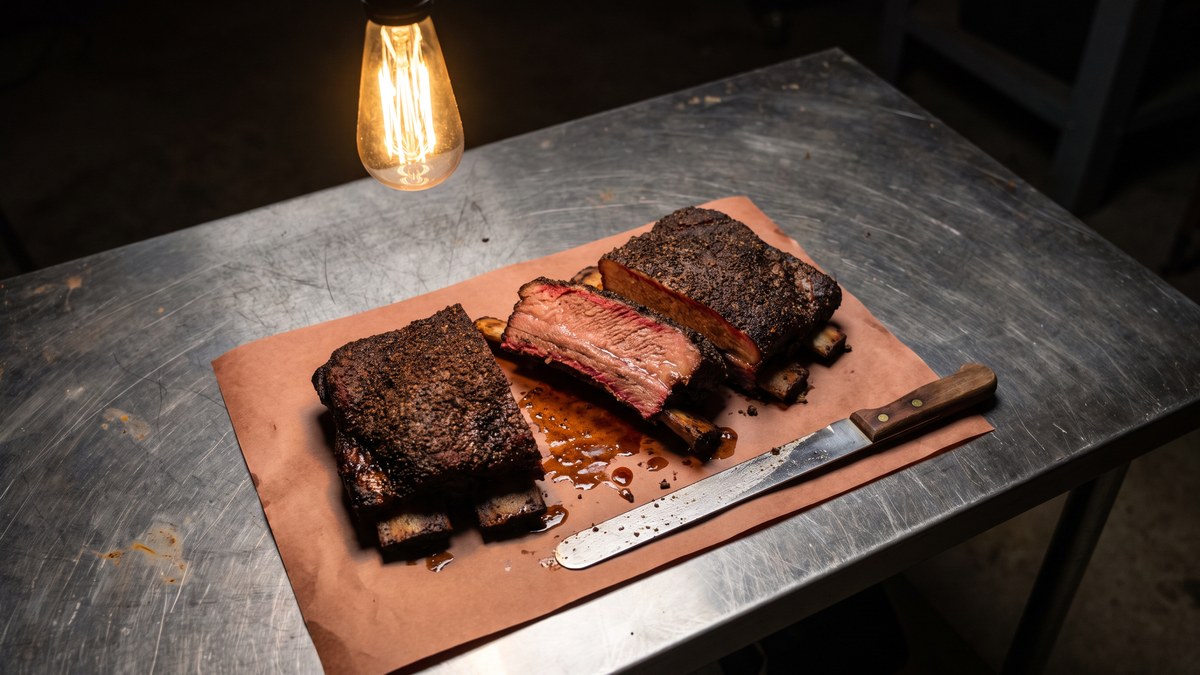
Eleven years a man has done them whole, and he stands there watching Henry do it flat.
Read the next chapterHow long does it take to smoke beef ribs?
About eight to ten hours at 250 degrees for a three-bone beef plate rib — roughly 1.5 to 2 hours per pound. Trim the fat cap to a quarter inch, coat it in coarse salt and pepper, and run it bone side down with the lid shut for the first three hours. Spritz once an hour after that if the surface looks dry. Expect a stall between 165 and 175 that lasts one to three hours; leave it unwrapped — the bark is the point. Start probing at 200. It is done between 203 and 210 degrees, when the probe slides in like butter and the meat has pulled back about an inch from the ends of the bones. Rest 30 to 60 minutes tented in butcher paper, then slice between the bones.
| Stage | Pit temperature | Internal | Time |
|---|---|---|---|
| Trim, salt and pepper, rest on the counter | — | — | 30 min |
| Lid shut, bone side down, bark setting | 250°F | — | first 3 hours |
| Spritz on a cycle | 250°F | — | every hour, if dry |
| The stall | 250°F | 165–175°F | 1–3 hours |
| Wrap, only if out of time | 250°F | 175°F, bark set | saves about an hour |
| Start probing | 250°F | 200°F | — |
| Done | 250°F | 203–210°F | probe like butter, meat pulled back an inch |
| Rest, tented in paper | — | — | 30–60 min |
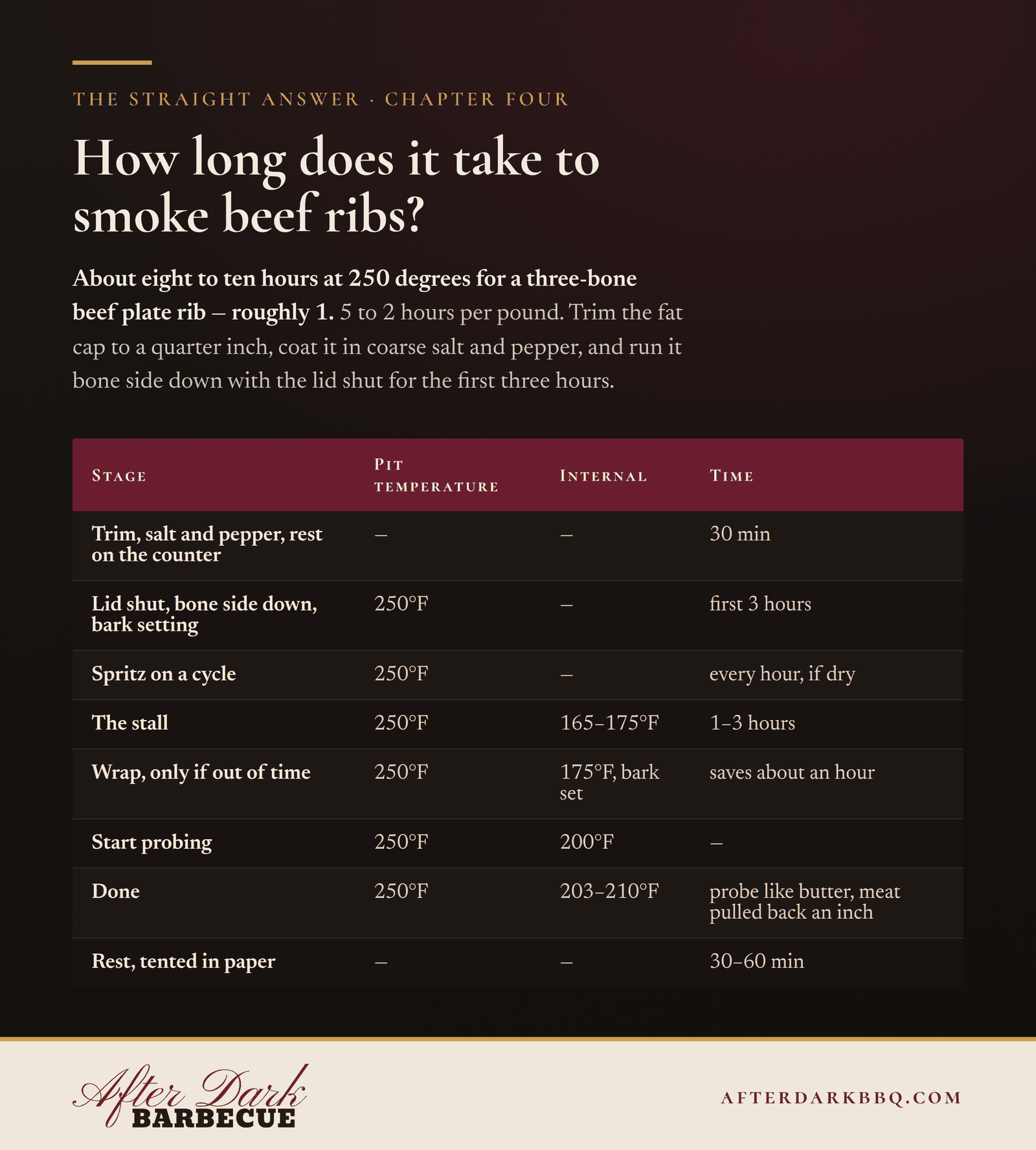
How to read this: Pit temperature is what the smoker holds; internal is what the meat reads on a probe pushed into the thickest meat between two bones, not touching either. Hours per pound is a planning number — a five-pound plate has finished in seven hours and taken eleven. Put them on at noon for a ten o’clock table, and do not rest them in a cooler for hours the way you would a brisket; thirty to sixty minutes under paper is right.
The full method, straight: the smoking time and temperature chart, which wood to pair with which cut, and what to do about the stall.
This is the cook from the story above with nothing left on: just the numbers, ready for your own pit.
Sources
The 145°F safe minimum with a three-minute rest for whole cuts of beef is from the USDA Food Safety and Inspection Service Safe Minimum Internal Temperature Chart. The 250°F schedule, the stall range and the probe-tender finish are After Dark BBQ’s own, measured at the grate and stated as ours rather than dressed up as research. Read October 2026.
Stay a While Longer
The chapters: Chapter One — Midnight Ribs · Chapter Two — Overnight Smoked Brisket · Chapter Three — Overnight Pork Butt · Chapter Five — Smoked Whole Turkey
Letters to Dutch: How Long to Smoke St. Louis Ribs at 250 · The Night the Brisket Would Not Let Me Sleep
Everything at the After Dark BBQ hub · Technique · Who Dutch Cobb is · Write to Dutch
Volume One, complete. Volume Two, a new chapter every Friday.All the chapters · Write to Dutch