Chapter Seven · Chuck roast at 250° · Seven hours
Chapter Seven
SHE ASKED FOR THE KNIFEHANDS OFFTEACHER AND STUDENT
Heat Somebody is going to get burned
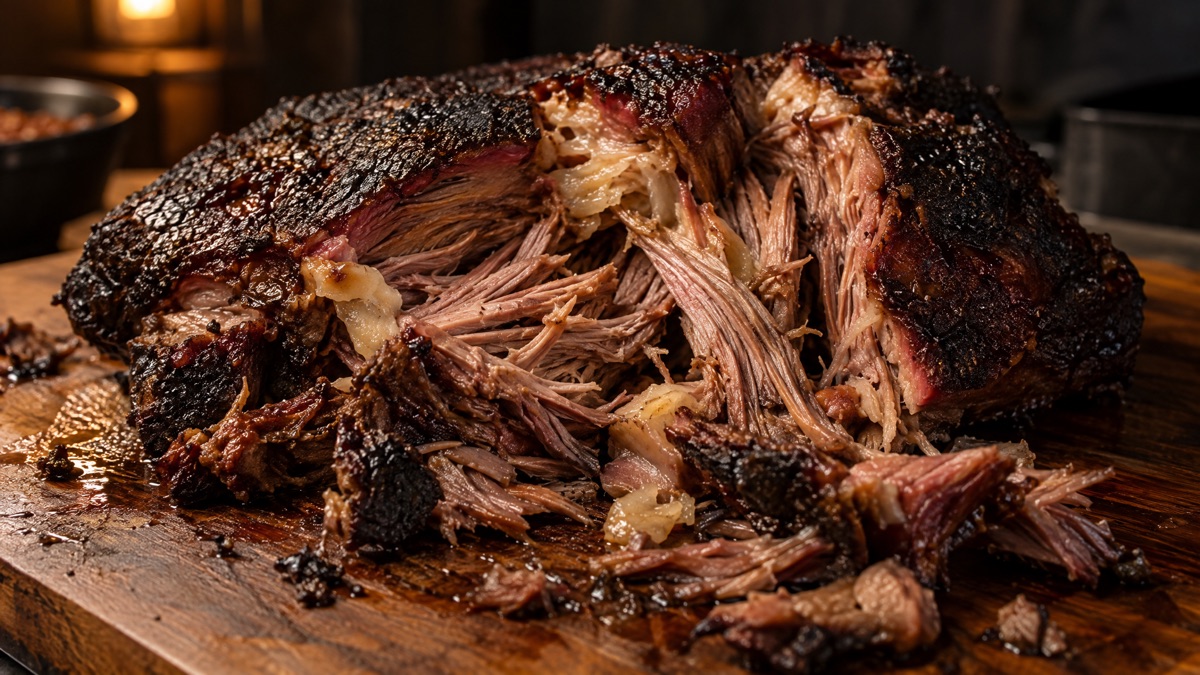
Chapter seven of After Dark BBQ: a smoked chuck roast at 250 that took all evening to give in, seven hours before it finally turned tender.
It gives when it is ready. Not one minute before, and not for asking.
The Brisket You Can Afford
A chuck roast comes off the shoulder, four muscles held together by more connective tissue than almost anything else on a steer. That is why it comes cheap, and why a man who rushes it never gets it to give.
It is also why it plays hard to get exactly the way a brisket does. The collagen that makes it tough is the same collagen that gives way to gelatin if a man holds it long enough above 160 degrees, and the meat goes from chewing like a boot to coming apart in wet strands inside the space of about ten degrees.
The difference is the price and the size. A three pound chuck roast costs what a tank of gas costs and takes six to eight hours at 250. A packer brisket costs a day of work and takes sixteen. Every mistake a man can make with a brisket he can make with a chuck roast first, on a Tuesday night, for nine dollars, and nobody has to know.
This chapter is the second week of January, one roast, and the first time in seven chapters that Henry is not the one doing it. The method underneath it is the one that works on any pit: salt and coarse pepper, 250 degrees, wrap at 165, pull at 203, rest an hour.
She Asked for the Knife
It is January and the yard is frozen hard enough to ring under a boot, and Lena comes on a Tuesday the way she has come on every Tuesday since October.
She does not sit down.
LenaI have watched you do this for six months.
Henry is banking coals and does not look up. “You have told me how to do it for six months.”
“That is what I am saying.” She has a paper bag under her arm. She sets it on the stainless table. “I know every word of it and I have never once done it with my hands. Not once. I can tell you the temperature and I could not tell you what it feels like.”
In the bag is a chuck roast. Three and a quarter pounds, a little over nine dollars, the sticker still on it.
HenryYou bought a roast.
“I bought the cheapest thing in that case that does what a brisket does.” She takes her coat off, which she has never done in this yard. “You are going to stand over there and let me ruin it.”
He thinks about it a good deal longer than he should.
Henry“And if you ask me a question?”
“Then answer it. But do not touch it and do not take the probe out of your pocket unless I ask for it.”
I have taught maybe forty people to cook on a pit. Every one of them I taught by taking the tongs out of their hand at the worst possible moment and doing it for them, and every one of them learned nothing at all that night.
Featured Fuel: Ashfell Fuelworks Post Oak
Beef off the shoulder wants the same wood beef off the breast does. In the After Dark BBQ universe Henry keeps post oak on the rack for anything beef, because it is the one wood that is very hard to overdo on a six-hour cook.
Post oak burns steady and clean, puts a deep blush on beef, and never takes the flavor anywhere it does not want to go.
Hickory works if the fire is honest and small. Mesquite all over a shoulder for seven long hours is how a roast ends up tasting like creosote and regret.
A chuck roast is small, so keep the fire small and attentive. Two splits at a time, not four. Nobody likes being smothered.
Technique Spotlight: Salt, Pepper, and Nothing Clever
A chuck roast is the wrong place for a rub with sugar in it.
Why
Seven hours of heat turns sugar bitter long before the collagen has given up, and there is no thick fat cap on a chuck roast to hide behind. Half coarse black pepper and half kosher salt, by volume, is the whole seasoning, and it is what Texas puts on beef for the same reason.
How much
Enough that you can no longer see red through it, on every side, ends included, rubbed in with both hands. A three pound roast takes more than people expect — about two tablespoons of the mix.
Trimming
Almost none. Take off any loose flap that will dry into a shoestring and leave the rest of her alone. The seams of fat running through the middle are the whole point of the cut and they render out into the meat.
Season it and put it on cold. A roast does not need to come to room temperature, and an hour on the counter is an hour of bacteria doing arithmetic.
Six Hours and She Would Not Let Me Touch It
She rubs it down badly the first time and a good deal better the second, and she says so out loud before he can.
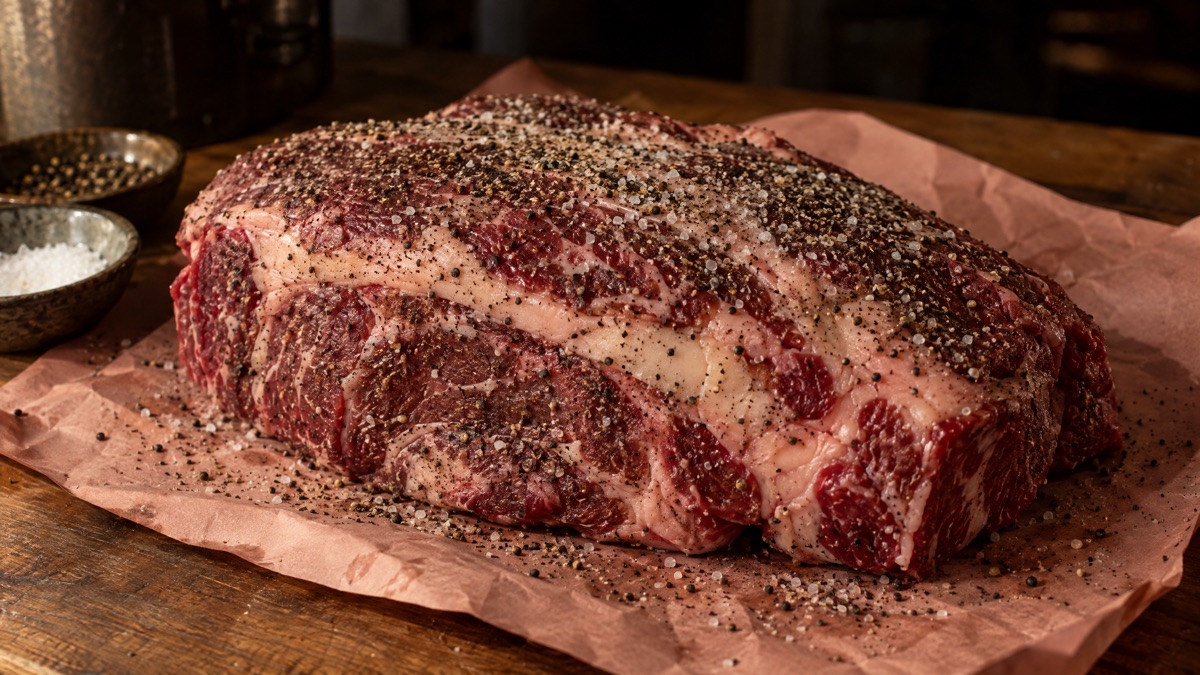
The Ironbound is at 250 by half past two. The roast goes on fat seam up, dead center of the grate, because she asks where and he says the middle and does not say why until she makes him.
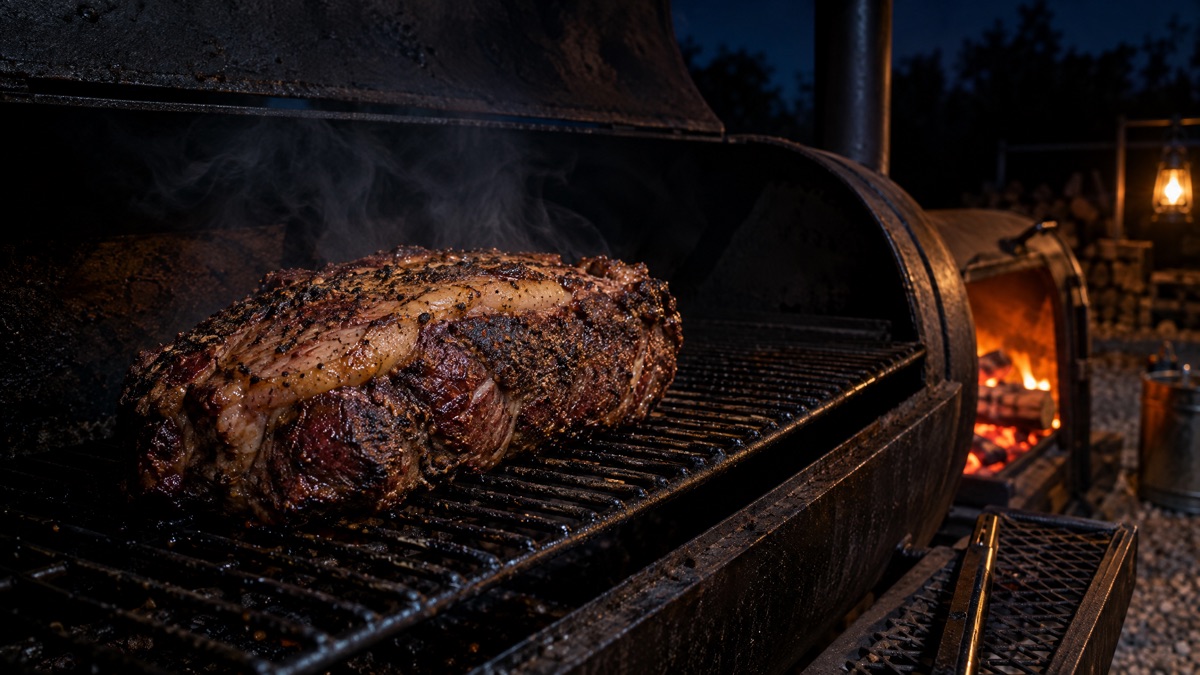
A chuck roast is how a man learns brisket without paying brisket prices. Same shoulder, same collagen, same stall, same long evening of nothing appearing to happen. Three pounds instead of fourteen, and a third of the money.
You can read this one for who finally got her hands on it. I read it for the part where Henry stood six feet back with a probe in his pocket all night and never once took it out.
DutchThen the part nobody writes about. Four hours of a yard in January with a woman sitting in a folding chair with her coat buttoned back up and a man across from her who keeps putting his hand in his pocket and taking it out empty.
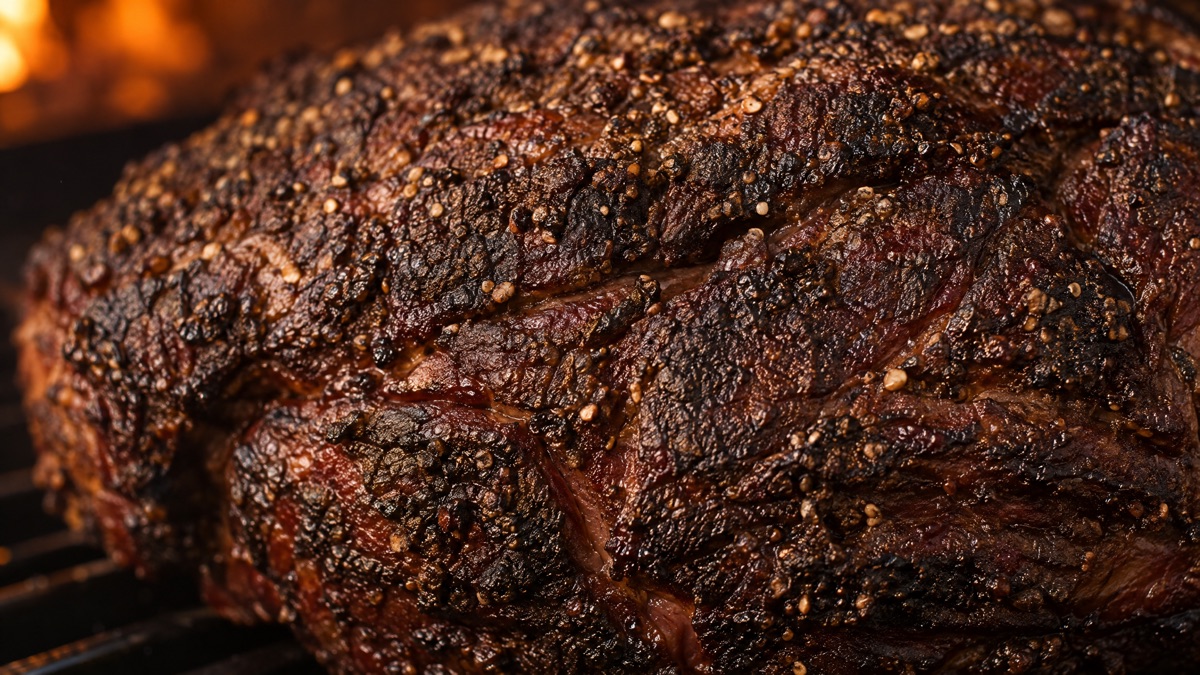
At half past six the roast reads 158 on her thermometer, the cheap one out of the drawer, and then it will not move for forty minutes.
LenaIt is broken.
HenryIt is not broken.
It has not moved in forty minutes.
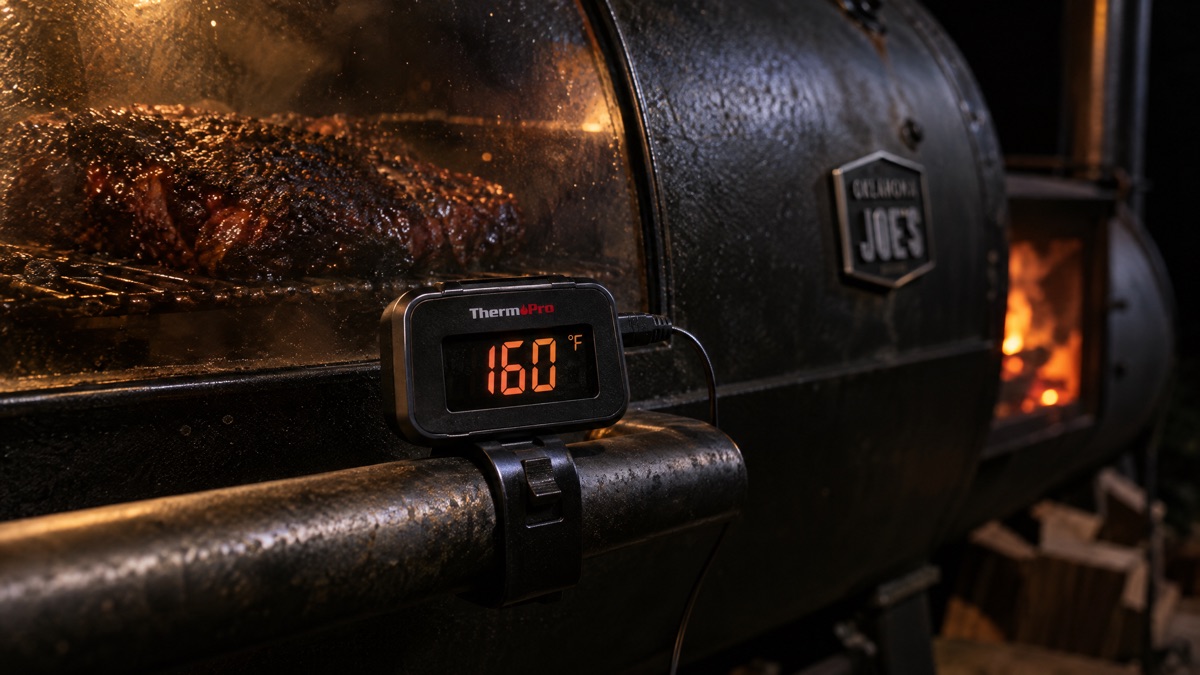
It will not move for another hour either, unless you do something about it.
She looks at the lid for a while.
Lena“Foil or paper.”
Henry“Your call. You have told me the answer twice.”
She wraps it in paper at 165 with a splash of beef stock poured in at the fold, and she does it clumsily and tightly and it holds, and holding is the only thing a wrap has to do.
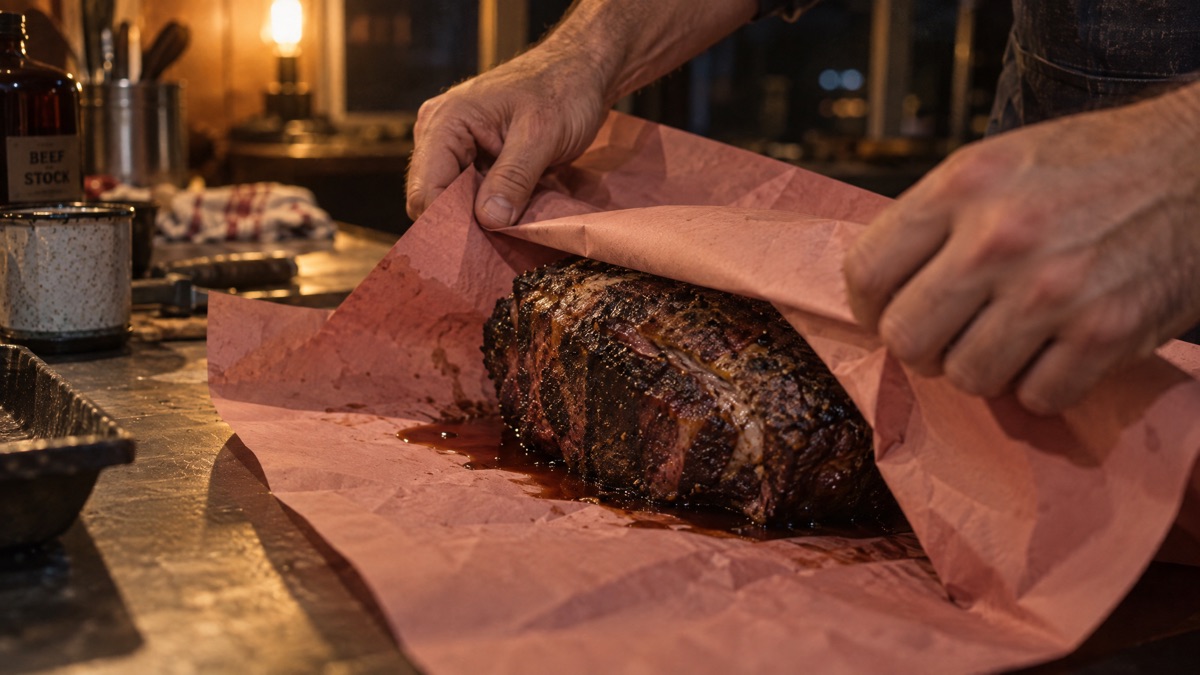
Back on at seven. The number starts climbing again inside fifteen minutes, the way it always does once it has given in, and she watches it go from 168 to 175 and does not say one word for a long time.
LenaIt was the water.
Six months of being told about the stall, and forty minutes of sitting in front of one in the cold is what finally taught her what it was.
Science Spotlight: Why 203 and Not 195
Tough cuts are tough because of collagen, and collagen is not fat and does not melt at fat temperatures.
It starts converting to gelatin above about 160°F, and it converts faster the hotter and longer it is held. That conversion is the entire reason a shoulder stays up for seven hours — not to raise the temperature, which takes two, but to hold it hot long enough for the tissue to come apart in your hands.
At 195°F a chuck roast is cooked and still chewy, because the conversion is maybe half done. Between 198 and 205 it finishes, and the meat goes from cooked to falling apart in about ten degrees. 203°F is the middle of that window, which is why every pitmaster says the same number.
But the number only gets you close. The real test is the probe: it should slide into the thickest part with no resistance at all, like warm butter. If it fights you at 203, the collagen is not finished, and twenty more minutes will do more than any thermometer reading.
This is also why a chuck roast makes a liar out of the clock and keeps a man up later than he planned. Two roasts of the same weight can finish an hour apart because one had more connective tissue in it than the other.
It Gave at Two Minutes Past Nine
At 8:40 she asks for the probe.
He hands it over without saying anything, which took more out of him than the entire night did. She puts it in from the top, straight through the paper, and it stops.
Lena“It is fighting me.”
Henry“Then it is not ready.”
She sits back down. She does not argue about it, and she does not ask him to check it for her, and the two of them sit out in the cold and wait on a nine dollar piece of meat like it is worth something.
At 9:02 she tries again and the probe goes in to the handle like there is nothing in there at all left to stop it.
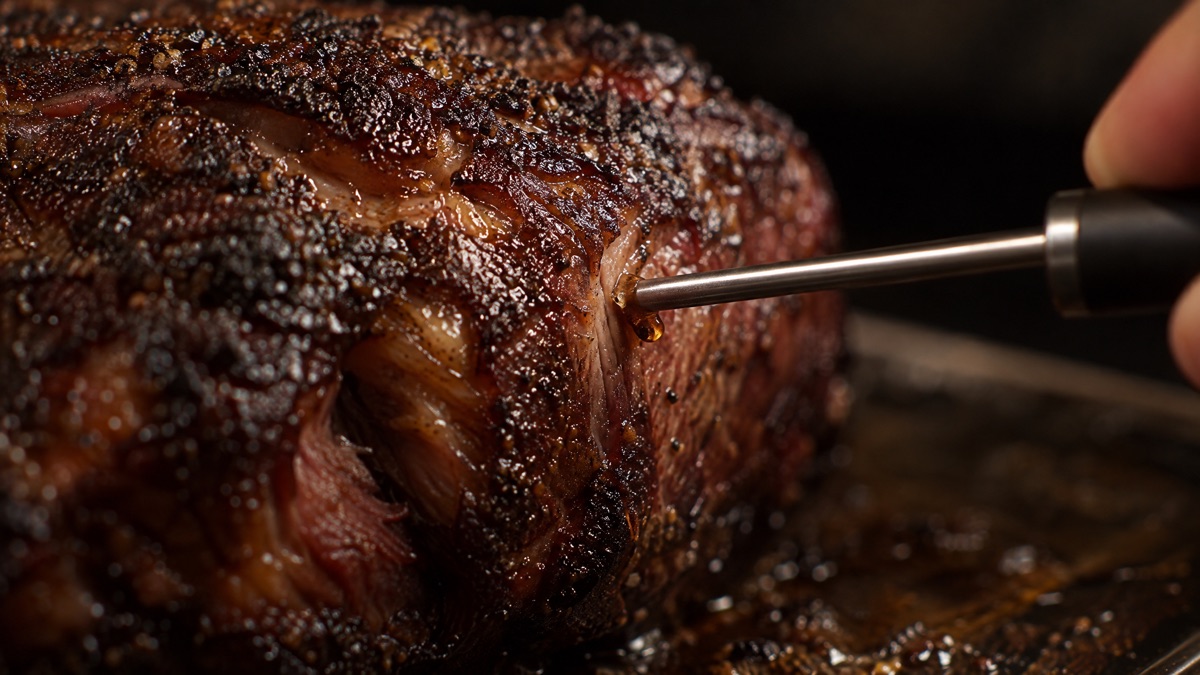
She says one word, and it is not a word Dutch prints.
It comes off at 203. It sits wrapped on the stainless table for a full hour, and she will not let him open it early either, which is his own rule coming back at him. At ten they open the paper and the steam comes up between the two of them and the whole roast falls apart under two forks without either of them having to work at it.
They eat it standing up at the table, off the paper, with their fingers, in a yard at ten degrees, and neither of them suggests going inside.
What She Said Afterward
Not much. She wiped her hands and put her coat on and got as far as the gate.
LenaEvery time I told you to be patient.
HenryI know.
I did not know what I was asking you for.
The gate clicked. He stood out in the yard with the paper and the fat going cold on it and did not go inside for a long while.
Already cured, already smoked, already cooked by somebody else — and he puts it on anyway.
Read the next chapterHow long does a chuck roast take to smoke?
About 6 to 8 hours at 250°F for a 3 to 4 pound chuck roast — roughly 2 hours per pound, including the stall and a wrap. Take it to an internal temperature of 203°F, or until a probe slides in with no resistance, then rest it wrapped for 45 minutes to an hour.
Season it with half coarse black pepper and half kosher salt and nothing else. On at 250°F, fat seam up. Expect the temperature to park somewhere between 155 and 170°F for an hour or more; wrap it there, in butcher paper or foil, with a splash of beef stock. It climbs steadily once it is wrapped up snug, and it is done the moment it stops fighting the probe.
| Weight | At 225°F | At 250°F | At 275°F |
|---|---|---|---|
| 2 lb | 5–6 hr | 4–5 hr | 3½–4 hr |
| 3 lb | 7–8 hr | 6–7 hr | 5–6 hr |
| 4 lb | 8–10 hr | 7–8 hr | 6–7 hr |
| 5 lb | 10–12 hr | 8–10 hr | 7–8 hr |
| Stage | Pit | Internal | Time |
|---|---|---|---|
| Season, half salt half coarse pepper | — | — | straight from the fridge |
| On, fat seam up, lid down | 250°F | — | no spritz for 3 hr |
| Bark set | 250°F | about 150°F | 3–4 hr in |
| The stall | 250°F | 155–170°F | 1–2 hr of nothing |
| Wrap, splash of beef stock | 250°F | 165°F | paper or foil |
| Probe tender, off | 250°F | 200–205°F | 6–8 hr total |
| Rest, still wrapped | — | — | 45–60 min |
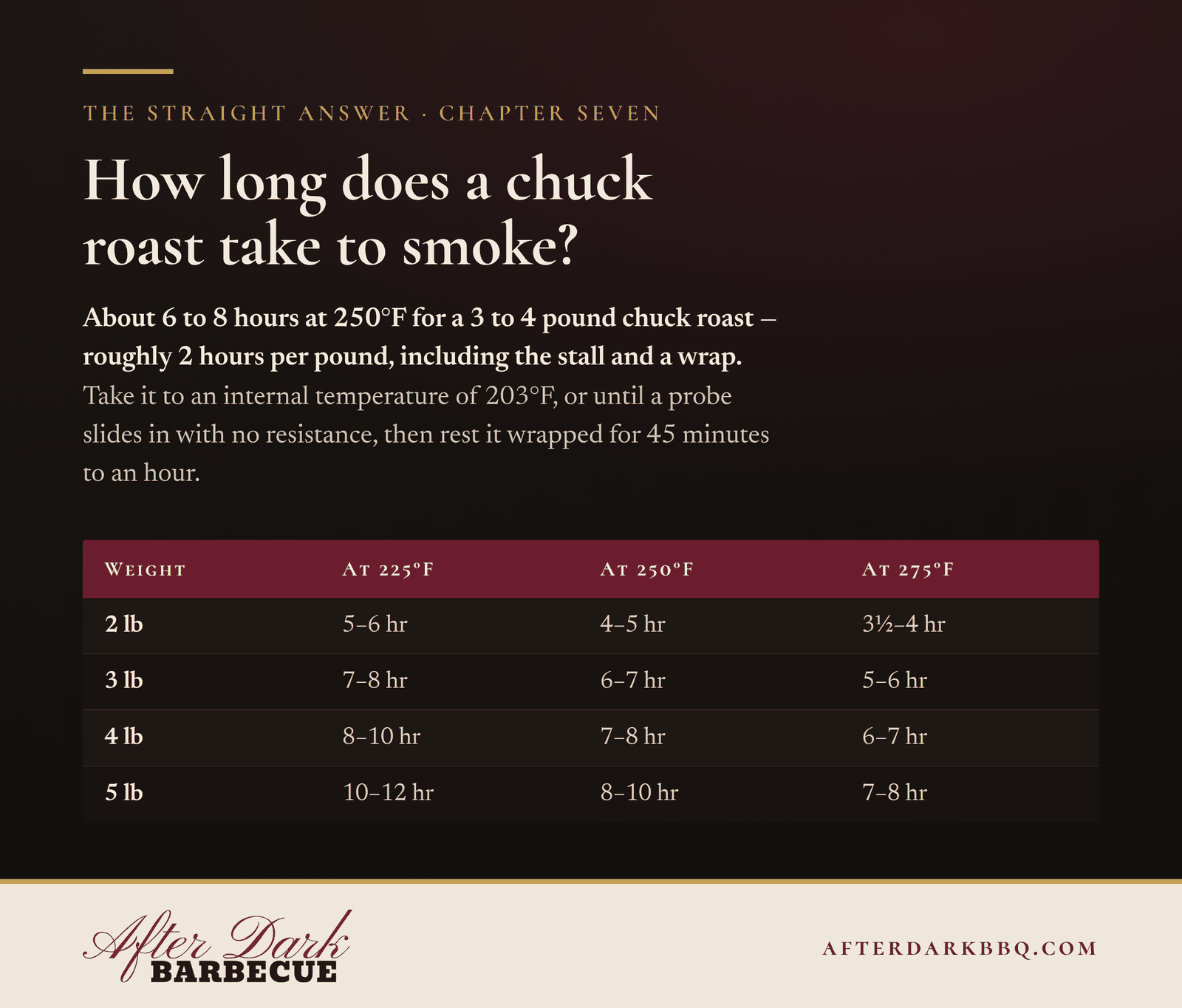
How to read this: Pit temperature is what the smoker holds; internal is what a probe reads in the thickest part of the roast. Weight is a planning number and not a promise — two roasts of the same weight can finish an hour apart, because one carried more connective tissue than the other. The probe decides, not the clock and not the thermometer.
This is the cook from the story above with nothing left on: just the numbers, ready for your own pit.
Recipe: The Nine Dollar Rehearsal
What You Will Need Tonight
A chuck roast, 3 to 4 lb · kosher salt and coarse black pepper, half and half, about two tablespoons · a cup of beef stock · butcher paper or foil · post oak.
Prep
Trim only loose flaps that would dry out. Leave the fat seams running through it. Season every side including the ends until you cannot see red through the pepper. Put it on cold.
The cook
250°F, fat seam up, in the middle of the grate. Lid down and leave it alone for the first three hours while the bark sets.
The stall
Somewhere between 155 and 170°F it will stop climbing, sometimes for two hours. That is moisture evaporating off the surface as fast as the fire pushes heat in. Wrap at about 165°F with a splash of stock at the fold to end it, or ride it out and keep more bark.
The finish
Off at 200 to 205°F, and only when the probe slides in with no resistance. Rest it wrapped, 45 minutes to an hour.
What to do with it
Pull it apart with two forks and put the liquid from the wrap back over it. It is pulled beef: sandwiches, tacos, over grits, or standing at the table off the paper. Sliced is a different cook — for that, pull it at 190 to 195°F and it will carve, firm and beefy, more like a pot roast that met a fire.
Sources
Safe minimum internal temperatures for beef are from the USDA Food Safety and Inspection Service Safe Minimum Internal Temperature Chart. The 40 to 140°F range and the two hour limit out of refrigeration are from the FSIS Danger Zone (40°F to 140°F) fact sheet. The stall window, the wrap point and the 200 to 205°F finish are After Dark BBQ’s own, measured at the grate and stated as ours rather than dressed up as research. Read September 2026.
Stay a While Longer
Volume One, complete. Volume Two, a new chapter every Friday.All the chapters · Write to Dutch

Leave a Reply