Chapter Eighteen · Meatloaf at 250° · Three hours
Chapter Eighteen
SHE PUT THE PAN BACKCOOKING TOGETHERUNGLAMOROUS ON PURPOSE
Heat Running hot
Chapter eighteen of After Dark BBQ: meatloaf hand-packed the way she wanted it, three hours at 250° and glazed in the last half hour.
No pan. Bare on every side, and a glaze that goes on late.
She Put the Pan Back in the Cabinet
She found the loaf pan in the drawer under the stove and put it right back.
LenaNot tonight.
HenryThat is what it is for.
LenaIt is for hiding. Shape it with your hands and put it on a rack and let it be looked at.
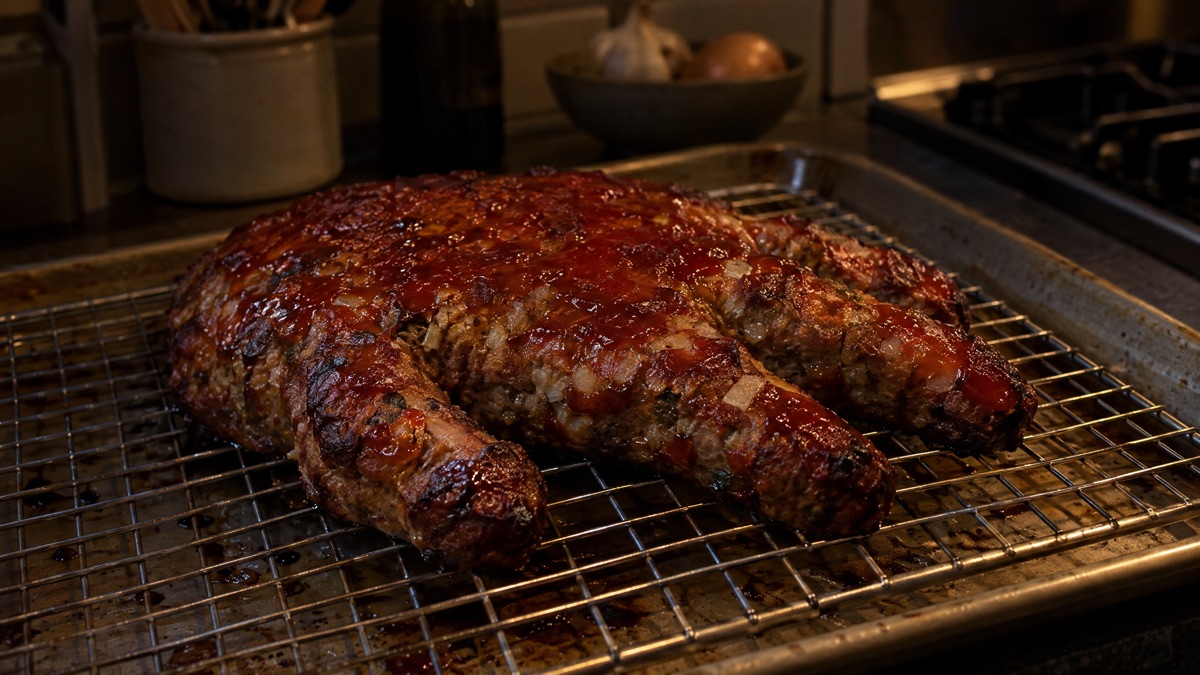
Free-form and out in the open on a rack is the entire upgrade. Every surface gets air, every surface gets smoke, and the fat that renders out falls straight through instead of pooling around the sides and stewing them.
What Goes In, and What Holds It Together
Two pounds of eighty-twenty ground chuck and a half pound of ground pork. Eighty-twenty is not a suggestion. The fat is what makes it worth the trouble. Ninety-ten gives you a dry loaf no matter what you do to it, because there is nothing to render.
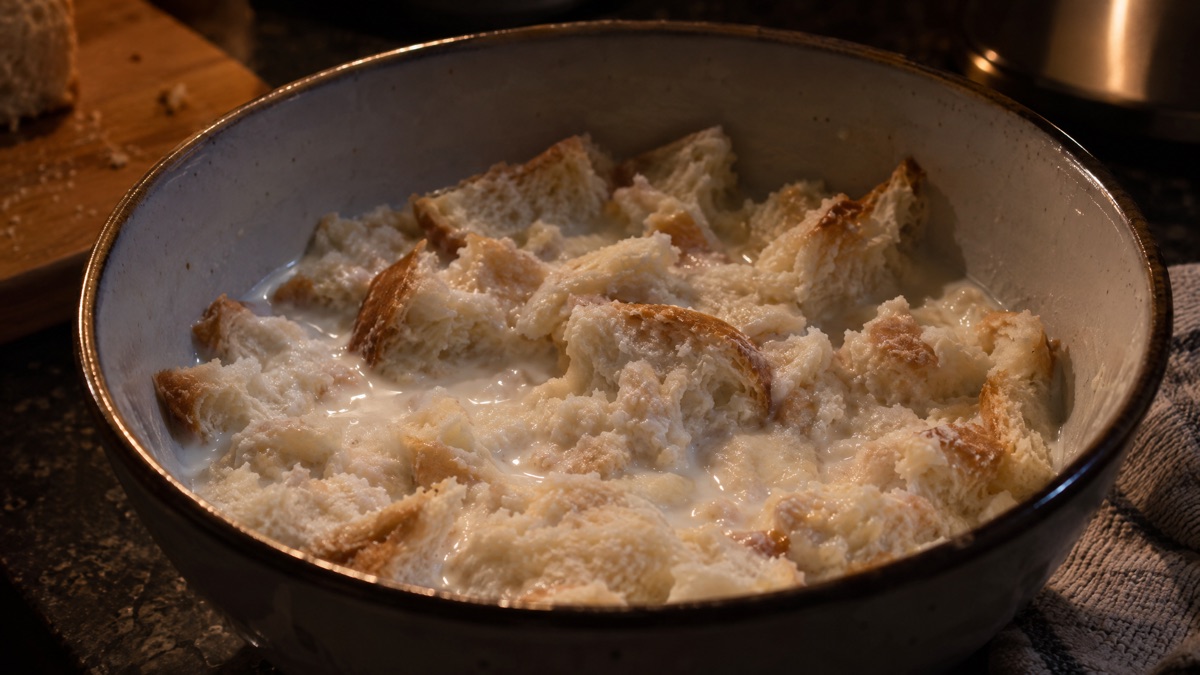
The binder is a panade — half a cup of milk poured over three-quarters of a cup of breadcrumbs and left five minutes until it is a paste. Not dry crumbs. Dry crumbs pull water out of the meat, which is exactly backwards. The panade holds water in and keeps the proteins from tightening into a brick.
Two eggs, onion cooked soft first, garlic, Worcestershire, salt and a lot of black pepper. Raw onion in a meatloaf stays crunchy and weeps water in the middle of the cook.
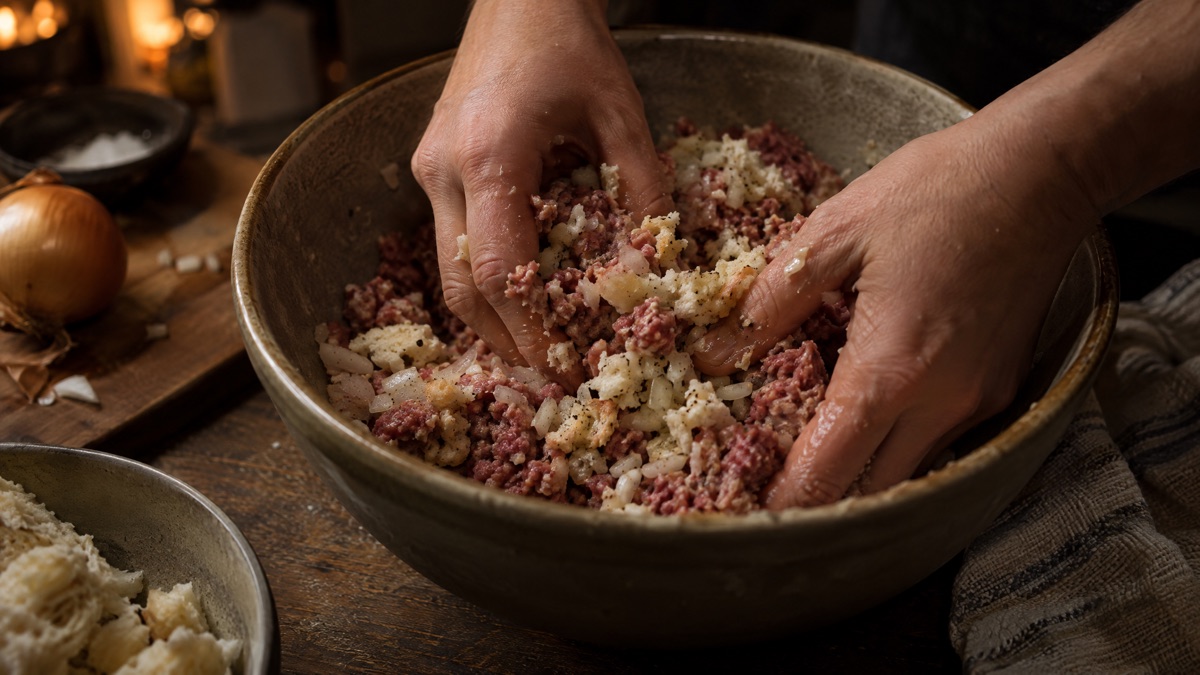
Then the part every man gets wrong: use your hands, take it gentle, and stop early. Worked too long, ground beef goes springy and dense the way a sausage does, and that texture in a loaf reads as rubbery.
Meatloaf carries a reputation it did not earn, and the reputation comes from the pan. A loaf pan steams the sides, boils the fat back into the meat, and gives a man one browned surface out of six.
You can read this one for two people cooking something unglamorous on purpose. I read it for the decision to throw the pan away.
DutchLenaHands. Not a spoon.
HenryIt is cold.
LenaIt will not be for long. Gently, and stop before you think you are finished.
Technique Spotlight: Shape It Low and Wide
A tall narrow loaf takes an hour longer and the middle finishes last. Make it about four inches wide and two and a half tall, longer rather than taller. More bark, faster cook, and every slice has a crust on three sides.
Three Hours, and the Glaze Goes On Late
Two hundred and fifty degrees, hickory with a little cherry, loaf straight onto a rack over a tray to catch what falls.
It builds a proper bark in the first two hours, left bare and on display — a real one, dark and dry at the edges, the same thing that happens to a pork butt. That is the whole argument for leaving it bare for as long as a man can stand it.
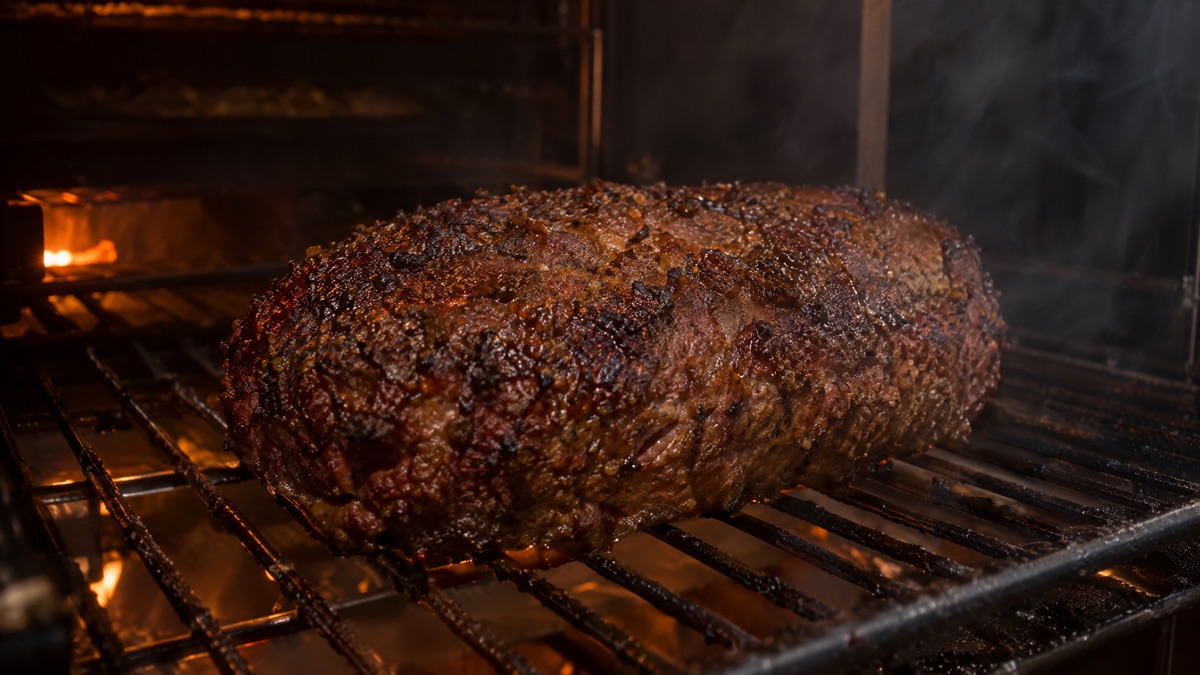
At about an hour and a half the outside is set and the inside is somewhere near one hundred and twenty. This is when a man gets eager and wants to start glazing. Do not.
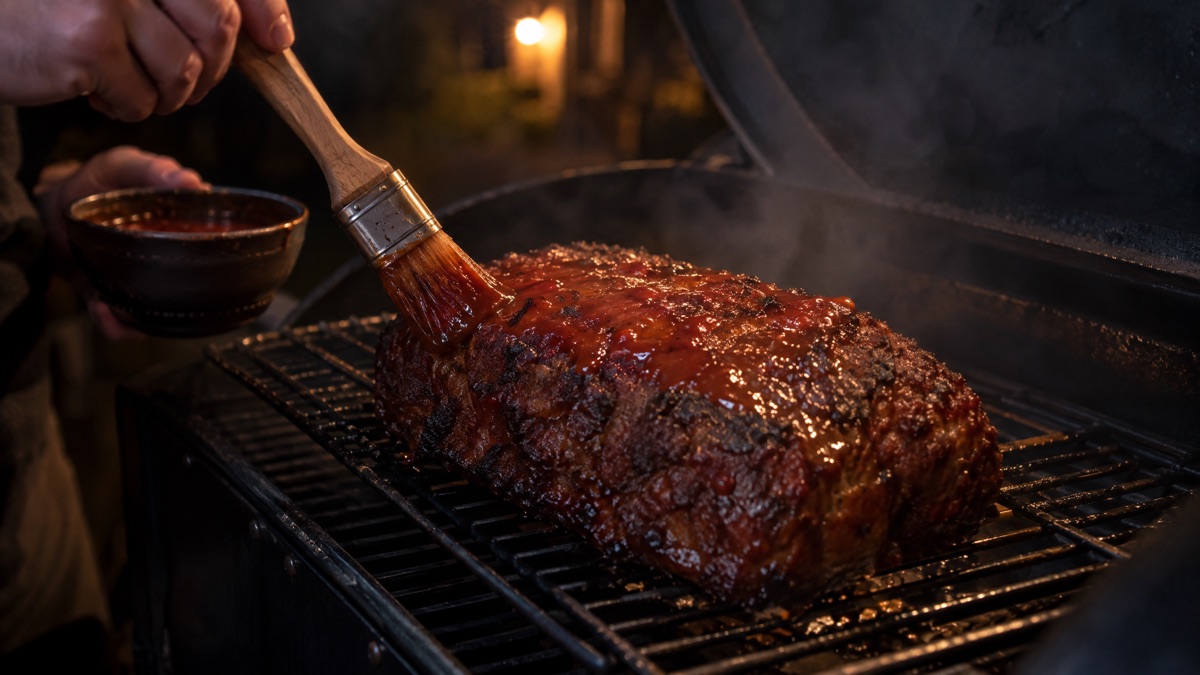
Ketchup, brown sugar and vinegar is mostly sugar, and sugar on the outside of a three-hour cook goes black. The glaze goes on at one hundred and forty internal, roughly the last thirty to forty minutes, in two thin coats twenty minutes apart. Two thin coats set into lacquer. One thick coat, all at once, slides off the sides and burns on the tray.
Off at 160, Rested, and Cut Thick
One hundred and sixty degrees in the center. That is a ground beef number and it is not negotiable the way a whole muscle is — grinding moves the outside of the meat to the inside, so the whole loaf has to get there.
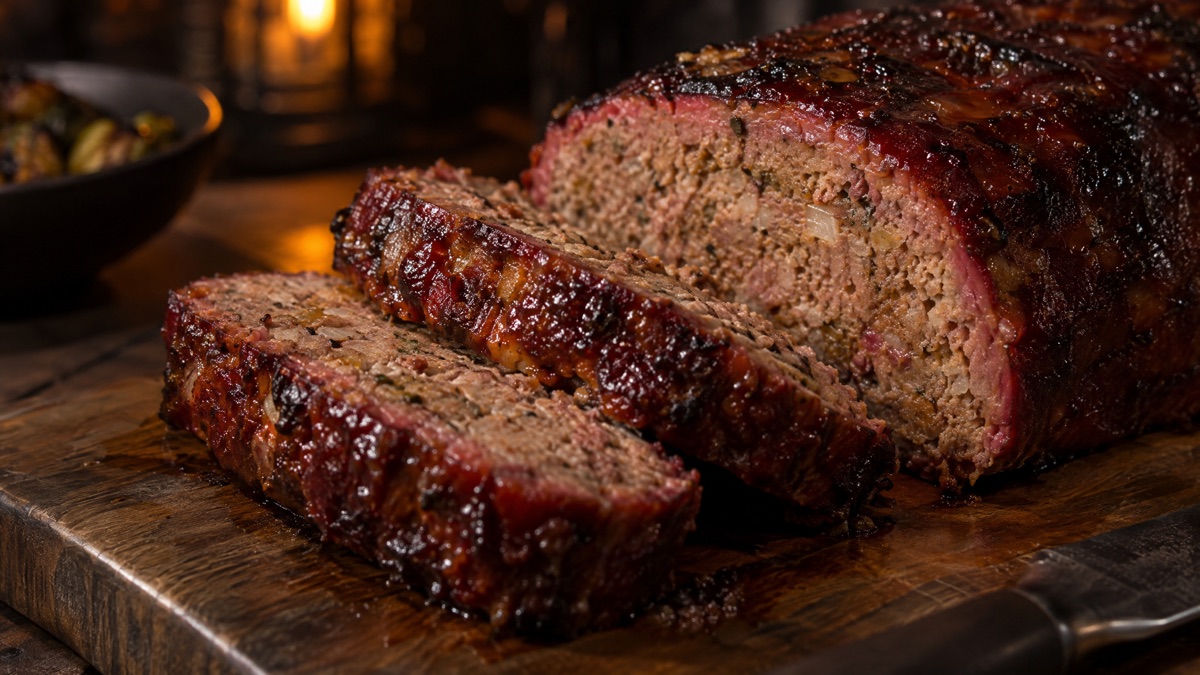
Fifteen minutes on the board. Slice thick, an inch, with a serrated knife and no sawing.
It came out looking like something that belonged on a pit instead of in an oven: dark the whole way around, glossy on top, and the slices held together without a pan ever having laid a hand on them.
Henry“It held its shape.”
Lena“Because you did not squeeze it to death.”
The next day he fried two cold slices in a dry pan for breakfast, which is the only correct use for leftover meatloaf and is reason enough on its own to make a second one.
The Grind, and Why the Butcher Counter Wins
The tray in the case said ground beef and the percentage was in small print on the label.
Eighty-twenty ground chuck is the right call and it is not a compromise. Ninety-ten gives you a loaf that is dry no matter how good your panade is, because there is nothing to render and nothing carrying flavor. Seventy-thirty renders so much fat that the loaf collapses in on itself and sits in a pool.
The half pound of ground pork is not a garnish. It is the friend who loosens everybody up. Pork fat renders at a lower temperature than beef fat, so it starts basting the inside of the loaf early in the cook, before the beef has given up anything. It also brings a softer texture, which keeps ground chuck from reading as dense.
If your butcher will grind it coarse, ask him to. Supermarket grind is fine and very uniform, and uniform is what makes meatloaf feel manufactured. A coarser grind gives a loaf that eats like meat instead of like pâté.
Lena“Ask him for a chili grind.”
Henry“And if he looks at me strangely.”
Lena“He will look at you with respect. It is different from what you are used to.”
Why Free-Form Beats the Pan, Measured
A loaf pan gives a man one browned surface out of six. Everything else is in contact with hot metal and its own rendered fat, which is the definition of braising.
Free-form on a rack gives him five browned surfaces, nothing hiding, and a bottom that drains. That is five times the bark, and bark on a meatloaf is not a small thing — it is the same Maillard crust that makes a burnt end worth the five hours, and it is the only part of a meatloaf anybody has ever gone back for.
It also cooks about forty minutes faster, because heat and smoke reach the sides instead of having to conduct through a wall of steel.
The objection is always the same: will it fall apart in his hands. No. The panade and two eggs bind it, and a loaf shaped low and wide has no structural reason to slump. What falls apart is a loaf that was mixed too little, or shaped too tall, or moved while it was still hot. Let it rest fifteen minutes and it will slice clean with a serrated knife.
The Breakfast That Justifies the Whole Thing
Two cold slices, an inch thick, straight into a dry cast iron over medium heat. No oil — there is enough fat in the loaf and it will release on its own in about ninety seconds.
Three minutes a side. The glaze on the top caramelizes a second time and the cut faces go crisp and dark, and what you have is somewhere between meatloaf and a hamburger steak and better than either.
On white bread with more ketchup, or under two fried eggs, or standing at the counter with a fork while the coffee is still brewing.
It is the reason to make a two-and-a-half-pound loaf for two people, which is what they did, and which they have done every time since.
LenaYou made too much.
HenryI made exactly enough.
LenaFor tomorrow.
HenryFor tomorrow.
The Glaze, Built From What Is Already Open
Three parts ketchup, one part brown sugar, one part cider vinegar, whisked cold. That is the whole recipe and it has not been improved on in seventy years.
The vinegar is doing more work than it ever gets credit for, the way the quiet ones do. Ketchup is already sweet, and brown sugar makes it sweeter; without acid the glaze reads as candy against a savory loaf. A tablespoon of Worcestershire or a spoon of Dijon in the mix pushes it further toward savory, and both are welcome.
Two thin coats, twenty minutes apart, in the last forty minutes. The first coat goes tacky and sets. The second one lays over it and gives you depth and shine. One thick coat applied at the end sits wet on the surface, slides down the sides, and burns on the tray under the rack.
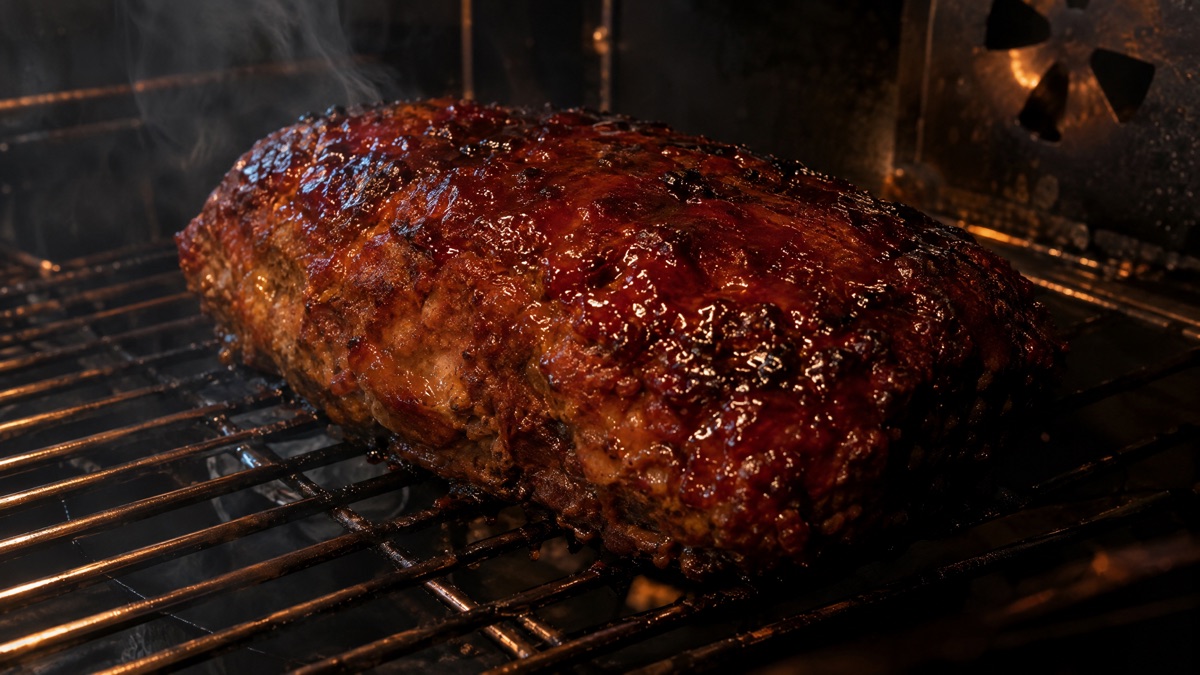
Brush it on slow. Do not spoon. A spoon puts three times as much on as a man wants and there is no taking it back off.
Smoke on Ground Beef Is Different
Grinding changes what smoke does to meat, and it is the reason a smoked meatloaf tastes stronger than a smoked roast of the same weight.
A whole muscle has one exterior. Smoke lands on it and works inward slowly, and after twelve hours a brisket has taken on a surprisingly thin band of smoke flavor with a lot of beef behind it.
Ground beef is all surface, folded in on itself. Every particle in that loaf was an exterior five minutes ago, and the loaf you shaped has channels of air running through it that smoke moves into. Three hours on a meatloaf reads like six on a roast.
Which is why the wood should go lighter than instinct says. Easy does it. Hickory with a little cherry. Not mesquite, not a firebox packed with oak. And three hours is the number — a five-hour meatloaf is not more smoky in a good way, it is acrid and dry, and it is a mistake people make exactly once.
The one cook in this story that punishes a man for waiting.
Read the next chapterHow long does it take to smoke a meatloaf?
About three hours at 250°F for a two-and-a-half-pound free-form loaf, off at 160°F internal. Glaze in the last 30 to 40 minutes only, in two thin coats.
| Stage | Pit | Internal | Time |
|---|---|---|---|
| Panade, then mix by hand | — | — | 15 min |
| Shape low and wide, on a rack | — | — | 5 min |
| On, naked | 250°F | — | — |
| Bark sets | 250°F | about 120°F | 1.5 hr |
| First thin glaze coat | 250°F | 140°F | about 2 hr 15 min |
| Second thin glaze coat | 250°F | about 150°F | 20 min later |
| Off | 250°F | 160°F | about 3 hr |
| Rest, then slice an inch thick | — | — | 15 min |
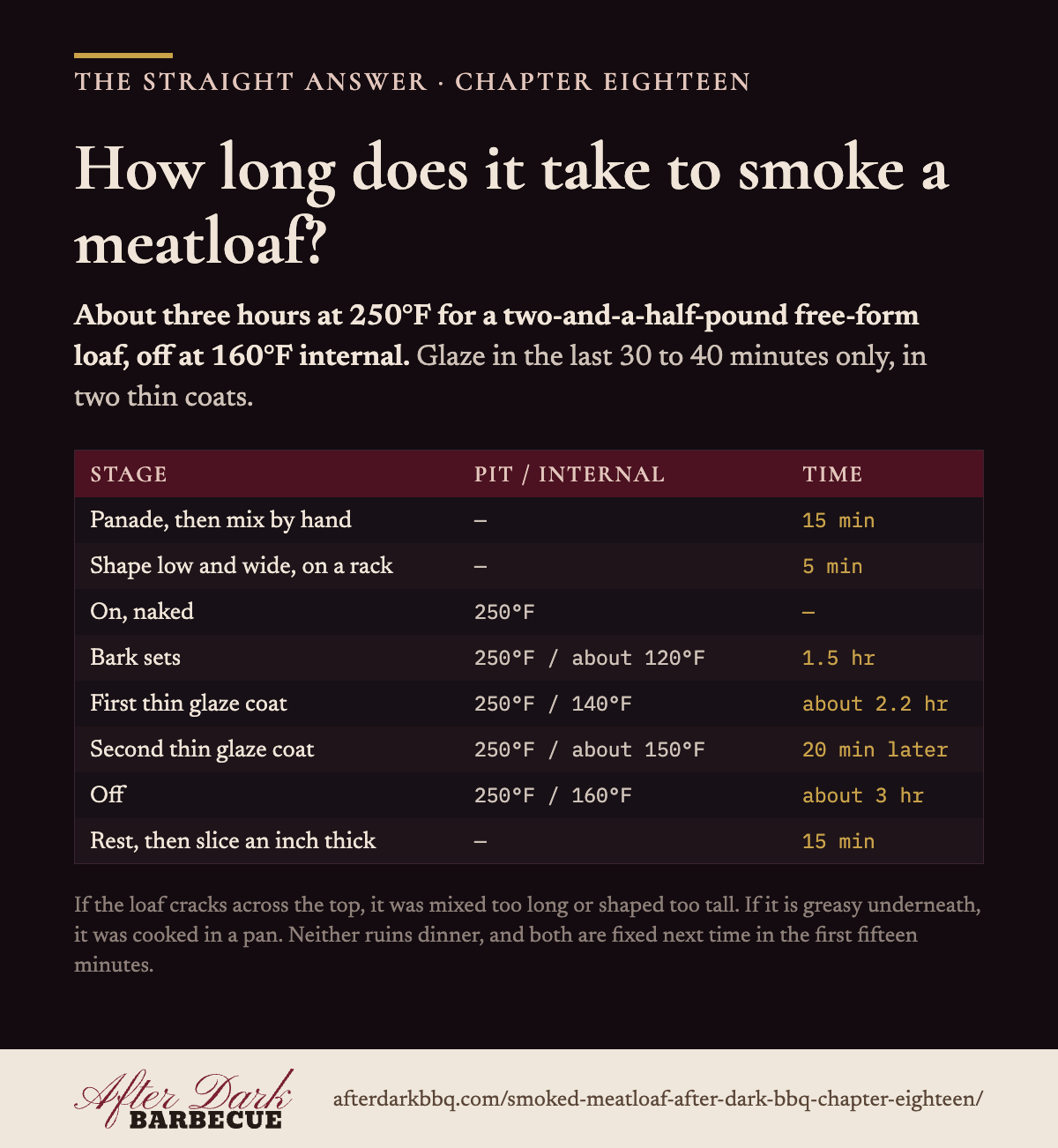
If the loaf cracks across the top, it was mixed too long or shaped too tall. If it is greasy underneath, it was cooked in a pan. Neither ruins dinner, and both are fixed next time in the first fifteen minutes.
Recipe: The Short Version
Meat: 2 lb ground chuck (80/20) and ½ lb ground pork.
Panade: ¾ cup breadcrumbs soaked in ½ cup milk, 5 minutes.
Also: 2 eggs, 1 onion cooked soft, 3 cloves garlic, 2 tbsp Worcestershire, salt, heavy black pepper.
Mix: by hand, and stop early.
Shape: free-form on a rack, about 4 inches wide and 2½ tall.
Smoke: 250°F, hickory and cherry, about 3 hours.
Glaze: ketchup, brown sugar and cider vinegar, two thin coats in the last 40 minutes.
Off: 160°F. Rest 15 minutes, slice an inch thick.
Next: a tri-tip, ninety minutes, and the first cook in this story that punishes you for being patient.
The Hard Numbers, Laid Out Bare
How long does it take to smoke a meatloaf — the chart, the stage table and the questions people actually ask, with no story attached.
Sources
The 160°F safe minimum internal temperature for ground meat is from the USDA Food Safety and Inspection Service Safe Minimum Internal Temperature Chart. The 40 to 140°F range and the two hour limit out of refrigeration are from the FSIS Danger Zone (40°F to 140°F) fact sheet. The 250°F pit, the bare bark stretch and the two thin glaze coats are After Dark BBQ’s own, measured at the grate and stated as ours rather than dressed up as research. Read September 2026.
Volume One, complete. Volume Two, a new chapter every Friday.All the chapters · Write to Dutch

Leave a Reply