Letters to Dutch · A reader confesses · Write in and yours may be next →
Letters to Dutch
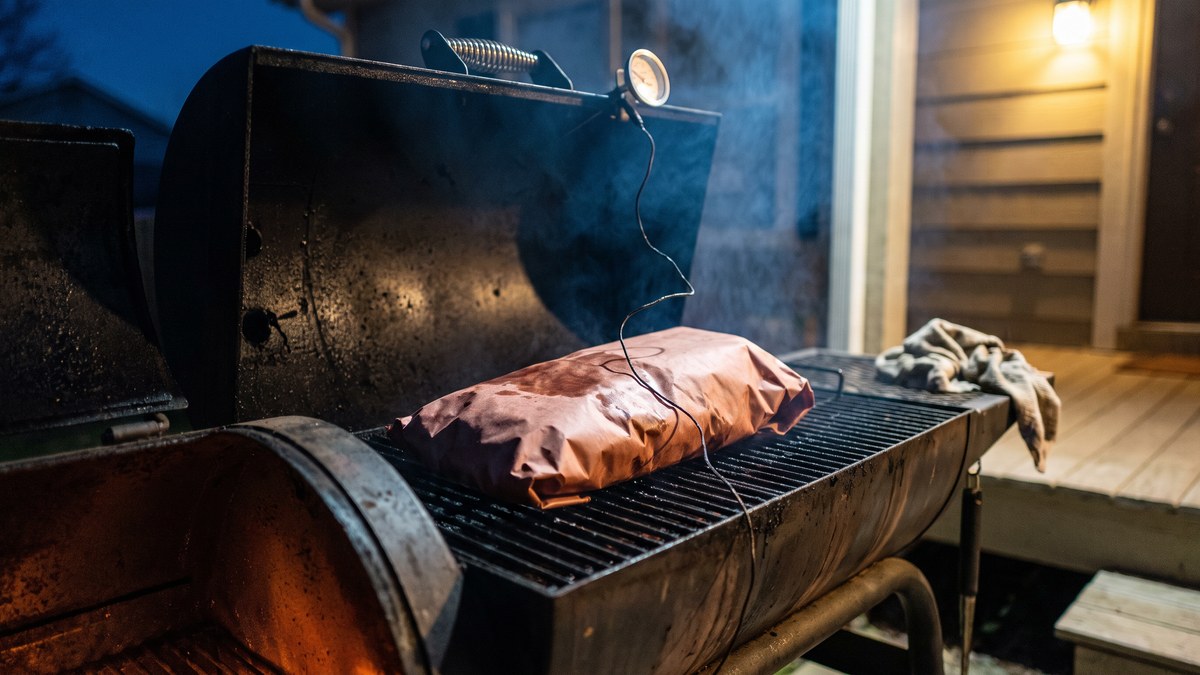
The night a brisket refused to finish, and the reading that ended it: at 203°F the probe finally slid in with no resistance at all.
From Letters to Dutch. Every temperature, time and technique below is one you can run on your own pit tonight, after the lights go down.
Dear Dutch,
I never thought this would happen to me.
I’ve cooked a lot of briskets in my life. I’ve spent long nights with fire and smoke and more than a few stubborn cuts of meat that refused to behave. But this one—this one was different. From the moment I opened the cooler and felt that cold, heavy weight settle into my hands, I knew I wasn’t going to sleep that night. Thick. Dense. Unapologetically firm. It didn’t flinch when I touched it. If anything, it dared me to commit.
I laid it out slow on the board, letting the porch light trace every curve and edge. The air felt heavier already, like it knew something was about to happen. I told myself to stay professional. To keep it about the cook. But my hands didn’t listen. They lingered. The trim was deliberate. Controlled. Just enough excess removed to reveal the promise underneath without giving everything away at once.
The rub came next, and I didn’t rush that either. Salt first—slow and even, like a promise being whispered instead of announced. Pepper followed, firm and unavoidable. Paprika brought the warmth. Garlic and onion filled the gaps. I worked the seasoning into every surface until the color deepened and the scent changed, until the brisket no longer felt cold and distant but awake—aware of what was coming.
That’s when I lit the fire.
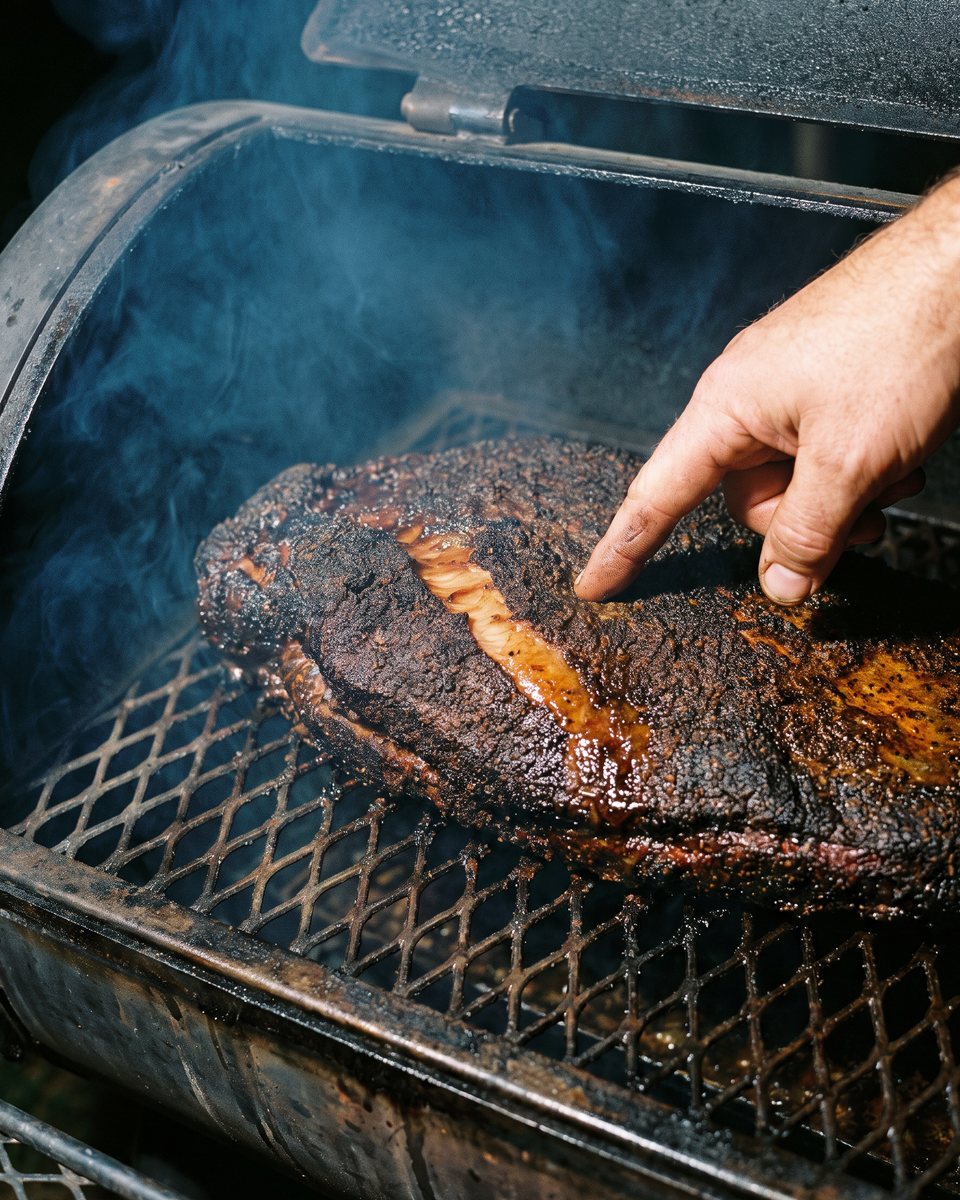
The smoker settled in at a steady 235°F, that low, controlled heat that never shouts but always gets its way in the end. I placed the brisket fat-side down, closed the lid, and let the darkness take over. No peeking. No second-guessing. The first hours were all about restraint. Just the faint hiss of wood, the slow exhale of smoke, and the steady climb of temperature beneath the surface.
Then it happened.
The anticipation was exhausting. Lingering between 160°F and 175°F internal for what felt like hours. All that surface moisture lifting off, cooling my thick meat as fast as the heat could get in. During the day, this phase fights you. At night, you let it take the time it takes. The collagen began unwinding at its own pace. The fat melting inward instead of running out along the sides. Smoke settled deep and refused to leave until it had made itself part of the story.
I checked it with my fingers, not a probe. Not yet. The surface had tightened. Darkened. The bark was forming, slowly building tension like it knew exactly how long it could make me wait. Every instinct told me to intervene earlier than I should. Wrap it. Push it. Force progress. But I didn’t. I stayed steady. Let the night do what the night does best—stretch time until you forget what impatience feels like.
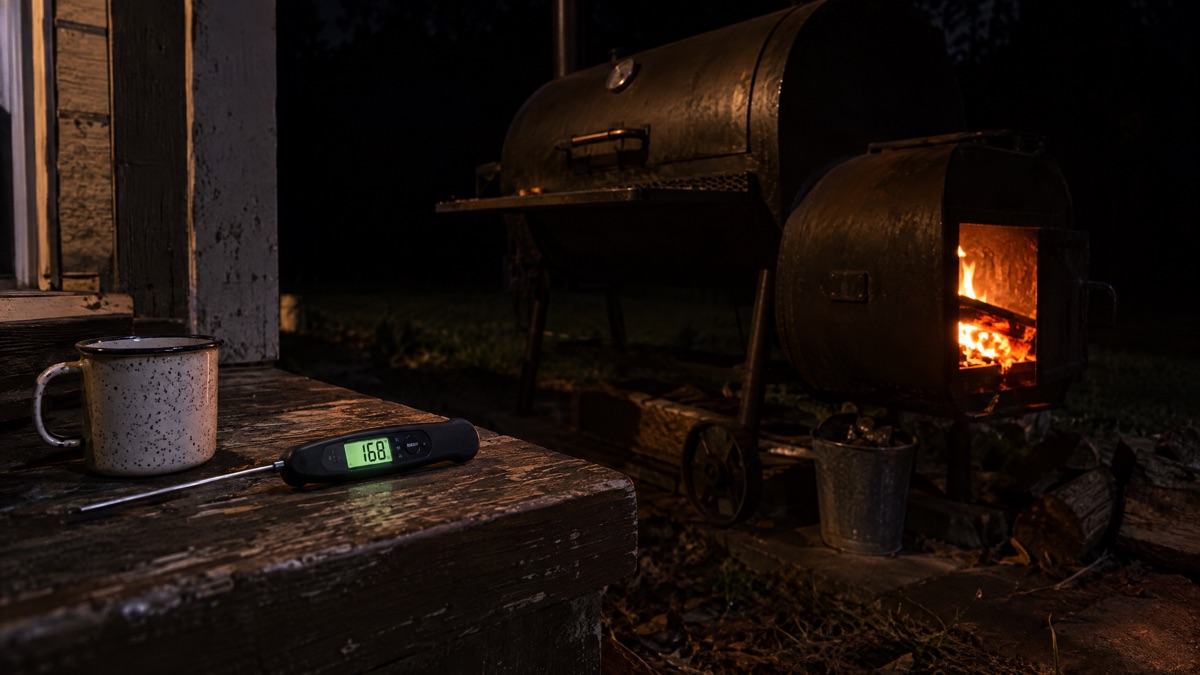
Hours passed that way. Just me, the fire, and that quiet, private understanding forming between heat and meat. When I finally slid the probe in, it met resistance—but not defiance. It was yielding, reluctantly. 168°F. Still teasing me. Still not ready.
I waited longer.
When the bark no longer dented under my finger and the surface felt dry, tight, and confident in what it had become, that’s when I wrapped it. Not tight. Never tight. Butcher paper only—enough to shield, not enough to suffocate. I put it back into the heat and felt the mood change immediately. Things were moving now. The stall was breaking. The tension was shifting.
By the time it crossed 195°F, I could feel it weakening. The probe slid in smoother. Not effortless yet—but close. Every few degrees after that felt heavier. Slower. Like the final moments of a long night when neither of you wants to be the first to give in.
At 203°F, I stopped pretending I was still in control.
The probe sank in like it had been waiting for permission. I pulled it, wrapped it in two towels, and set it in the cooler, and then I sat down on the porch step at ten past four with nothing left to do and no intention of sleeping.
— Ray, Joplin
Ray, what held you hostage at 168 was your brisket sweating faster than the fire could warm it back up. The meat was not playing hard to get. It ends when the bark dries enough to stop the sweating, and your thumb knew it before the probe ever told you.
Fat side down at 235 was right on a pit that throws its heat up at her from underneath. Paper at the wrap was the right call. It lets the bark keep breathing while she pushes through to the finish.
203 is a number people love because it is usually where she finally lets the probe slide in easy. It is how easy she gives that matters, not the number. You had it. Two hours lying in the cooler afterward would not have hurt it either.
— Dutch
Why is my brisket stuck at 168 degrees?
It is stalled, and that is normal. Between roughly 160 and 175 degrees, moisture evaporating from the surface cools the meat as fast as the fire can heat it, so the internal temperature stops climbing. It can hold there for hours. It breaks on its own once the bark dries. Wrapping gets through it faster. Start checking for tenderness at 195 degrees.
| Internal temperature | What is happening | What to do |
|---|---|---|
| 160–175°F | The stall — evaporation is cooling the surface as fast as the fire heats it | Wait it out, or wrap |
| 175–195°F | The stall has broken and the climb resumes | Leave it alone |
| 195°F | Collagen is turning to gelatin | Start probing for tenderness |
| 195–203°F | Done, when the probe meets no resistance | Pull it and rest it |
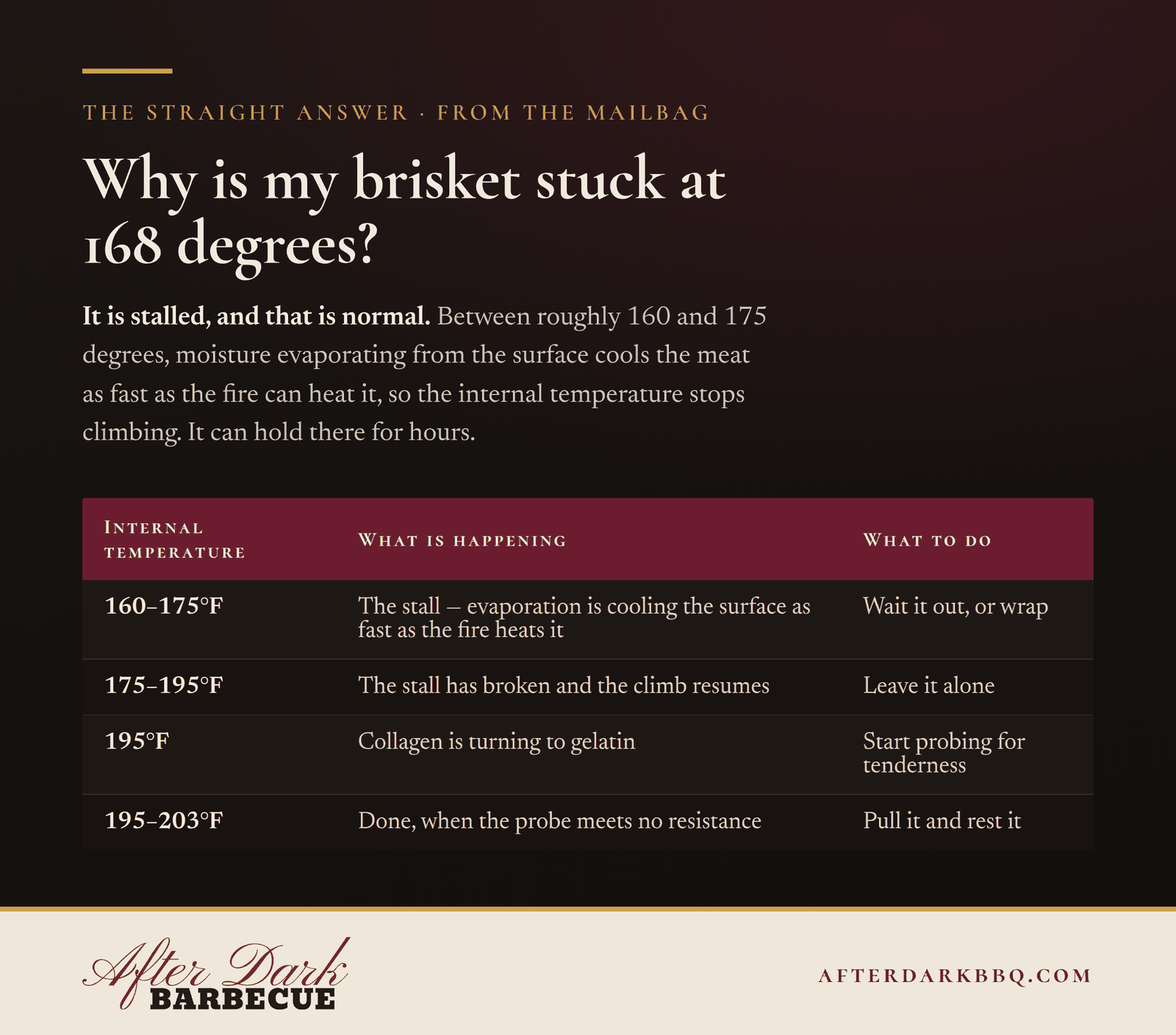
How to read this: The left column is what your thermometer reads inside the meat. A number that has not moved in two hours is the stall, not a broken thermometer and not a dying fire. The only stage decided by a number alone is when to start probing; the finish is decided by how the probe feels going in.
The full method, straight: what to do about the stall, the smoked brisket guide, and the smoking time and temperature chart.
This is the cook from the story above with nothing left on: just the numbers, ready for your own pit.
Stay a While Longer
The chapters: Chapter One — Midnight Ribs · Chapter Two — Overnight Smoked Brisket · Chapter Three — Overnight Pork Butt · Chapter Four — Smoked Beef Ribs · Chapter Five — Smoked Whole Turkey
Letters to Dutch: How Long to Smoke St. Louis Ribs at 250
Everything at the After Dark BBQ hub · Who Dutch Cobb is · Write to Dutch

Leave a Reply