Chapter Seventeen · Cream cheese at 225° · Two hours
Chapter Seventeen
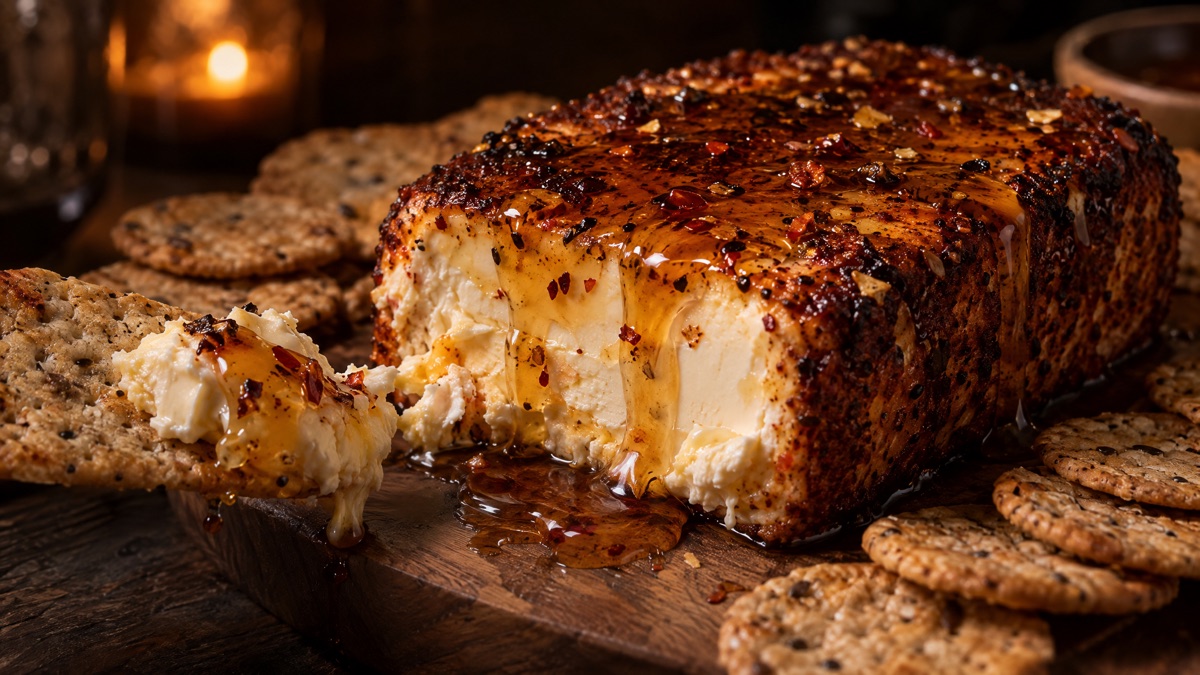
PEOPLE CAME OVERNOTHING PREPAREDGONE IN ELEVEN MINUTES
Heat Thin blue smoke
Chapter seventeen of After Dark BBQ: cream cheese at 225°, scored deep, soft in two hours and gone in eleven minutes.
Soft in two hours. Gone in eleven minutes.
People Came Over and He Had Nothing
Three cars in the drive at six and a brisket that would not be ready until nine, and Henry standing in his own kitchen with the particular panic of a man who invited people over to a thing that is not ready for them.
Lena“What do you have.”
Henry“Crackers. And that.”
That was two blocks of cream cheese that had been sitting in the door of the refrigerator since a recipe he never made.
LenaThen you have everything.
Score It, or the Smoke Stays on the Outside
Out of the foil, onto a square of parchment on a small tray. A knife drawn across the top in a diamond, a quarter inch deep, then across the other way.
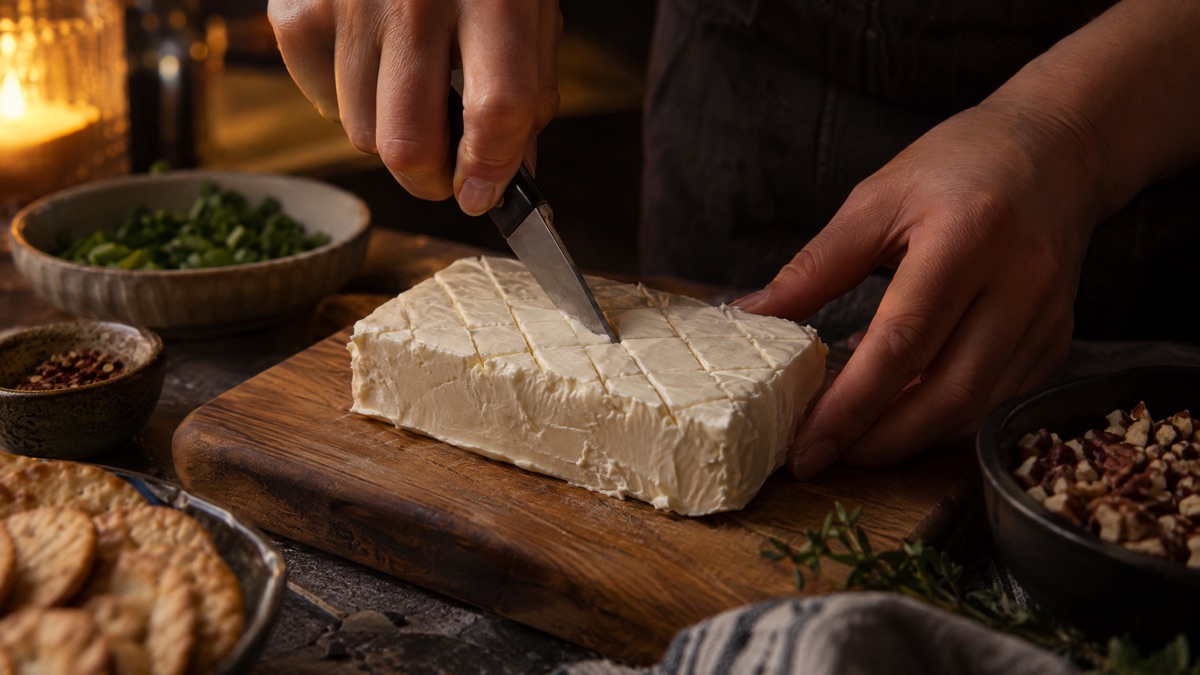
Those cuts are the whole technique. A block of cream cheese is a closed surface, and smoke that lands on a closed surface stays on it and goes bitter at the edges. Score it and the cuts open themselves as the block softens, and the smoke follows them all the way down into the middle where the fat is.
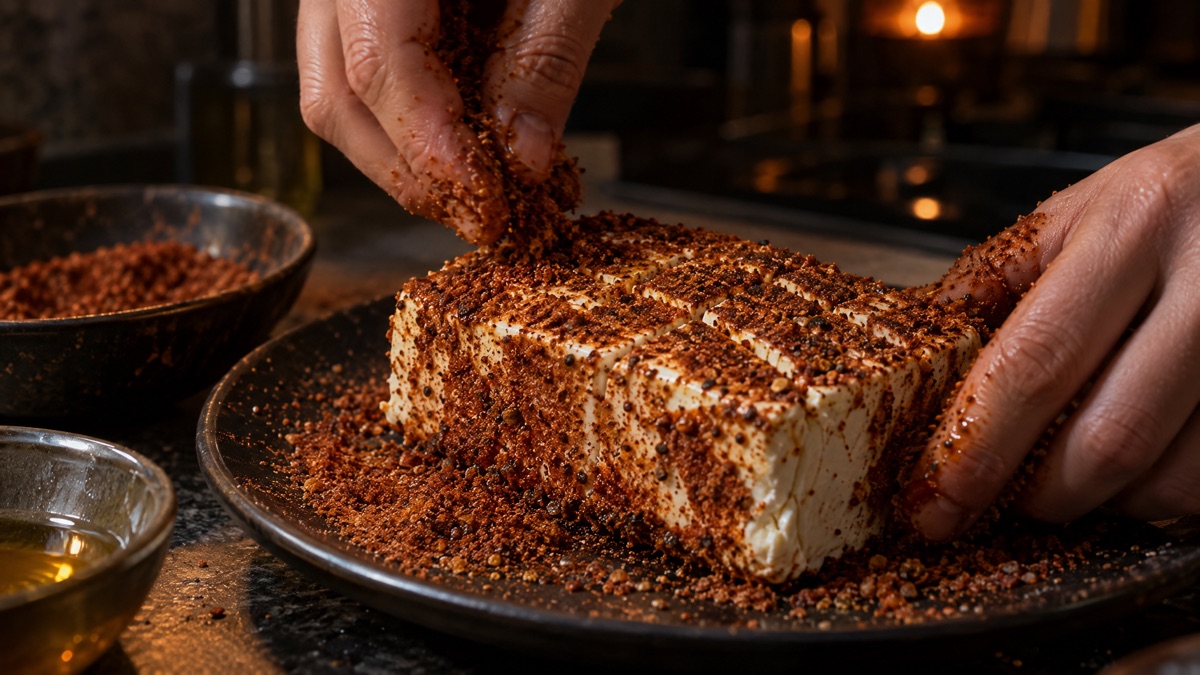
Oil the surface lightly, then a rub. Whatever is already on the counter from the brisket works. Sweet rubs go with hot honey and pepper jelly afterward. Savory rubs go with crackers and a spoon and nothing else.
Every long cook has a gap in it where the fire is doing all the work and a man is doing none of it. Most men fill that gap with beer. The smarter ones fill it with a block of cream cheese, which asks nothing of anybody and is gone before the brisket is off.
You can read this one for the neighbors who stayed a good deal longer than they meant to. I read it for the scoring, which is the whole difference between smoke on it and smoke in it.
DutchLenaScore it deeper than feels polite.
HenryHow deep.
LenaUntil it opens when it gets warm.
Technique Spotlight: Two Hours, Not Four
Cream cheese is fat and fat is a sponge for smoke. Two hours at 225°F is the sweet spot. Past three hours it turns acrid, and there is no dip strong enough to hide it. If your pit is running 250°F, take it off at ninety minutes.
What It Does While You Are Not Watching
It does not melt. It holds firm far longer than any man expects, the first time he gets his hands on one. A block of full-fat cream cheese holds its shape on a 225-degree pit almost to the end, because its water is bound up in the emulsion and it has no starch to collapse.
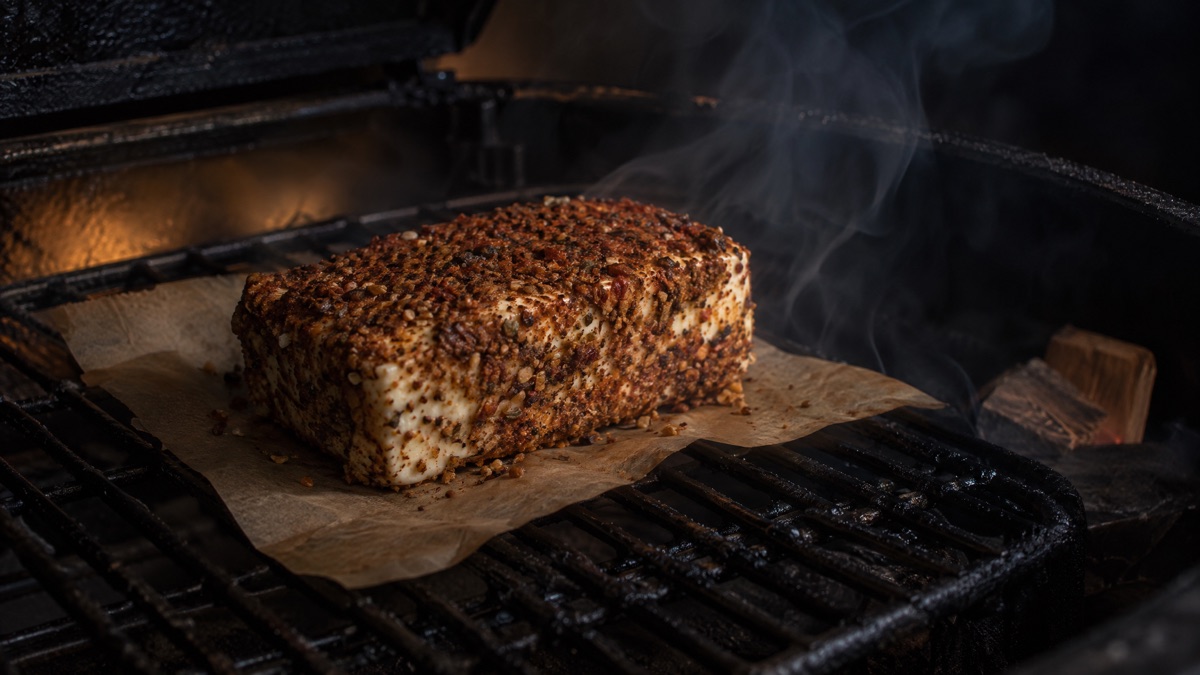
What it does instead is slowly give in. The corners round off, the scored top opens into a grid of little valleys, the surface goes from white to tan to a dull gold, and the whole block settles about a quarter inch lower than it started out.
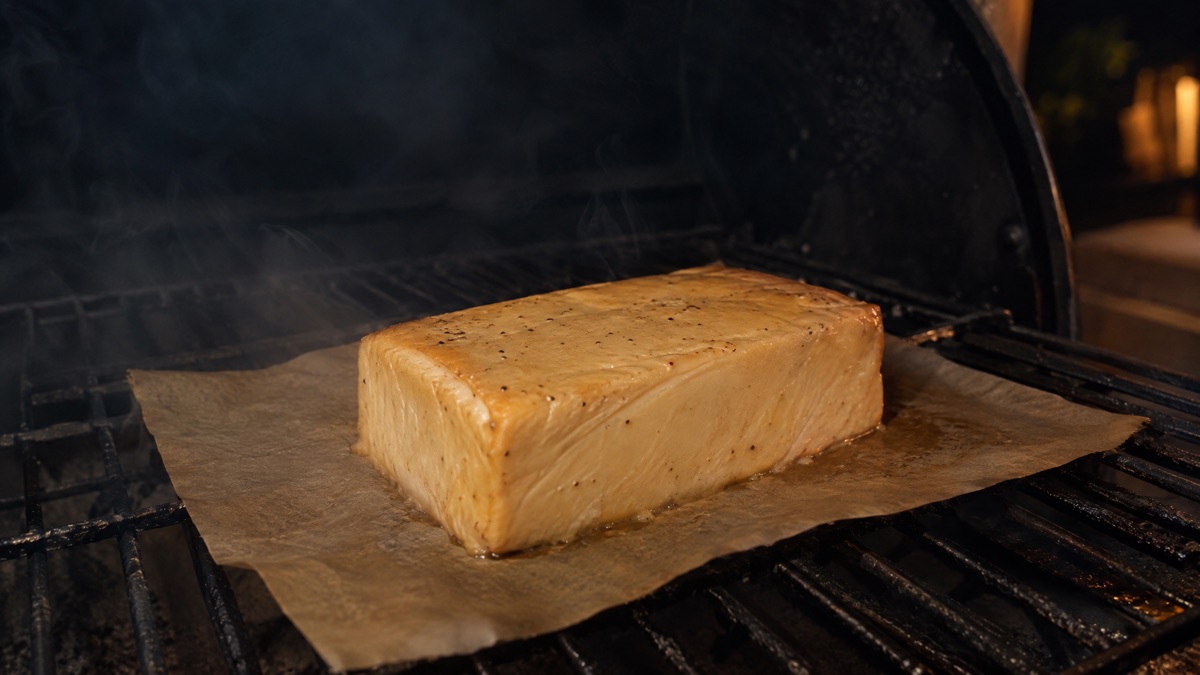
That surrender is the timer. When the diamonds have opened all the way and the block has gone soft enough to give under a fingertip but still stands up on its own, it is ready. Two hours, most nights.
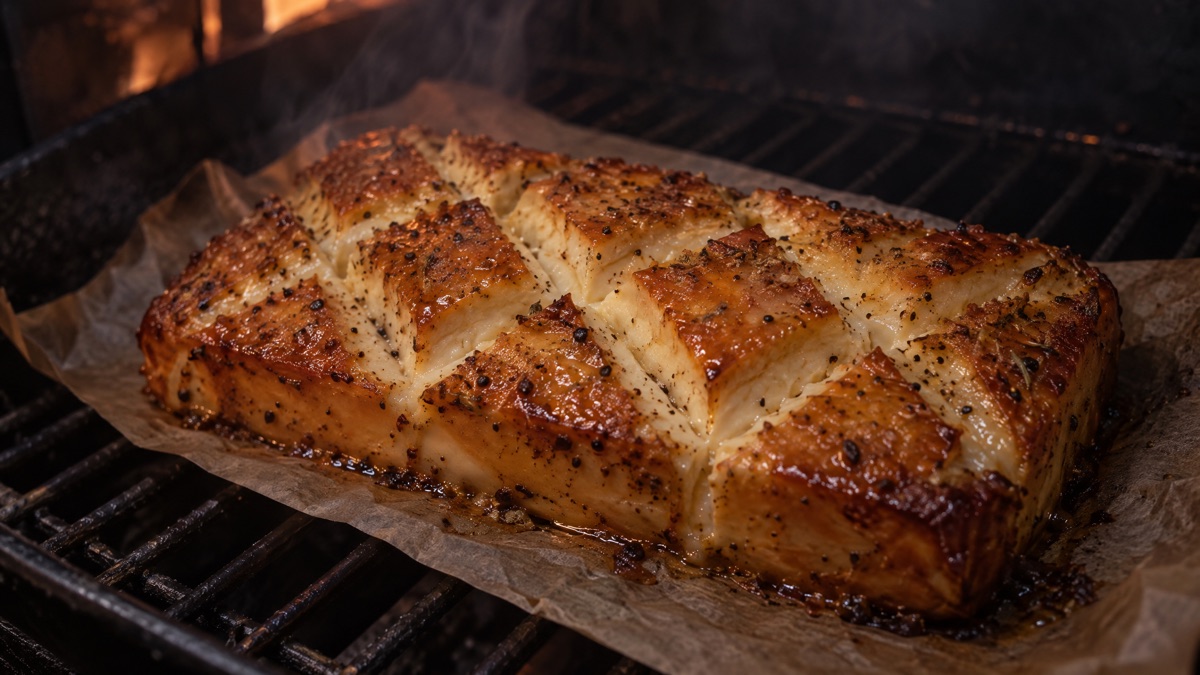
The low-fat kind will break and weep because there is less fat holding the emulsion together, and whipped cream cheese runs through the grate. Full-fat block, or go find something else to do with your evening.
Gone Before the Brisket
He carried it out on the parchment on the tray, scored side up, still faintly steaming, with a box of crackers under one arm and a jar of pepper jelly he had been saving for nothing in particular.
It was empty in eleven minutes. He knows because the brisket still had two hours to go and somebody asked if there was another one, and there was, and that one lasted nine.
LenaYour best dish of the year took five minutes of attention.
HenryDo not tell anybody.
LenaI am telling everybody.
What to Put on Top of It
The block is a canvas and the rub is only foreplay. What goes on after it comes off is where people develop opinions.
Hot honey is the default for a reason. Sweet, sharp, and it runs down into the scored valleys and pools there.
Pepper jelly is the southern answer, spooned over the top while the block is still hot enough to loosen it.
Bacon jam or chopped burnt ends turns it into a meal, which was not the plan, and nobody complains.
Everything bagel seasoning on the outside before it goes on the pit, then served with plain crackers. It is the one savory version that beats the sweet ones.
Chili crisp, spooned over at the table, oil and all. It is the newest and the best of them and it makes the smoke taste like it was on purpose.
The one rule: the topping goes on after, not before. Anything with sugar in it will darken past pleasant over two hours.
Why It Holds Its Shape
People expect it to lose all control and it never does, and the reason is worth knowing because it tells you what can go wrong.
Cream cheese is an emulsion of milkfat in a protein network, set with acid rather than rennet. That acid-set casein network is stable at the temperatures on a low pit — it softens, it slumps, but it does not flow, because there is nothing in it that melts the way an aged cheese does.
What breaks it is heat past about two hundred degrees, where the network contracts hard and squeezes the fat out. That is when she sweats an oil slick around the base and goes grainy on top. It is the same failure as the mac and cheese sauce five chapters back, and it has the same cause: too hot, too fast.
Which is why a 225-degree pit is right and a grill with the block sitting over a live burner is not, no matter how indirect you think you have made it.
The Leftover Problem, Which Does Not Exist
In the unlikely event that half a block comes back inside, it does three things well the next day.
Stirred into scrambled eggs at the end, off the heat, so it melts in streaks. Thinned with a splash of milk and a squeeze of lemon into a dip for vegetables that nobody will eat because there is a better version of this on the table. Or spread cold on a bagel with the salmon from Chapter Eleven, which is the single best breakfast this story has produced in seventeen chapters.
It keeps three days covered. It does not freeze — the emulsion breaks on the thaw and what you get back is grainy and weeping.
Henry“There is none left again.”
Lena“Buy four next time and hide two.”
The Rub, and How Much Is Too Much
An eight-ounce block of cream cheese is nearly all surface and has almost no salt of its own, which means it takes a rubbing eagerly. That cuts both ways.
A rub built for pork — heavy on sugar, paprika and salt — will read as much saltier on cheese than it does on a butt, because there is no eight pounds of meat behind it to dilute the seasoning. Use about half what instinct tells you, and put more on the top than the sides.
Sweet rubs go with sweet toppings. Savory rubs — salt, pepper, garlic, a little onion powder — go with crackers and nothing else, and they are the better choice if the pit is already running a heavy wood.
The oil underneath is not optional and it is not for flavor. It is what holds the rub on once things start heating up. A dry block sheds rub as soon as the surface warms and sweats. A thin film of neutral oil, rubbed on with your fingers, glues the seasoning to the cheese for the first thirty minutes, which is all it needs.
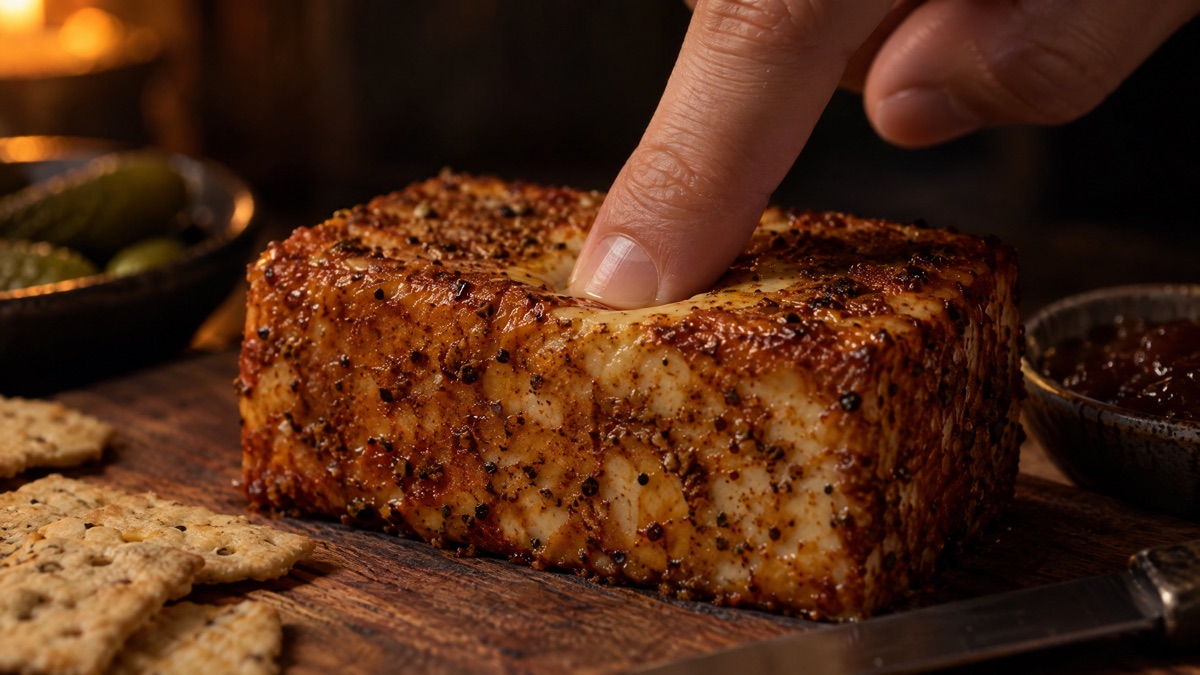
The Gap in Every Long Cook
There is a shape to a long cooking day that nobody tells you about when you buy the pit.
The first two hours are thrilling. The middle six are a job, and a long one. And then somewhere around hour nine the meat is wrapped or resting, the fire needs a split every forty minutes and nothing else, and you are standing in your own yard with four hours of responsibility and no task.
That gap is where most men drink too much, and some go inside and miss the finish. It is also, as it turns out, exactly the size of a block of cream cheese: thirty seconds of scoring, two hours of leaving it alone, and a plate that gives everybody in the yard something to do with their hands.
Henry has since started putting one on at the beginning of every brisket, the way some men put the coffee on. It costs three dollars and it has improved more of his evenings than the smoker did.
Lena“You put one on before I got here.”
Henry“I put two on.”
She finds the loaf pan and puts it straight back in the drawer.
Read the next chapterHow long do you smoke cream cheese?
Two hours at 225°F, scored a quarter inch deep on top. Ninety minutes if the pit is at 250°F. Three hours is the outer wall before the smoke turns bitter, and there is no fixing it after that.
| Stage | Pit | What to look for | Time |
|---|---|---|---|
| Score the top in a diamond | — | ¼ inch deep, both ways | 3 min |
| Oil lightly, then rub | — | all sides and the top | 2 min |
| On parchment, indirect side | 225°F | — | — |
| Surface colors, corners round | 225°F | white to tan | 1 hr |
| Scored top opens | 225°F | diamonds spread apart | 1.5 hr |
| Off — soft but standing | 225°F | gives under a fingertip | 2 hr |
| Serve straight off the pit | — | with crackers and hot honey | immediately |
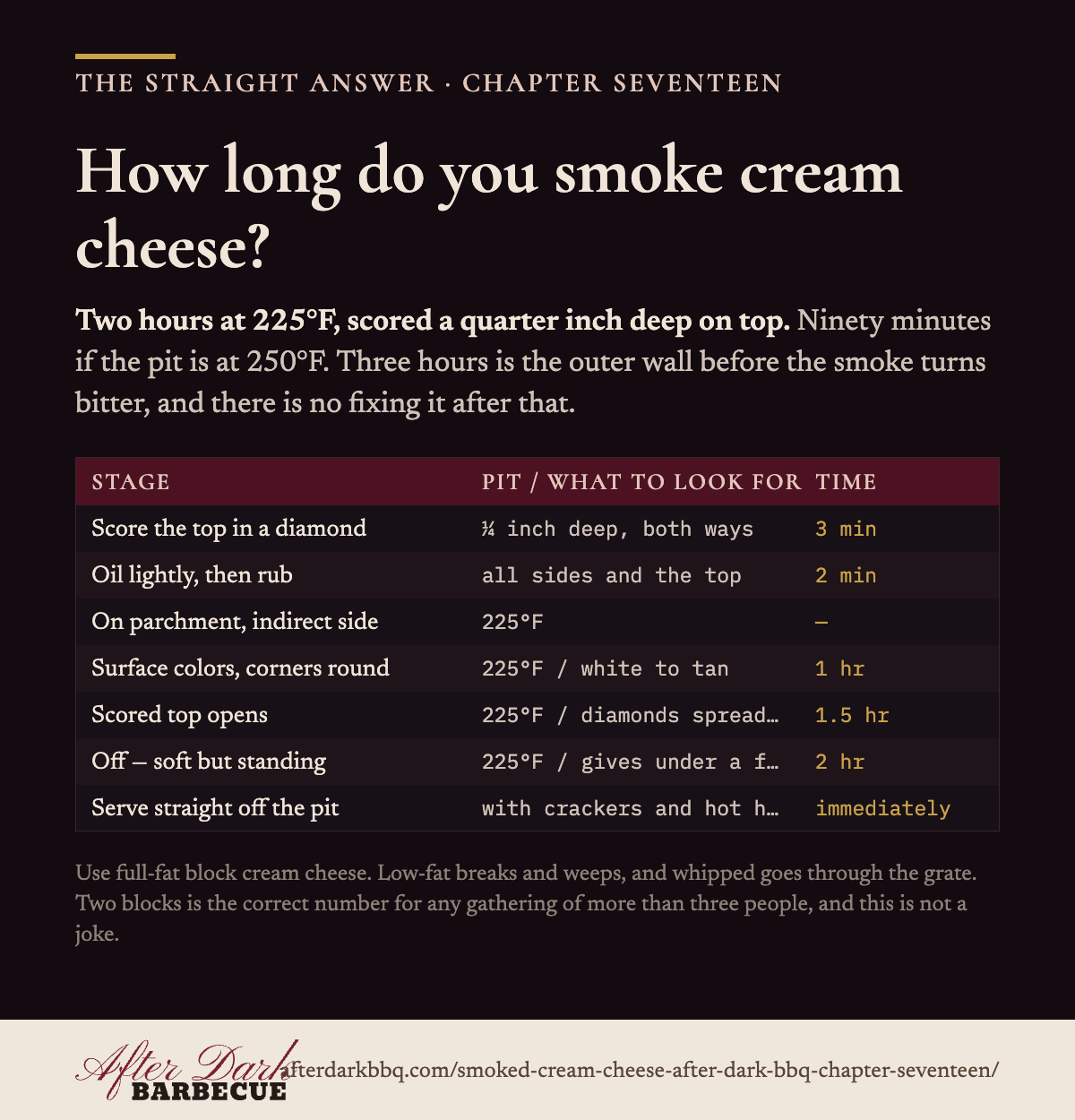
Use full-fat block cream cheese. Low-fat breaks and weeps, and whipped goes through the grate. Two blocks is the correct number for any gathering of more than three people, and this is not a joke.
Recipe: The Short Version
Cheese: one 8 oz block of full-fat cream cheese, cold out of the wrapper.
Score: diamond pattern, ¼ inch deep, both directions.
Season: light oil, then any barbecue rub you already have open.
Smoke: 225°F on parchment, indirect, 2 hours.
Done: when the scoring has opened and the block gives but still stands.
Serve: hot, with crackers, hot honey or pepper jelly.
Next: a meatloaf, hand-packed, and the two hours that turn a weeknight dinner into something nobody expected.
The Hard Numbers, Laid Out Bare
How long do you smoke cream cheese — the chart, the stage table and the questions people actually ask, with no story attached.
Sources
The 40 to 140°F range and the two hour limit out of refrigeration for dairy are from the USDA Food Safety and Inspection Service Danger Zone (40°F to 140°F) fact sheet, and safe minimum temperatures for everything served alongside are in the FSIS Safe Minimum Internal Temperature Chart. The two hours at 225°F, the scoring depth and the fingertip test are After Dark BBQ’s own, measured at the grate and stated as ours rather than dressed up as research. Read September 2026.
Volume One, complete. Volume Two, a new chapter every Friday.All the chapters · Write to Dutch

Leave a Reply