Chapter Eleven · Salmon at 180° · Two hours
Chapter Eleven
SHE TURNED UP UNANNOUNCEDTHE DOOR STAYED OPENOVERNIGHT
Heat Running hot
Chapter eleven of After Dark BBQ: how to smoke salmon cold and slow at 180° for two hours, because she liked it that way and would not be hurried.
He kept it so low she thought nothing was happening. Something was.
She Brought the Fish and No Instructions
She came up the drive at nine with a paper-wrapped side of salmon under her arm like a rolled newspaper, and she did not ask whether he had plans for the evening.
LenaTwo pounds. Skin on. I am told you are good with a long night.
Henry had the offset already warm from something else, running hot and happy, coals bright, the kind of fire a man is proud of. He opened the lid to show her.
LenaThat is far too much for me.
He thought she was talking about the fire. She was, mostly.
A side of salmon does not want a fire. It wants a rumor of one. Two hundred and twenty-five degrees, the number that turns a brisket into something worth waiting all night for, will turn a salmon into a dry plank with white curd weeping out of every seam. The albumin comes out when the muscle is squeezed too fast. That is the fish telling a man, in front of everybody, that he rushed it.
Technique Spotlight: The Number That Matters
One hundred and eighty degrees in the chamber. One hundred and forty-five in the fish. Everything else in this chapter is just a way of passing the long night between those two facts.
The Overnight Part Is the Part That Works
He laid the side out on a sheet pan and she stopped his hand before the pepper.
Lena“Salt and sugar first. Equal. Then you leave it alone and so do I.”
A cup of kosher salt, a cup of brown sugar, mixed. A quarter inch of it packed down over the flesh, heavier at the shoulder, thin over the tail where it is already thin. Plastic over the top of it. Into the refrigerator, and left there.
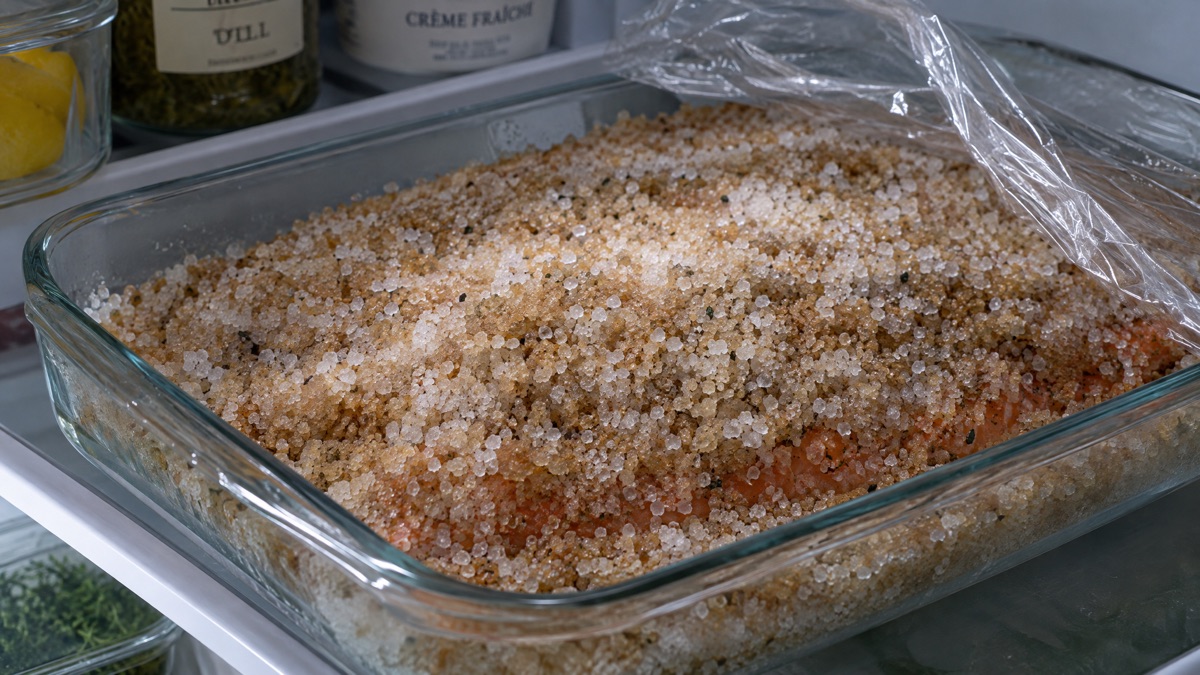
What happens in there all night is not seasoning. It is drawing. The salt pulls the water up out of the muscle and the sugar pulls the salt back down into it, and by four hours the flesh has gone firm and slightly translucent, and by eight it is as firm as it needs to be and not one bit firmer. Twelve is the far end of it. Overnight on a thick center cut is fine. Overnight on a thin tail piece is a mistake a man tastes the next morning.
She wiped her hands and looked at the clock on his stove, which was four minutes fast and had been since 2019.
LenaSo we have eight hours and nothing to do.
HenryI have a chair.
LenaYou have two.
Science Spotlight: Dry Brine or Wet Brine
The salt and sugar in this chapter is a dry brine, also called a cure: equal parts kosher salt and sugar packed onto the flesh and left overnight in the refrigerator. A wet brine dissolves the salt and sugar in cold water and soaks the fillet for several hours instead. Both draw moisture out of the surface and season the fish. The dry version seasons more evenly, keeps the flesh firmer and leaves less water to drive off before the smoke. Either way, rinse it, pat it dry and let the surface go tacky before it goes on.
The Step Nobody Photographs
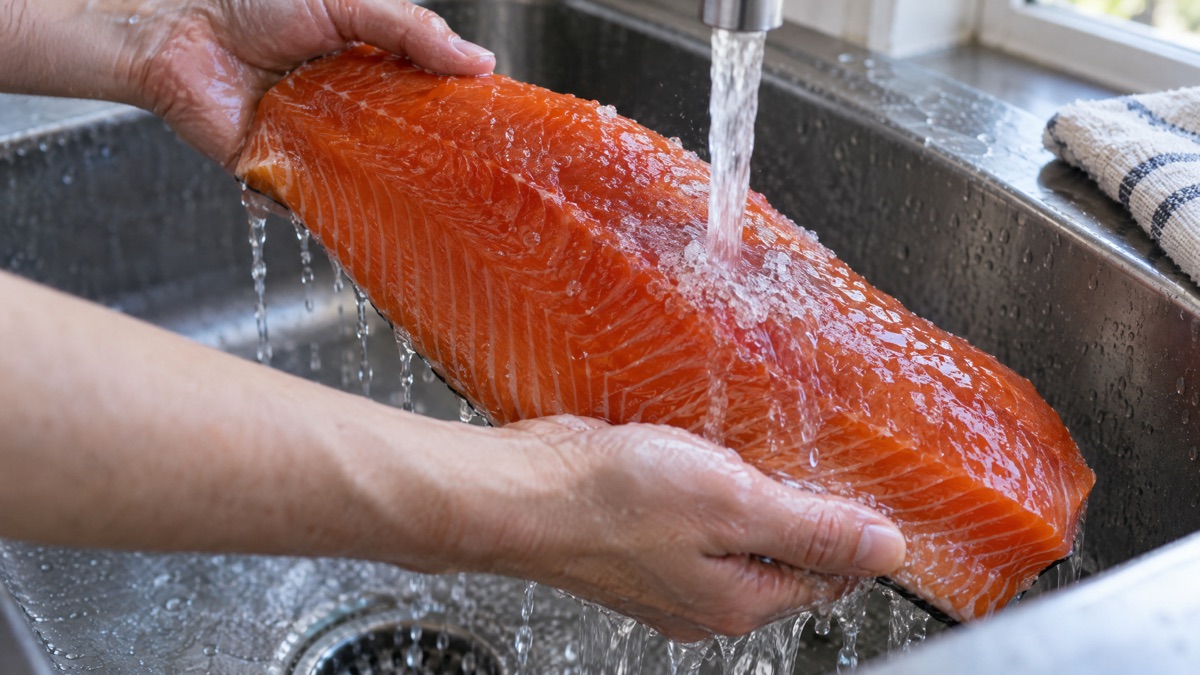
At five in the morning he rinsed the cure off under cold water, every grain of it, everywhere, and patted the side dry with a good deal more paper towel than he thought was reasonable. Then he put it back in the refrigerator bare, uncovered, nothing over it at all, on a rack, with a small fan running on the shelf below.
Salmon is the only thing in this story that makes a man slow down twice. Once in the refrigerator overnight, where the salt does all the work and he is not allowed to lay a hand on it. Once on the pit, where the fire has to stay so low that a man used to brisket will swear it has gone out on him.
You can read this one for the night Lena spent in his kitchen with the door open. I read it for the pellicle, which is the step every man skips and the only reason smoke will stick to a fish at all.
DutchThis is the pellicle. In an hour the surface goes from wet to tacky, and if a man drags a knuckle across it he can feel a faint drag, like the back of a stamp. That tack is dissolved protein drying into a skin. Smoke will not stick to water. It will stick to that.
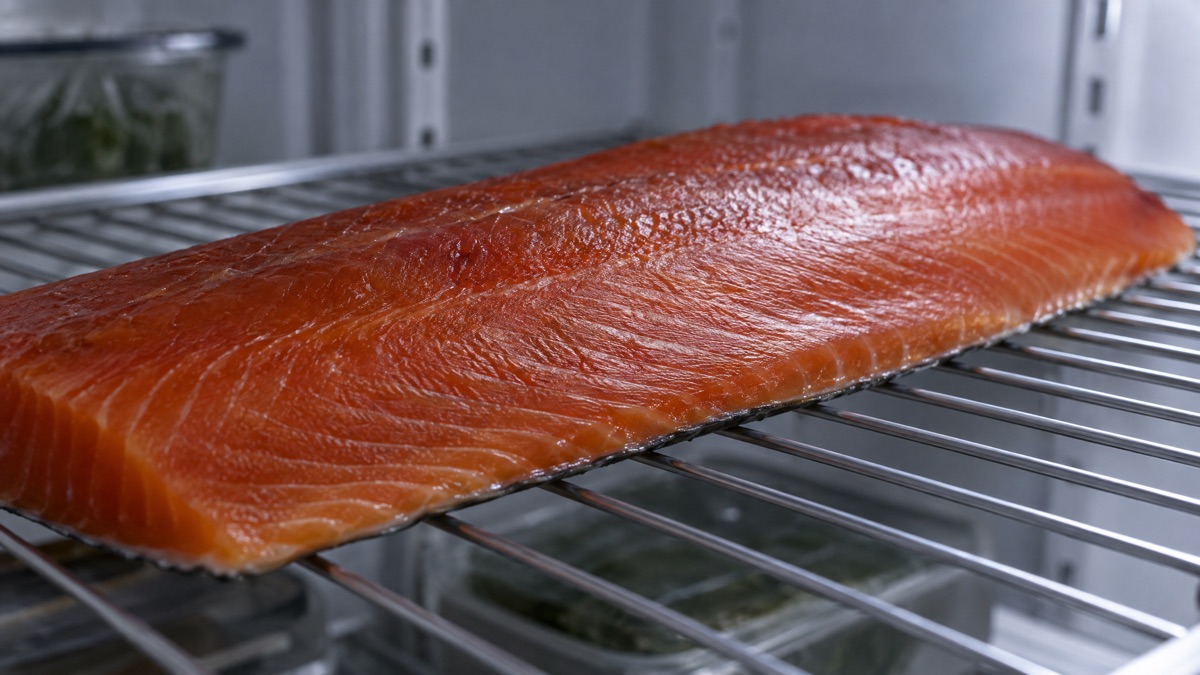
Skip it and a man gets a fish that tastes like it was near a fire. Give it the hour and he gets one that tastes like it came out of one.
Henry“An hour to get tacky.”
Lena“Some of us take two.”
A Fire You Have to Keep Talking Down
He built the smallest fire he had ever built in that pit. Four coals and one split of alder, the vents nearly shut, the lid down, and a thermometer sitting at one hundred and seventy-five that would not climb for him. It felt like doing nothing at all. It was the whole job.
Alder is the wood for this. It is soft and slightly sweet and it does not fight the fish. Apple and cherry work. Hickory will bully it. Mesquite will end the relationship.
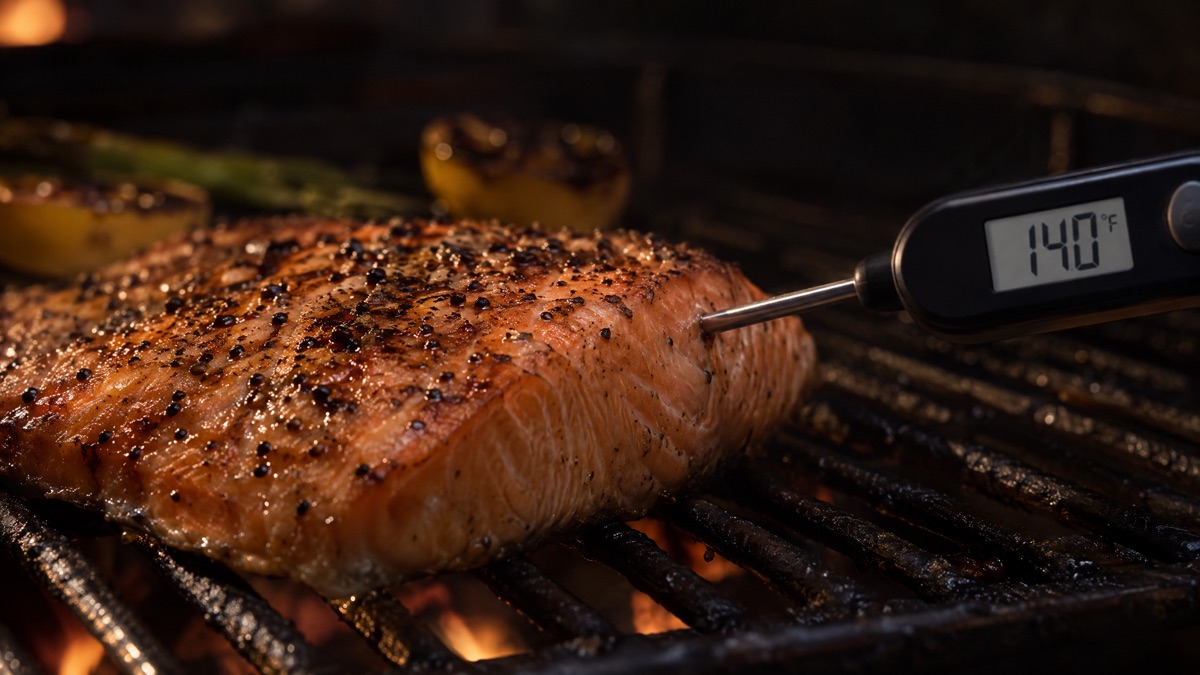
The side went on skin side down and stayed that way. Two hours at one-eighty, give or take, with the lid coming up exactly twice: once at ninety minutes to slide the probe into the thickest part, and once at the end.
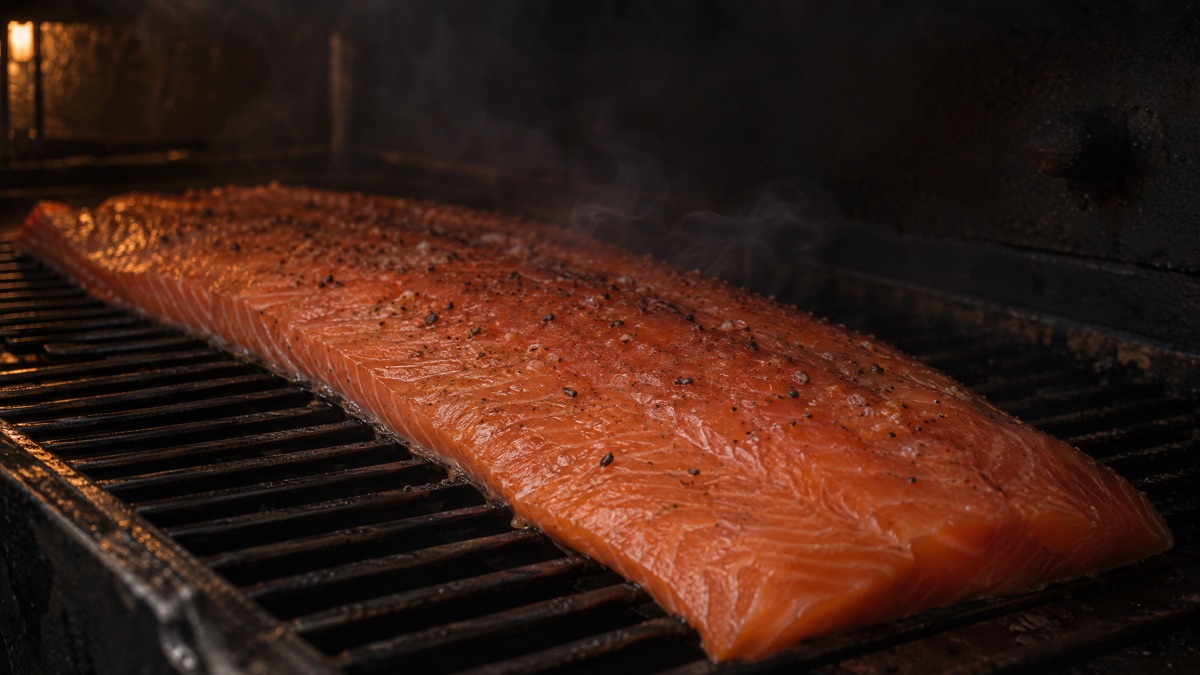
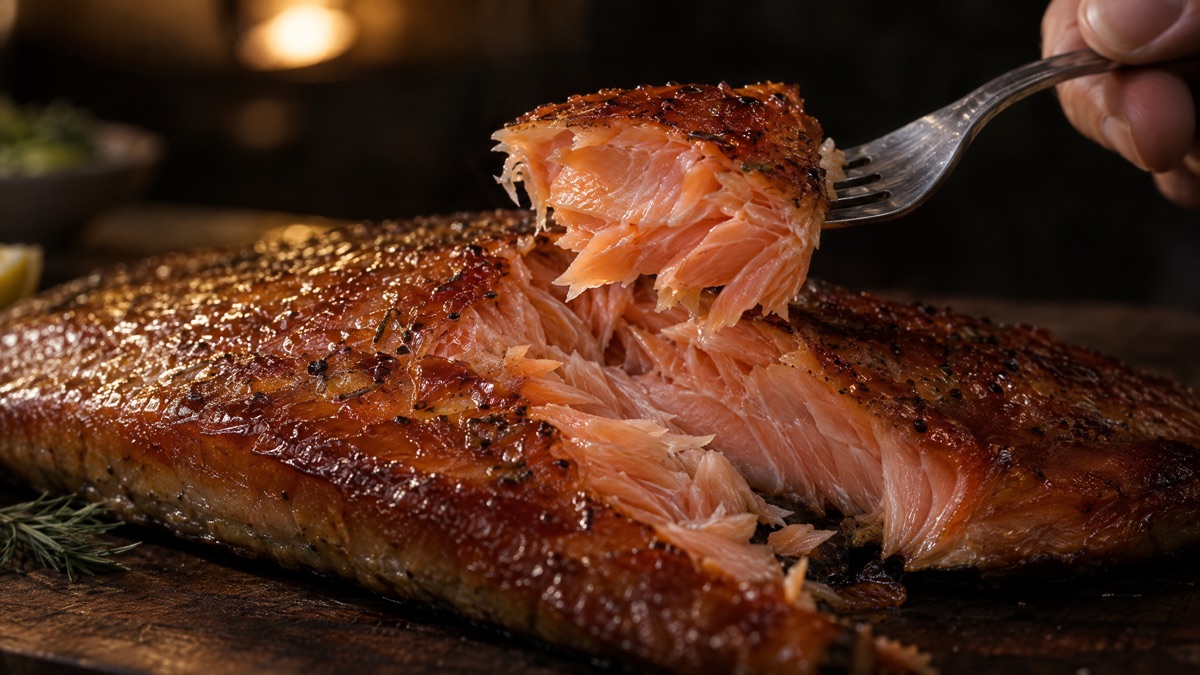
The fish tells a man it is finished before the thermometer does. The flesh goes from glossy to matte, the flakes come apart under the lightest pressure a finger can manage, and one bead of white shows at one seam and nowhere else. That is one hundred and forty-five degrees, and not one degree short of it, no matter who is waiting.
Technique Spotlight: One Warning, and It Is a Real One
Cold smoking — anything under ninety degrees for hours — is a different craft with a different safety floor. Fish held for hours in the range between forty and one hundred and forty degrees is a risk, not a technique, unless it has been fully cured and you know exactly what you are doing. Everything in this chapter is hot smoking. It gets to one hundred and forty-five, and that is where it stops.
The Part Where Nobody Left
He pulled it at eight in the morning, two hours on, the kitchen door still open from the night before. She took a fork to the thick end standing up, without a plate, which is the only correct way to test a salmon, and then said nothing at all for long enough that he had to ask.
LenaIt held together.
HenryThe fish.
LenaSure.
The skin stayed on the grate, the way it is supposed to. That is the last favor the skin does anybody: it holds the fish together for two hours and then it lets go, and what lifts off the grate is a clean side with a copper edge on it and no ragged bottom.
The Wood, and How Little of It
He had a milk crate of splits by the door: oak, hickory, apple, and one piece of alder he had been saving for a year without knowing what for. She picked up the hickory first, weighed it in her hand, and put it back down.
LenaNot on a fish.
Smoke is not one flavor. It is a family of compounds, and the hard woods carry more of the heavy ones — the tar-adjacent, the bitter, the kind that a brisket can absorb for twelve hours without complaint because there are ten pounds of beef and a half inch of rendered fat to dilute them. A two-pound side of salmon has no such defense and nothing to hide behind. It is an inch thick, it is mostly water and lean protein, and it takes on smoke in the first forty minutes and then keeps taking it.
Alder is the traditional wood for salmon in the Pacific Northwest for a reason that has nothing to do with romance. It burns clean, it is low in the heavy phenols, and it gives a smoke that is almost sweet. Apple and cherry are the substitutes and they will treat her fine. Maple works. Pecan is as far as a man should push it.
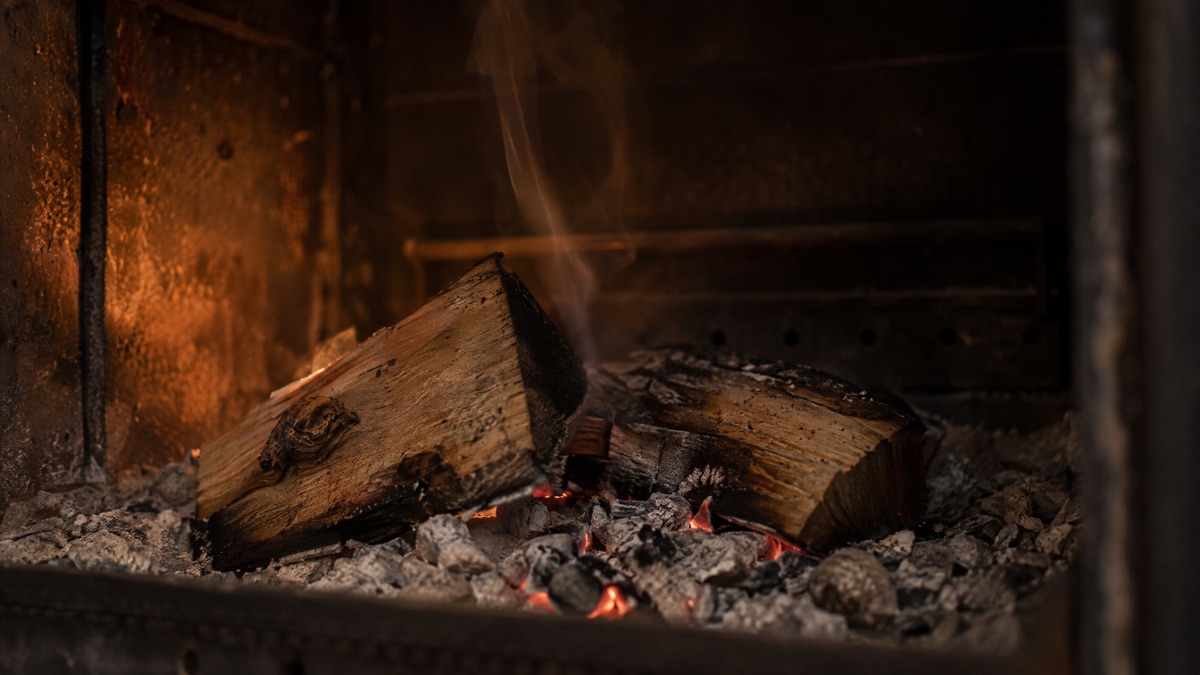
One split. Not three. Holding back is the whole trick. On a fire this small a single piece of alder will smolder for most of the cook, and if it goes out before the fish is done, that is not a problem — the salmon stopped absorbing anything useful an hour ago.
Henry“One piece of wood for two hours.”
Lena“You are always trying to give things more than they asked for.”
The Four Ways It Goes Wrong
Every failure with smoked salmon is one of four things, and Henry had personally committed three of them across previous summers.
White curd on the surface. That is albumin, a protein that liquefies and gets squeezed out when the muscle fibers contract too fast. A little at one seam is normal. A white lacework over the whole side means the pit ran hot. Bring it down to 180°F, ease off, and it mostly stops.
Smoke that tastes like an ashtray. Too much wood, or wet wood, or a fire choked down so far it smolders white instead of burning clean. Thin blue smoke or nothing at all, and a man can wait for the blue. White billowing smoke is the smell of a bad decision being made slowly.
Dry, chalky flesh. Overcooked, almost always by five eager degrees. One hundred and fifty is a different fish than one hundred and forty-five. There is no rest step that brings it back.
Smoke that will not stick. No pellicle. The side went on wet, the smoke rolled right over it without ever getting a grip, and what you have is poached salmon with a suggestion.
He had done the last one three years running and blamed his wood every time.
Sunday, Cold, Standing Up
There is a morning after to a side of salmon that nobody plans for and everybody prefers.
Chilled overnight in the refrigerator, the texture changes entirely. The fat firms up, the smoke settles down into the flesh and quits shouting, and what was a warm main course becomes something a man flakes with a fork straight out of the container at eleven at night with the light off.
On a bagel. Into scrambled eggs at the last second, off the heat. Over a salad with too much dill. Mashed into cream cheese with lemon and capers and eaten off a spoon, which is what actually happened on the Sunday.
It keeps four days covered. It freezes badly — the texture goes grainy — so cook only what you will eat, and accept that the good part is over sooner than the cure.
LenaThere is less of this than there was yesterday.
HenryI had breakfast.
LenaYou had a third of a fish.
He did not argue, because it was two-thirds and she had rounded in his favor.
The brisket is resting, and she comes out of his own kitchen and takes over.
Read the next chapterHow long does it take to smoke salmon?
About two hours at 180°F for a two-pound side, pulled at 145°F internal. The cook is short. The cure is overnight and the pellicle is an hour, and those two are what make it taste smoked instead of merely warm.
| Stage | Pit | Internal | Time |
|---|---|---|---|
| Dry cure, salt and sugar | refrigerated | — | 4–12 hr |
| Rinse and pat dry | — | — | 10 min |
| Pellicle, uncovered on a rack | refrigerated | — | 1–2 hr |
| On, skin side down | 180°F | — | — |
| Probe at the thick end | 180°F | about 120°F | 1.5 hr |
| Off, flakes separate | 180°F | 145°F | about 2 hr |
| Rest, then serve warm or chilled | — | — | 10 min |
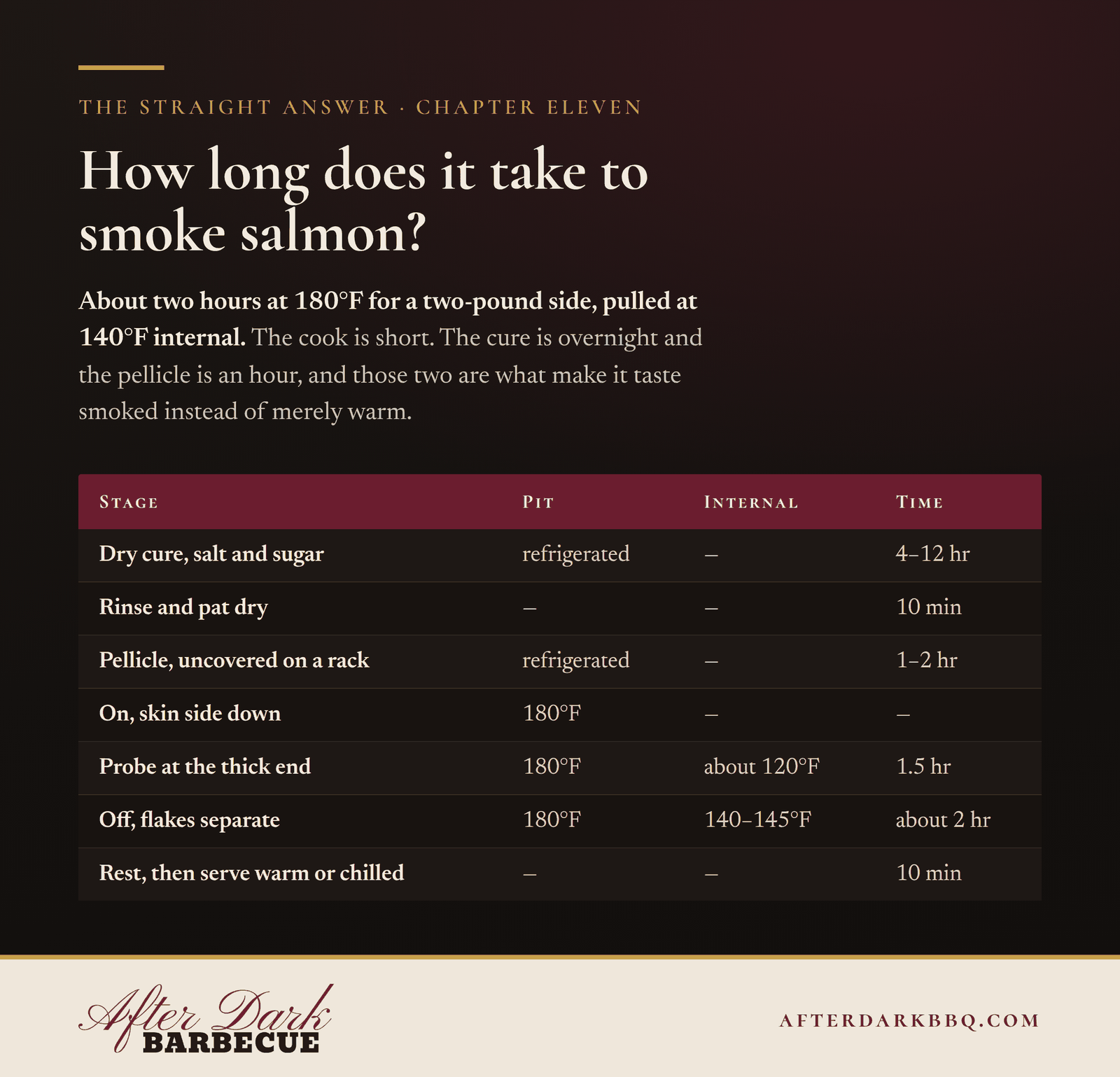
Thicker center cuts run closer to two and a half hours. Thin tail pieces can be done in seventy minutes, so probe the thick end and pull the whole side when it gets there.
Recipe: The Short Version
Cure: equal parts kosher salt and brown sugar, a quarter inch packed over the flesh, 4 to 12 hours refrigerated.
Rinse: cold water, every grain, then pat bone dry.
Pellicle: uncovered on a rack in the refrigerator, 1 to 2 hours, until the surface is tacky.
Smoke: 180°F, alder or apple, skin side down, about 2 hours.
Pull: 145°F at the thickest part, and not a degree less.
Serve: warm off the pit, or chilled the next day on anything.
Next: a pan of macaroni goes on the pit, and Henry finds out what happens to a cheese sauce that sits in smoke for an hour.
Sources
The 145°F safe minimum internal temperature for fish is from the USDA Food Safety and Inspection Service Safe Minimum Internal Temperature Chart. The 40 to 140°F range and the two hour limit out of refrigeration are from the FSIS Danger Zone (40°F to 140°F) fact sheet, and they are the reason this chapter is about hot smoking and not cold smoking. The 180°F pit and the cure and pellicle times are After Dark BBQ’s own, measured at the grate and stated as ours rather than dressed up as research. Read September 2026.
Volume One, complete. Volume Two, a new chapter every Friday.All the chapters · Write to Dutch

Leave a Reply