Chapter Twelve · Mac and cheese at 225° · One hour
Chapter Twelve
SHE TOOK OVERIN HIS KITCHENWHILE IT RESTED
Heat Running hot
Chapter twelve of After Dark BBQ: mac and cheese at 225° for an hour, creamy, covered and left alone under the lid until it set.
Nothing left to do with his hands, and she found something for them.
An Hour With Nothing to Do
The brisket came off at one in the afternoon and went into a dry cooler under towels, where it would sit for three hours and get better without him. That is the strange grief of a long cook. The work is over before the day is.
LenaSo the fire is still going and you are just going to stand there.
HenryThat is the tradition.
LenaIt is a waste of a hot box.
She came back out of his kitchen with a pound of elbows already boiled short, a block of sharp cheddar, a wedge of gruyere, and a can of evaporated milk he did not know he owned.
Why It Breaks If You Rush It
A cheese sauce breaks for two reasons and both of them are heat in a hurry.
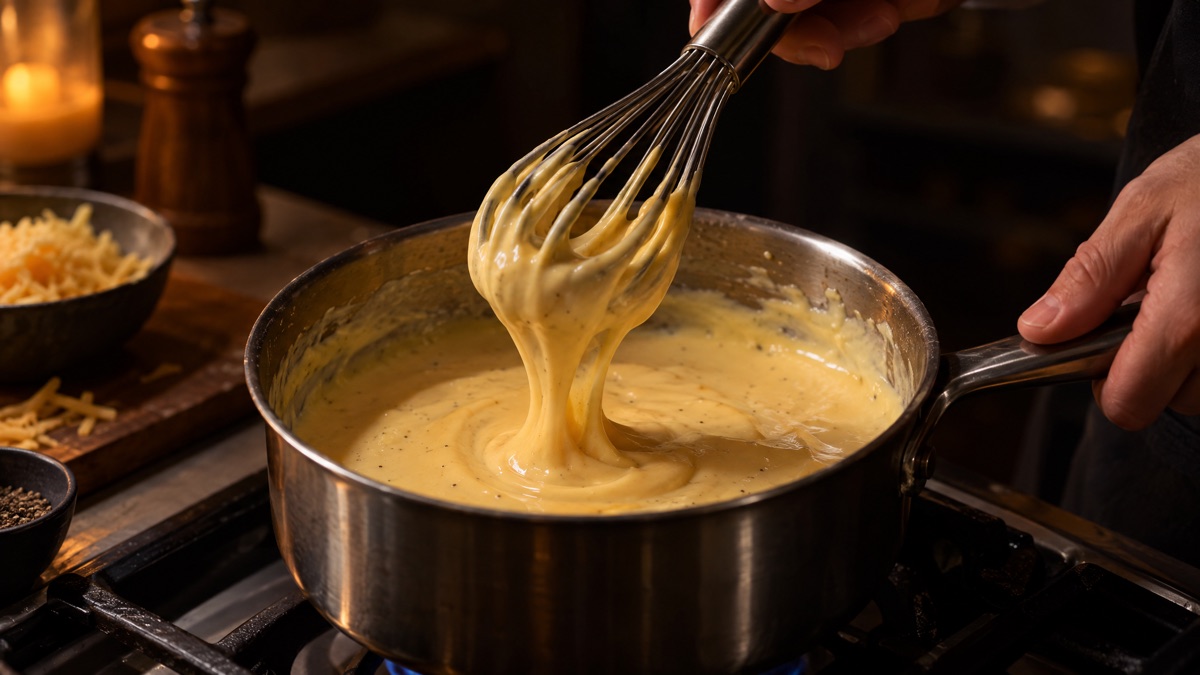
The first is temperature. Cheddar is an emulsion held together by protein. Push it past about one hundred and sixty-five degrees fast and the protein tightens, squeezes out the fat, and what was smooth becomes grainy with an oil slick on top. The second is water. A sauce that is too thin cannot hold on to what you give it, and every extra ounce of milk is one more chance for the fat to walk out on it.
Evaporated milk fixes both. It carries less water and more protein than whole milk, and that protein keeps the fat where you want it. A teaspoon of cornstarch tossed through the shredded cheese does the same job from the other side, and keeps everything together when things get hot.
Every pitmaster I know has a brisket he is proud of and a macaroni somebody else made for him. There is a reason for that. A brisket will forgive a man an hour of neglect. A cheese sauce will not forgive him four minutes.
You can read this one for what happened while the brisket was resting. I read it for the sauce, which breaks for exactly two reasons and can be talked down off both of them.
DutchLenaLow and steady, and do not walk away from it.
HenryYou have said that to me before.
LenaAnd you keep needing to hear it.
Shred your own cheese. The bagged kind is dusted with cellulose so it will not clump in the bag, and that dust turns to sand in a sauce. It is the single most common reason a smoked macaroni comes out gritty, and nobody ever suspects the shortcut.
Technique Spotlight: The Mix That Holds
Sharp cheddar for flavor. Gruyere or young gouda for melt. Smoked gouda only if you want the smoke doubled, because the pit is already going to give you an hour of it. Never all sharp cheddar — it is the hardest one in the case to get to loosen up.
An Hour Under the Lid Is Plenty
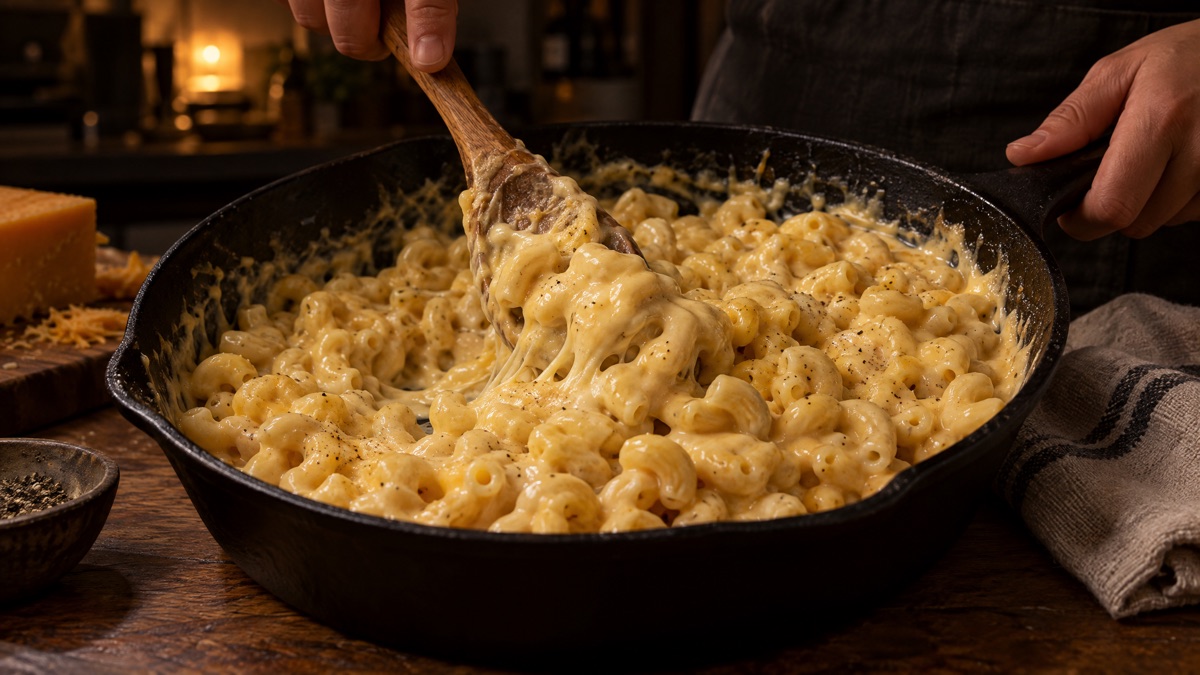
Into a twelve-inch cast iron, uncovered, and onto the far side of the pit at two hundred and twenty-five degrees. One hour. Stir once at the half.
Smoke lands on fat, and a pan of macaroni is mostly fat and starch, which means it takes smoke faster than a brisket does. Ninety minutes is as long as it will put up with you. Two hours and it tastes like an ashtray with noodles in it, and there is no fixing that at the table.
Mild wood only. Apple, cherry, pecan. Nothing that comes on too strong. Whatever is already in the firebox from the brisket is usually right, because it has burned down clean by now and it is giving thin blue smoke instead of white.
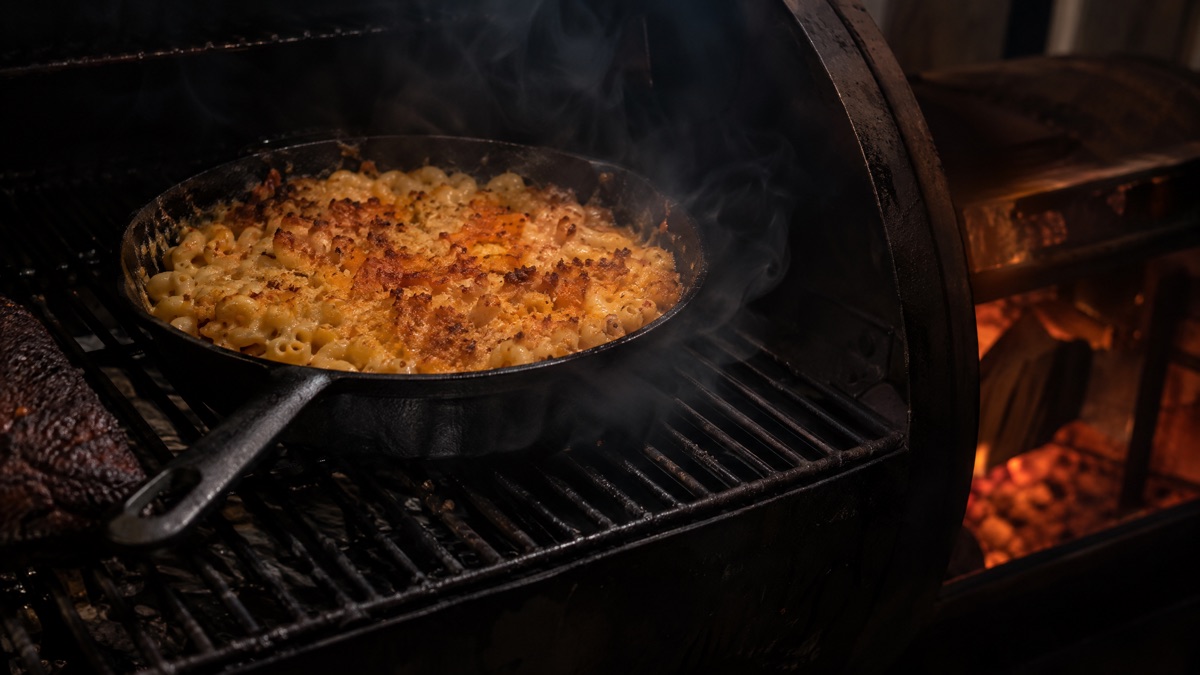
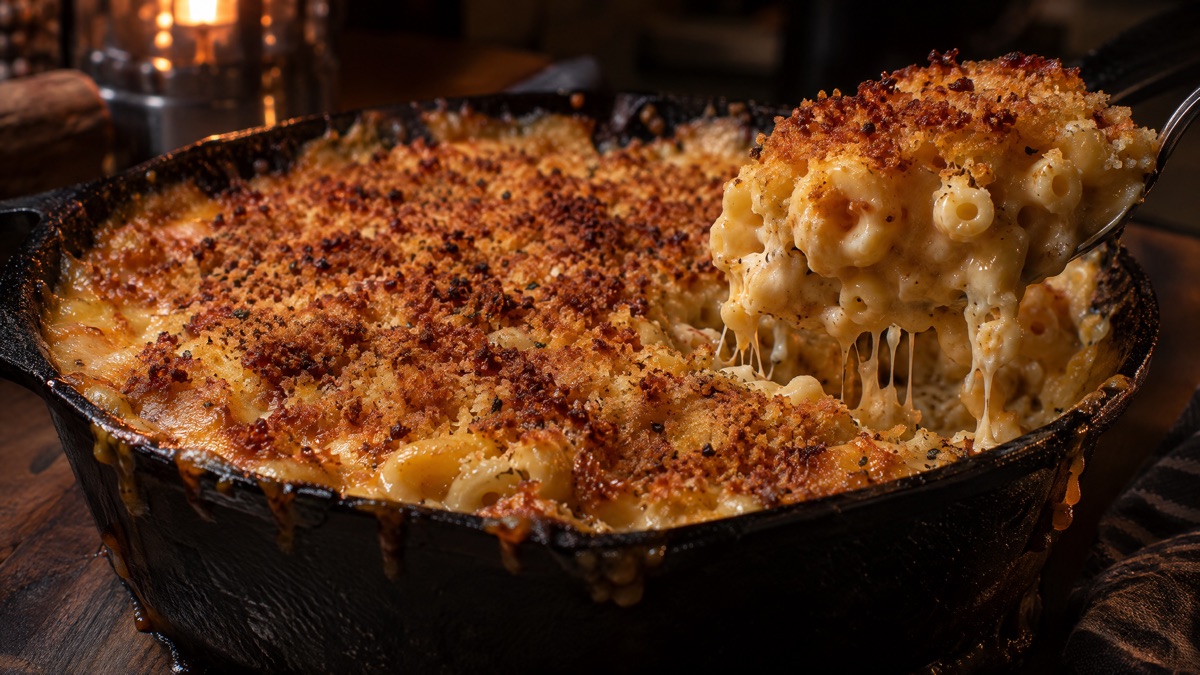
The top sets into a skin and blushes bronze at the edges where it presses up against the iron. If you want a crumb topping, panko tossed in melted butter goes on for the last fifteen minutes only. Any earlier and it drinks the sauce and turns to paste.
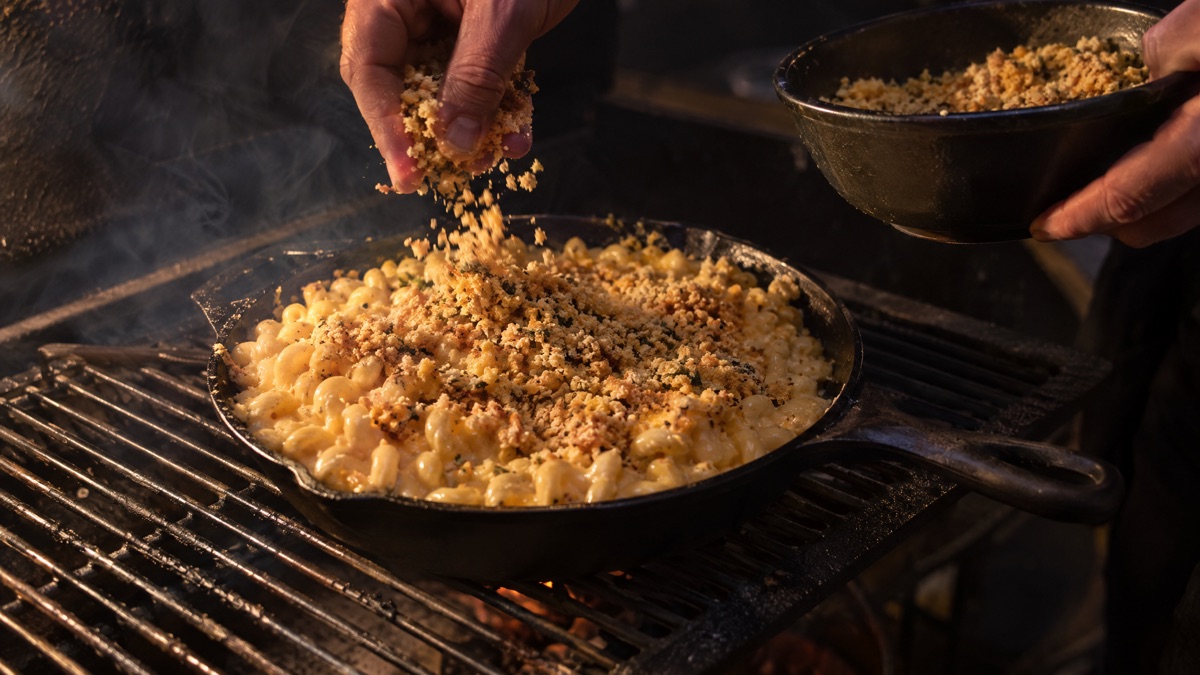
Henry“It is bubbling at the sides.”
Lena“That is when it is ready. Not before, and I am not saying it twice.”
What Came Off the Pit
It came off at three. The brisket had another twenty minutes of resting to do and nobody in that yard was watching it anymore, which is the highest compliment a side dish has ever been paid out there.
The pull off a spoon was the test. Thick enough to hold its shape on the plate, loose enough to slump a little at the edge after a minute. That is the window. A macaroni that stands up stiff in a perfect square has gone too far, and one that runs was never going to make it.
LenaSay it.
HenryIt is better than the brisket.
LenaLouder, next time there are people here.
The Cheese Case, Ranked by Whether It Will Cooperate
She sent him back into his own kitchen twice, which is two more times than he thought a macaroni warranted.
Cheese melts well or badly for reasons that have nothing to do with price. Young cheeses hold more moisture and have looser protein structures, so they flow. Aged cheeses have lost their water and gotten set in their ways, so they break into strings and oil.
Sharp cheddar brings the flavor everybody expects and melts worse than its reputation suggests. It should never be more than about half the blend.
Gruyere is the quiet fix. It melts like it was born to, it browns beautifully on top, and it brings out the best in a cheddar.
Young gouda does the same job for less money. Smoked gouda doubles the smoke, which is a choice and not a mistake, as long as you know you are making it.
American cheese — the real deli kind, sliced at the counter — is the professional secret nobody admits to. It is built around emulsifying salts, which is the entire reason it never breaks. Four ounces in a pound of blend and your sauce will not separate no matter what you do to it.
Parmesan and pecorino are seasoning, not structure. An ounce for the sharpness. They will not melt into anything.
Henry“You are telling me to put processed cheese in it.”
Lena“I am telling you what every restaurant you have ever loved is doing behind the door.”
Pasta, and the Two Minutes That Matter
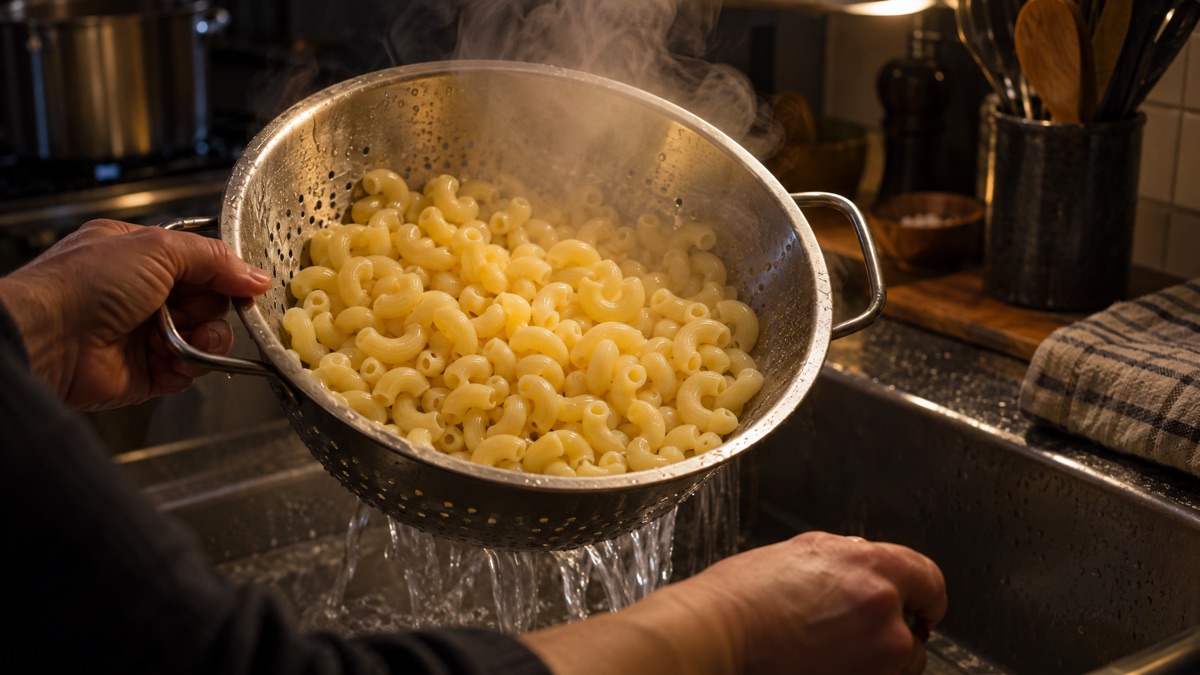
The macaroni goes into the water and comes out two minutes short of the box. Not al dente — short of al dente, a little chalky in the center, the kind of bite that would be a complaint if you served it.
Because it is not finished. It has an hour on a pit ahead of it, sitting in hot cheese, and pasta drinks liquid the entire time it is warm. Boiled to done and then smoked for an hour gives you the texture of a casserole that was left at a church supper.
Elbows are traditional and they work because the hollow traps sauce. Shells work better and nobody will say anything. Cavatappi is the upgrade if you want people to notice. Long pasta does not work at all, and the man who tries it will only try it once.
Reserve a cup of the pasta water. It is salted and full of starch, and a splash of it loosens a tight sauce better than milk does, because the starch keeps the emulsion together instead of thinning it.
The Leftovers Argument
A pan of smoked macaroni that has been in the refrigerator overnight is a different dish, and it is not a worse one.
It sets solid. The starch retrogrades, the sauce firms, and what you can do with it that you cannot do with fresh is cut it into squares and fry them. Cast iron, a little butter, two minutes a side, until there is a crust on the flat faces and the middle has gone molten again.
That is the best thing that comes out of this chapter, and it requires a man to make too much on purpose.
In the microwave it is merely fine, and only if you add a spoon of milk first and cover it. Dry reheating splits the sauce, and a split sauce reheated twice is beyond anybody.
LenaMake two pans next time.
HenryFor the leftovers.
LenaFor me. I am not sharing the fried squares with your neighbors.
The Pan You Do It In
A twelve-inch cast iron skillet is the right vessel and it is not close.
Iron holds heat, which keeps the sauce from cooling at the edges and seizing while the middle is still warm. It gives you a browned rim where the sauce touches metal, which is the best bite in the pan. And it goes from the pit to the table without a transfer, which matters more than it sounds like it should — every time you move a cheese sauce you stir it, and every stir after the pit puts a little more air into something that was smooth.
A disposable foil pan works and you will feel it. Thin aluminum does not hold heat, the sauce cools unevenly, and there is no browning worth the name. It is what you use when you are cooking for twenty and you have three pans going.
Ceramic is fine and heavy and slow. Glass is fine and will crack if you set it down on a cold surface off a hot pit, which somebody in your life has already done once.
Where to Put It, and How Long to Leave It
Far side from the fire, always, where it can take its time. A pan of macaroni on the hot end will boil at the edges before the middle takes any smoke at all, and boiled cheese sauce is the fastest route to grain there is.
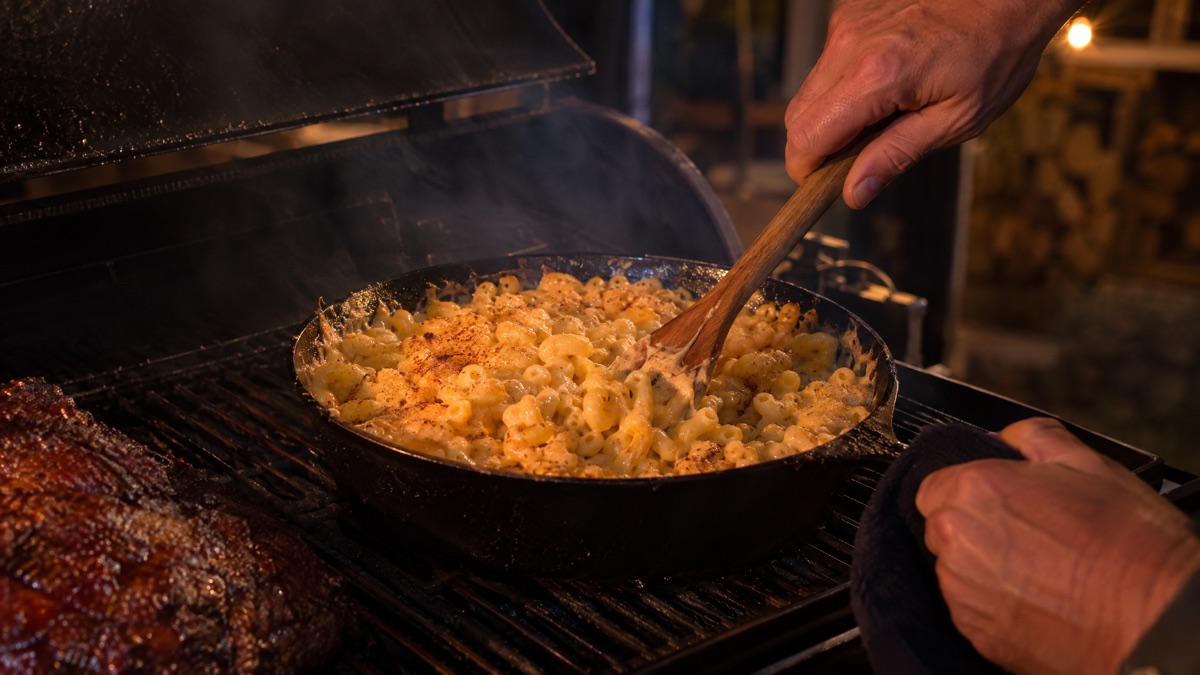
If the pit runs hot on one side — and every offset does — turn the pan a half turn when you stir at the thirty-minute mark. That single rotation is the difference between an even top and one bronzed corner.
And leave it uncovered. Foil over the top turns the whole thing into a steamer: no smoke gets in, no water gets out, no skin forms. The skin is the whole point. It is the thing people fight over when the spoon comes out.
Henry“What if it dries out on top.”
Lena“It is supposed to. That is not drying, that is a crust, and you have spent two years covering it up.”
She hangs them in front of a fan for an hour before she will let him put wood on.
Read the next chapterHow long do you smoke mac and cheese?
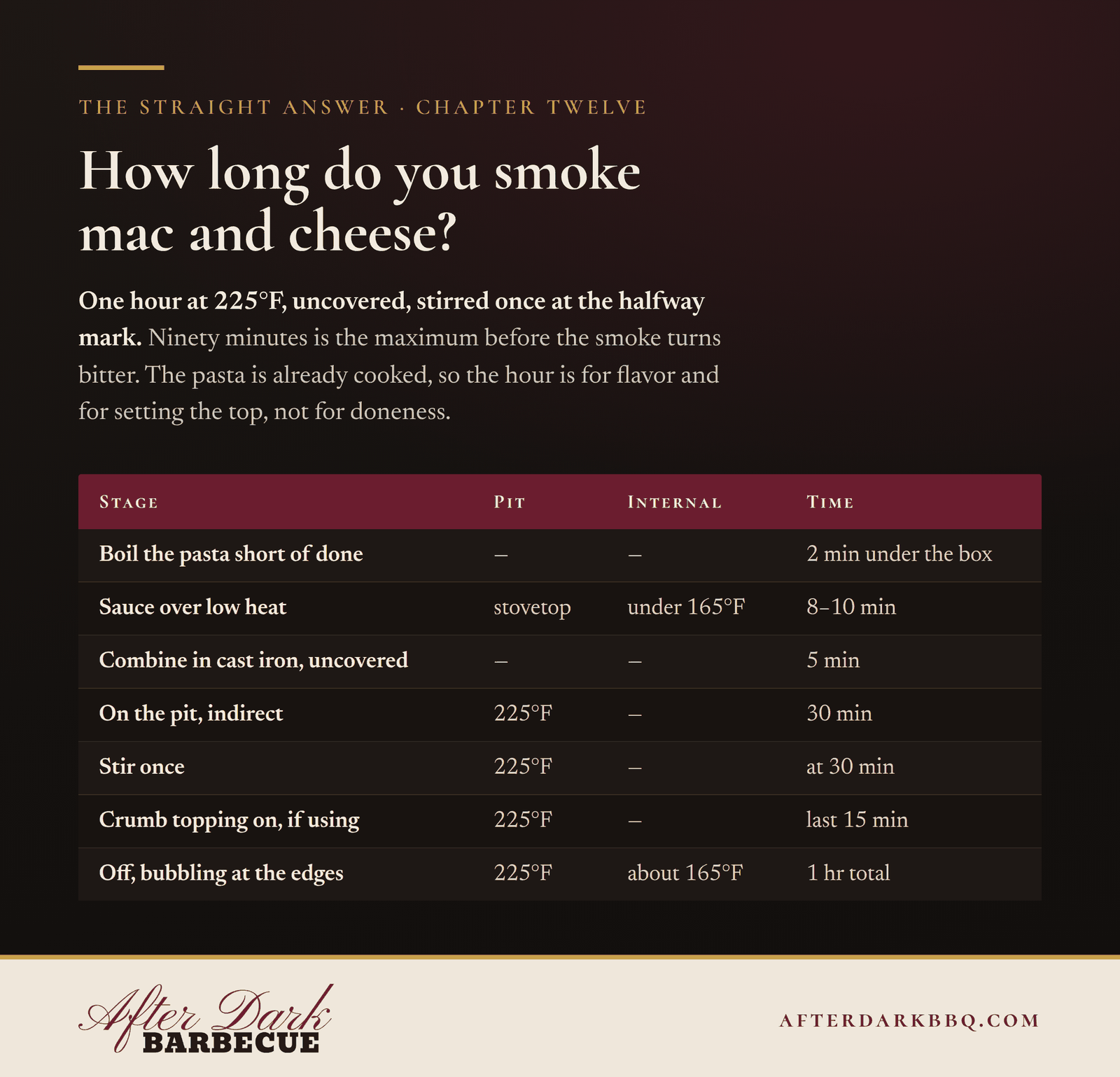
One hour at 225°F, uncovered, stirred once at the halfway mark. Ninety minutes is the maximum before the smoke turns bitter. The pasta is already cooked, so the hour is for flavor and for setting the top, not for doneness.
| Stage | Pit | Internal | Time |
|---|---|---|---|
| Boil the pasta short of done | — | — | 2 min under the box |
| Sauce over low heat | stovetop | under 165°F | 8–10 min |
| Combine in cast iron, uncovered | — | — | 5 min |
| On the pit, indirect | 225°F | — | 30 min |
| Stir once | 225°F | — | at 30 min |
| Crumb topping on, if using | 225°F | — | last 15 min |
| Off, bubbling at the edges | 225°F | about 165°F | 1 hr total |
If the sauce looks tight when it comes off, a splash of warm evaporated milk stirred in at the table brings it back. If it broke, pull it off the heat, add a spoon of the same milk and whisk hard — a broken sauce can be rescued once.
Recipe: The Short Version
Pasta: 1 lb elbows, boiled two minutes short of the package time.
Sauce: 3 tbsp butter, 3 tbsp flour, 12 oz evaporated milk, 1 cup whole milk, off the heat before the cheese goes in.
Cheese: 8 oz sharp cheddar and 6 oz gruyere, shredded yourself, tossed with a teaspoon of cornstarch.
Smoke: 225°F, uncovered cast iron, 1 hour, mild wood, stir at 30 minutes.
Top: buttered panko for the last 15 minutes only.
Off: when the edges bubble, around 165°F.
Next: two dozen links, a low fire, and the only question that matters about sausage — whether it snaps.
Sources
The 165°F reheat figure for leftovers is from the USDA Food Safety and Inspection Service Safe Minimum Internal Temperature Chart. The 40 to 140°F range and the two hour limit out of refrigeration are from the FSIS Danger Zone (40°F to 140°F) fact sheet, and they are why a pan of this does not sit out all evening. The hour at 225°F, the single stir and the crumb timing are After Dark BBQ’s own, measured at the grate and stated as ours rather than dressed up as research. Read September 2026.
Volume One, complete. Volume Two, a new chapter every Friday.All the chapters · Write to Dutch

Leave a Reply