Chapter Nine · Corned beef at 250° · Two days
Chapter Nine
SHE CAME ALONETWENTY HOURS OF WAITINGSLOW BURN
Heat Somebody is going to get burned
Chapter nine of After Dark BBQ: she brought it cured, and two days and a slow 250° on the pit turned it into smoked pastrami.
She brought it already salted. All he had to do was take his time.
What Pastrami Actually Is
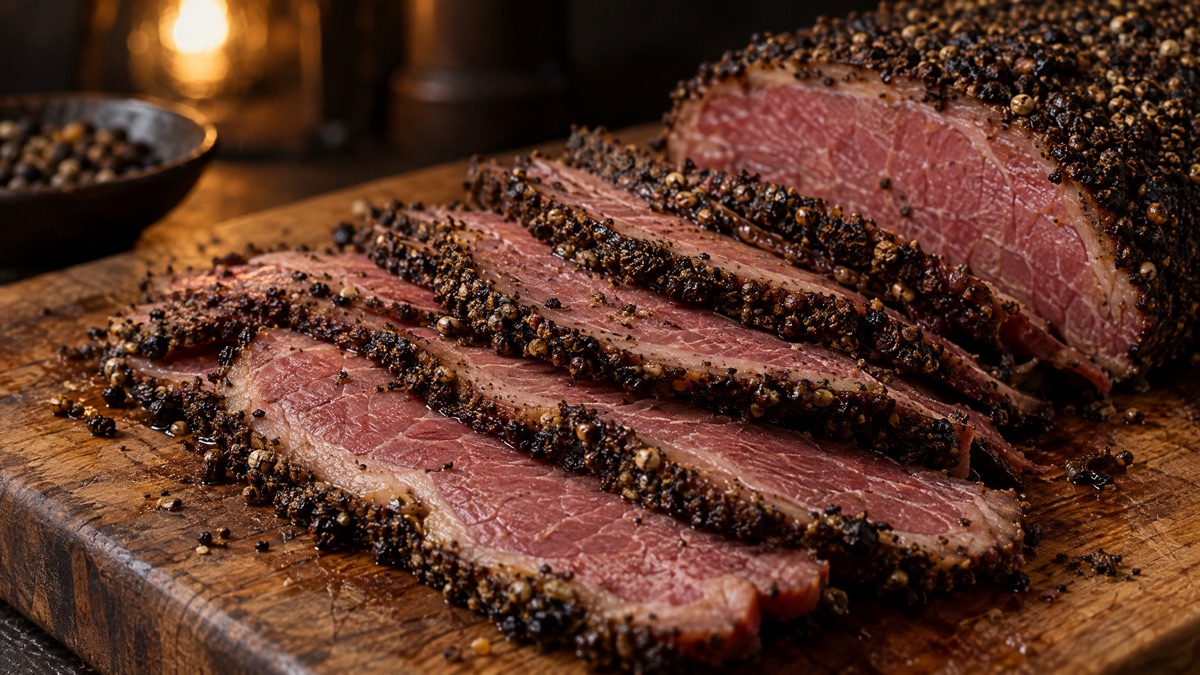
Pastrami is not a cut. It is a brisket that has been cured, then rubbed, then smoked, then steamed, four things done to it one after another, and not one of them can be rushed.
The cure is the part a man can buy already done for him. A corned beef in a plastic bag at the grocery store in March is a brisket flat that has spent a week in salt, sugar, pickling spice and curing salt, which is why the pink stays even after it is cooked.
What separates pastrami from corned beef is what happens to it after the cure. Corned beef gets boiled. Pastrami gets a heavy coat of black pepper and coriander, hours of smoke, and then steam at the end — and the steam is the part men skip because they cannot wait, and then they wonder why theirs came out hard as a salted brick.
This chapter is the second week of March, a three pound flat somebody bought on sale, and the first time anybody has asked Henry for a favor that was really an excuse to be in his yard. The method is the one that works on any pit: soak it, rub it, 250 degrees to 165, steam it to 203.
Mara Came Through the Gate First
She has been coming since October and she has never once come first. Lena brings her. That is how it works, and both of them know it, and neither of them has ever said it out loud.
Tuesday, ten after eight, and it is Mara at the gate with a plastic bag in her hand and nobody behind her at all.
MaraThey had them stacked by the door. Two for the price of one because it is March.
She sets it down on the stainless table. Three pounds of corned beef in a vacuum bag, wet through, with a spice packet floating in the brine at one end.
Henry“You want it boiled.”
“I do not want it boiled. My mother boiled it every year and it was gray and it was salty and everybody ate it because it was March.” She puts one finger on the bag. “I want to know what you would do with it.”
He turns the bag over and reads the back of it the way he reads everything, all the way through, slowly, while she stands there and lets him.
HenryIt needs to soak. Tonight, all night, and I have to change the water four times.
Then it is a two-day favor.
It is.
She was already at the gate.
MaraThursday, then.
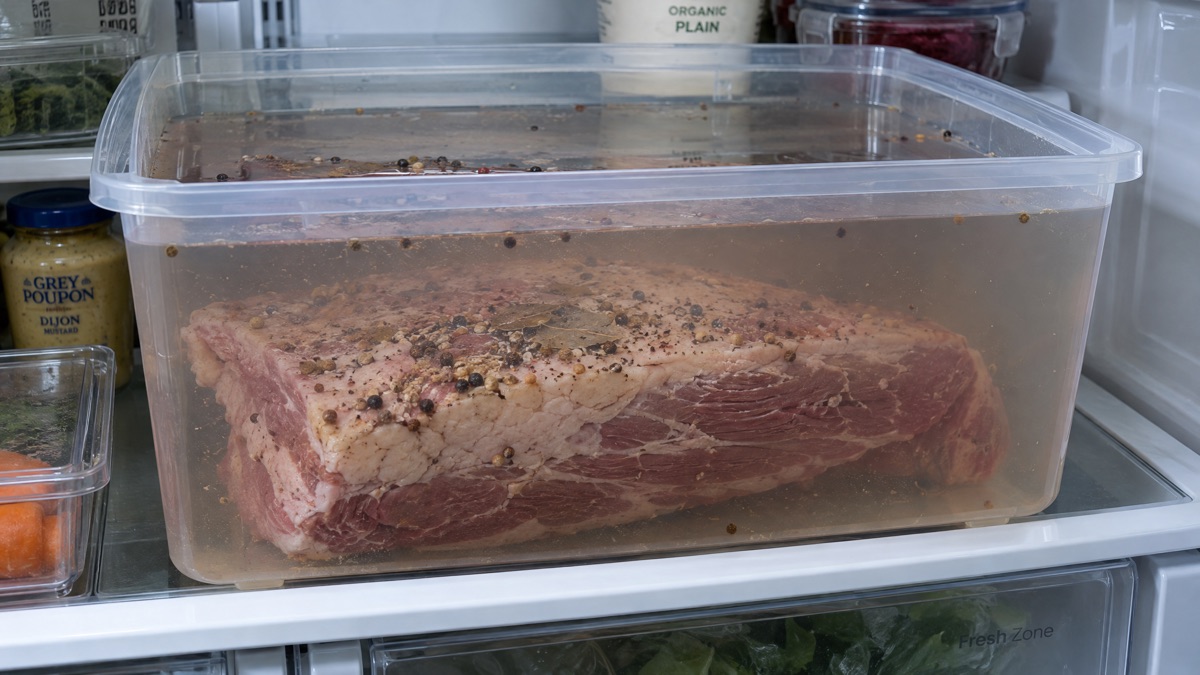
He put it in a stockpot in the workshop fridge under cold water at half past eight and changed the water at midnight, at four, at eight in the morning, and again at noon, and stood there every one of those times with his hand in water cold enough to hurt, pouring off something the color of weak tea and then putting his hand back in.
Technique Spotlight: The Soak Is Not Optional
This is the step that decides whether you made pastrami or a salt lick, and it is the one almost everybody skips.
Why
A corned beef has spent five to ten days in a brine. The salt is not on it, it is in it, all the way through. Smoking concentrates everything by driving moisture off, so a piece that tastes merely salty raw comes out inedible after eight hot hours on a pit.
How long
Eight hours minimum. Twelve to twenty-four is better. Fully submerged in cold water in the refrigerator, and change the water every four to six hours — the water pulls salt until it reaches equilibrium and then stops working, which is why one long soak in one pot of water does almost nothing after the first few hours.
How to know
Cut a thin slice off the end, fry it in a pan for a minute and taste it. If it is pleasantly seasoned, stop. If it leaves you thirsty, give it six more hours.
Throw the spice packet away. It is for boiling. What happens next is none of its business.
Featured Fuel: Ashfell Fuelworks Post Oak and Cherry
Cured beef under a half inch of black pepper does not need a loud wood. In the After Dark BBQ universe Henry runs post oak with one cherry split on anything cured, for color more than flavor.
Post oak is steady and gentle and knows to stay out of the coriander’s way.
Cherry darkens the crust, and on pastrami the crust is what everybody is staring at.
Mesquite and heavy hickory pick a fight with the pepper and lose. A small, clean fire beats a big, loud one on every cured cut.
Thursday, and Half an Inch of Pepper
Thursday at four the meat comes out of the last change of water, and he takes it dry with towels, everywhere, until the surface has gone tacky instead of wet.
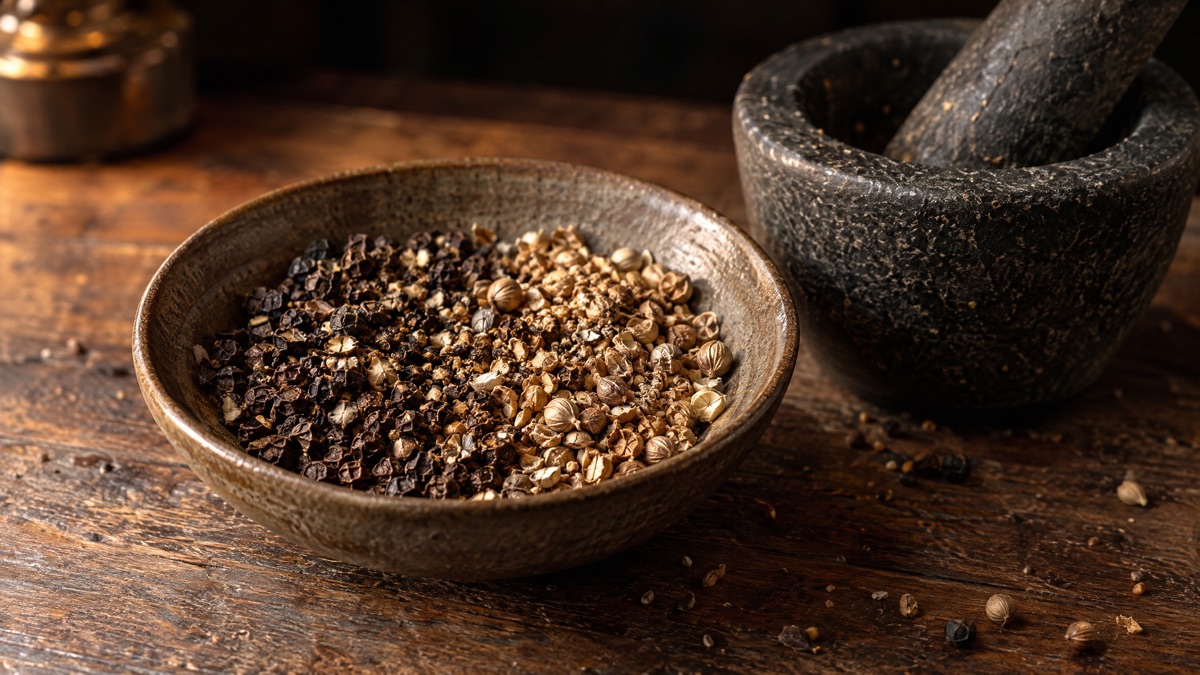
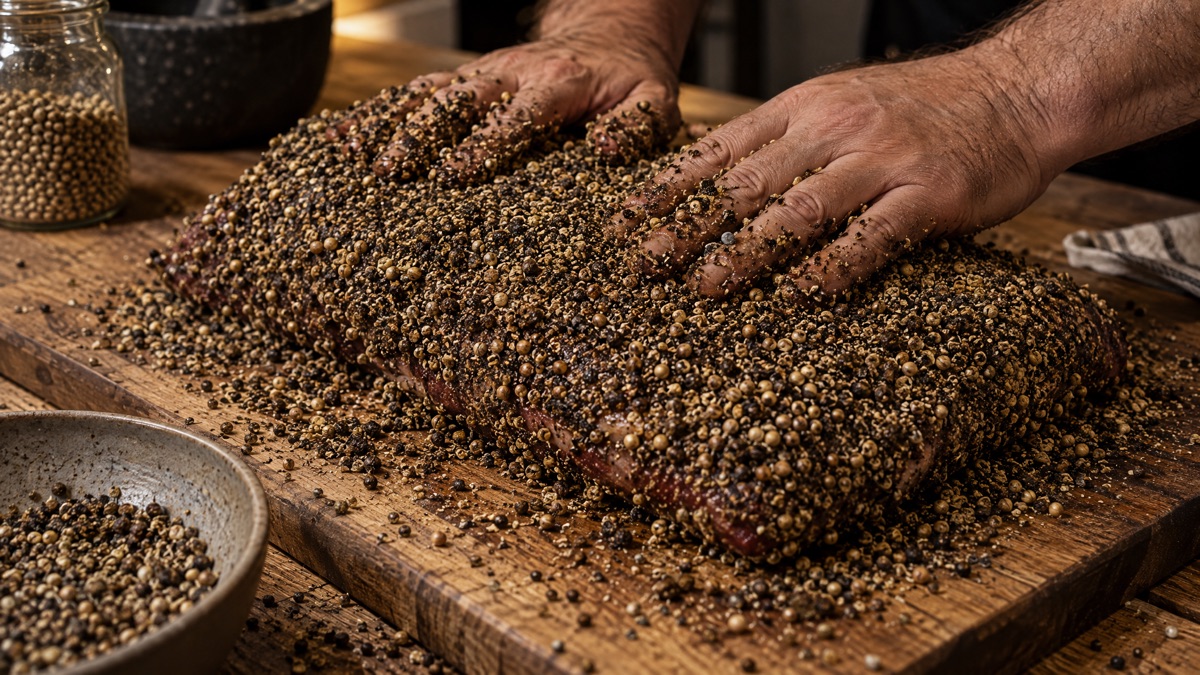
Then the rub, and there is only one: coarse black pepper and coriander seed, equal parts, both of them cracked that afternoon, with a little garlic and mustard seed worked in. It goes on heavy enough that the meat disappears under it entirely, pressed down in with the flat of his hand, and that is not a garnish. A pastrami crust is supposed to be thick enough to be a texture of its own.
Corned beef is a brisket somebody else already started on. It has spent a week lying in salt and spice before it ever gets to a man, and there is not one thing he can do about that except spend a day taking some of it back out.
You can read this one for who carried it into the yard. I read it for the soak. Twenty hours in cold water, changed four times, and a man who badly wanted to skip it and did not.
DutchOn at five, fat cap up, 250 degrees, post oak and one split of cherry.
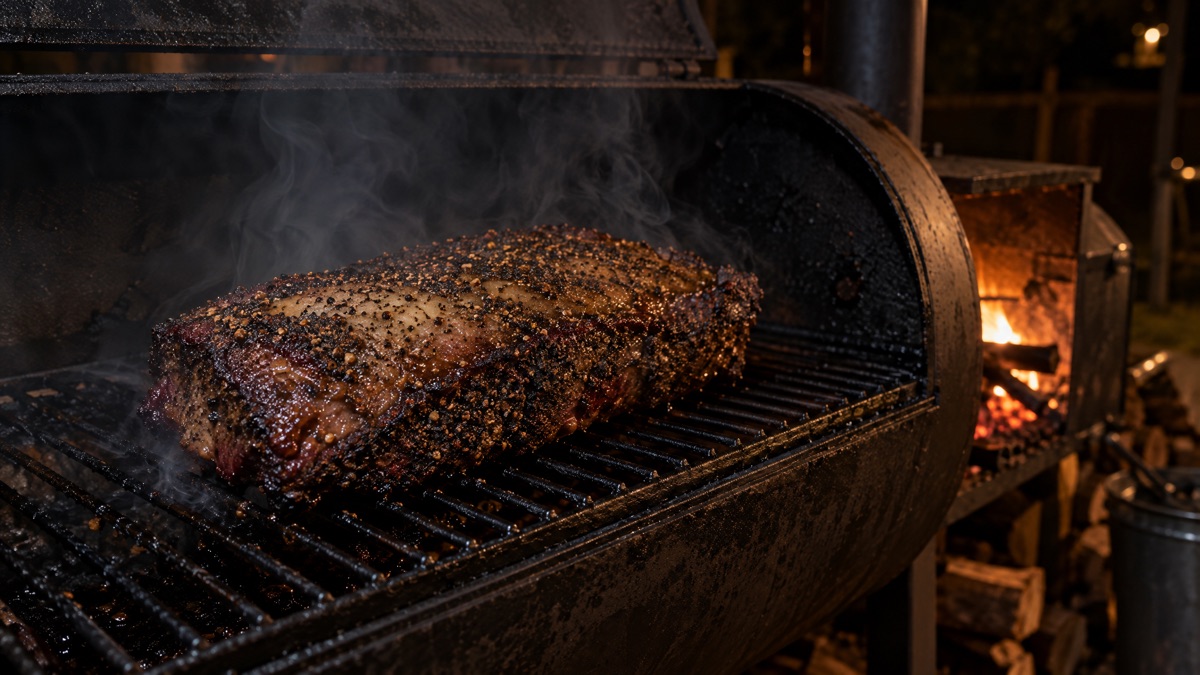
Mara comes at seven and Lena is with her, and if either of them has a thought about who came through the gate first on Tuesday, neither of them says it.
Lena“It smells like a delicatessen.”
Henry“That is the coriander. That is the whole trick.”
At nine it reads 162 and the crust has gone from gray-green to nearly black, and he puts it in a foil pan with a cup of water in the bottom and seals the top down tight over it.
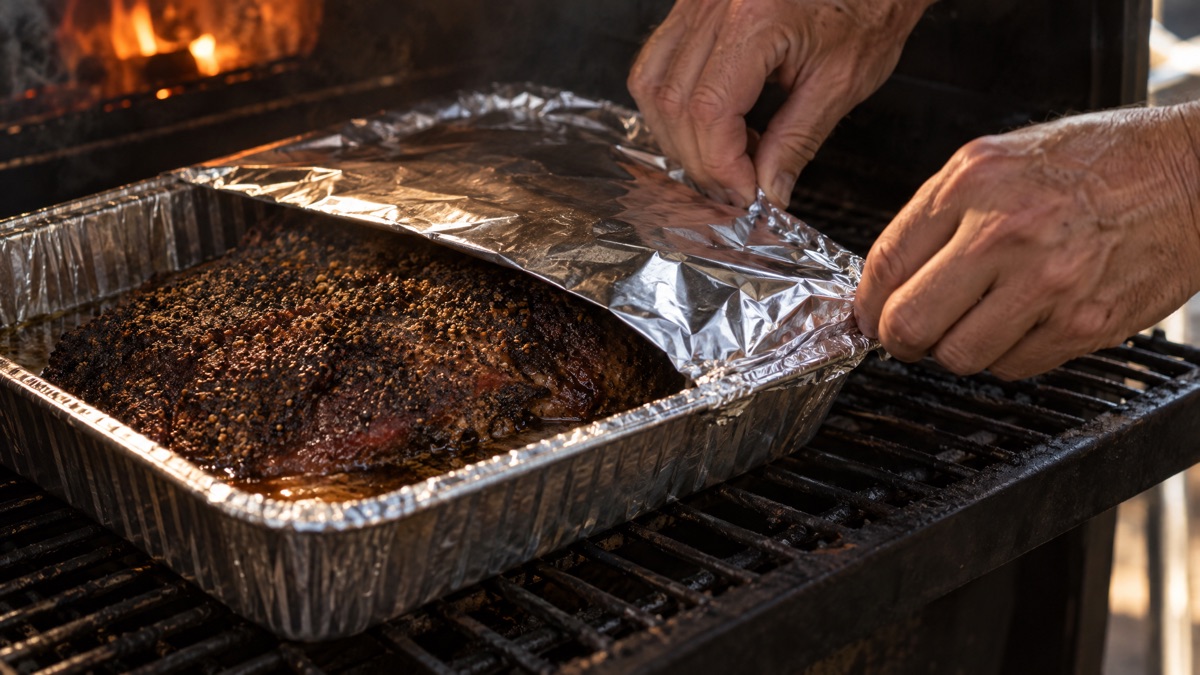
Which is the other half of pastrami, and the half nobody photographs.
Technique Spotlight: The Steam at the End
Every delicatessen in New York finishes pastrami in a steam cabinet, and there is a reason it is not optional at home either.
What steam does
A cured flat is lean and there is no fat cap to carry it through the last thirty degrees. Wrapped dry, it goes from tough to dry without ever stopping at tender. Wet heat holds the surface at 212, keeps it moist, and lets the collagen give in without the meat giving up any more water.
How to do it on a pit
At about 165°F internal, put the meat in a foil pan with a cup of water, seal the top with foil, and put it back on at 250°F. Two to three hours. Or use a steamer basket over simmering water on the stove for the same result.
When it is done
Probe tender at 200 to 205°F, same as brisket, and on pastrami it matters more, because a lean flat has nowhere to hide and nothing to cover for you.
After
Best cold. Chill it overnight, then slice it thin across the grain and steam the slices to serve. Hot and fresh off the pit it will tear rather than slice. The good things wait until morning.
It Finished at Half Past Eleven
They sat three chairs across from a foil pan for two and a half hours in March, which is colder in that yard than February ever is, and talked about almost nothing, and not one of them left.
At 11:20 he pulled the foil back and the steam came up between them in a column, and the smell that came up with it was pepper and coriander and something underneath it like a cellar.
The probe went in at 203 and did not meet one thing on the way.
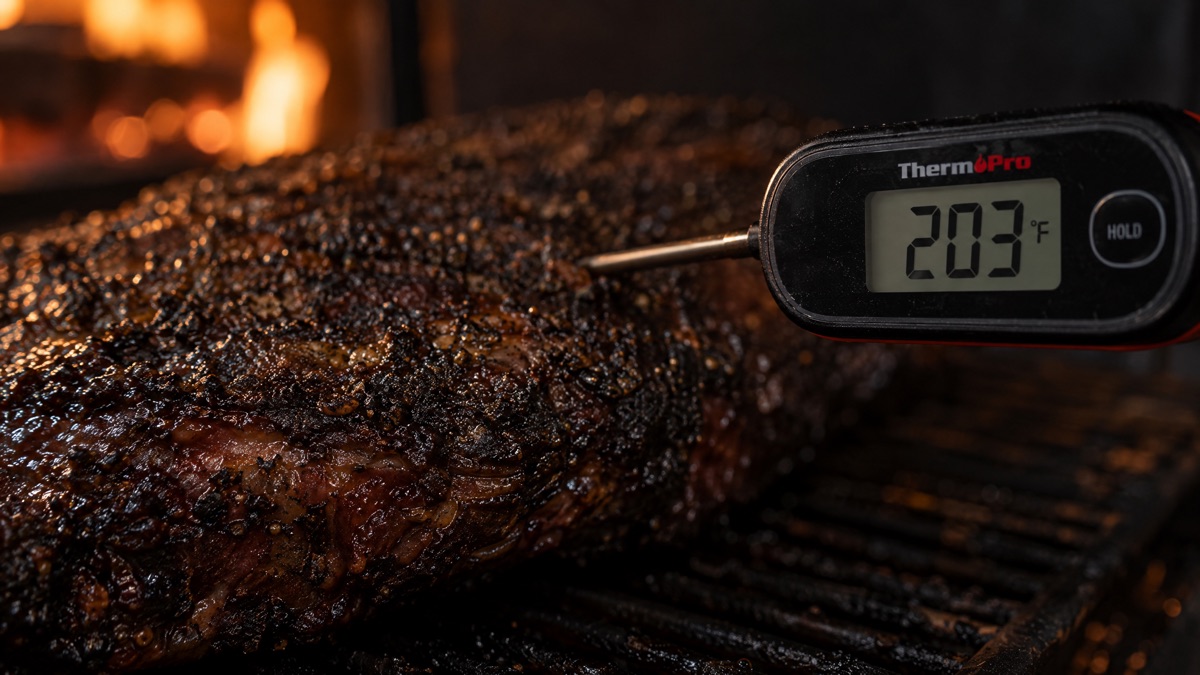
He cut one slice off the end, against the grain, as thin as he could get it, and it bent over the knife instead of breaking.
He gave it to Mara because it was hers.
She ate it standing up and did not say one word about it, and then she asked him the only question that mattered.
Mara“How long does it keep?”
Henry“Cold, a week. It is better on the third day than it is tonight.”
“Then I will come back on the third day.”
He buys it for nobody on the first warm night of the year, and somebody finally stays until four.
Read the next chapterHow do you turn corned beef into pastrami?
Soak it, rub it with pepper and coriander, smoke it at 250°F to 165°F, then steam it to 203°F. Corned beef is already cured, so the work is taking salt back out and putting smoke and crust on. A three pound flat takes 8 to 24 hours of soaking and about 7 hours of cooking.
Soak fully submerged in cold water in the refrigerator and change the water every four to six hours — that is the step that decides whether it is edible. Throw the spice packet away; it is for boiling. Rub heavy with equal parts coarse black pepper and cracked coriander. Finish it sealed up tight in a foil pan with a cup of water, and take it all the way to probe tender.
| Stage | Temperature | Time |
|---|---|---|
| Soak, water changed 4–6 hourly | refrigerated | 8–24 hr |
| Rub: pepper and coriander, equal parts | — | heavy coat |
| Smoke, fat cap up | 250°F | 4–5 hr, to 165°F |
| Pan with a cup of water, sealed | 250°F | 2–3 hr |
| Probe tender, off | 200–205°F internal | — |
| Rest, or chill overnight | — | 30–60 min, or a day |
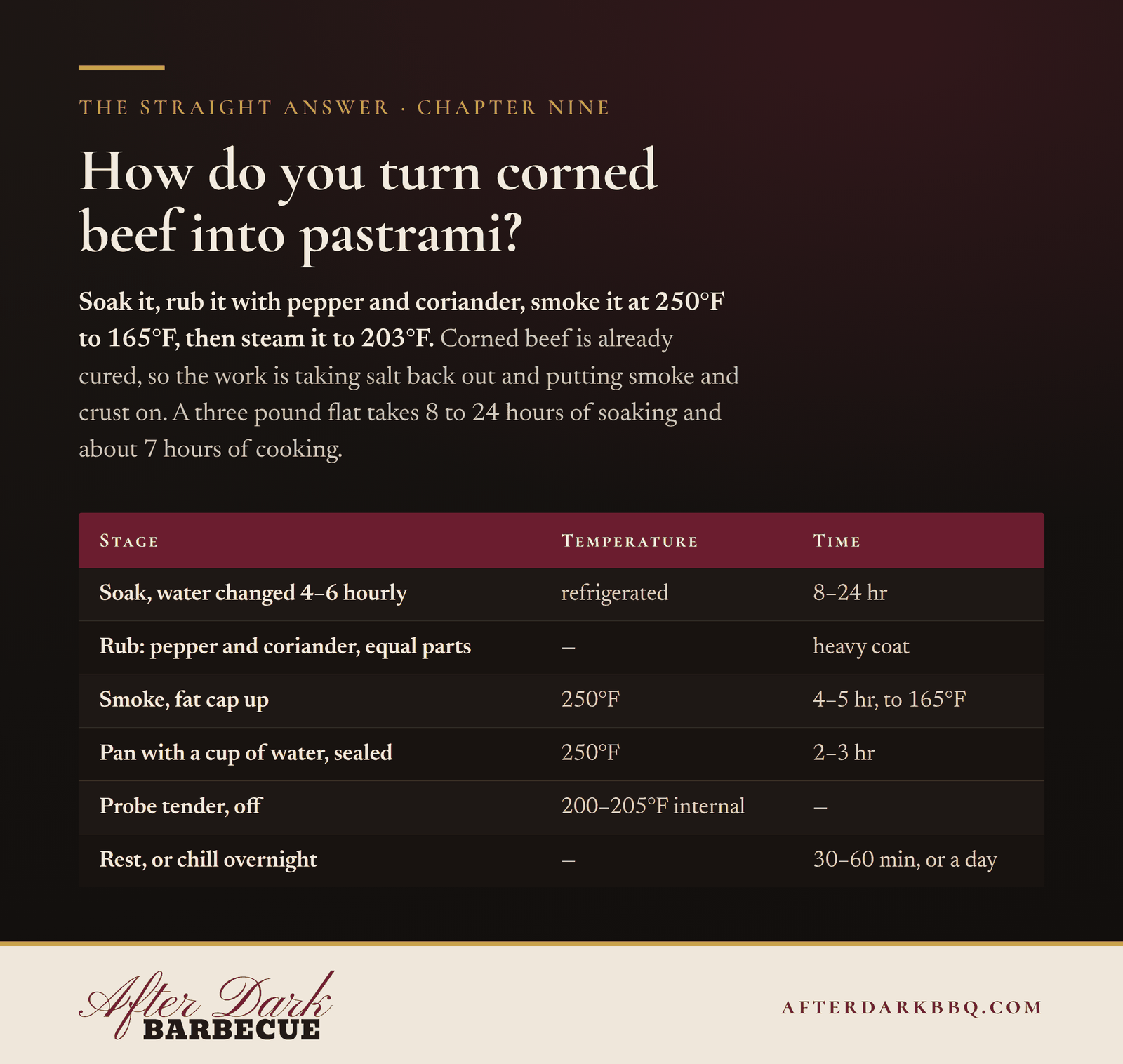
How to read this: Internal temperature is what a probe reads in the thickest part of the flat. The soak is the only stage with no number attached to it — test it by frying a thin slice off the end and tasting it. If you want plain smoked corned beef rather than pastrami, the cook is the same without the pepper and coriander crust.
This is the cook from the story above with nothing left on: just the numbers, ready for your own pit.
Recipe: The Two-Day Favor
What You Will Need Tonight
A corned beef flat, 3 to 4 lb · a quarter cup coarse black pepper · a quarter cup coriander seed, cracked · a tablespoon each granulated garlic and mustard seed · a foil pan and a cup of water · post oak and one cherry split.
Day one
Open the bag, throw away the spice packet, rinse the meat. Submerge in cold water in the refrigerator. Change the water at four to six hour intervals, four times if you can. Fry a thin slice off the end to taste before you stop.
Day two, the rub
Dry it until the surface is tacky. Crack the pepper and coriander coarse and mix them equal by volume with the garlic and mustard seed. Coat it so heavily you cannot see meat, and press it in.
The smoke
250°F, fat cap up, four to five hours, until the internal temperature reads 165°F and the crust is nearly black.
The steam
Into a foil pan with a cup of water, sealed tight with foil, back on at 250°F for two to three hours, until a probe slides into the thickest part with no resistance at 200 to 205°F.
The slice
Best chilled overnight and sliced thin across the grain, then steamed to serve. Rye bread, mustard, nothing else on it.
Sources
Safe minimum internal temperatures for beef are from the USDA Food Safety and Inspection Service Safe Minimum Internal Temperature Chart. The 40 to 140°F range, the two hour limit and the rules for holding cured meat cold are from the FSIS Danger Zone (40°F to 140°F) fact sheet. The soak times, the 165°F wrap point and the 200 to 205°F finish are After Dark BBQ’s own, measured at the grate and stated as ours rather than dressed up as research. Read September 2026.
Stay a While Longer
Volume One, complete. Volume Two, a new chapter every Friday.All the chapters · Write to Dutch

Leave a Reply