Chapter Eight · Double-smoked ham at 250° · Three hours
Chapter Eight
SECOND TIME AROUNDFEEDING THE WHOLE ROOMGRIEF AND CASSEROLE
Heat Running hot
Chapter eight of After Dark BBQ: a double smoked ham that went back on at 250 for three more hours anyway, glaze and all.
Somebody already had it. That is not a reason to leave it alone.
Why You Would Do It a Second Time
Almost every ham in an American grocery store is cured, smoked and fully cooked before it ever reaches the case. The label says so in small type. A man is not cooking it. He is warming it back up, slow and gentle, and 140 degrees is all it asks him for.
So why put it on a pit for three long hours? Two reasons, and both of them are worth staying up for.
The first is that factory smoke is thin. It goes on in a stainless cabinet in under an hour and it never gets past the surface. Three hours of cherry over a real fire works smoke down into the outside half inch instead of just laying it on top, and a man can tell the difference the moment he gets one open.
The second is the glaze. In an oven a glaze bakes. On a pit at 275 with the lid down it goes on in layers, slow, and tightens up into something a good deal closer to candy than to sauce, and it takes all the smoke you give it.
This chapter is the first Saturday in February, a spiral-cut ham somebody bought at a grocery store, and a lunch nobody wanted to be at. The method underneath it is the one that works on any pit: 250 degrees, cut side down in a pan, a cup of liquid, glaze at 128, off at 140.
The Man From Chapter Six
The old man with the standing rib order died on a Wednesday in February, at home, at eighty-one. His name was on a paper receipt in a cigar box behind the bar going back nine years and the man from the roadhouse had never once charged him full price.
Lena comes to the fence Thursday night and does not lean on it.
LenaSaturday. After the service. He is opening the room and putting out what people bring.
Henry waits.
“The family brought a ham. Spiral cut, plastic sleeve, a little packet of glaze taped to the top of it.” She says it flat, without any edge on it at all, which is worse. “It is sitting on a table in the back of that kitchen and he keeps walking past it.”
HenryHe has an oven.
He is not going to put that man’s lunch in an oven.
Nine pounds, already cooked, already smoked, cured by somebody in a plant in another state a month ago. There is nothing about it that needs a fire.
Henry“Bring it tonight.”
He put the packet of glaze in the trash without opening it and then took it back out and put it on the shelf over the workbench, where it is still, because you do not throw away a thing somebody’s family bought.
Featured Fuel: Ashfell Fuelworks Cherry and Apple
A ham is already salty, already smoky and already sweet before you touch it, so the wood has one job and it is not to add another flavor. In the After Dark BBQ universe Henry burns Ashfell cherry with one apple split for anything cured.
Cherry puts a deeper blush on a glaze than any other wood and asks almost nothing else of it.
Apple is mild and a little sweet, and it has been going home with pork for as long as anybody can remember.
Hickory on a cured ham is smoke on top of smoke on top of salt. It is the most common mistake on this cook, and the one a man makes when he comes on too strong.
Technique Spotlight: Spiral Cut Is a Problem, Not a Feature
A spiral ham has been cut into two hundred slices and then held together by nothing but the bone. Every one of those cuts is one more place for the juice to slip away.
What to do about it
Put it cut side down in a foil pan, not on the bare grate. Pour a cup of liquid in the pan — stock, cider, cola, whatever you have — and tuck the whole thing in loosely under foil for the first two thirds of the cook.
When to take the foil off
At about 115 to 120°F internal. The last stretch goes uncovered, so the surface gets tacky enough for a glaze to grab hold and for smoke to put some color in it.
The better buy
A shank or butt portion that has not been spiral cut holds moisture far better and costs less per pound. Slice it yourself. If somebody hands you a spiral, the pan and the liquid are not optional.
Saturday, and Nobody Was Hungry
The service is at eleven. Henry lights the Ironbound at eight and holds it at 250 with cherry and one apple split, and the ham goes on at nine in a foil pan, cut side down, a cup of apple cider in the bottom, foil laid loose over the top of it.
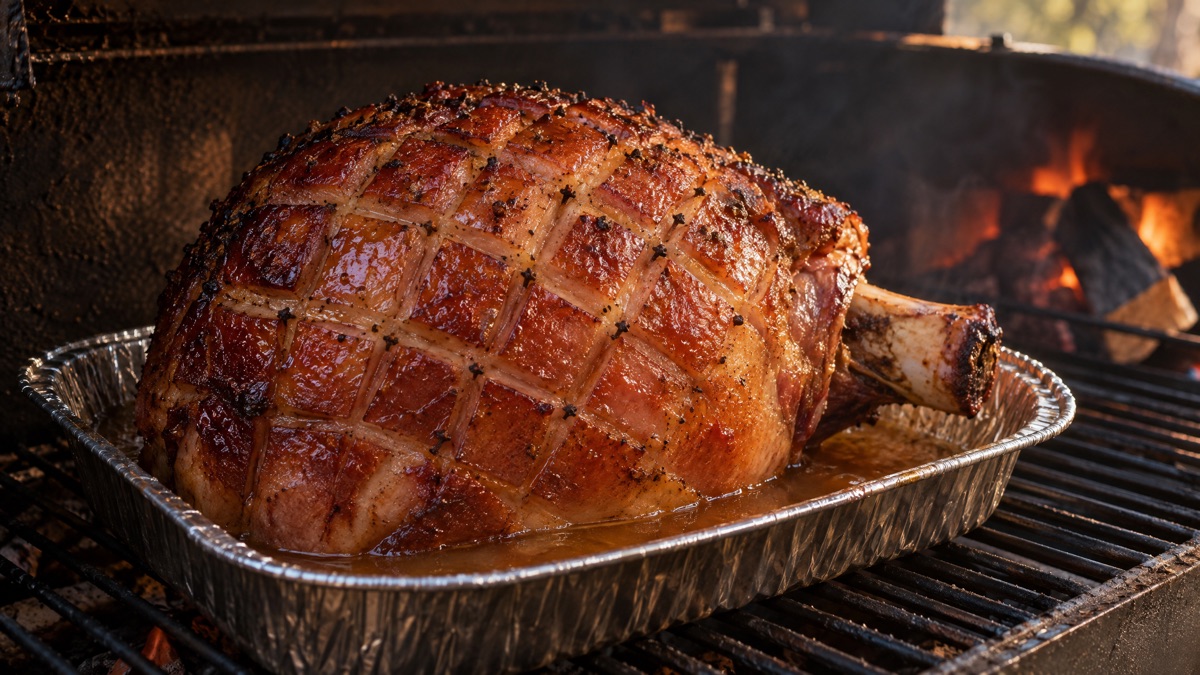
Mara comes at ten with her own chair and does not sit in it. She stands by the pit with her coat buttoned and her hands in her sleeves and says exactly one thing in an hour.
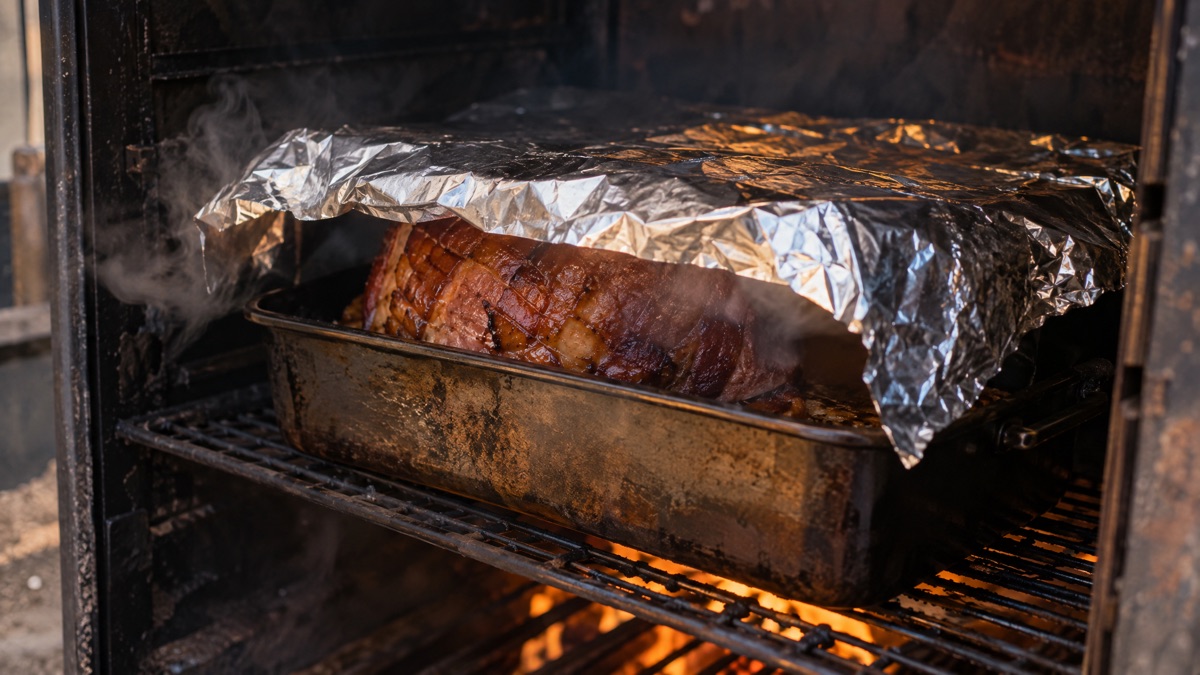
A ham from the store has already been cured, already been smoked, and already been cooked by somebody else. It does not need a man at all. That is the whole problem with it, and it is exactly why a man will stand over one for three hours anyway.
You can read this one for whose table it went to. I read it for the glaze going on at 128 degrees and not one minute sooner, which is the only real decision in the whole cook and the one every man gets wrong because he cannot wait.
DutchMara“He came in for the prime rib the week after Christmas. He told me it was the best one they ever did.”
Henry does not say anything to that, which is the correct thing to say.
At 11:40 the probe reads 118 and the foil comes off, and the cut faces have gone from pink to a deeper pink all the way down, and the liquid standing in the pan has turned the color of tea.
He makes the glaze on a side burner: brown sugar, a spoon of coarse mustard, a splash of the cider out of the pan, a little apple cider vinegar. It stays on the stove until it is thick enough to hang on a spoon and not one second longer, because a glaze worked too hard turns to candy in the pan and never gets anywhere near the meat.
Technique Spotlight: Glaze at 128, Not Before
Every glaze on every ham is mostly sugar, and sugar burns at pit temperature long before three hours are up.
The rule
Glaze goes on in the last 30 to 45 minutes, which on a ham means at about 125 to 130°F internal. Two or three thin coats, twenty minutes apart, beat one thick one every time.
Why layers
Each coat sets and gets sticky before the next one goes on, and you end up with a lacquer instead of a mess. Brush it into the cuts on a spiral, not just over the top, or the slices in the middle taste like nothing.
If you want it darker
Run the pit to 300 to 325°F for the last fifteen minutes. Do not reach for a torch on a ham; rush her and the sugar goes from bronze to bitter in about four seconds.
Back On Until 128
The first coat goes on at 12:10 at 128 degrees, not one degree before. He brushes it over the top and then works the brush all the way down into every one of the cuts, turning the pan as he goes, taking his time about it, and the smell that comes up off it is the first thing all morning that has made anybody in that yard lift their head.
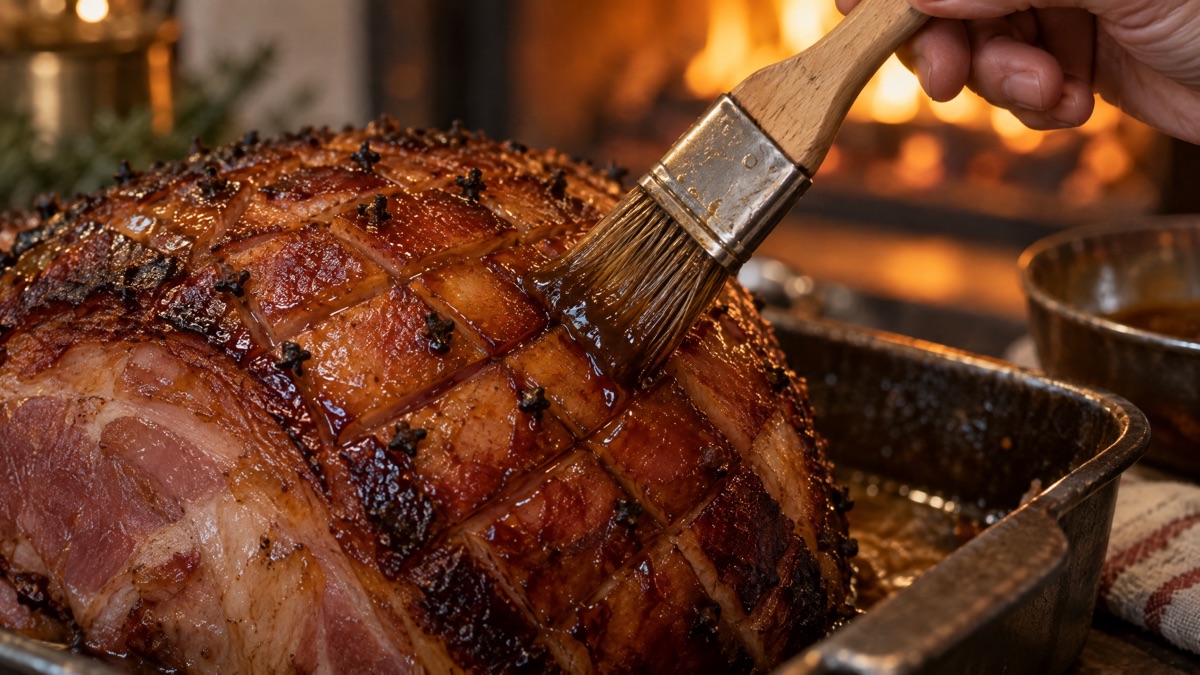
Second coat at 12:30. Third at 12:50, thinner than the other two.
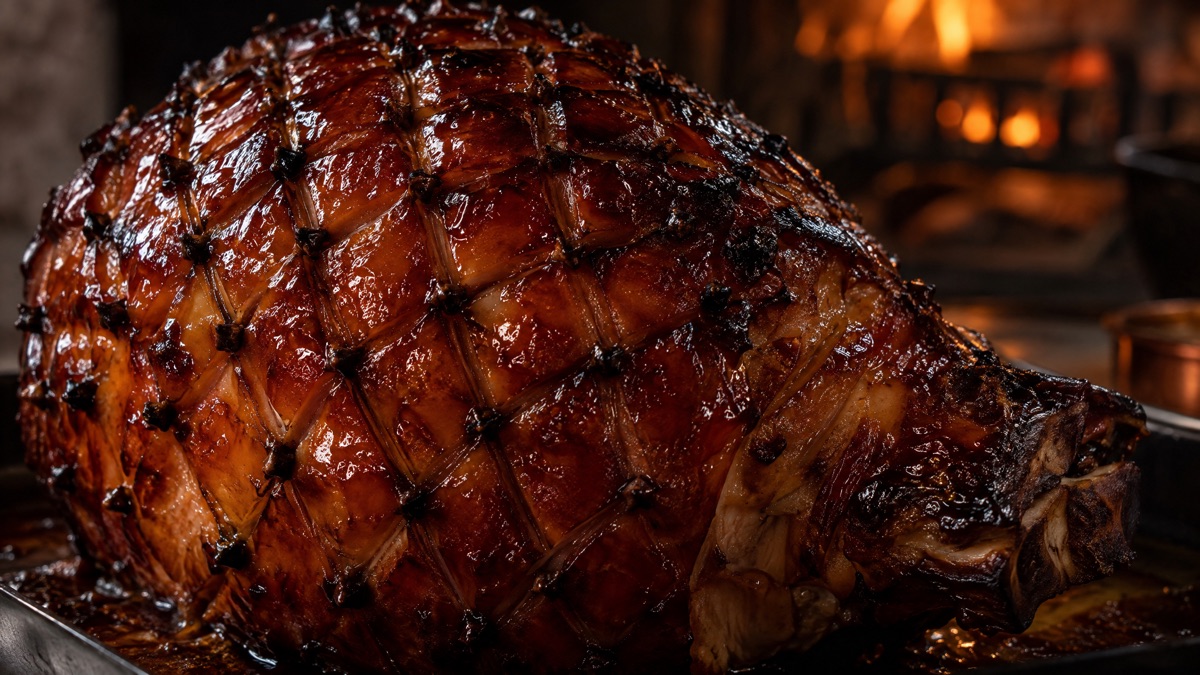
The glaze has gone from wet to tacky to something with a shine on it, and where it has run down into the pan it is bubbling slow around the edges.
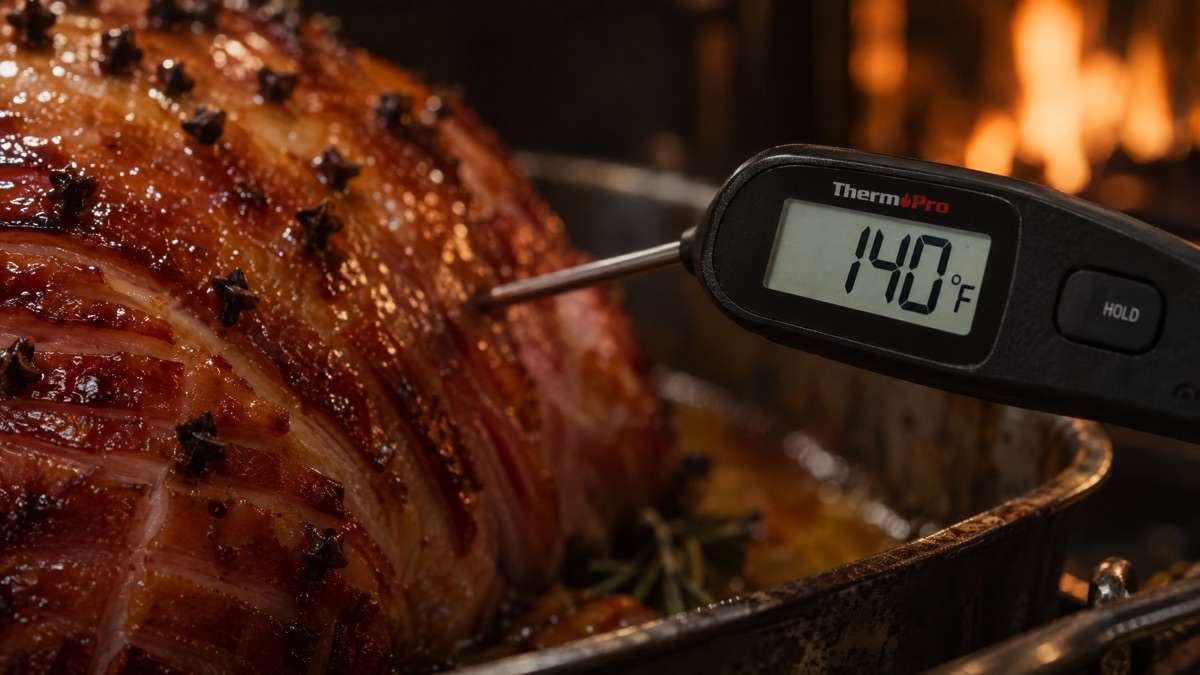
At 1:05 the probe reads 140 and it comes off, and he makes it sit fifteen minutes in the pan before anybody moves it, because a ham carried hot loses half of what is in the bottom of that pan, and the bottom of that pan is the best part of the whole thing.
It Went Down the Whole Table
They carried it in at half past one, into a room with maybe forty people in it and a long table of the food people bring to these things — two casseroles, a bowl of potato salad, a store cake with the sticker still on the box.
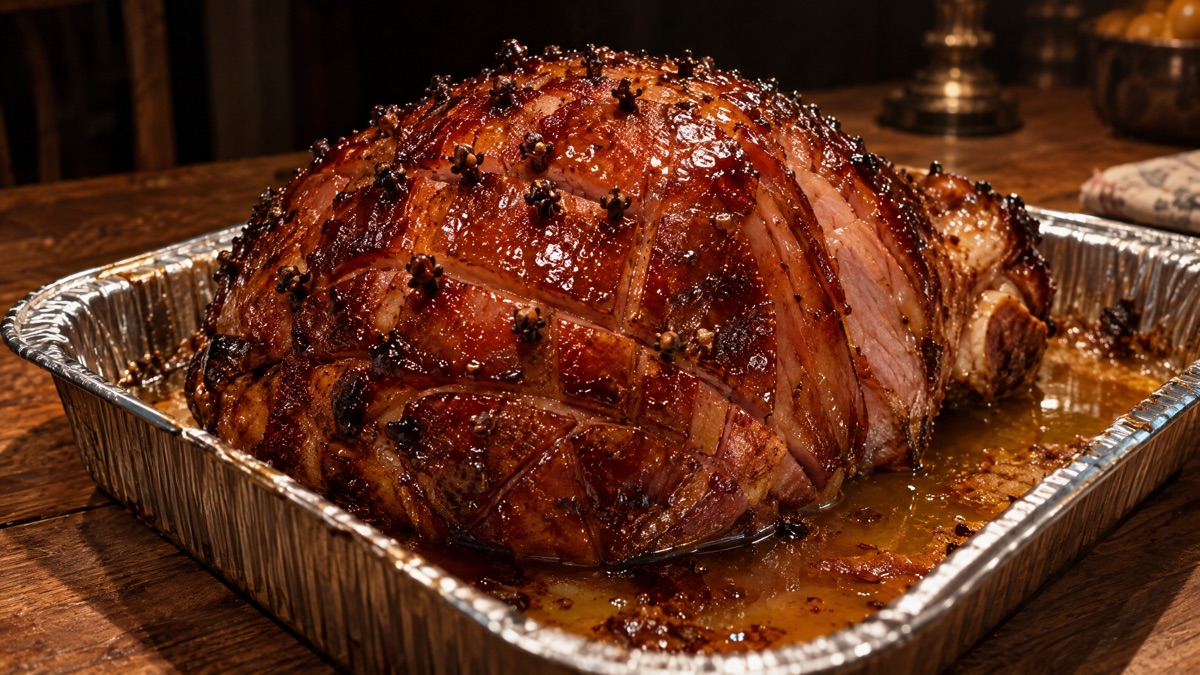
They set it at the end. Nobody announced it and nobody said where it came from.
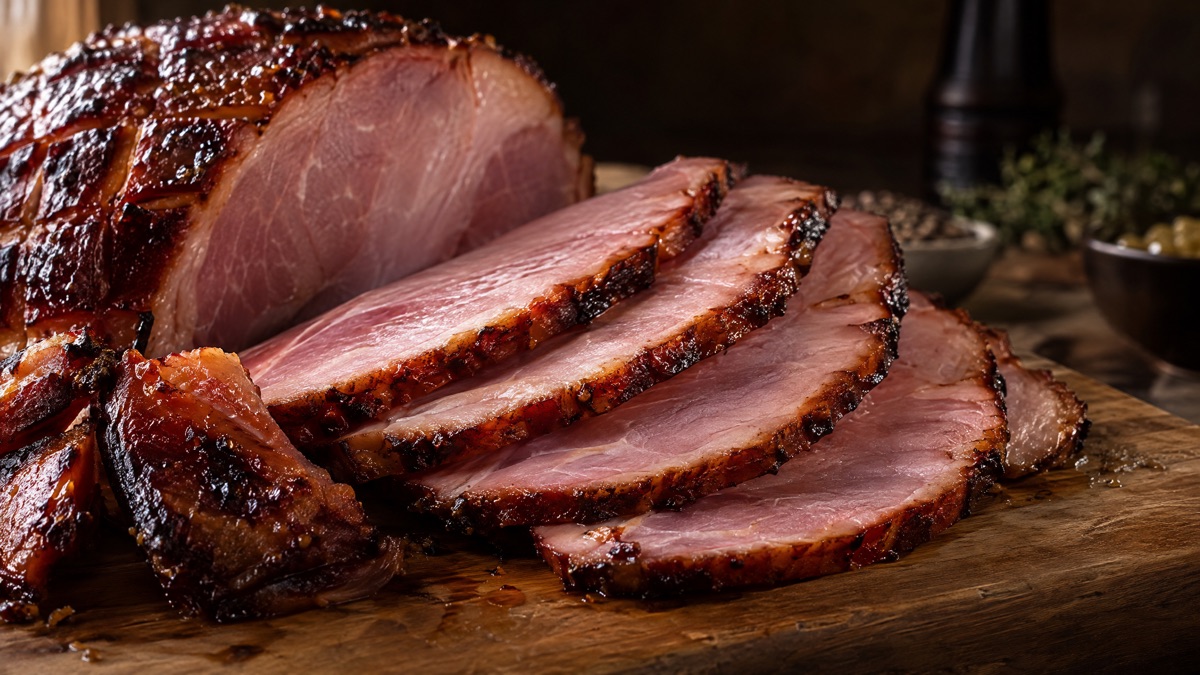
The man from the roadhouse cut it standing up, with the same knife he used on the rib roast in December, and the cut faces came apart in the spiral the way they are meant to, one after another, glazed dark on the outside and pink the whole way to the bone.
An hour later there was one casserole left and half a cake, and a bare ham bone sitting in a pan with about an inch of liquid in the bottom of it that somebody had been spooning over their plate.
Lena found him outside by the trucks with the empty pan.
LenaYou are not going to say anything about it.
HenryNo.
Good.
She took the pan out of his hands and carried it back in herself.
She comes through the gate alone for once, and asks what he would do with it.
Read the next chapterHow long do you smoke a ham?
About 15 to 20 minutes per pound at 250°F — roughly two and a half to three hours for a nine-pound ham. A store-bought ham is already cured, smoked and fully cooked, so you are reheating it: take it to 140°F internal and no further.
Put it cut side down in a foil pan with a cup of cider or stock, covered loosely with foil. Take the foil off at about 115 to 120°F. Glaze in the last 30 to 45 minutes, which lands at about 125 to 130°F, in two or three thin coats twenty minutes apart. Then let it rest fifteen minutes in the pan before anybody lays a hand on it.
| Weight | At 225°F | At 250°F | At 275°F |
|---|---|---|---|
| 6 lb | 2½–3 hr | 2–2½ hr | 1¾–2 hr |
| 8 lb | 3–3½ hr | 2½–3 hr | 2–2½ hr |
| 10 lb | 4–4½ hr | 3–3½ hr | 2½–3 hr |
| 12 lb | 4½–5 hr | 3½–4 hr | 3–3½ hr |
| Stage | Pit | Internal | What happens |
|---|---|---|---|
| Cut side down, pan, cup of cider | 250°F | — | foil laid loose on top |
| Foil comes off | 250°F | 115–120°F | surface starts to dry |
| First glaze coat | 250°F | 125–130°F | thin, and into the cuts |
| Second and third coats | 250°F | — | 20 minutes apart |
| Optional color | 300–325°F | — | last 15 minutes only |
| Off | — | 140°F | fully cooked ham, reheated |
| Rest in the pan | — | — | 15 minutes before it moves |
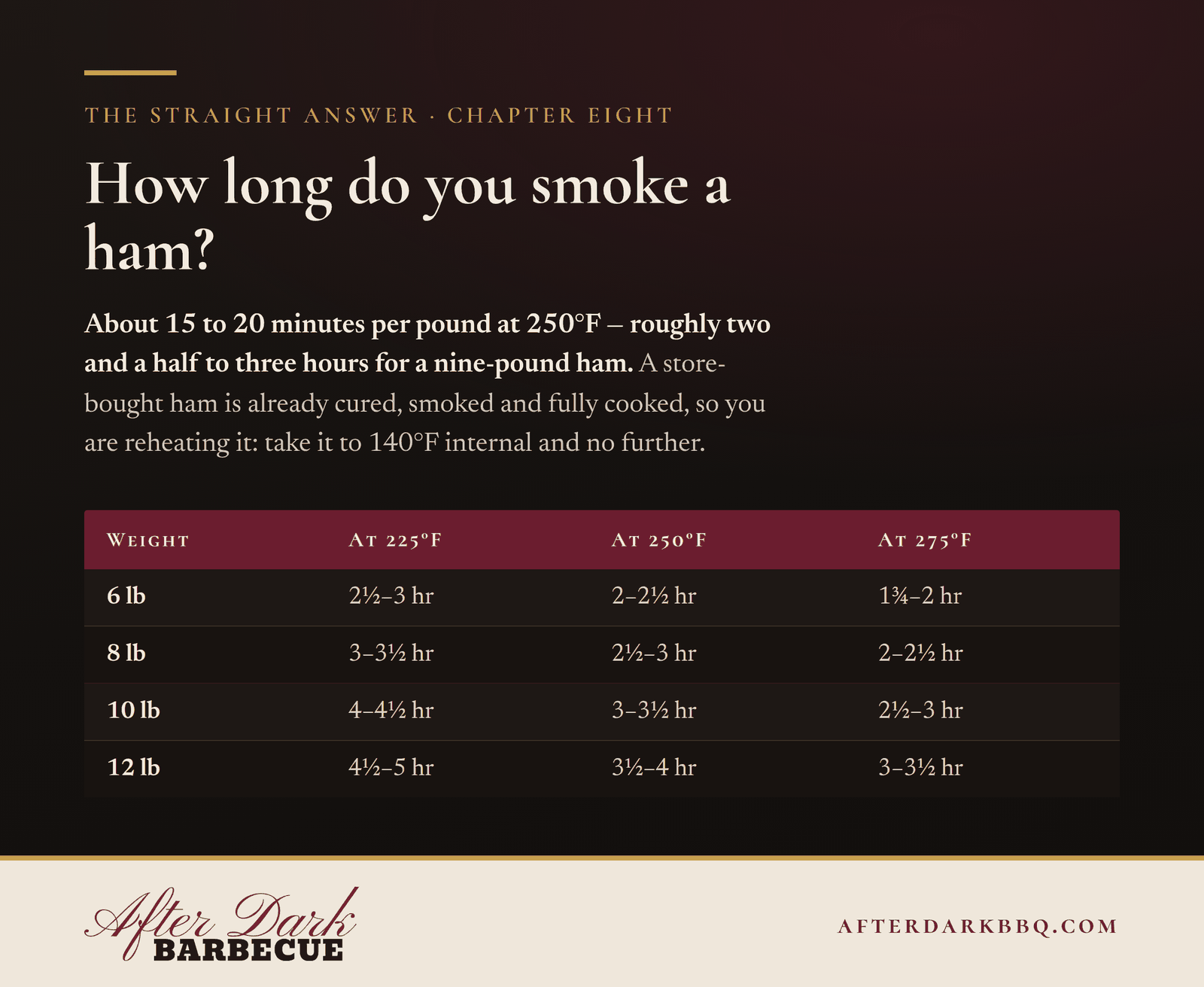
How to read this: This is the cook for a fully cooked ham, which is what almost every ham in a grocery store is — the label will say cured, smoked, or fully cooked. The USDA calls for 140°F when reheating one of those, and 165°F for anything that was repackaged after leaving the plant. A fresh ham is raw pork and a different cook entirely: that one goes to 145°F with a three-minute rest, and takes closer to five hours.
This is the cook from the story above with nothing left on: just the numbers, ready for your own pit.
Recipe: The Ham Somebody Else Bought
What You Will Need Tonight
A fully cooked ham, 8 to 10 lb · a foil pan · a cup of apple cider or stock · cherry and apple wood. Glaze: a cup of brown sugar, a tablespoon of coarse mustard, a splash of the cider from the pan, a tablespoon of apple cider vinegar.
The setup
Pit at 250°F. Ham cut side down in the pan, cider in the bottom, foil laid loosely over the top. No rub — it is already cured and salted.
The middle
Foil off at 115 to 120°F and let the surface dry for twenty minutes or so while you make the glaze. Cook it on the stove only until it hangs on a spoon; boiled hard it turns to candy in the pan.
The glaze
First thin coat at 125 to 130°F, brushed over the top and down into the cuts. Second coat twenty minutes later. A third, thinner still, twenty minutes after that.
Off and rest
Off at 140°F. Fifteen minutes in the pan before it moves anywhere.
The bottom of the pan
Do not throw it out. Skim the fat, pour the rest into a jug and put it on the table with a spoon in it. It is the best thing on the ham and the only part nobody expects.
The Hard Numbers, Laid Out Bare
How long do you smoke a ham — the chart, the stage table and the questions people actually ask, with no story attached.
Sources
The 140°F reheat figure for a fully cooked, USDA-inspected ham is from the USDA Food Safety and Inspection Service Safe Minimum Internal Temperature Chart. The 40 to 140°F range and the two hour limit out of refrigeration are from the FSIS Danger Zone (40°F to 140°F) fact sheet. The glaze timing, the foil-off point and the minutes per pound above are After Dark BBQ’s own, measured at the grate and stated as ours rather than dressed up as research. Read September 2026.
Stay a While Longer
Volume One, complete. Volume Two, a new chapter every Friday.All the chapters · Write to Dutch

Leave a Reply