Chapter Fifteen · Burnt ends at 250° · Five hours
Chapter Fifteen
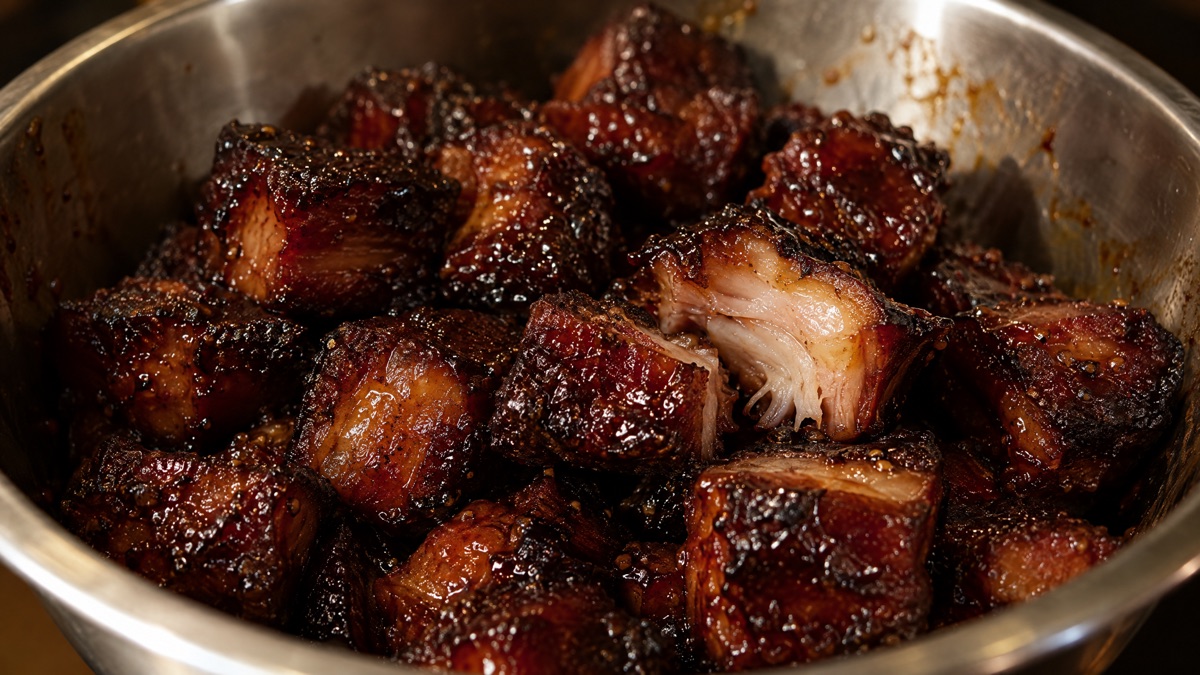
NEITHER OF THEM USED A PLATETHREE HOURS BAREONLY HAVING ONE
Heat Running hot
Chapter fifteen of After Dark BBQ: pork belly cubed, sauced and put back on at 250° for five hours until the edges went sticky.
They both said they were only having one.
She Asked for the Small Ones
He had a five-pound belly, skin already off, and she stood there and watched him square up the edges with a long knife.
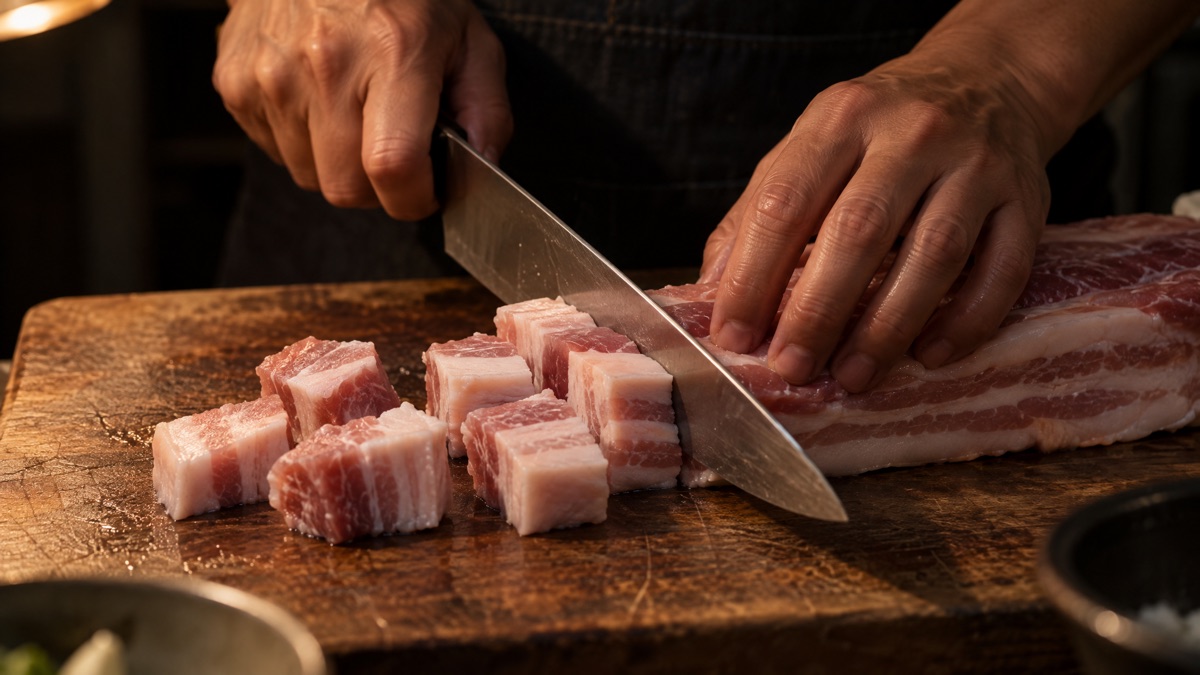
LenaInch and a half. No bigger.
HenryTwo inches gives you more of the middle.
LenaAnd less of the outside, and the outside is the entire point. You want every cube to be mostly edge.
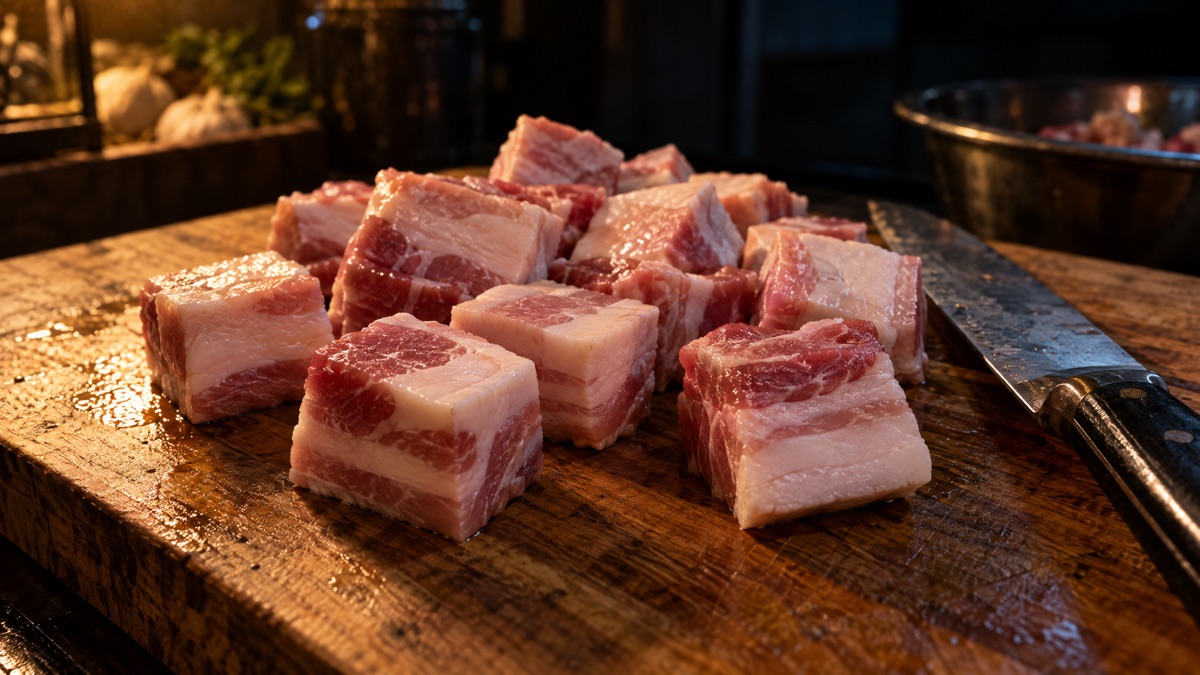
She was right, and the geometry is why. Cut a belly into two-inch cubes and most of what a man ends up with is interior. Cut it at an inch and a half and the ratio flips: bark on five faces out of six, soft fat in the middle, and every single piece tastes like the corner of something.
Burnt ends are the only thing in barbecue that got famous by being the part the pitmaster used to give away. The originals were the ends of a brisket point, handed out free at the counter to whoever happened to be standing there. Pork belly burnt ends are the newer cousin and they are better, and I will take the letters.
You can read this one for the hour where neither of them said anything and neither of them stopped. I read it for the sauce step, which is where most men turn barbecue into candy without ever meaning to.
DutchThree Hours Naked
Cubes go on a rack in a single layer, spaced, at two hundred and fifty degrees. Salt, coarse pepper, a little brown sugar, nothing else yet.
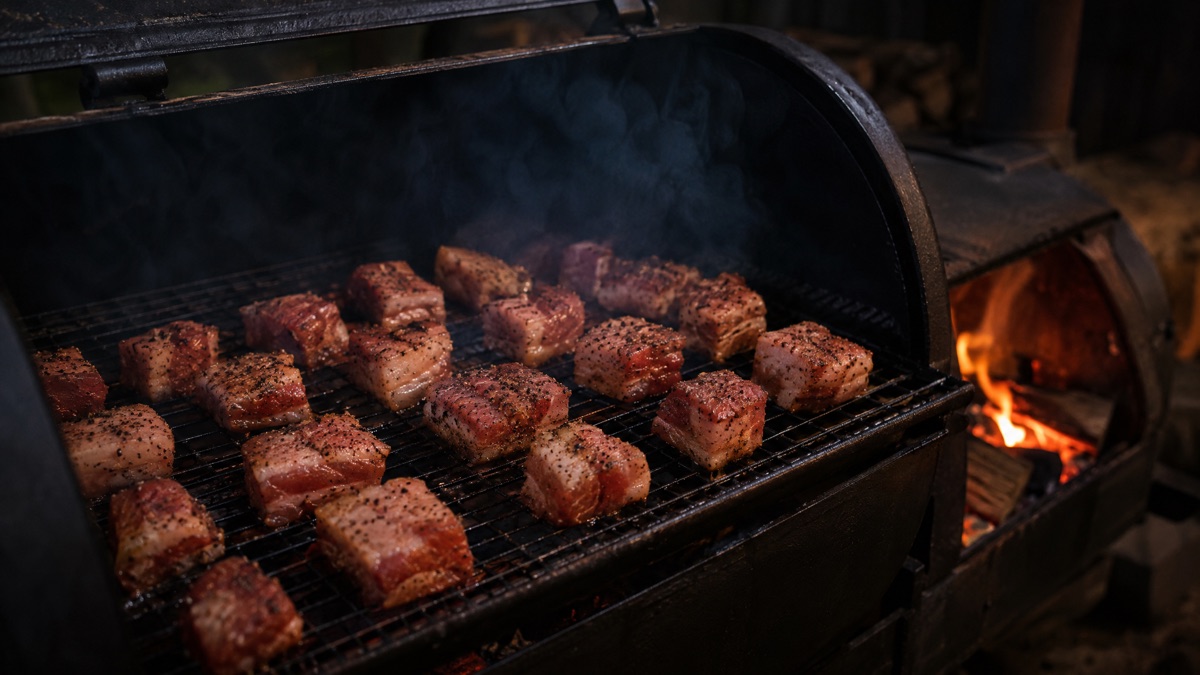
Three hours, uncovered and untouched, nothing over them and nobody laying a hand on them. This is where the bark forms and where the fat starts going from firm to soft, and a man who sauces anything in this window burns the sugar black long before the fat has rendered at all.
At three hours they look done and they are not. They are beautiful and they are still rubbery in the middle, and a man who takes one off and eats it now will go around telling everybody that burnt ends are overrated.
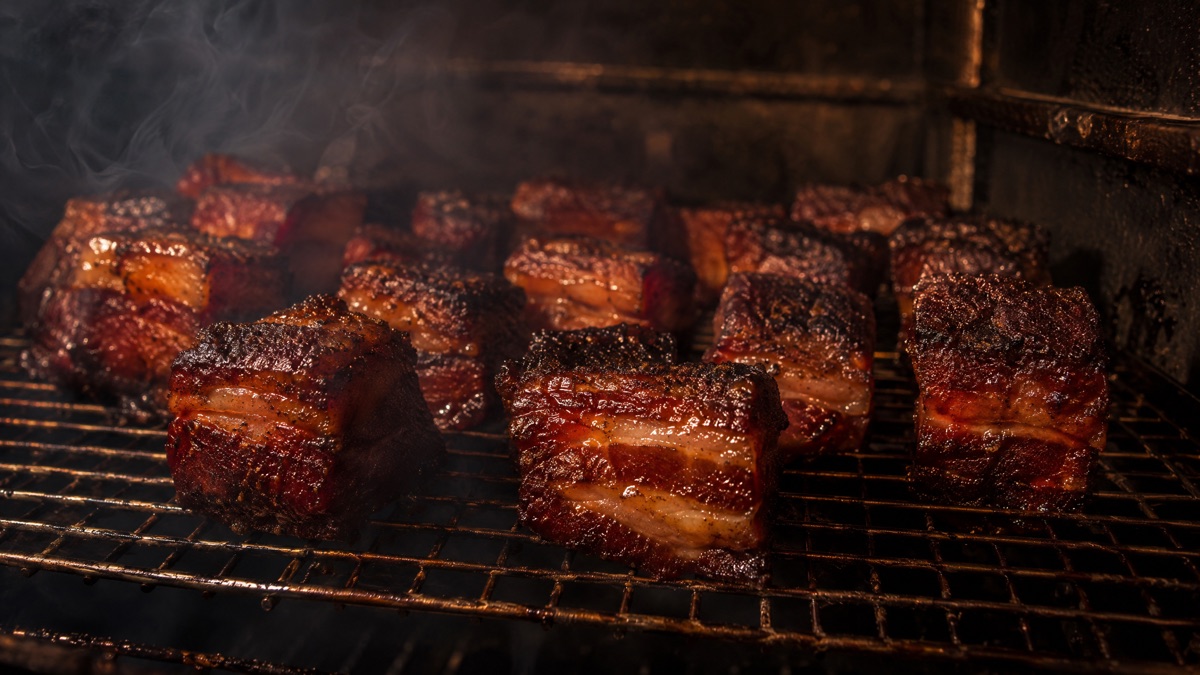
HenryThey look finished.
LenaSo do a lot of things at three hours.
Technique Spotlight: The Pan Step, Which Is Not Optional
Into a foil pan with butter, brown sugar and honey. Cover it tight. Back on for an hour and a half. The pan is a braise, and the braise is what turns rendered fat into something that gives all the way under a man’s teeth. Skip it and he has smoked pork cubes, which are fine, and which are not these.
The Hour That Makes the Photograph
Out of the pan, the foil pulled back, sauce on, and back on the grate uncovered for the last forty-five minutes to an hour.
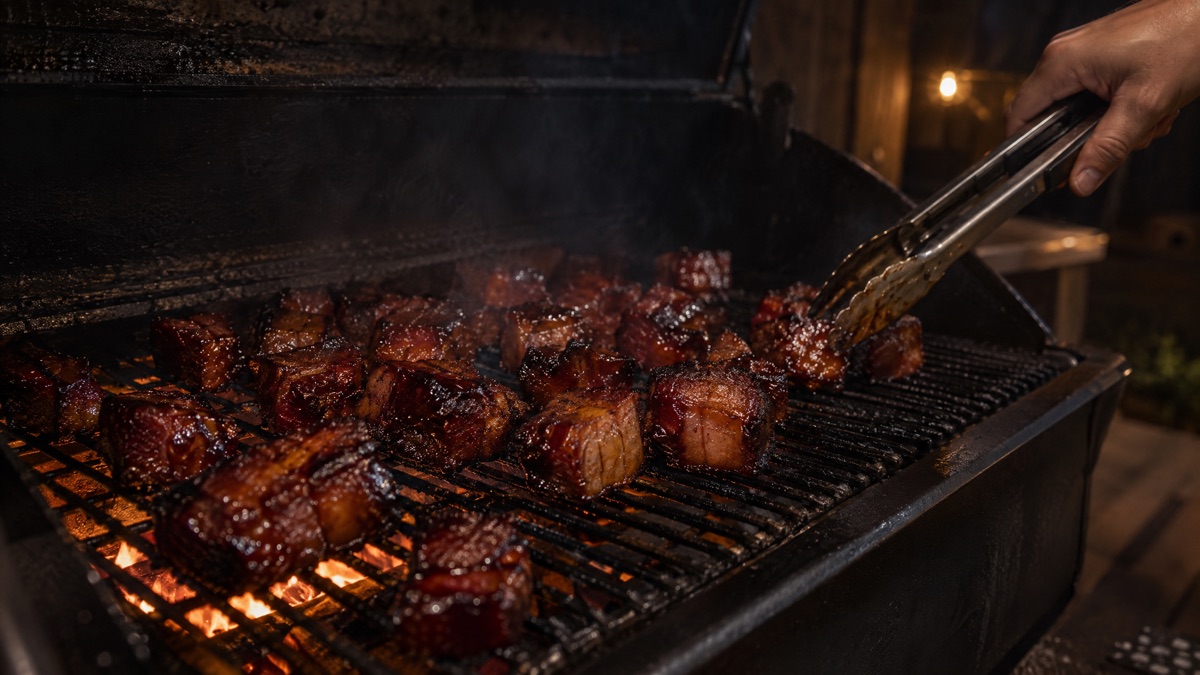
Sauce late. That is the whole rule. Barbecue sauce is mostly sugar and tomato, and sugar starts to scorch a little above three hundred degrees. At two-fifty it has time to tighten instead of burn, and what a man wants is a lacquer that has gone from wet to sticky to just barely tacky — the point where a cube will hold a fingerprint.
Too far and it is candy. Candy is what happens when the sugar caramelizes past the savory and there is nothing left underneath it. The tell is the shine: glossy and slightly loose is right, and hard and glassy has gone one step past.
Henry“How do I know when to stop?”
Lena“When it stops running and starts holding on. You will feel it before you see it.”
Neither of Them Used a Plate
They came off at five hours, into a bowl, and the bowl sat on the arm of a chair between two people who had each said they were only having one.
The right cube is soft the whole way through with a rim of bark that resists for a half second and then quits. It should not be greasy on the fingers. Grease on the fingers means the fat never fully rendered, which means the pan step was short, which means next time a man gives it another twenty minutes covered.
LenaThat is the last one.
HenryYou said that four ago.
LenaAnd I will say it again after this one.
Where Burnt Ends Came From
They were free, once.
In Kansas City the point end of a brisket — the fatty half, the one that takes longest and renders hardest — would go back on the fire after the flat had been sliced, and the pitmaster would chop the crusted ends into a pan and set it on the counter. People ate them standing up while they waited for their order. Nobody charged for scraps.
Then somebody noticed the scraps were the best thing in the building, and now they are the most expensive thing on half the menus in America, and worth every penny.
Pork belly burnt ends came later and came from the same instinct: take the fattiest thing you have, cube it so it is mostly surface, and cook it twice. They are not traditional. They are a newer idea, barely ten years on the menus. They are also better, because belly has more fat to render and a softer grain, and a belly cube gives way completely while a brisket cube still has beef in it.
Henry“So they are not real burnt ends.”
Lena“Neither were the real ones, until people kept asking for them.”
The Pan Step, in Detail
Four tablespoons of butter in pats across the bottom. Half a cup of brown sugar. A quarter cup of honey, warmed enough to pour. The cubes go in on top, then foil pulled tight over the whole pan and crimped at the edges.
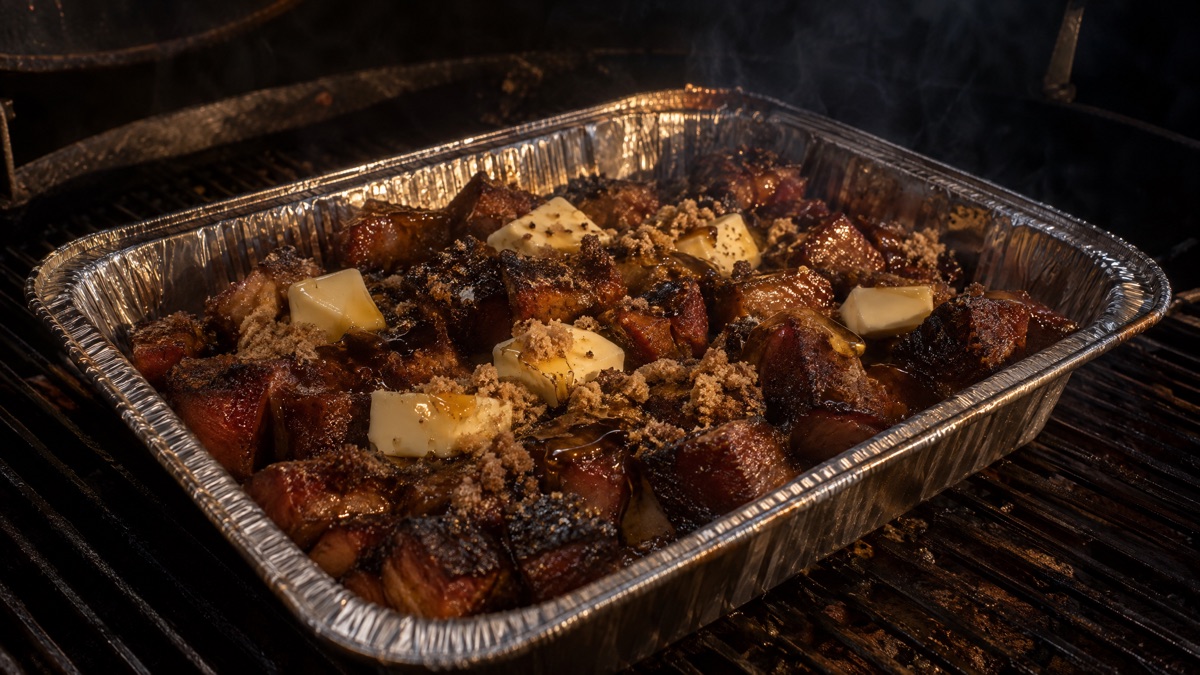
What happens under that foil is a braise at two hundred and fifty degrees. The butter and the rendering pork fat pool in the bottom, the sugar dissolves into them, and the cubes sit in an inch of hot fat and syrup with nowhere for their moisture to go. Collagen that has been stalling since the three-hour mark finally lets go. The fat between the layers goes from soft to liquid.
Ninety minutes is the number. At sixty they are close and still a little firm in the middle. At a hundred and twenty they start to fall apart when you move them, which is not a disaster but is not what you wanted either.
Drain most of the liquid off before you sauce. Not all of it — a few spoonfuls stirred into the sauce gives you a glaze that tastes like the cook instead of like the bottle.
What to Do With the Ones That Survive
There usually are none. On the rare night there are, they warm back up better than anything else in this story, because the fat has already given in and the glaze keeps the surface covered.
A dry skillet over medium, four or five minutes, turning, until the outsides have tightened again. The glaze re-melts and goes sticky a second time.
Chopped into mac and cheese. Folded into a breakfast hash with potatoes and an egg on top. Or on a slider bun with a pickle, which is how they are sold at every barbecue joint that figured out what they had.
Do not freeze them. The glaze goes cloudy and the fat separates on the thaw, and you will have turned the best thing you made all month into something merely acceptable.
LenaSave six for tomorrow.
HenrySix.
LenaFour. Put them in the back where you cannot see them.
Buying the Belly
A pork belly is sold two ways and one of them will cost you an hour with a knife.
Skin-on is cheaper and more common at Asian markets and at butcher counters that break their own hogs. The skin has to come off for burnt ends — it will not render in five hours and it turns to leather. Take it off with a long flexible knife held almost flat, working from one corner, pulling the skin taut with your other hand and leaving about a quarter inch of fat behind.
Skinless costs a dollar or two more a pound and comes already undressed. Buy skinless the first time.
Look for even thickness across the slab. A belly that runs two inches at one end and three-quarters at the other will give you cubes that finish forty minutes apart, and there is no fixing that except cutting the thin end off and cooking it separately.
Five pounds feeds eight people as an appetizer, or four people who have decided this is dinner. It shrinks by roughly a third on the pit, and that shrinkage surprises every man the first time.
Candy, and How to Know You Crossed the Line
The mistake nobody warns a man about is not burning. It is getting too sweet.
There is brown sugar in the rub, brown sugar and honey in the pan, and sugar in the sauce. Three sugar steps stacked on top of each other, and every one of them is standard. Run all three at full strength and what comes off the pit is dessert with a smoke flavor.
The fix is salt and acid, and you make the decision at the sauce step. Cut the barbecue sauce with a splash of cider vinegar and a pinch of salt before it goes on. Taste it. It should taste slightly too sharp in the bowl, because an hour on a two-hundred-and-fifty-degree pit will concentrate it and the pork fat will round it off.
If you are already past it and the cubes are too sweet on the plate, a hard sprinkle of coarse salt and a few drops of vinegar over the bowl will pull them back. Do it before anyone else eats one, and do not mention it.
Henry“Nobody noticed.”
Lena“I noticed. I just liked watching you fix it.”
She says the skin is not worth the trouble, and he spends a night proving otherwise.
Read the next chapterHow long do pork belly burnt ends take?
About five hours at 250°F — three hours naked, ninety minutes covered in a pan, then forty-five minutes to an hour sauced and uncovered. Cut the cubes at an inch and a half so every piece is mostly bark.
| Stage | Pit | Internal | Time |
|---|---|---|---|
| Cube at 1½ inches, season | — | — | 20 min |
| On a rack, single layer, naked | 250°F | — | 3 hr |
| Bark set, still firm inside | 250°F | about 165°F | at 3 hr |
| Into a pan with butter, sugar, honey, covered | 250°F | — | 1.5 hr |
| Probe tender, fat rendered | 250°F | 200–205°F | at 4.5 hr |
| Sauced, uncovered, to set the glaze | 250°F | — | 45–60 min |
| Off, glaze tacky not glassy | — | — | about 5 hr total |
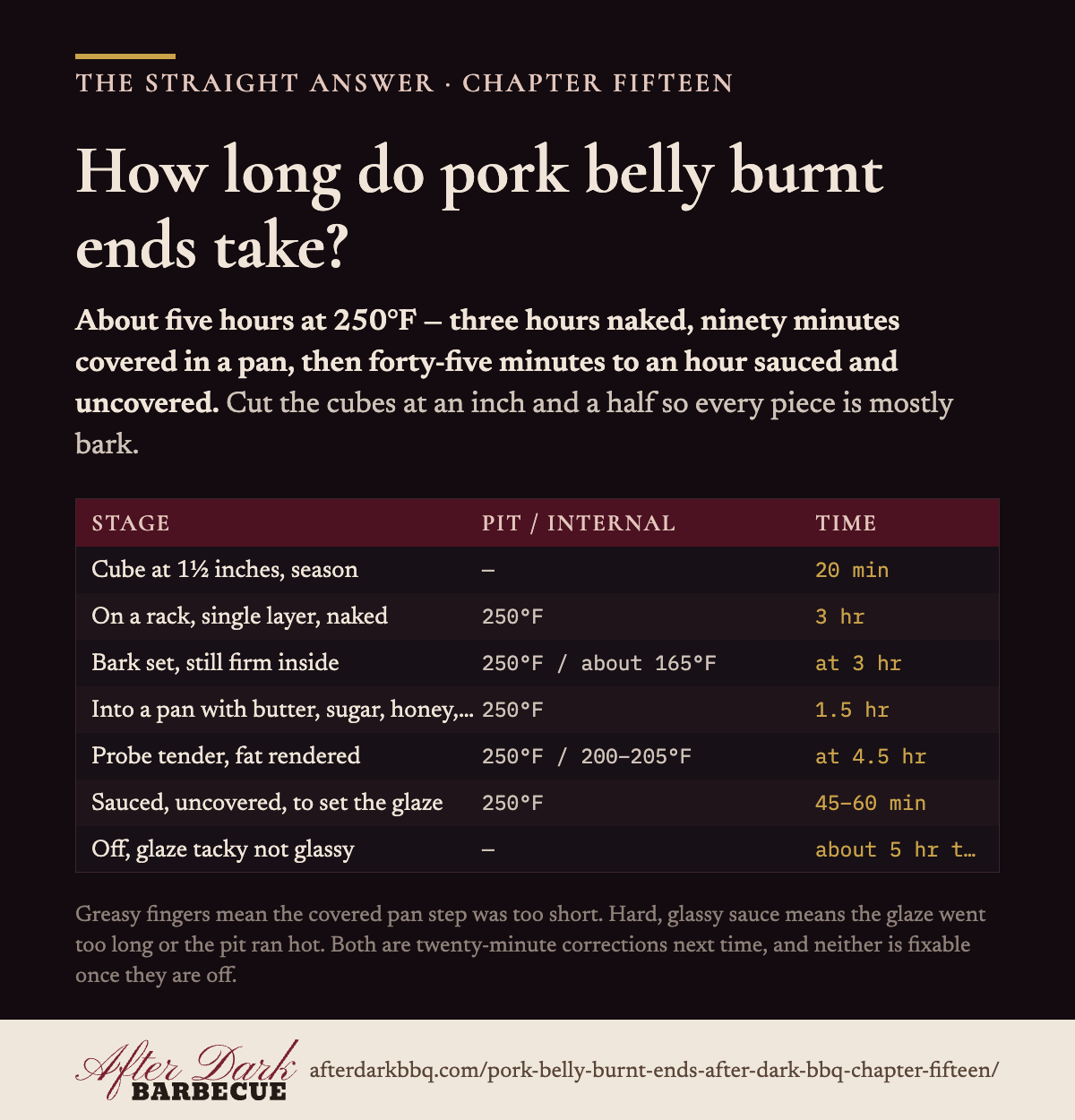
Greasy fingers mean the covered pan step was too short. Hard, glassy sauce means the glaze went too long or the pit ran hot. Both are twenty-minute corrections next time, and neither is fixable once they are off.
Why are my pork belly burnt ends tough?
Because they came off before the fat rendered, not because they overcooked. A cube that chews at four hours is undercooked. The fat and connective tissue in a belly do not give up until 200 to 205°F, and most of that happens under foil in the covered pan step. Pull at 185°F and you get neat squares with good bark and a waxy middle. If the probe meets any resistance, cover them again and check in twenty minutes.
How do you get crisp edges on pork belly burnt ends?
Dry the cubes before they go on, leave space between them, and finish uncovered. Pat the cut cubes dry and set them on a rack with an inch of air on every side, or they steam each other instead of roasting. The last forty-five minutes go uncovered at 250°F so the glaze tightens onto the bark. Running the pit up to 275°F for the final fifteen minutes firms the outside further; past that the sugar turns to candy and the edges go hard instead of crisp.
Recipe: The Short Version
Cut: skinless pork belly into 1½ inch cubes.
Season: salt, coarse pepper, a little brown sugar.
Smoke: 250°F on a rack, single layer, 3 hours uncovered.
Pan: foil pan with 4 tbsp butter, ½ cup brown sugar, ¼ cup honey, covered tight, 1½ hours.
Glaze: drain, sauce, back on uncovered 45 to 60 minutes.
Off: when the glaze is tacky and holds a fingerprint, around 200 to 205°F internal.
Next: a whole chicken, an hour and a half, and the argument about whether skin is worth the trouble.
Sources
The 145°F safe minimum with a three minute rest for whole cuts of pork is from the USDA Food Safety and Inspection Service Safe Minimum Internal Temperature Chart, with background in Fresh Pork from Farm to Table. Burnt ends run far past that number on purpose — 200 to 205°F is a texture target, not a safety one. The 40 to 140°F range and the two hour limit out of refrigeration are from the FSIS Danger Zone (40°F to 140°F) fact sheet. The cube size, the three-hour naked stretch, the ninety minute pan and the glaze window are After Dark BBQ’s own, measured at the grate and stated as ours rather than dressed up as research. Read September 2026.
Volume One, complete. Volume Two, a new chapter every Friday.All the chapters · Write to Dutch

Leave a Reply