Chapter Fourteen · Turkey breast at 275° · Three hours
Chapter Fourteen
A HOLIDAY NOBODY CALLEDJUST THE TWO OF THEMSHE STAYED THROUGH SUNDAY
Heat Thin blue smoke
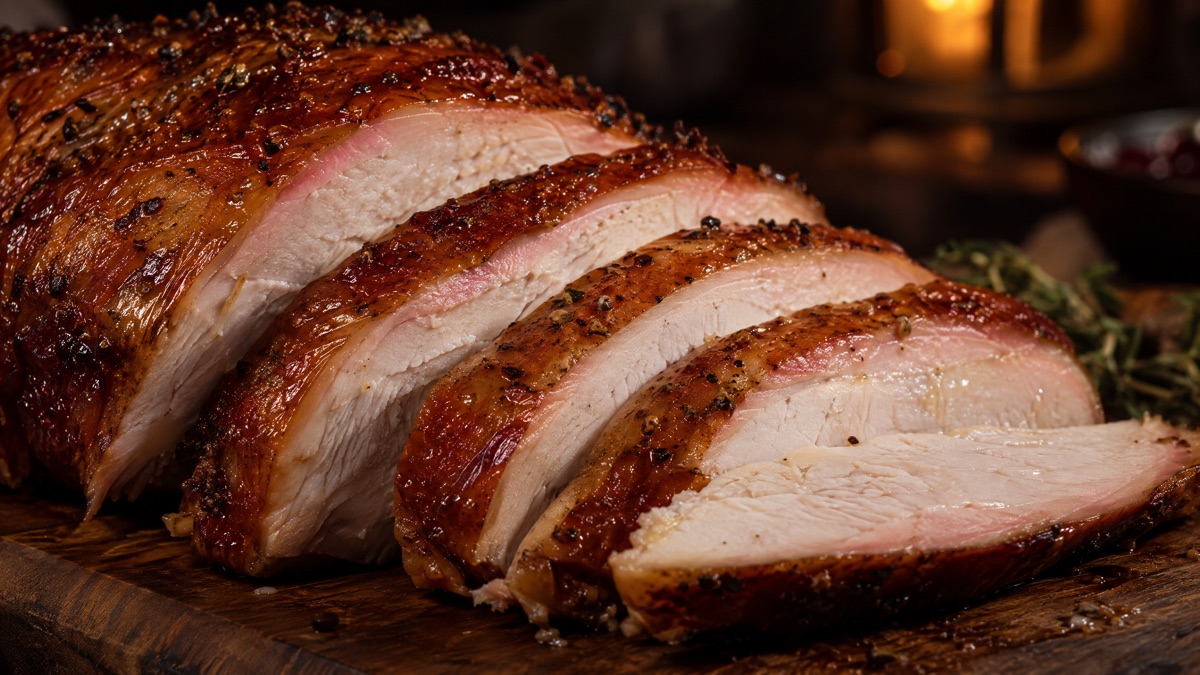
Chapter fourteen of After Dark BBQ: just the breast, all evening, three hours at 275° and pulled before it had a chance to dry out.
No holiday, no company, and all evening for the one piece he wanted.
A Holiday Nobody Called
It was the second week of October and he bought a seven-pound bone-in breast because it was lying there and because the house had been too quiet since Sunday.
LenaIt is not a holiday.
HenryIt is a Friday.
LenaA whole breast for one man on a Friday.
HenryIt reheats.
She stayed anyway, which is how these things go.
Wet Brine, Dry Brine, and Which One to Trust
Turkey breast is lean and it has nothing to fall back on. Fat is what buys a pork butt forgiveness for a man’s mistakes. A breast has almost none, so the forgiveness has to be added, and it is added with salt and water.
A wet brine is a cup of kosher salt and half a cup of brown sugar in a gallon of water, cooled completely, breast submerged, four to eight hours in the refrigerator. It works by slipping water deep inside the muscle, so what she sweats out on the pit is water you gave her instead of water she needed.
A dry brine is a tablespoon of kosher salt per four pounds, rubbed on and left uncovered on a rack for twelve to twenty-four hours. It puts less water in and gets you better skin, because the surface has all night to dry out and tighten up.
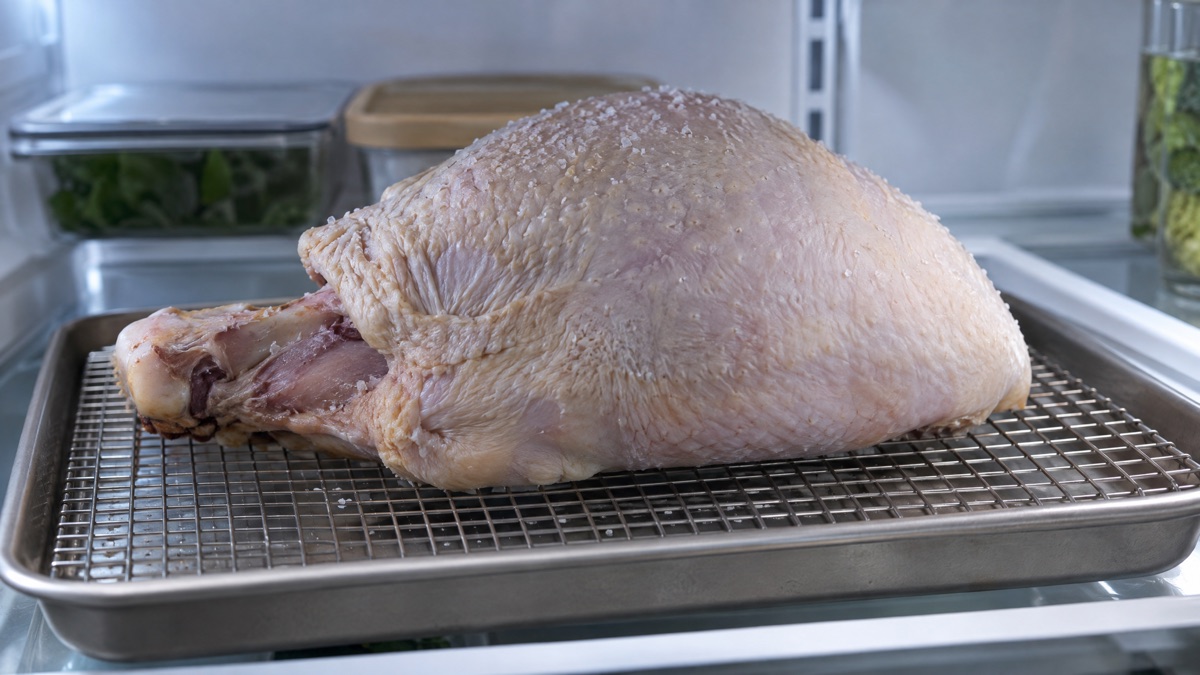
Pick one. Do not do both, and never brine a bird that arrived pre-brined from the store — read the label and look for a sodium solution, because a second brine on top of that makes something closer to a ham.
LenaOvernight, and hands off.
HenryYou keep making me wait.
LenaAnd it keeps turning out better.
Science Spotlight: Why 275°F and Not 225°F
Poultry skin needs heat to render and tighten. At 225°F it never gets there and you end up with something rubbery and pale that nobody wants to chew. At 275 to 300°F the fat under the skin renders, the skin pulls tight and goes bronze, and the breast still has three hours of smoke on it. Low and slow is for collagen. A turkey breast has almost none, and she wants it hot.
Butter Under the Skin, Wood That Knows Its Place
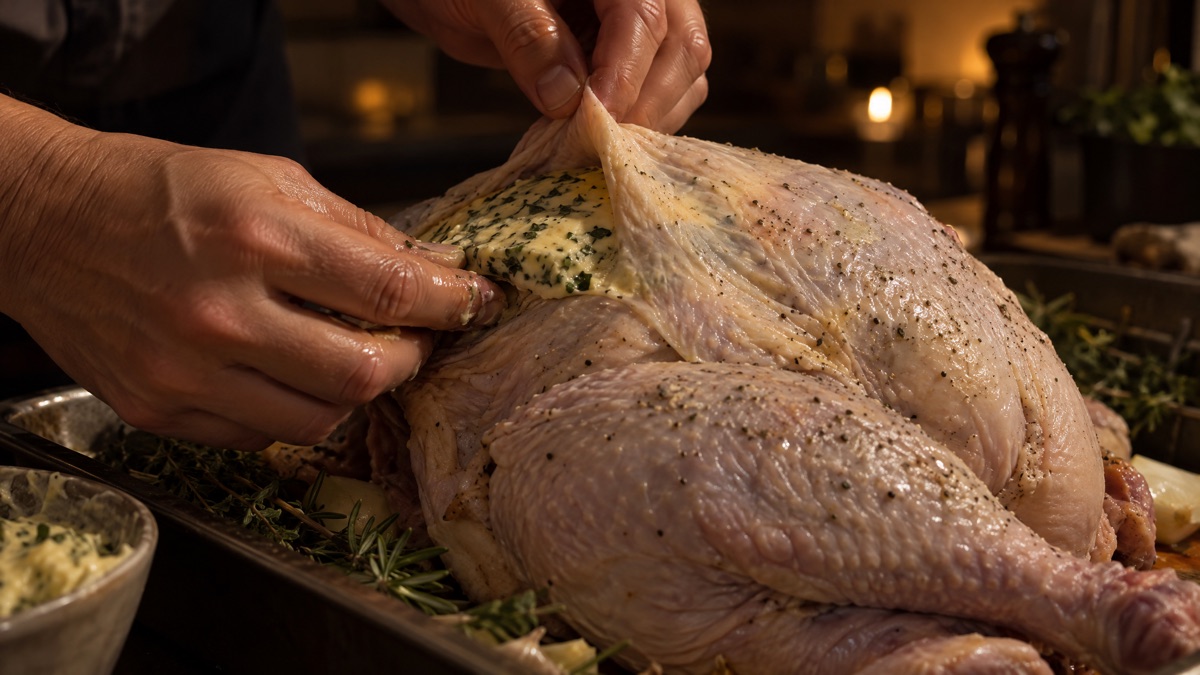
He worked his fingers in under the skin at the neck end and loosened it all the way back without once tearing it, which takes a good deal longer than any man expects and is the only fussy thing in this whole cook. Softened butter with black pepper and a little sage went in there after them, pushed all the way flat with the heel of his hand.
White meat has a five degree window and no manners about it at all. One hundred and sixty is juicy, one sixty-five is done, and past that is sawdust, with nothing in between except the two minutes it takes a man to cross from one to the other.
You can read this one for a man cooking a holiday bird in October for no occasion at all. I read it for the brine, which is the only thing standing between a man and that five degrees.
DutchCherry wood, and not much of it. Apple works. Pecan is the far edge. Turkey takes smoke faster than beef does and holds it longer, and a breast that spent three hours in hickory tastes like a campfire that got into the groceries.
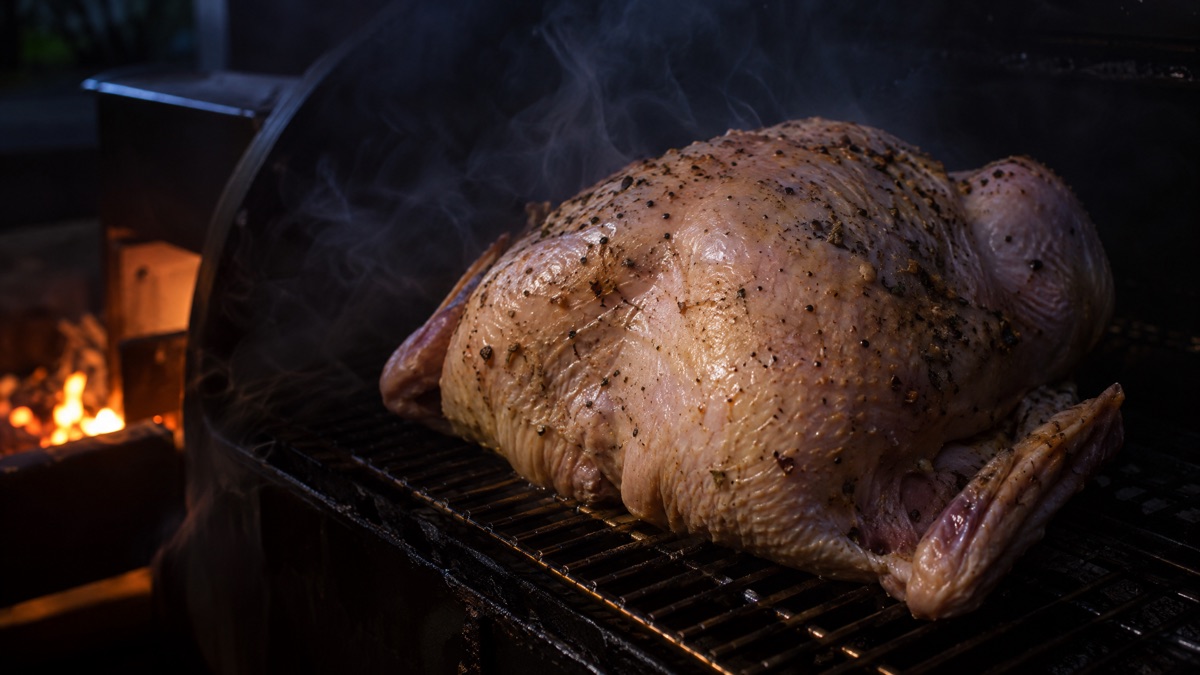
On at two hundred and seventy-five, breast side up, and then left alone. No spritzing, no basting, no lifting the lid to look. Every time a man opens it up, the skin gets one more chance to go soft on him.
Pull It Early, Which Is the Whole Chapter
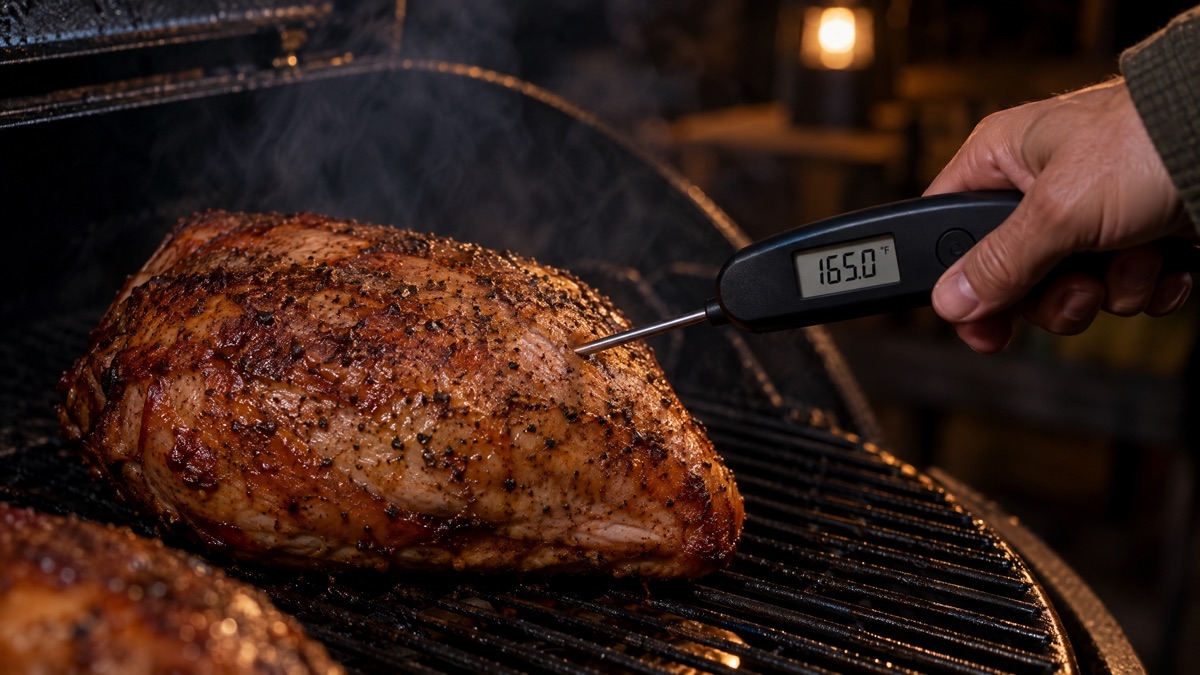
The probe went into the thickest part of the breast from the side, away from the bone, and he watched it the way a man watches a phone.
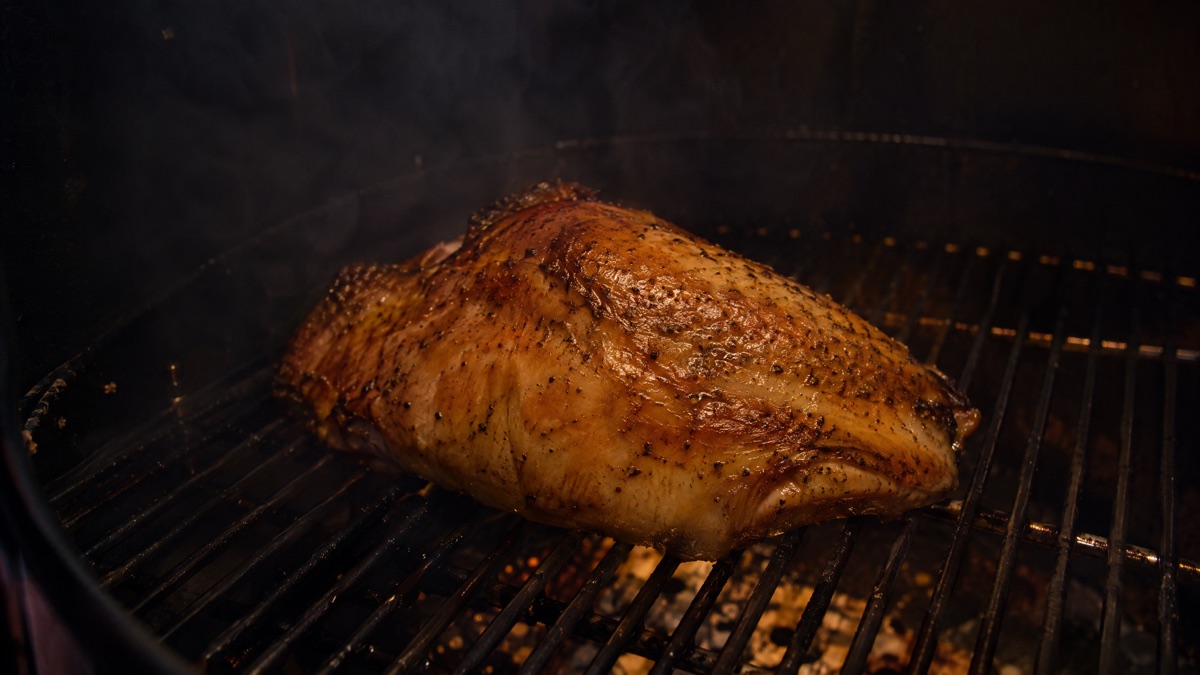
At one hundred and sixty degrees he took it off. Not one sixty-five — one sixty. A seven-pound breast carries enough heat in it to climb four or five degrees lying on the board with nobody laying a hand on it, and it will land on exactly the number the health department wants while a man is still getting the knife out.
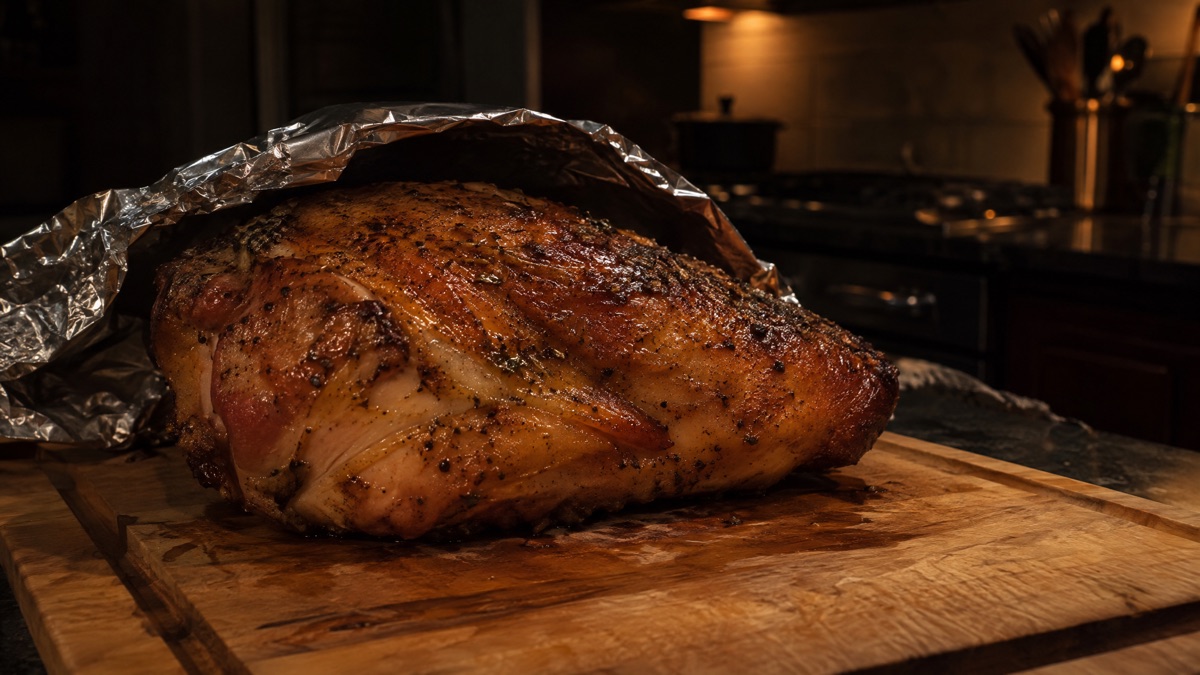
Twenty minutes resting, loosely tented, then cut across the grain in slices thicker than a man thinks he wants. Thin slices of white meat go dry between the board and the plate.
Henry“I took it off early.”
Lena“First time all year you have.”
There was most of a breast left. It went into the refrigerator and came back out on Sunday, sliced cold and eaten standing up at the counter by two people who had not planned on a second night.
Bone In, Bone Out, and What It Costs You
The case had both and the boneless was four dollars cheaper.
A bone-in breast takes it slower and more evenly, because bone conducts heat poorly and shields the meat pressed closest to it. It holds its shape on the board. It gives you a carcass worth a pot of stock on Sunday. And the skin comes off in one piece, which matters to people who care about skin.
A boneless breast — usually two lobes tied into a roast — cooks in closer to two hours and is easier to slice. It is also drier, because the string squeezes it tight, and because there is nothing in the middle to slow the heat down. If you buy it, probe at ninety minutes and be ready to pull early.
Neither is wrong. But if you have only cooked one turkey breast in your life and it disappointed you, there is a reasonable chance it was boneless and you cooked it to the number on the package.
Henry“Four dollars.”
Lena“Spend it. You are not saving money, you are buying an hour of margin.”
The Pink Ring That Frightens People
The first time he smoked poultry he threw half of it away.
Smoked turkey and chicken come off the pit with a pink or reddish layer just under the skin, sometimes a quarter inch deep. It looks exactly like undercooked meat, and it is not. It is the smoke ring — nitric oxide and carbon monoxide from the fire binding to myoglobin in the meat and locking it in its red form, so it cannot go gray no matter how long you cook it.
It is chemistry, not doneness. A breast at one hundred and seventy degrees with a pink ring is overcooked and still pink. A thermometer is the only thing in the yard that can tell you the truth, and it should be calibrated in ice water every few months, because a probe that reads four degrees low will ruin white meat quietly for a whole season.
Tell your guests before you carve, not after. Somebody at every table has an opinion about pink poultry and it is easier to explain the ring while the knife is still in your hand.
Sunday, Sliced Cold
There was two-thirds of a breast left and it went into the refrigerator whole, unsliced, which is the only way to store it. Sliced meat dries at every cut face. A whole piece keeps four days and loses almost nothing.
Cold, sliced thin against the grain, it is better than any deli turkey that has ever been sold, and it costs about a third as much per pound. Sandwiches on Sunday. A pot of stock from the carcass with the drippings poured in. And the last of it shredded into a soup on Tuesday, added at the very end, off the heat, because smoked turkey that gets boiled tastes like a campfire that fell in the pot.
LenaYou said you cooked it because it reheats.
HenryIt does.
LenaYou cooked it because the house was quiet.
He did not answer that, and she stayed through Sunday, which was the answer.
The Five Degrees, and How to Stop Losing Them
White meat has almost no intramuscular fat and very little connective tissue, which means there is nothing in it that improves with time. Every minute past done is a minute of loss.
Past one hundred and sixty-five degrees, the muscle fibers clench hard and squeeze out every bit of the water the brine put there. Pull at one sixty, land at one sixty-five. Five degrees, and the difference between them is the difference between a breast people go back to and one that needs gravy to be edible.
Three things buy you margin. The brine, which adds water you can afford to lose. The bone, which slows the last thirty degrees. And carryover, which you use on purpose instead of being surprised by — a seven-pound breast off the pit at one hundred and sixty will climb four to six degrees on the board, every time, because the outside is two hundred degrees and the heat has nowhere to go but inward.
Leave the probe in while she rests and watch her climb. The first time you see it land on one sixty-five by itself, you will never take a breast off at one sixty-five again.
Gravy From the Drippings, Since You Have Them
Set a small pan of water under the breast for the whole cook. It catches what renders, it keeps the drippings from scorching on the tray, and it puts a little humidity in a chamber that is running hotter than the rest of this story.
What comes out is smoky, salty and dark. Skim the fat. Whisk two tablespoons of it with two tablespoons of flour in a saucepan over medium heat until it smells like toast, then add the drippings and enough stock to make it pourable. Pepper. No salt until the very end — brined drippings are salty and they will tell you when they need help, which is usually never.
It is not the gravy from a holiday table. It is darker and it tastes like the fire, and it is better on the third-day sandwiches than anything you could buy.
Three hours bare, then an hour and a half shut in a pan with butter and honey.
Read the next chapterHow long does it take to smoke a turkey breast?
About three hours at 275°F for a 6 to 7 pound bone-in breast, pulled at 160°F. Roughly 25 to 30 minutes a pound. Carryover takes it to a safe 165°F while it rests, so taking it off at 165 means eating it at 170.
| Stage | Pit | Internal | Time |
|---|---|---|---|
| Brine, wet or dry | refrigerated | — | 4–24 hr |
| Butter under the skin | — | — | 10 min |
| On, breast side up | 275°F | — | — |
| Skin sets and colors | 275°F | about 110°F | 1 hr |
| Halfway, no peeking past this | 275°F | about 135°F | 2 hr |
| Off the pit | 275°F | 160°F | about 3 hr |
| Rest, carryover to 165°F | — | 165–166°F | 20 min |
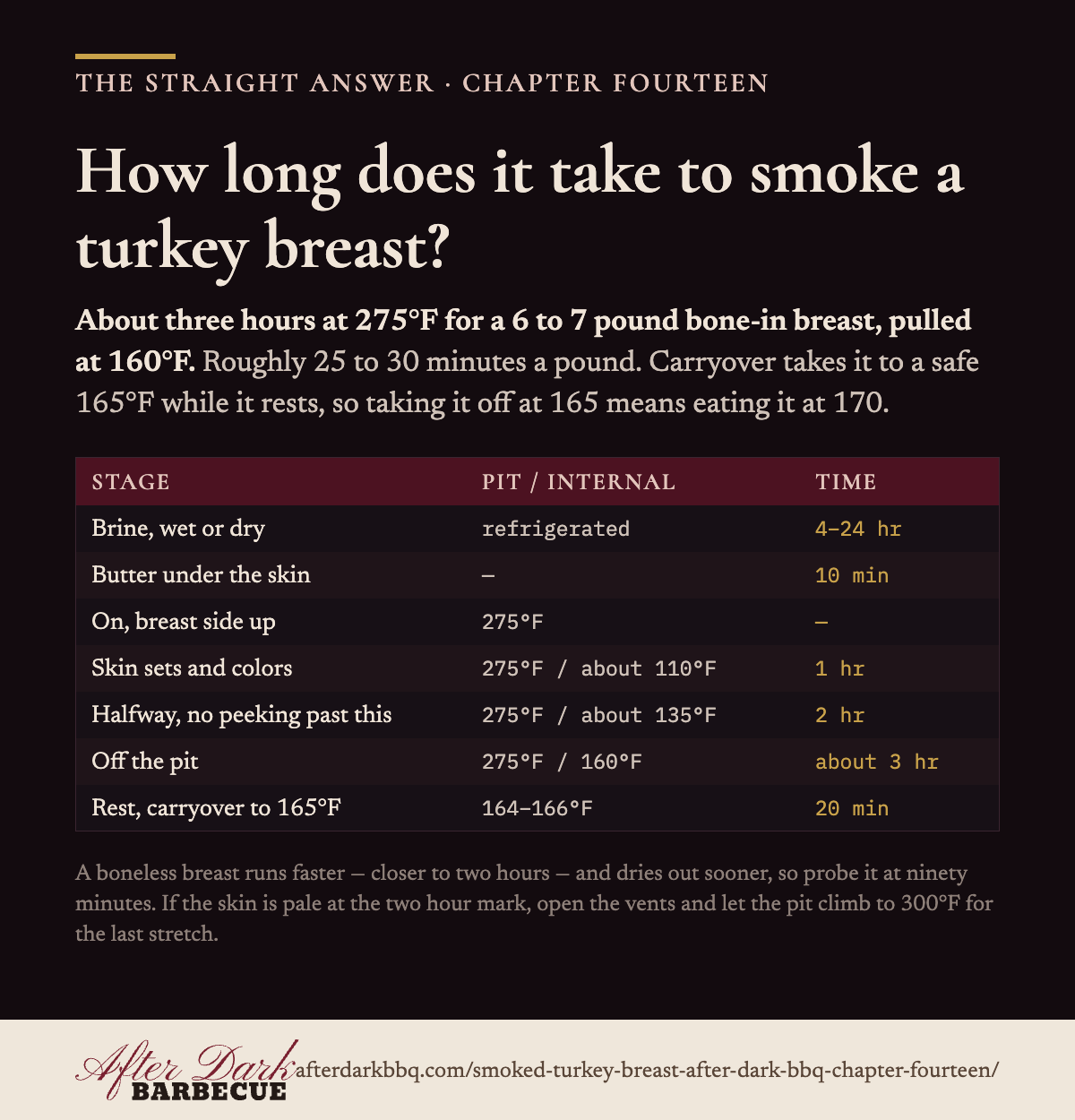
A boneless breast runs faster — closer to two hours — and dries out sooner, so probe it at ninety minutes. If the skin is pale at the two hour mark, open the vents and let the pit climb to 300°F for the last stretch.
Recipe: The Short Version
Brine: 1 cup kosher salt and ½ cup brown sugar per gallon of water, 4 to 8 hours. Or dry brine 1 tbsp salt per 4 lb, uncovered, 12 to 24 hours.
Butter: softened, with pepper and sage, worked under the skin.
Smoke: 275°F, cherry or apple, breast side up, lid down.
Time: about 3 hours for a 6 to 7 lb bone-in breast.
Pull: 160°F. It climbs to 165°F on the board.
Rest: 20 minutes, then slice thick, across the grain.
Next: the belly comes back, cut into cubes, sauced and put back on the fire for the hour that makes people take photographs.
The Hard Numbers, Laid Out Bare
How long to smoke a turkey — the whole bird, the chart and the questions people actually ask, with no story attached.
Sources
The 165°F safe minimum internal temperature for poultry is from the USDA Food Safety and Inspection Service Safe Minimum Internal Temperature Chart. The 40 to 140°F range and the two hour limit out of refrigeration are from the FSIS Danger Zone (40°F to 140°F) fact sheet. Pulling at 160°F and letting carryover finish the job, the 275°F pit and the uncovered brine are After Dark BBQ’s own, measured at the grate and stated as ours rather than dressed up as research. Read September 2026.
Volume One, complete. Volume Two, a new chapter every Friday.All the chapters · Write to Dutch

Leave a Reply